Venezuela at a Crossroads: Decoding the Economic Shockwaves of a Post-Maduro Era
A New Dawn or a False Horizon? The Financial World Reacts to a Geopolitical Earthquake
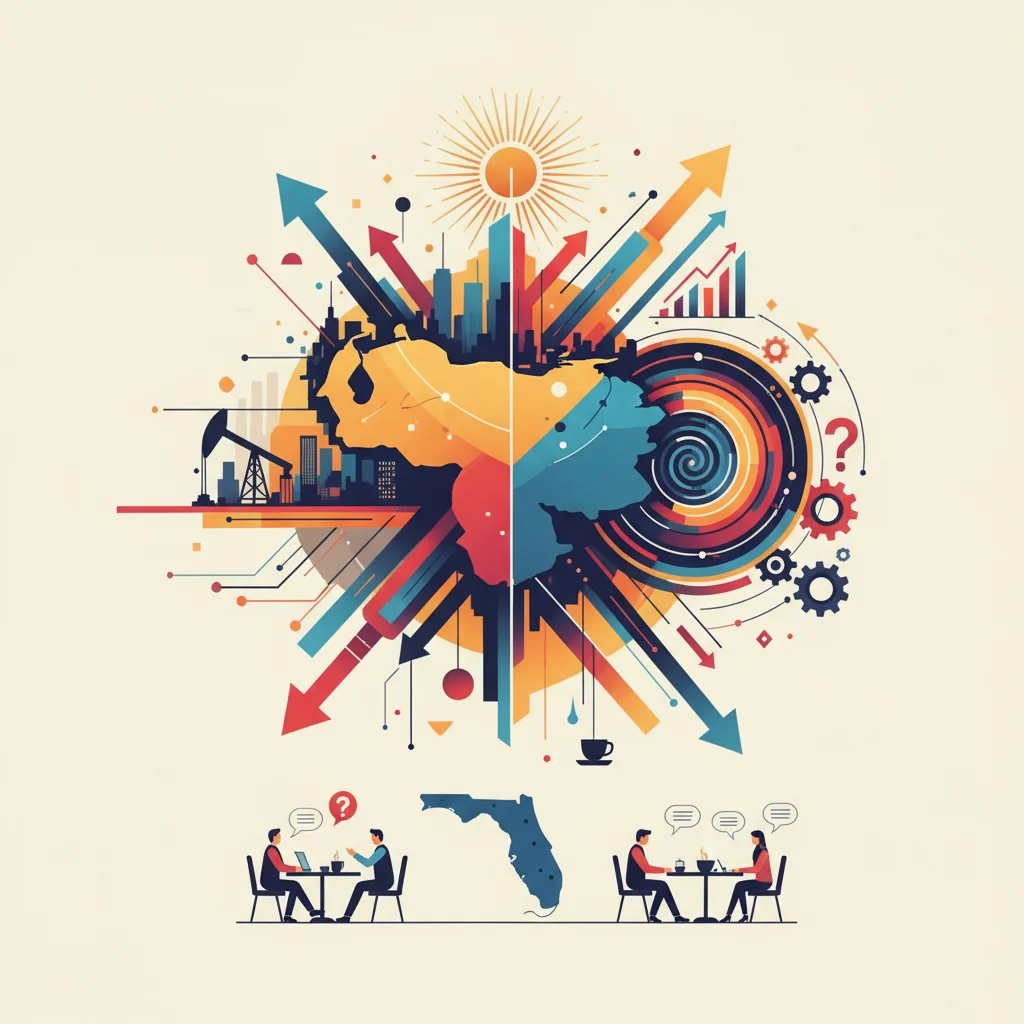
In the bustling cafes of Doral, Florida—a community often dubbed “Doralzuela” for its large Venezuelan population—a cautious euphoria has erupted. The stunning news, first reported by the Financial Times, of authoritarian leader Nicolás Maduro’s capture has sent shockwaves not only through diaspora communities but across the global financial markets. While many celebrate the ousting of a leader who presided over one of the most catastrophic economic collapses in modern history, seasoned investors and business leaders are asking the crucial question: What comes next?
The fall of Maduro is more than a political headline; it’s a potential turning point for a nation rich in resources but crippled by years of mismanagement, corruption, and international sanctions. For those in finance, investing, and global economics, this event unlocks a Pandora’s box of opportunities fraught with unprecedented risk. The path to rebuilding Venezuela’s shattered economy will be a monumental undertaking, testing the resilience of international institutions, the appetite of private capital, and the very fabric of the nation’s future.
The Anatomy of an Economic Collapse
To understand the magnitude of the task ahead, one must first grasp the depth of the abyss from which Venezuela must climb. Once the wealthiest nation in Latin America, its economy has been systematically dismantled. Under the Chávez and Maduro regimes, the country experienced a protracted crisis characterized by:
- Hyperinflation: At its peak, inflation reached an astronomical 10,000,000% in 2019, rendering the national currency, the bolívar, virtually worthless and vaporizing savings.
- GDP Contraction: The country’s economy shrank by an estimated 75% between 2013 and 2021, a collapse worse than that of the United States during the Great Depression.
- Nationalization and Expropriation: The seizure of private companies across key sectors, from agriculture to oil, decimated productive capacity and obliterated foreign investor confidence.
- Humanitarian Crisis: The economic devastation triggered a mass exodus, with over 7 million Venezuelans fleeing the country, creating one of the largest displacement crises in the world.
The state-owned oil company, PDVSA, the lifeblood of the nation’s economy, is a shell of its former self. Once producing over 3 million barrels per day, output has plummeted due to underinvestment, corruption, and sanctions. Rebuilding this critical infrastructure alone will require tens of billions of dollars and years of technical expertise.
The Diamond Standard: How Flawed Gems Are Forging the Future of Finance and Technology
Immediate Market Tremors: A Litmus Test for Investor Appetite
The immediate reaction in the stock market and bond markets will serve as a crucial barometer for long-term sentiment. The most direct financial instruments tied to the country’s fate are its defaulted government and PDVSA bonds. These have been trading for pennies on the dollar for years, held by a small group of speculative hedge funds and institutional investors. A change in regime could trigger a massive rally in these distressed assets, though the path to restructuring Venezuela’s estimated $150 billion in external debt will be complex and contentious.
Below is a speculative analysis of the potential short-term market impact following this geopolitical shift.
| Asset Class | Potential Short-Term Impact | Key Considerations |
|---|---|---|
| Venezuelan Sovereign & PDVSA Bonds | Highly Positive / Volatile | Speculative rally on restructuring hopes; legal challenges and creditor hierarchy will be complex. |
| Crude Oil (WTI/Brent) | Moderately Negative | Long-term prospect of 2M+ bpd returning to the market could weigh on prices, but this is not an immediate reality. |
| Regional LatAm Equities (e.g., Colombia, Brazil) | Slightly Positive | Reduced regional instability and potential for future trade and energy integration could boost sentiment. |
| US Oil Services Stocks (e.g., SLB, HAL) | Positive | Anticipation of massive contracts to rebuild Venezuela’s dilapidated oil infrastructure. |
A Roadmap to Recovery: The Role of Modern Finance and Technology
Rebuilding Venezuela requires more than just capital; it demands a complete overhaul of its economic and institutional architecture. A transitional government, backed by international support from institutions like the IMF and World Bank, will be the first critical step. This government would need to immediately tackle currency stabilization, fiscal reform, and the establishment of a legal framework that protects property rights and encourages foreign direct investment (FDI).
This is where modern financial technology can play a transformative role. In a country where the traditional banking system has failed its citizens, there is a unique opportunity to leapfrog legacy systems.
- Fintech for Financial Inclusion: Mobile payment systems and digital wallets could quickly bring millions of unbanked and underbanked citizens into a formal economic system, facilitating aid distribution and commerce.
- Blockchain for Transparency: Utilizing blockchain technology to create a new, immutable land registry could resolve decades of property disputes and provide the security needed for agricultural and real estate investment. It could also be used to ensure transparency in the management of oil revenues and government procurement.
- Digital Currency: While the Maduro regime’s “Petro” was a failed experiment, a credible, central bank-backed digital currency (CBDC) or the regulated use of established stablecoins could offer a swift path away from the chaotic, cash-based informal economy.
The reconstruction of Venezuela presents a unique case study for how 21st-century financial tools can be deployed to rebuild a nation from the ground up, potentially creating a new model for post-crisis economic recovery.
Beyond the 9-to-5: Unpacking the Hidden Economic Power of the Side Hustle
Navigating the Sanctions Labyrinth and Geopolitical Chessboard
A pivotal catalyst for any recovery will be the swift and strategic lifting of U.S. and international sanctions. These measures, designed to cripple the Maduro regime, have also choked the nation’s ability to participate in the global financial system. A new, recognized government would likely see a rapid unwinding of these restrictions, reopening pathways for oil trading, international loans, and access to capital markets.
However, the geopolitical landscape is complex. Venezuela owes significant debt to both China and Russia, who may seek to use their leverage to secure favorable terms on oil contracts and asset control. The United States and its allies will need to engage in delicate diplomacy to ensure that Venezuela’s recovery is not hijacked by competing global interests. As one analyst quoted in the Financial Times noted, “The battle for political control may be over, but the battle for Venezuela’s economic soul is just beginning.”
Beyond the Hype: Why the AI Boom Is Not the Bubble You Think It Is
Conclusion: A Cautious Optimism for a Broken Nation
The fall of Nicolás Maduro marks the end of a dark chapter for Venezuela. For the diaspora, it is a moment of profound hope for family reunification and national rebirth. For the global financial community, it represents one of the most significant and high-stakes emerging market opportunities of the century. The potential is immense: the revival of a major oil producer, the awakening of a dormant consumer market, and a powerful story of recovery against all odds.
Yet, the path forward is paved with daunting obstacles. Political stability is far from guaranteed, the societal wounds are deep, and the economic damage is of a generational scale. Investors and business leaders must temper their optimism with a clear-eyed assessment of the risks. Success will require patience, resilience, and a coordinated global effort. Venezuela’s journey back from the brink has just begun, and the world is watching to see if this dawn is a true sunrise or merely a fleeting moment of light.