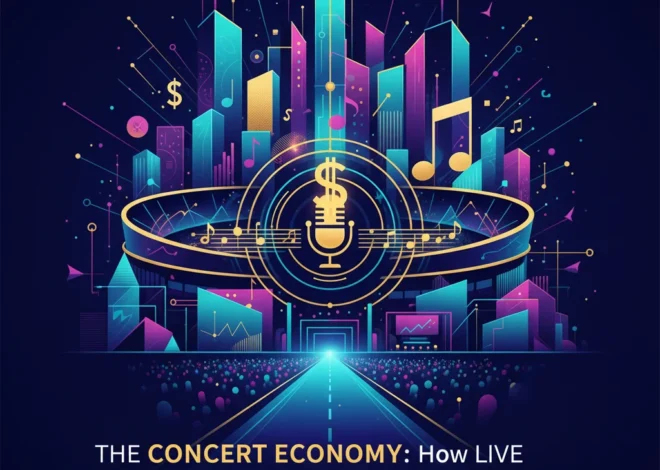
The Concert Economy: Deconstructing the Billion-Dollar Business of Live Music
In an era where digital streams are measured in fractions of a cent, the live concert has transformed from a promotional tool into a financial behemoth. Global superstars like Taylor Swift and Beyoncé are not just musicians; they are the CEOs of touring empires, generating revenue that rivals the GDP of small nations. The Eras Tour, for instance, is projected to gross over a billion dollars, a figure that was once unimaginable for a series of live performances. How did this happen? How did an industry, once reliant on selling physical albums, pivot to become a dominant force in the “experience economy”?
This analysis delves into the intricate financial architecture of the modern live music industry. We will explore the economic shifts that made touring the primary revenue driver, dissect the complex machinery of a mega-tour, and examine how financial technology is poised to disrupt the entire ecosystem. For investors, business leaders, and anyone fascinated by the intersection of culture and commerce, understanding this evolution is key to grasping a powerful and growing sector of the global economy.
The Great Pivot: From Physical Sales to Live Experiences
To understand the current boom in live music, we must first look back at the disruption that nearly crippled the industry. For decades, the business model was simple: record an album, sell millions of copies, and tour to promote those sales. The concert was a marketing expense, not the primary product. Then came the digital revolution. The rise of file-sharing platforms like Napster, followed by the dominance of streaming services, decimated album sales revenue. According to a BBC industry analysis, profits from recorded music plummeted by over 50% in the first decade of the 21st century.
This revenue collapse forced a fundamental re-evaluation of the entire industry’s finance model. Artists and labels realized that while music could be infinitely replicated online, a live experience could not. The concert became the premium, scarce product. This pivot aligned perfectly with a broader consumer trend: a shift in spending from material goods to memorable experiences. Consumers, particularly millennials and Gen Z, began prioritizing travel, festivals, and live events over physical possessions. The live music industry was perfectly positioned to capitalize on this macroeconomic trend.
This shift fundamentally altered the economics of being a musician. The tour evolved from a loss leader into the central pillar of an artist’s enterprise, driving revenue not just from ticket sales but from a diversified portfolio of income streams.
Powering the Dragon's Brain: The Nuclear Secret Behind China's AI Investment Boom
Anatomy of a Modern Mega-Tour: A Financial Breakdown
A modern global tour is a masterpiece of logistics, marketing, and financial engineering. It’s a mobile corporation that sets up in a new city every few days, employing hundreds of people and managing colossal cash flows. The revenue streams are far more complex than just the ticket price. Let’s break down the key financial components.
Below is a simplified breakdown of the primary revenue and cost centers for a hypothetical stadium tour leg:
| Revenue Streams | Key Cost Centers |
|---|---|
| Ticket Sales (Gross): The primary driver, often with dynamic pricing models. | Venue Rental & Fees: A significant percentage of the gross ticket sales. |
| Merchandise: High-margin sales of apparel and souvenirs, often exceeding $1 million per show. | Production: Staging, lighting, sound, video screens, and special effects. Can cost tens of millions. |
| Sponsorships & Brand Partnerships: Corporate sponsors paying for brand association. | Crew & Staffing: Salaries for hundreds of technicians, drivers, security, and management. |
| VIP Packages & Upsells: Premium experiences like meet-and-greets or exclusive access. | Logistics & Transportation: Moving dozens of trucks, buses, and equipment between cities. |
| Concessions & Ancillary Sales: A percentage of food, beverage, and parking revenue from the venue. | Marketing & Promotion: Global advertising campaigns to ensure sell-out crowds. |
This complex interplay of revenue and costs is managed by major promoters like Live Nation and AEG. These publicly traded giants act as the investment banking partners for these tours, often providing massive upfront advances to artists in exchange for a significant share of the profits. Their performance on the stock market is often a direct reflection of their roster of touring artists and the health of the live events sector. For investors, analyzing a company like Live Nation requires a deep understanding of these intricate tour-level economics.
The Ticketing Dilemma: A Case for Fintech and Blockchain Disruption
No discussion of live music finance is complete without addressing the contentious issue of ticketing. The dominance of platforms like Ticketmaster, which merged with promoter Live Nation in 2010, has led to public outcry over high fees, a lack of transparency, and the proliferation of a secondary market (scalping) that often benefits bots and resellers more than artists or fans. A 2023 report noted that service fees can add upwards of 30% to the face value of a ticket (source).
This is where financial technology, or fintech, offers compelling solutions. The existing ticketing system is, in many ways, an archaic legacy system ripe for disruption. Imagine a future built on new tech:
- Blockchain-Based Tickets: A ticket issued as a non-fungible token (NFT) on a blockchain could create a secure, transparent, and programmable asset. Artists could set rules directly into the ticket’s smart contract, such as capping resale prices or automatically taking a percentage of any secondary market sale. This recaptures revenue currently lost to scalpers.
- Dynamic and Transparent Pricing: Advanced algorithms could create fairer dynamic pricing models that adjust based on real, verified demand, cutting out the speculation that drives up secondary market prices.
- Decentralized Fan-to-Fan Trading: Secure, peer-to-peer trading platforms could be built, allowing fans to exchange tickets safely without exorbitant intermediary fees, all while adhering to the artist’s rules.
While mainstream adoption of these technologies is still in its early stages, the potential for fintech to bring efficiency, transparency, and artist control to the ticketing market is immense. It represents a fundamental shift from a centralized, opaque model to a decentralized and more equitable one.
The Trillion-Dollar Tightrope: Why a Realistic Climate Transition is the Only Investable Path
The Ripple Effect: How Music Tourism Boosts Local Economies
The economic impact of a major tour extends far beyond the venue walls. When a global superstar comes to town, they bring a traveling economic stimulus package. This phenomenon, sometimes dubbed “Swiftonomics” or “Beyoncé-nomics,” highlights the significant macroeconomic benefits for host cities. Research suggests a single stadium show can inject tens of millions of dollars into a local economy (source).
This revenue comes from “music tourists” who travel to the city for the event, spending money on:
- Hotels and Accommodations: Hotel occupancy rates and prices surge during concert weekends.
- Restaurants and Bars: Pre- and post-show dining and entertainment see a massive influx of customers.
- Transportation: Airlines, ride-sharing services, and public transit all experience increased demand.
- Local Retail: Fans often spend on shopping and other local attractions during their visit.
For city officials and business leaders, attracting a major tour is a strategic economic decision. It validates the city’s status as a cultural hub and provides a tangible, short-term boost that is felt across the entire hospitality and service sector. This makes the live music industry a key player not just in entertainment, but in urban and regional economic development.
Investing in the Roar of the Crowd
For the savvy investor, the robust growth of the live music industry presents several opportunities. While you can’t buy shares in Taylor Swift directly, you can gain exposure to this trend by investing in the publicly traded companies that form the industry’s backbone.
Key players include Live Nation Entertainment (LYV), the global leader in live events and ticketing, and Madison Square Garden Entertainment (MSGE), which owns iconic venues. Investing in these stocks is a bet on the continued strength of the experience economy. However, like any form of trading, it comes with risks. The business is susceptible to economic downturns (as discretionary spending is cut), unforeseen event cancellations, and regulatory scrutiny over market concentration.
A diversified approach might also include investing in related sectors that benefit from music tourism, such as event technology companies, travel and hospitality ETFs, or even firms specializing in music royalty finance. As the industry continues to evolve, new and innovative investment vehicles will undoubtedly emerge.
The Economist's Dangerous Blind Spot: Why Mainstream Models Fail Investors
Conclusion: The Future is Live and Loud
The journey of the music industry from a product-based model to an experience-driven powerhouse is a compelling case study in adaptation and economic evolution. Live music has proven to be a resilient and remarkably valuable asset, demonstrating a unique ability to command premium prices in an increasingly digital world. It is no longer just an art form but a sophisticated financial ecosystem, a powerful engine for local economies, and an intriguing sector for investors.
Looking ahead, the convergence of live experiences with emerging technologies like AR, VR, and blockchain promises to unlock even more value. The fundamental human desire to gather and share a collective experience remains the industry’s most valuable, and enduring, asset. For the foreseeable future, the biggest stages will continue to host the biggest business in music.