Trump’s Venezuelan Oil Gambit: A High-Stakes Bet on Energy, Economics, and Geopolitics
The Audacious Claim Shaking Global Energy Markets
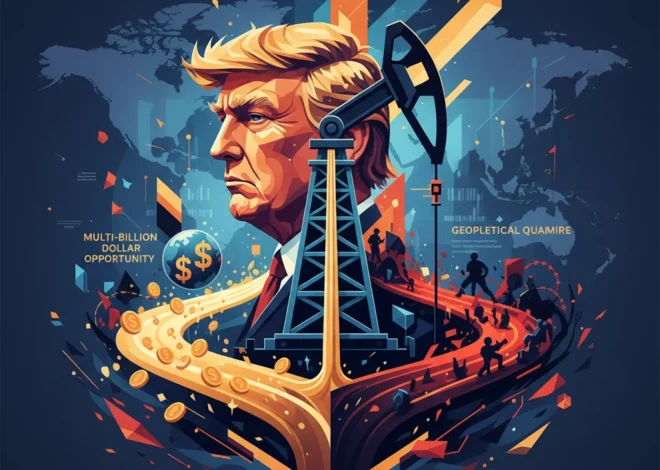
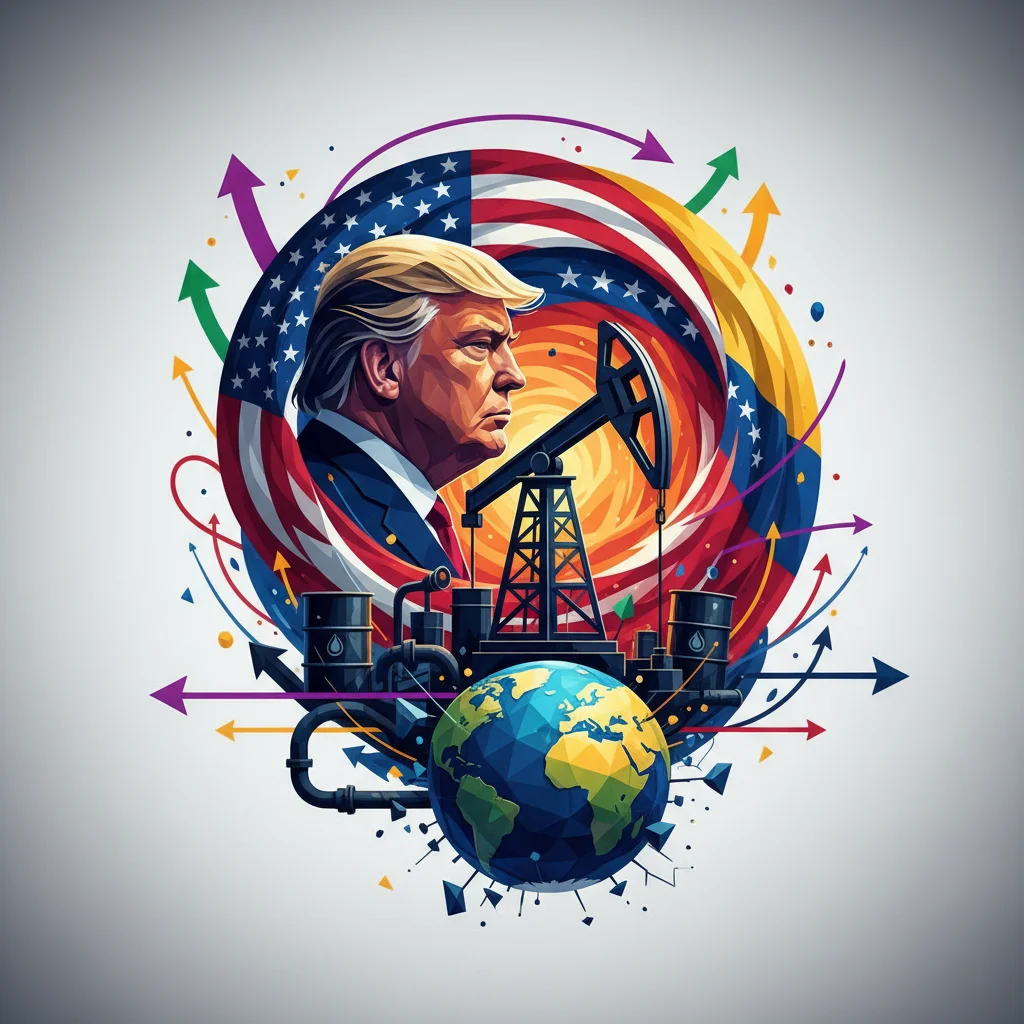
In the high-stakes world of global politics and finance, bold statements often serve as trial balloons, testing the waters of public and market reaction. Few statements, however, have been as audacious as Donald Trump’s recent assertion that, under his potential leadership, the United States would look to extract a share of Venezuela’s “tremendous” oil wealth. Speaking at a rally, the former president suggested a quid pro quo: the U.S. would help stabilize the crisis-ridden nation, and in return, “we want to take a big chunk of their oil.” This pronouncement, reported by the Financial Times, has sent ripples through the worlds of finance, energy, and international relations, forcing investors and policymakers to confront a radical, if hypothetical, shift in U.S. foreign and energy policy.
At its core, the proposition is simple: leverage American power to access the world’s largest proven crude oil reserves. Yet, the reality is a labyrinth of geopolitical complexity, economic ruin, and immense logistical hurdles. To understand the potential impact on the global economy and investment landscapes, we must first dissect the current state of Venezuela’s oil sector, a tragic story of squandered potential.
From Oil Superpower to Cautionary Tale: The Collapse of an Industry
Venezuela sits atop an ocean of oil. With proven reserves estimated at over 300 billion barrels, it surpasses even Saudi Arabia. This geological blessing should have made it one of the wealthiest nations on earth. Instead, its state-owned oil company, Petróleos de Venezuela, S.A. (PDVSA), once a titan of the industry, is now a shadow of its former self. Years of mismanagement, corruption, and underinvestment under the regimes of Hugo Chávez and Nicolás Maduro have decimated its operational capacity.
The decline has been staggering. At its peak in the late 1990s, Venezuela was producing over 3 million barrels per day (bpd). Today, that figure has plummeted. According to reports cited by the Financial Times, the country’s crude output has fallen precipitously under the Maduro regime (source). Crippling U.S. sanctions, designed to pressure Maduro from power, have further suffocated the industry, cutting it off from key markets, technology, and international banking systems.
To visualize this dramatic collapse, consider the production data over the last two decades:
| Year | Approximate Crude Oil Production (Million barrels per day) | Key Events & Context |
|---|---|---|
| 2000 | ~3.2 | PDVSA is a major global player. |
| 2010 | ~2.8 | Early signs of underinvestment and politicization. |
| 2015 | ~2.6 | Oil price crash exacerbates economic crisis. |
| 2019 | ~0.8 | Severe U.S. sanctions imposed. |
| 2023 | ~0.7-0.8 | Slight recovery but still a fraction of former capacity. |
Note: Figures are approximate and compiled from various energy agency reports reflecting the trend of decline.
This collapse has not only destroyed the Venezuelan economy but has also left a vacuum in the global energy supply chain, a void filled by other producers. Reviving this industry would require tens, if not hundreds, of billions of dollars in new investing, a complete overhaul of decaying infrastructure, and a stable political and legal framework—none of which currently exist.
The Week in Review: 5 Critical Market Signals and What They Mean for Your Portfolio
The Geopolitical Chessboard: More Than Just Oil
Any U.S. move to “take” a portion of Venezuela’s oil would be a geopolitical earthquake. It would directly challenge the influence of two other global powers: Russia and China. Both nations have extended billions of dollars in loans to the Maduro regime, often collateralized by future oil shipments. They have become Venezuela’s economic lifelines, and they would not stand idly by as the U.S. muscles in on their investment.
Furthermore, the proposal would upend decades of diplomatic norms regarding national sovereignty. The optics of a superpower claiming a weaker nation’s primary natural resource would be highly controversial, potentially alienating allies in Latin America and beyond. This isn’t a simple trading deal; it’s a fundamental reordering of international power dynamics, with the U.S. acting as both partner and creditor with an explicit claim on assets. Such a policy would have profound implications for international law and the principles of sovereign resource ownership.
The plan also raises questions for organizations like OPEC. A revived Venezuela, even one sharing revenue with the U.S., could flood the market with millions of barrels of heavy crude, potentially destabilizing the delicate production quotas that maintain price stability. The ripple effects on global commodity trading and the economies of other oil-producing nations would be immediate and significant.
The Ramen Principle: What a Noodle Bar Can Teach Us About Core Asset Investing
An Investor’s Dilemma: Unpacking the Risk and Reward
For the finance community, Trump’s proposition presents a fascinating, albeit highly speculative, thought experiment. What would it take for Venezuela to become an investable asset again?
- Political and Regime Change: The primary condition is a stable, pro-business government in Caracas that would honor international agreements. Without this, any investment is dead on arrival.
- Legal Framework Restoration: Investors would need ironclad legal protections for their assets and contracts, reversing the nationalizations and expropriations of the past. U.S. companies like ConocoPhillips and ExxonMobil are still seeking billions in compensation for assets seized under Chávez (source).
- Massive Capital Injection: The infrastructure—from drilling rigs and pipelines to refineries and export terminals—is in a state of near-total decay. A multi-year, multi-billion dollar investment cycle would be required before any significant new production could come online. This would necessitate a colossal project finance effort from the international banking sector.
- Technological and Human Capital: Venezuela has lost a generation of skilled oil workers who have fled the country. Rebuilding this human capital while importing advanced extraction technology for its heavy crude would be a monumental task.
In this high-risk environment, one could even speculate on the role of emerging financial technology. Could blockchain be used to create a transparent ledger for oil revenues, ensuring that any “chunk” taken by the U.S. or other partners is clearly accounted for? Could fintech platforms facilitate the complex financing required to rebuild the industry in a country with a shattered credit history? While futuristic, these are the kinds of innovative solutions that might be required to de-risk such an unprecedented venture.
The Circular Economy's Hidden Engine: How Second-Hand Fashion is Reshaping Global Finance
The Final Word: A Vision or a Mirage?
Ultimately, Donald Trump’s vision for Venezuelan oil is a potent blend of populist appeal and raw economic calculus. It frames a complex foreign policy challenge as a straightforward business deal. While the idea of tapping into the world’s largest oil reserve is alluring, the path to achieving it is littered with near-insurmountable obstacles.
For investors, business leaders, and financial professionals, the situation remains a high-stakes “watch and wait.” A dramatic policy shift by a future U.S. administration could, in theory, unlock immense value. However, the political risk, geopolitical backlash, and sheer economic cost of rehabilitating Venezuela’s oil industry make it one of the most speculative and dangerous bets in the global economy today. The “tremendous” wealth is certainly there, buried deep beneath the ground. Whether it can ever be safely and profitably extracted remains the multi-trillion-dollar question hanging over the future of energy and economics.