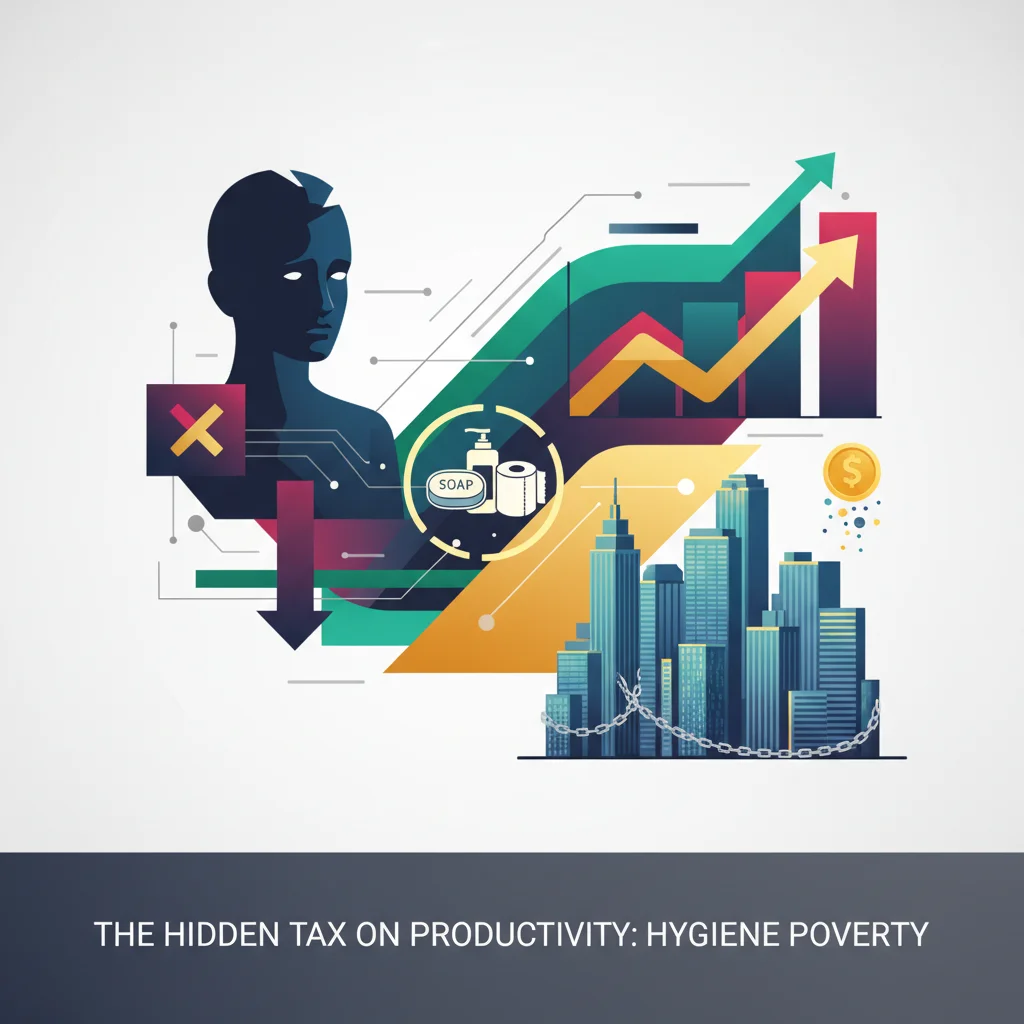
The Hidden Tax on Productivity: Why Hygiene Poverty is a Critical Economic Indicator for Investors
An Invisible Crisis with Tangible Economic Consequences
In one of the world’s leading financial capitals, a silent struggle is unfolding that has profound implications for the economy, corporate performance, and investment strategy. A startling report has revealed that nearly a third of all Londoners are currently experiencing ‘hygiene poverty’—the inability to afford basic sanitation and personal care products like soap, deodorant, and period products. According to the charity In Kind Direct, 32% of the city’s population has had to cut back on or go without these essentials due to financial pressures.
While this is a deeply human issue, for business leaders, investors, and finance professionals, it is also a critical economic indicator. This isn’t just about charity; it’s about the foundational health of our workforce, the stability of consumer markets, and the hidden drags on economic productivity. As the charity aptly states, “No-one should miss out on opportunities because they can’t afford soap or period products.” This statement cuts to the heart of the economic argument: hygiene poverty is a barrier to opportunity, and a barrier to opportunity is a drag on growth.
This analysis will dissect the financial and economic implications of hygiene poverty, exploring its ripple effects on everything from individual productivity to corporate earnings and the broader economy. We will examine how this social issue intersects with the worlds of investing, banking, and financial technology, and why addressing it is not just a moral imperative but a strategic economic one.
The Macro and Microeconomics of a Bar of Soap
To understand the full impact, we must first appreciate the scale of the problem. Hygiene poverty is a direct consequence of the cost-of-living crisis, where inflation on essential goods outpaces wage growth. For millions, the choice is no longer between brands, but between eating a meal or buying toothpaste. This creates a cascade of negative economic effects at both the micro and macro levels.
The Individual Impact: A Drag on Human Capital
At the microeconomic level, the inability to maintain personal hygiene directly impacts an individual’s ability to participate in the economy. The consequences include:
- Reduced Employability: Candidates may avoid or perform poorly in job interviews due to a lack of confidence and the fear of social judgment, limiting their access to better-paying jobs.
- Workplace Absenteeism and Presenteeism: Employees may miss work due to health issues linked to poor hygiene or stay home to avoid social interaction. Even when present, their focus and productivity can be severely hampered by anxiety and discomfort.
- Health Complications: Lack of access to basic hygiene can lead to preventable health conditions, increasing the burden on public healthcare systems and resulting in more sick days, further reducing economic output.
Consider the monthly cost of a basic hygiene basket for an individual. While seemingly small, for a household on a tight budget, these costs represent a significant portion of discretionary income.
Below is an estimated breakdown of monthly essential hygiene costs, illustrating the financial pressure on low-income households.
| Product Category | Estimated Monthly Cost (per person) | Annual Cost (per person) |
|---|---|---|
| Soap / Body Wash | £3 – £5 | £36 – £60 |
| Shampoo / Conditioner | £4 – £7 | £48 – £84 |
| Toothpaste / Dental Care | £3 – £6 | £36 – £72 |
| Deodorant | £2 – £4 | £24 – £48 |
| Laundry Detergent | £5 – £8 | £60 – £96 |
| Period Products (if applicable) | £4 – £10 | £48 – £120 |
| Total Annual Estimate | £252 – £480 |
This annual cost of up to £480 per person is a “hygiene tax” on the poor, diverting funds that could otherwise be spent on food, education, or other goods and services that stimulate the economy.
The Silent Crash: How Japan's Demographic Crisis Will Reshape the Global Economy
The Macroeconomic Fallout
When a third of a major city’s population is affected, these micro-level struggles aggregate into a significant macroeconomic problem. The wider economy suffers from a less healthy, less confident, and less productive workforce. This translates into lower GDP, reduced tax revenues, and increased social welfare costs. For companies, it means a smaller pool of effective talent and a customer base with constrained purchasing power. This can directly impact the performance of companies on the stock market, particularly in the consumer discretionary and retail sectors.
The Role of Finance and Technology in Forging a Solution
The financial industry, from global banks to nimble fintech startups, is uniquely positioned to be part of the solution. This is not merely about philanthropy; it’s about market-building, risk mitigation, and identifying new opportunities for sustainable growth.
An ESG Investing Imperative
For the modern investor, hygiene poverty is a material ‘Social’ factor within the ESG (Environmental, Social, and Governance) framework. How a company addresses this issue reveals much about its corporate culture, its understanding of its customer base, and its long-term viability.
- Corporate Responsibility: Consumer goods companies that actively work to make their products accessible through donations, lower-cost options, or partnerships with charities demonstrate strong social governance. This builds brand loyalty and a resilient customer base.
- Employee Welfare: Companies that provide support to their own low-wage workers, perhaps through wellness stipends that can be used for essentials, are investing in their own human capital. This reduces turnover and increases productivity, which are key metrics for investors.
- Supply Chain & Community Impact: A company’s commitment to the economic health of the communities in which it operates is a sign of a sustainable business model. Investors should scrutinize companies for their role in addressing—or ignoring—issues like hygiene poverty.
The research by In Kind Direct highlights the scale of the need, providing a clear data point for investors to use when evaluating the ‘S’ in ESG.
The Great Pharma Migration: Why Europe is Losing Billions in Investment to the US
Leveraging Financial Technology (Fintech) for Social Good
The world of financial technology is built on creating efficiency and access. While often focused on trading or payments, these same tools can be deployed to combat hygiene poverty:
- Digital Vouchers & Targeted Aid: Fintech platforms can partner with charities and local governments to distribute digital vouchers specifically for hygiene products. This ensures aid is used as intended and provides valuable, anonymized data on need hotspots.
- “Round-Up” Donations: Banking apps can integrate features allowing users to round up their purchases to the nearest pound, with the difference being donated to charities tackling hygiene poverty. This micro-donation model can aggregate into significant funding.
- Transparent Supply Chains with Blockchain: For corporate and philanthropic donors, blockchain technology can offer an immutable ledger to track donations. A company could fund a specific pallet of soap and track its journey from the warehouse to the specific community center that receives it, ensuring transparency and accountability.
- AI-Powered Budgeting Tools: Advanced banking apps could use AI to help low-income users budget for essentials, identify deals on hygiene products, and connect them with local support services when their spending patterns indicate financial distress.
A Path Forward: A Multi-Stakeholder Approach
Solving a problem as pervasive as hygiene poverty requires a concerted effort from all sectors of the economy. It is a complex issue rooted in economics, and its solution must be equally grounded in sound financial and strategic principles.
1. Corporate Strategy: Businesses, particularly in the consumer goods and retail sectors, must move beyond seasonal charity drives. They should integrate affordability and accessibility into their core business models. This could include tiered product lines, partnerships with social enterprises, or direct support programs for communities.
2. Investor Action: The investment community holds significant power. By demanding greater transparency on social impact metrics and prioritizing companies that actively contribute to community stability, investors can drive meaningful change. ESG is not a passive checklist; it is an active investment strategy that recognizes that social health and market health are intertwined.
3. Government Policy: Sensible policy, such as removing VAT from all essential hygiene items (not just period products), can provide immediate relief. Public-private partnerships can also scale up the distribution of products through schools, community centers, and healthcare facilities.
The Narco-Dollar Economy: Decoding the Fall of a Drug Empire and Its Impact on Global Finance
Conclusion: An Investment in Dignity is an Investment in Growth
The fact that one-third of Londoners struggle to afford soap is not just a headline; it’s a data point that signals a deep-seated fragility in our economy. It represents a significant portion of the population unable to participate fully in economic life, a hidden tax on productivity, and a brake on our collective potential.
For those in finance, business, and investing, the challenge is to look past the spreadsheets and stock tickers and see the fundamental human factors that truly drive the economy. Addressing hygiene poverty is not an act of charity—it is a strategic investment in our human capital, a necessary step to building a more resilient and prosperous society, and a powerful driver for sustainable, long-term economic growth. The cost of inaction, measured in lost productivity, poor health, and diminished opportunity, is a price none of us can afford to pay.

Related Posts
Beyond the Burger: Why McDonald’s Harassment Allegations Are a Red Flag for Investors
Beyond the Golden Arches: Why McDonald’s Labor Scandal is a Major Red Flag for Investors