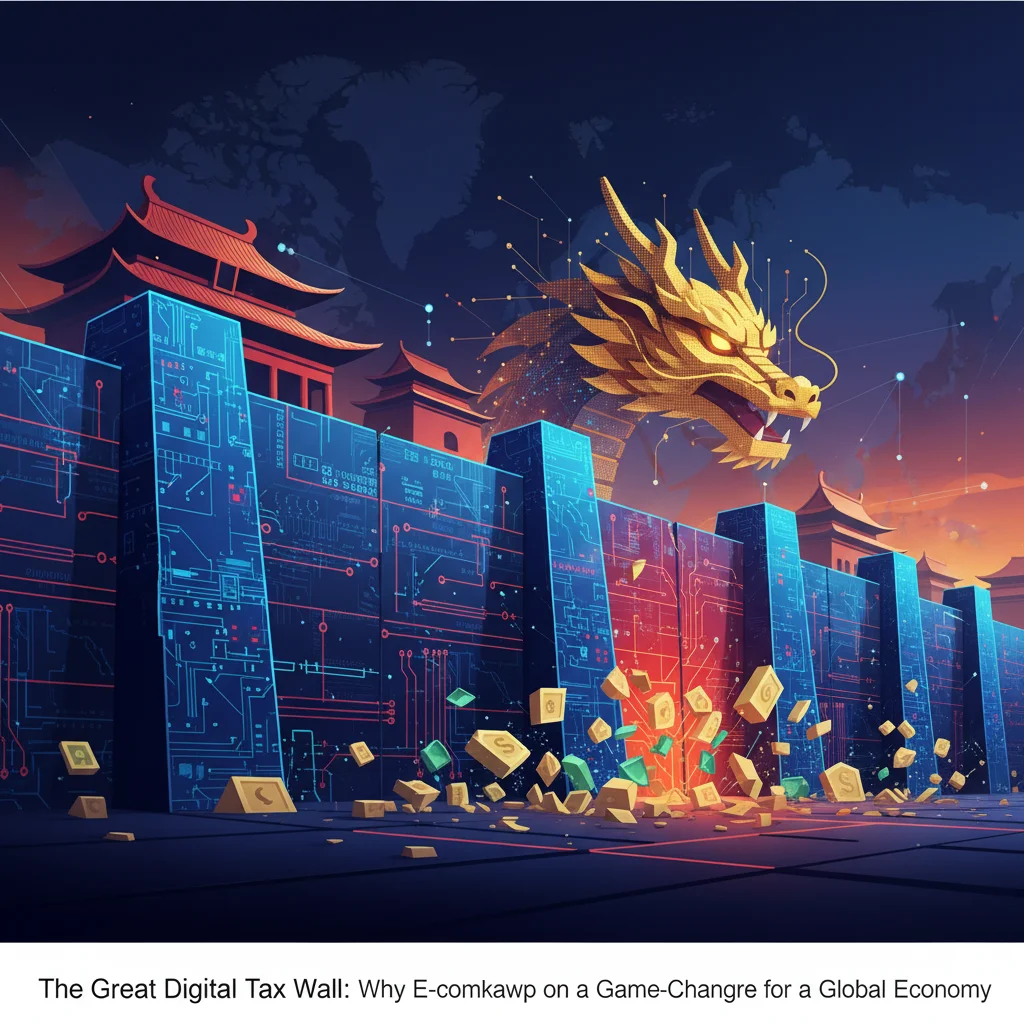
The Great Digital Tax Wall: Why Beijing’s Crackdown on E-commerce is a Game-Changer for the Global Economy
The Dragon Awakens: Beijing Sets its Sights on E-commerce’s Untaxed Billions
For years, China’s sprawling digital marketplace has been a modern-day Wild West—a dynamic, high-growth frontier where billions are made, and tax obligations have often been a secondary concern. That era is definitively over. As China’s economic engine begins to sputter, facing headwinds from a property crisis and slowing global demand, Beijing is turning its powerful regulatory gaze inward, targeting the vast, under-taxed world of online vendors. This isn’t merely a bureaucratic shuffle; it’s a seismic shift in China’s economic policy with profound implications for global finance, investing, and the future of digital commerce.
The central government is embarking on a sweeping tax crackdown aimed at bolstering state revenues, a move that the Financial Times reports is essential to compensate for slowing economic growth. This campaign signals a new phase in the relationship between the state and the country’s vibrant private sector, particularly the tech giants and the millions of small merchants who power its e-commerce platforms. For investors and business leaders, understanding the nuances of this crackdown is no longer optional—it’s critical for navigating the evolving landscape of the world’s second-largest economy.
A Slowing Economy and a Pressing Need for Revenue
To grasp the “why” behind this crackdown, one must first look at China’s macroeconomic pressures. The post-pandemic recovery has been weaker than anticipated, with the nation’s GDP growth targets becoming harder to reach. The property sector, once a primary driver of the economy, is mired in a deep crisis, impacting local government finances that heavily relied on land sales for revenue. According to the International Monetary Fund, China’s local governments face a significant “funding gap,” creating immense pressure to find alternative and more stable sources of income.
This is where the digital economy enters the picture. China’s e-commerce market is the largest in the world, with transaction volumes that dwarf those of the U.S. and Europe combined. However, a significant portion of this activity has historically operated in a grey zone, with many online sellers under-reporting income or failing to issue official invoices, known as fapiao, to evade taxes.
The scale of this untapped revenue is staggering. Below is a comparison highlighting the explosive growth of the digital retail sector against the backdrop of the broader economy, illustrating why it has become such an attractive target for tax authorities.
| Metric | 2018 | 2023 (Estimate) | 5-Year Growth |
|---|---|---|---|
| China Online Retail Sales | ~$1.33 Trillion USD | ~$2.88 Trillion USD | ~116% |
| China’s Nominal GDP | ~$13.89 Trillion USD | ~$19.37 Trillion USD | ~39% |
| E-commerce as % of Total Retail | ~23.6% | ~46% | Significant Deepening |
Data synthesized from sources including Statista and national economic reports.
This table clearly shows that the digital economy has been outgrowing the national economy by a significant margin. For a government desperate to shore up its fiscal position without resorting to broad-based tax hikes on its citizens, enforcing existing tax laws on this booming sector is the most logical, albeit challenging, path forward.
The Circular Economy's Hidden Engine: How Second-Hand Fashion is Reshaping Global Finance
The ‘Golden Tax System’: How Big Data is Closing the Loophole
Executing such a widespread crackdown is a monumental task, but China has been building the necessary technological infrastructure for years. The key weapon in the state’s arsenal is the “Golden Tax System,” a sophisticated nationwide digital network designed to monitor business transactions and tax payments in near real-time.
Initially launched to combat value-added tax (VAT) fraud, the system’s latest iteration, Phase IV, leverages big data, cloud computing, and AI to create a comprehensive profile of a company’s entire financial footprint. It can cross-reference data from multiple sources—banking records, social security payments, customs declarations, and e-commerce platform data—to flag discrepancies and identify potential tax evasion. This move transforms the financial technology landscape from a tool for commerce into a powerful instrument of state oversight.
As one tax adviser noted in the FT article, authorities are now demanding that online vendors “self-correct” their past tax filings, a clear signal that the government has the data to identify non-compliance (source). The era of operating under the radar is over. This technological leap has profound implications, potentially even setting a global precedent for how governments use fintech to enforce fiscal policy in the digital age. The transparency it enforces could, in the long run, make systems like blockchain more appealing for supply chain and transaction verification, as companies seek immutable records to prove compliance.
The Elephant in the Room: Could a UK Return to the EU Customs Union Redefine its Economic Future?
Ripple Effects: What This Means for the Stock Market, Investors, and Global Business
The implications of this tax crackdown extend far beyond China’s borders, creating both risks and opportunities for the global investment community.
- Impact on Tech Giants and the Stock Market: For platform companies like Alibaba, Pinduoduo, and JD.com, the new environment is a double-edged sword. On one hand, increased compliance costs for their millions of third-party vendors could potentially slow transaction growth and squeeze margins. On the other, it levels the playing field, formalizes the market, and could lead to a more stable, predictable operating environment. Investors in the Chinese stock market must now factor in this heightened regulatory scrutiny as a permanent feature, adjusting their valuation models to account for higher compliance overhead across the sector.
- The Squeeze on Small and Medium-Sized Vendors: The primary targets are the millions of small businesses that form the backbone of China’s e-commerce ecosystem. Many have built their business models on thin margins, where tax avoidance was a key factor in their profitability. The enforcement of tax laws will inevitably lead to price increases for consumers and could drive many smaller, less efficient players out of the market. This consolidation could benefit larger, more established brands.
- Global Supply Chains and Trading: International businesses that source products from smaller vendors in China may face rising costs and potential supply chain disruptions as their partners grapple with new tax burdens. The cost of “Made in China” goods sold through platforms like Amazon and Shopify is likely to increase, impacting inflation and consumer spending globally. Effective trading strategies will need to account for this new cost layer.
A Pillar of ‘Common Prosperity’
It is a mistake to view this tax enforcement campaign in isolation. It is a crucial component of President Xi Jinping’s overarching “Common Prosperity” agenda—a national strategy aimed at reducing wealth inequality and ensuring more sustainable, equitable growth. By ensuring online businesses pay their fair share of taxes, Beijing is not only boosting its own revenues but also leveling the playing field with traditional brick-and-mortar retailers, who have long complained about the unfair tax advantages of their digital competitors.
This policy aligns with a broader state-led effort to reassert control over the private sector and direct the flow of capital towards national strategic priorities rather than consumer tech. The era of unchecked capitalism in China’s digital sphere has given way to a new paradigm of state-guided development. For anyone involved in economics or finance related to China, understanding this political philosophy is as important as analyzing a balance sheet.
The Ramen Principle: What a Noodle Bar Can Teach Us About Core Asset Investing
Conclusion: Navigating the New Normal
China’s tax crackdown on its e-commerce sector is a landmark event, marking the maturation of the world’s largest digital market and a fundamental shift in the country’s economic governance. It is a direct response to slowing growth and a proactive step to secure the nation’s fiscal future. While it will undoubtedly create short-term pain for many businesses and introduce new volatility for investors, it also signals a move towards a more regulated, transparent, and potentially more stable market in the long run.
For global investors, finance professionals, and business leaders, the message is clear: the rules of engagement in China have changed. Success will no longer be defined by rapid, unchecked growth, but by adaptability, compliance, and a keen understanding of the state’s evolving priorities. The Great Digital Tax Wall of China is being erected, and navigating its gates will require more diligence and strategic insight than ever before.

Related Posts

Beyond the Classroom: An Investor’s Guide to the Economic Fallout of UK School Fee VAT

China’s Demographic Gambit: Why a Condom Tax and Childcare Subsidies Are a Major Signal for Global Investors
