Geopolitical Earthquake: The Financial Aftermath of Maduro’s Capture and the Future of Venezuela’s Economy
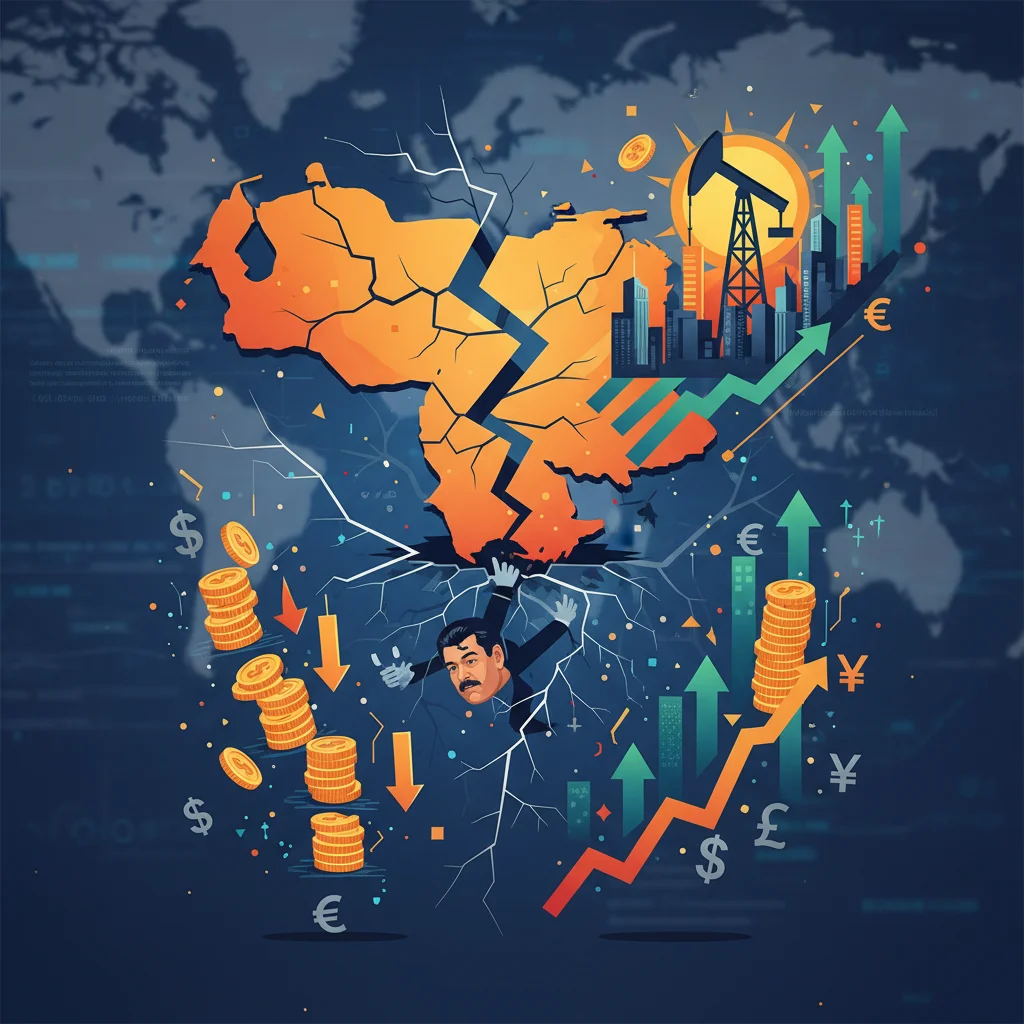
In a move that has sent shockwaves through global political and financial circles, United States Special Operations forces have successfully apprehended Venezuelan President Nicolás Maduro in a swift, pre-dawn raid on the Miraflores Palace in Caracas. The leader was subsequently flown to New York, an event confirmed by a terse White House statement. The geopolitical tremor was immediately amplified by a characteristically blunt comment from the US President, who declared the US will now “run” Venezuela, a statement that has thrown global markets into a tailspin and redrawn the map of international relations overnight.
This unprecedented action marks the culmination of years of escalating tensions, sanctions, and diplomatic standoffs. But beyond the political theater, the event has unleashed a torrent of questions and uncertainties for investors, business leaders, and financial institutions worldwide. The capture isn’t just the end of a regime; it’s the beginning of a radical, high-stakes experiment in nation-rebuilding, with Venezuela’s vast oil reserves and shattered economy at its core. This analysis will dissect the immediate market fallout, explore the monumental economic challenges and opportunities ahead, and assess the far-reaching implications for global finance and investing.
Operation Liberty Echo: The Raid That Shook the World
Details emerging from Pentagon sources paint a picture of a meticulously planned operation, reportedly codenamed “Operation Liberty Echo.” The raid was characterized by its surgical precision, leveraging advanced intelligence and what insiders describe as cutting-edge financial technology to track asset flows and pinpoint Maduro’s exact location. “The operation was executed with minimal collateral damage, a testament to the sophisticated surveillance capabilities employed,” a senior defense official was quoted as saying in the Financial Times. The dramatic capture and extradition have effectively decapitated the existing regime, creating a power vacuum that Washington now seems intent on filling directly.
The implications of this direct intervention are profound. For years, the international community has debated how to address the humanitarian and economic crisis in Venezuela. Now, that debate has been rendered moot. The United States has crossed the Rubicon, betting that direct control can succeed where sanctions failed. This high-risk “Caracas Gambit” now pivots from a military success to an economic marathon, the outcome of which is anything but certain.
The Ramen Principle: What a Noodle Bar Can Teach Us About Core Asset Investing
Market Mayhem: The Immediate Financial Fallout
The reaction on the global stock market was instantaneous and brutal. As the news broke, futures trading halted multiple times, and the opening bell was met with a wave of panic selling, followed by frantic, speculative buying. The CBOE Volatility Index (VIX), often called the market’s “fear gauge,” spiked over 40% in the first hour of trading (source).
The most dramatic swings were seen in the energy sector. Venezuela sits on the world’s largest proven oil reserves, and the prospect of a US-led administration rebooting its crippled production capacity sent crude prices plummeting. Brent and WTI crude futures fell by over 15% on the news, the sharpest single-day drop in years. Conversely, shares in defense contractors and private military companies surged on the expectation of lucrative security and logistics contracts.
Perhaps the most fascinating area for speculative investing is in Venezuelan sovereign debt. The country’s bonds have been in default for years, trading for pennies on the dollar. Overnight, these distressed assets have become lottery tickets. The prospect of a US-backed government honoring or restructuring this debt has created a frenzy among hedge funds and institutional investors specializing in distressed assets.
Below is a snapshot of the immediate market reaction across key asset classes:
| Asset Class | Pre-Event Status | Immediate Post-Event Reaction | Key Driver / Implication |
|---|---|---|---|
| WTI Crude Oil | Stable (~$80/barrel) | -15% (Plummeted to ~$68/barrel) | Anticipation of massive new supply flooding the market. |
| Venezuelan 2027 Bonds | Trading at 8 cents on the dollar | +250% (Spiked to 28 cents on the dollar) | Speculation of debt restructuring and repayment by a new government. |
| US Defense Sector ETF (e.g., ITA) | Stable | +8% | Expectation of contracts for security, reconstruction, and logistics. |
| Latin American Currencies | Varies by country | High volatility, general weakening vs USD | Regional instability and uncertainty; flight to safety in the USD. |
The Blueprint for a New Economy: Dollars, Blockchain, and Banking
The task of rebuilding Venezuela’s economy is Herculean. Hyperinflation has rendered the bolívar worthless, the banking infrastructure has collapsed, and industrial capacity outside of the oil sector is virtually non-existent. A US-led provisional government would likely pursue a radical, multi-pronged strategy.
1. Currency Stabilization: The first order of business is to kill hyperinflation. The most probable path is an official dollarization of the economy, immediately providing a stable unit of account. However, a more forward-thinking approach, leveraging fintech, is also being discussed. Some technologists propose leapfrogging traditional systems entirely by introducing a new digital currency. This could be a Central Bank Digital Currency (CBDC) built on a blockchain, potentially backed by a fraction of the country’s oil reserves. Such a move would provide transparency, reduce corruption, and create a modern financial ecosystem from scratch.
2. Rebuilding the Energy Sector: Revitalizing the state-owned oil company, PDVSA, will require tens of billions in foreign investment. This presents a monumental opportunity for international oil majors and service companies. The challenge will be navigating the legal framework of nationalized assets and establishing new production-sharing agreements that are both profitable and politically palatable (source).
3. Modernizing the Banking Sector: With the local banking system in ruins, there is a clean slate for international banks and innovative financial technology firms. The widespread use of mobile phones in Venezuela, even amidst poverty, opens the door for a mobile-first banking revolution, providing financial services to a population long cut off from the global economy.
The Week in Review: 5 Critical Market Signals and What They Mean for Your Portfolio
The Geopolitical Chessboard: A World Reacts
The US intervention has not occurred in a vacuum. The global reaction has been swift and divided, setting the stage for a new era of great power competition in Latin America.
China and Russia: As Venezuela’s primary lenders and strategic allies, Beijing and Moscow have condemned the operation as a flagrant violation of international law. Both nations have billions of dollars in loans-for-oil deals at stake. Their response will be critical. Retaliatory measures could range from UN Security Council vetoes and economic sanctions against US interests to more covert actions, such as cyberattacks or backing a local insurgency. The stability of global trading and supply chains could be threatened by their response.
Latin America: The reaction from regional neighbors is a mixture of quiet approval and public condemnation. Countries that have borne the brunt of Venezuela’s refugee crisis may privately welcome the stability, but no leader can afford to publicly endorse such a brazen breach of national sovereignty. Regional blocs like Mercosur and the Organization of American States are facing an existential crisis over how to respond.
OPEC: The oil cartel is in disarray. The prospect of a US-controlled Venezuela ignoring production quotas and maximizing output to fund reconstruction threatens to upend OPEC’s delicate balancing act, potentially leading to a prolonged period of lower oil prices and internal strife within the organization.
The Elephant in the Room: Could a UK Return to the EU Customs Union Redefine its Economic Future?
Conclusion: A High-Stakes Gamble for the Global Economy
The capture of Nicolás Maduro is not an endpoint but the explosive start of a new, uncertain chapter for Venezuela and the world. For investors and business leaders, the situation presents a duality of unprecedented opportunity and catastrophic risk. The potential for rebuilding a nation from the ground up, unlocking the world’s largest oil reserves, and creating a modern financial system is a powerful lure. The potential for a military quagmire, geopolitical conflict with China and Russia, and a collapse of the fragile global order is a terrifying deterrent.
The coming months will be critical. The world will watch to see if the US can translate a military victory into a sustainable economic and political success. The decisions made in Washington and Caracas will not only determine the fate of 30 million Venezuelans but will also set a new and dangerous precedent in international affairs, shaping the landscape of global economics and finance for decades to come.