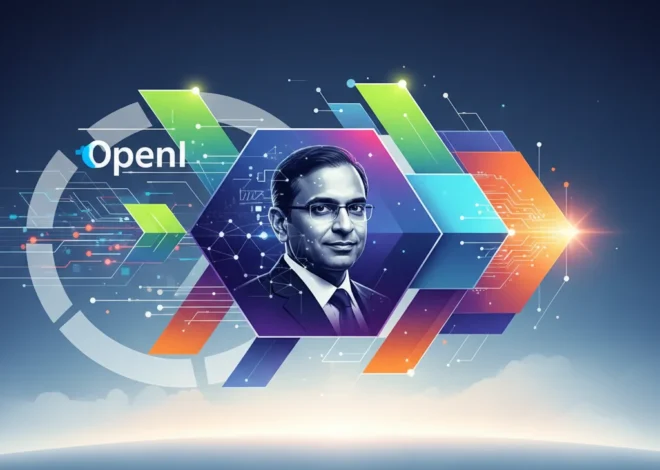
Yann LeCun’s AI Heresy: Why a Godfather of AI is Betting Against the ChatGPT Hype
In a world completely mesmerized by the seemingly magical abilities of Large Language Models (LLMs) like ChatGPT, one of the industry’s founding fathers is waving a giant caution flag. Yann LeCun, a Turing Award winner and Chief AI Scientist at Meta, isn’t just questioning the current direction of artificial intelligence—he’s actively building an alternative path. In a revealing interview with the Financial Times, LeCun announced he’s stepping down from his management role at Meta to focus on research and, more importantly, to launch a new startup. This isn’t just a career change; it’s a statement. LeCun believes that true intelligence is about learning and understanding the world, not just mastering language. And he’s betting his reputation on it.
For developers, entrepreneurs, and tech leaders, this is a pivotal moment. It signals that the AI revolution might be heading for a major plot twist. The tools and platforms we’re building today might be based on a foundation that one of its own architects deems fundamentally limited.
The Great “Off-Ramp”: LeCun’s Critique of Large Language Models
For the past few years, the world of software and tech innovation has been dominated by the generative AI boom. LLMs have become the go-to foundation for thousands of startups and new features, powering everything from chatbots to complex automation workflows. But according to LeCun, this might be a colossal mistake.
He famously described the current pursuit of building ever-larger language models as an “off-ramp” on the highway to Artificial General Intelligence (AGI). In his view, these systems are fundamentally flawed because they lack a crucial component of intelligence: a grounded understanding of reality. They are trained exclusively on text, a vast but ultimately limited dataset that doesn’t capture the physics, cause-and-effect, or common sense that governs the real world.
This leads to several critical problems:
- Hallucinations: Because LLMs don’t truly “know” anything, they often invent facts, sources, and details. For applications in sensitive fields like finance or medicine, this isn’t just an annoyance—it’s a catastrophic failure.
- Lack of Reasoning: They can mimic the patterns of logical text, but they can’t reason from first principles. Ask one a simple physics puzzle it hasn’t seen in its training data, and it will likely fail.
- No Planning Ability: True intelligence involves setting goals and planning a sequence of actions to achieve them. LLMs are reactive, predicting the next word, not planning the next ten steps. This severely limits their use in complex automation and robotics.
LeCun argues that intelligence is not a linguistic phenomenon. As he points out, babies and many animals learn, remember, and navigate the world with incredible sophistication long before they develop language. They do this by observing, experimenting, and building an intuitive “world model.” This, he believes, is the real key to unlocking the next level of artificial intelligence.
The AI Gold Rush: Navigating the Boom, the Bubble, and the Tectonic Shift Ahead
Beyond Words: Building AI That Understands the World
So, if LLMs are the “off-ramp,” what’s the main highway? For LeCun, the answer lies in building systems that can learn and reason about the world through observation, much like a human infant. His primary research focus is on a concept called Joint Embedding Predictive Architecture (JEPA).
Instead of training a model to predict the next word in a sentence, JEPA is designed to learn an internal model of how the world works by watching videos and other sensory data. It learns to predict what will happen next in a more abstract, conceptual way. For example, if it sees a video of a ball being dropped, it doesn’t just learn to describe the scene in words; it learns the underlying concept of gravity and can predict the ball’s trajectory. This is a monumental shift from text-in, text-out systems to a model that builds genuine, albeit simulated, common sense.
To understand the profound difference, consider this comparison:
| Feature | Large Language Models (Current AI) | World Models (LeCun’s Vision) |
|---|---|---|
| Core Function | Predict the next word in a sequence. | Predict future states of the world in an abstract space. |
| Learning Method | Trained on massive text datasets (books, websites). | Trained on multi-modal data, especially video, to learn cause-and-effect. |
| Understanding of Reality | None. It only knows statistical relationships between words. | Develops an internal, causal model of how the world works. |
| Key Limitation | Prone to “hallucinations” and lacks common-sense reasoning. | Enormous computational and data requirements; conceptually very difficult. |
| Potential Applications | Content creation, chatbots, summarization, basic code generation. | Advanced robotics, self-driving vehicles, scientific discovery, complex automation. |
The implications for the software and startup ecosystem are immense. An AI built on a world model could power truly intelligent automation, design complex engineering solutions, or even help scientists form new hypotheses by running simulations grounded in a learned understanding of physics and chemistry.
From Meta’s Labs to a New Startup: Putting Theory into Practice
Talk is cheap, especially in the echo chamber of AI research. What makes LeCun’s position so compelling is that he’s backing it up with action. By stepping away from the day-to-day management of Meta’s 800-person AI lab—a role he’s held since 2013—he’s freeing himself up to dive deep into the science and commercialization of his vision.
His yet-unnamed startup aims to build the foundational components for this new wave of AI. This is a direct challenge to the dominance of companies like OpenAI and Google. While they focus on scaling their text-based models, LeCun will be trying to build something fundamentally different. This move also aligns with his fierce advocacy for open-source innovation. He has been a vocal critic of the closed, proprietary models that have come to dominate the industry, arguing that open collaboration is the fastest and safest path to progress.
For entrepreneurs, this is a powerful lesson. It’s a reminder that even in a market that seems consolidated around a few major players and a single technology (LLMs), there is always room for a disruptive, first-principles approach. The future of AI is not yet written, and the programming and machine learning paradigms of tomorrow might look very different from today’s API calls to a cloud-based LLM.
What This AI Paradigm Shift Means for You
LeCun’s pivot isn’t just academic. It has tangible implications for anyone working in technology, from a junior developer to a startup founder.
- For Developers and Tech Professionals: Don’t get locked into a single toolset. While mastering LLM APIs is a valuable skill today, the future may demand expertise in computer vision, reinforcement learning, and building complex simulation environments. The future of programming may involve training models on real-world data, not just writing code.
- For Startups and Entrepreneurs: The biggest opportunities may lie in solving problems LLMs can’t. Think about industries where a physical understanding of the world is critical: manufacturing, logistics, robotics, and drug discovery. Building a SaaS platform that leverages a reasoning AI could create a moat that a simple text-based competitor could never cross. This is where true, defensible innovation will happen.
- For Cybersecurity: An AI that can reason and plan could revolutionize cybersecurity. Instead of just identifying patterns of known attacks, it could anticipate novel threats, simulate potential attack vectors on a network, and proactively devise defense strategies. This moves from reactive pattern-matching to proactive, intelligent automation.
The journey towards AGI is a marathon, not a sprint. While the current excitement around LLMs is a significant milestone, it’s crucial to listen to the pioneers who are looking further down the road. Yann LeCun, one of the three “godfathers of AI” who received the 2018 Turing Award, is pointing towards a future where intelligence is more than just clever wordplay. It’s about understanding. It’s about learning. And for those willing to build for that future, the opportunities are boundless.
Beyond the Firewall: Why a Spy Chief’s Warning is a Wake-Up Call for Every Developer and Startup
The question for all of us is whether we will continue down the well-trodden “off-ramp” of language models or if we’ll have the courage to follow pioneers like LeCun back onto the main highway, chasing a more ambitious and ultimately more powerful vision of what artificial intelligence can be.

Related Posts
Unleashing the Kraken: How an Energy Firm Built an $8.65 Billion Tech Titan
Beyond the Console Wars: Was Valve’s Steam Machine a Failed Experiment or a Prophecy for Gaming’s Future?