Beyond the Swipe: How AI and SaaS are Rebooting the Dating Industry for a Global Market
Remember the early days of dating apps? The thrill of the swipe, the endless carousel of faces, the gamified hunt for connection. For years, this model, pioneered by Tinder, dominated the digital dating landscape in the West. It was fast, fun, and addictively simple. But now, the dopamine rush is fading. A phenomenon known as “swipe fatigue” is setting in, leaving users jaded and market growth stagnant.
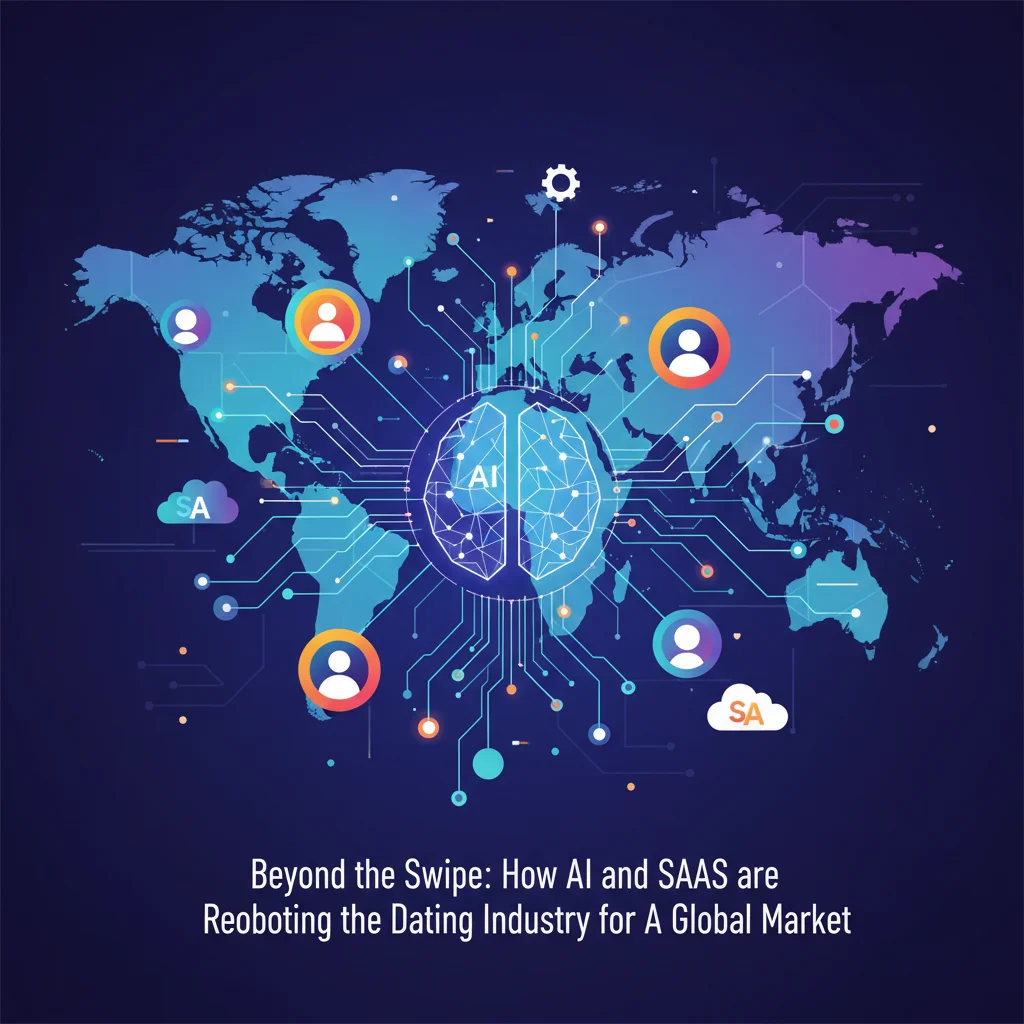
For tech giants like Match Group and Bumble, this isn’t a crisis—it’s a pivot. As the Western market reaches saturation, they’re turning their sights eastward to Asia, a region where the digital dating scene is not just growing, it’s evolving. This isn’t merely a geographic expansion; it’s a fundamental reinvention of the product, driven by different cultural norms, user intentions, and a whole lot of sophisticated software.
The story is no longer about casual connections. It’s about leveraging cutting-edge artificial intelligence, flexible SaaS models, and robust cloud infrastructure to serve a new wave of “goal-orientated” daters. For developers, entrepreneurs, and tech professionals, this shift offers a fascinating case study in product adaptation, market entry, and the future of consumer tech.
The Algorithm of Burnout: Deconstructing “Swipe Fatigue”
Before we look east, we have to understand what’s going wrong in the west. “Swipe fatigue” isn’t just a buzzword; it’s a symptom of a deeper user experience (UX) problem. The gamified, high-volume, low-intent model has led to several critical issues:
- Decision Overload: The human brain isn’t wired to meaningfully evaluate hundreds of potential partners in a single session. This leads to cognitive burnout and superficial judgments based on a single photo.
- Misaligned Incentives: The core loop—swiping—is designed for engagement, not necessarily successful outcomes. The longer you stay on the app swiping, the more data and potential revenue the platform generates. This can be at odds with the user’s goal of finding a relationship and leaving the app.
- Shallow Matching Algorithms: Early-generation machine learning models often relied on basic inputs: proximity, age, and a rudimentary “attractiveness” score based on who swipes right on whom. This often fails to capture the deeper nuances of compatibility, leading to a high volume of low-quality matches.
This burnout is reflected in the numbers. While these apps are still massive businesses, the explosive growth of the last decade has cooled. This has forced companies to seek new vectors for expansion, leading them to the vibrant and rapidly digitizing markets of Asia.
From Assembly Lines to Agile Sprints: Why Big Auto is Learning to Code Like a Startup
The New Frontier: Engineering for Intent in Asian Markets
The Asian market is not a monolith, but a diverse collection of cultures with varying attitudes towards dating. However, a common thread is emerging: a growing demand for platforms that facilitate serious, long-term relationships. The stigma once associated with online dating is fading, particularly among a rising class of educated, professional women who are taking control of their romantic lives.
According to the Financial Times, Match Group, which owns Tinder and Hinge, now generates 13 per cent of its direct revenue from the Asia-Pacific region, a number that is set to climb. This growth is fueled by a strategic shift away from the one-size-fits-all swipe model.
Here’s a look at the key differences in market dynamics and the required product response:
| Market Characteristic | Western Market (Legacy Model) | Asian Market (Emerging Model) |
|---|---|---|
| Primary User Goal | Broad spectrum: casual dating, hookups, relationships | Strong focus on serious relationships, marriage |
| User Behavior | High-volume, rapid “swiping” and gamification | More deliberate, thoughtful profile evaluation |
| Key Product Feature | The infinite swipe carousel | Curated matches, detailed profiles, conversation starters |
| Monetization Strategy | Freemium with boosts, “Super Likes,” and ad support | Premium subscription tiers with value-added services (e.g., advanced filtering, read receipts) |
This shift requires a complete rethink of the underlying technology. It’s no longer about quantity; it’s about quality. And that’s where AI and modern software architecture come into play.
The Tech Stack for True Connection: AI, SaaS, and Cybersecurity
Building a dating app for “goal-oriented” users is a far more complex engineering challenge. It requires a sophisticated tech stack that prioritizes depth, security, and personalization over simple volume.
1. The Evolution of Matchmaking AI
The next generation of dating apps is moving beyond collaborative filtering. The real innovation lies in using advanced machine learning to understand user intent and personality on a deeper level.
- Natural Language Processing (NLP): Instead of just photos, AI can now analyze the text in user bios, prompts, and even initial conversations to gauge personality traits, communication style, and relationship goals. This allows for matching based on genuine compatibility, not just shared hobbies.
- Behavioral Analysis: The platform can learn from how users interact. Who do they spend more time looking at? Whose profiles do they read thoroughly? This behavioral data provides a richer signal of preference than a simple left or right swipe.
- AI-Powered Icebreakers: To combat the dreaded “Hey,” some apps are using AI to suggest personalized opening lines based on shared interests found in two users’ profiles. This is a simple but effective use of automation to improve user outcomes.
This is a massive data-processing challenge that relies on scalable cloud infrastructure to run complex ML models in real-time for millions of users.
Nvidia's Shock Move: Is the AI Chip Giant Acquiring a Rival… or Just Its Brains?
2. The Flexibility of SaaS Business Models
The move towards intentional dating also changes the business model. While a free tier is still essential for user acquisition, revenue is increasingly driven by sophisticated SaaS subscriptions. Apps like Hinge have successfully demonstrated that users are willing to pay for a better experience. In fact, Hinge’s direct revenue grew 45 per cent in the last quarter of 2022 alone, showcasing the power of this premium, goal-oriented model.
These subscription tiers are no longer about getting more swipes; they offer tangible value, such as advanced filters for religion, education, or family plans, and features that provide more insight into who is interested in you. This aligns the company’s revenue goals with the user’s relationship goals.
3. The Non-Negotiable Role of Cybersecurity
As users share more personal and intimate data to get better matches, cybersecurity becomes paramount. A data breach on a dating app is not just a technical failure; it’s a catastrophic violation of trust. Startups and established players alike must invest heavily in:
- End-to-End Encryption: Protecting messages and personal data both in transit and at rest.
- Identity Verification: Using automation and AI to verify profiles and weed out scammers and bots, which is a major problem on less secure platforms.
- Data Privacy Controls: Giving users granular control over their data and visibility, which is especially important in more conservative markets.
A robust security posture is no longer a feature—it’s the foundation upon which user trust is built.
The Programming and Cultural Challenge
For a global company, entering the Asian market isn’t as simple as translating the app. It requires a deep commitment to localization that goes far beyond language. The programming and product teams must re-architect their platforms to be modular and culturally adaptable.
For example, Match Group’s acquisition of Hyperconnect in South Korea for $1.73bn was a strategic move to acquire local expertise and technology. They operate specific apps for specific cultures, like Pairs in Japan, which focuses on security and serious relationships, and Hawaya, designed for Muslim singles worldwide.
This strategy requires a microservices architecture, where different features and rule-sets can be deployed, tested, and customized for different regions without overhauling the entire codebase. It’s a testament to the idea that in a global marketplace, the most successful software is that which is built for adaptation from the ground up.
The Final Episode: How AI and Cloud Tech Are Writing the End of Broadcast TV
The Final Word: A New Chapter for Digital Connection
The great dating app pivot to Asia is more than just a business story; it’s a narrative about the maturation of an entire tech sector. It signals a move away from gamified distraction and towards technology that serves a fundamental human need: meaningful connection. This evolution is being powered by the latest advancements in artificial intelligence, cloud computing, and cybersecurity.
For the tech community, it’s a powerful reminder that the most enduring innovation comes from deeply understanding and respecting the end-user. The future of dating tech won’t be won by the app with the most swipes, but by the platform that uses sophisticated code to foster the most genuine relationships.