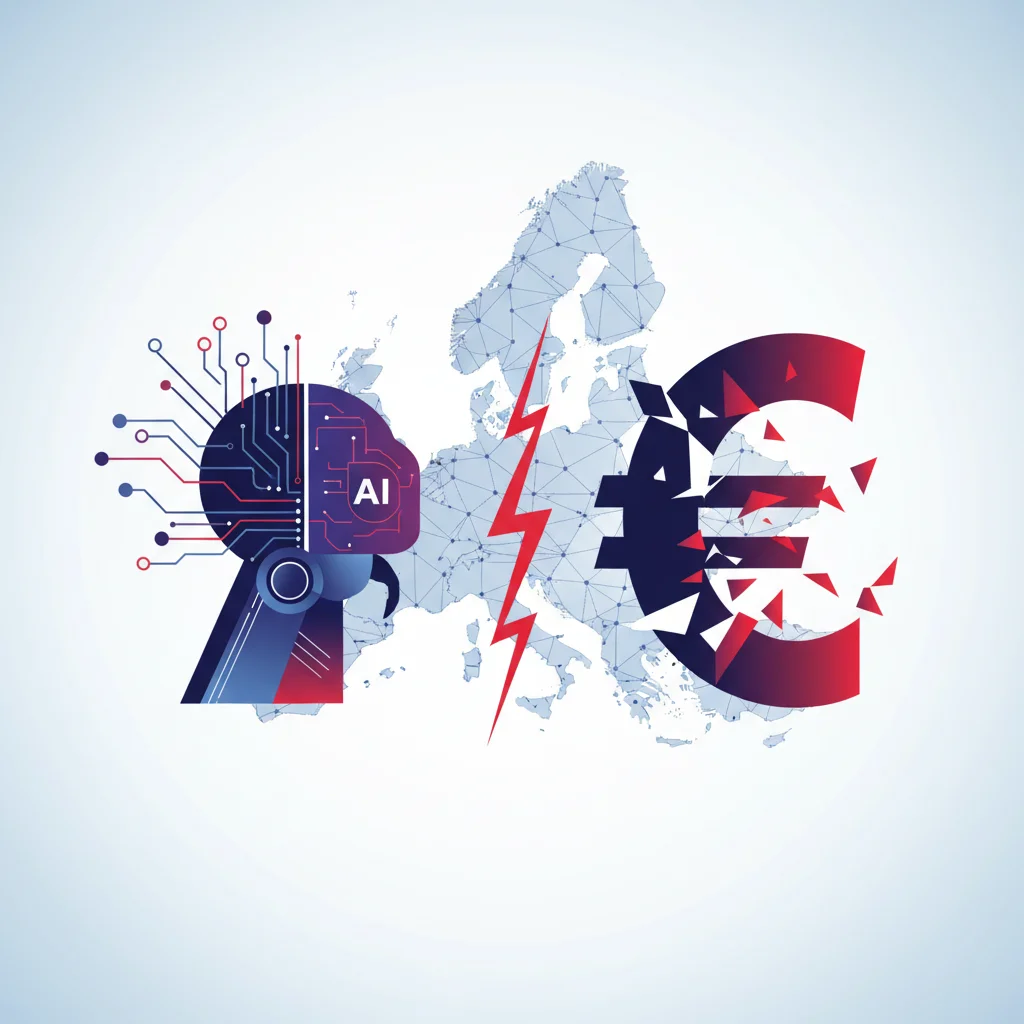
The Dual Threat: How AI and Austerity Are Reshaping European Banking Jobs
The European banking sector, long considered a bastion of stability and a cornerstone of the continent’s economy, is standing at a pivotal crossroads. A powerful confluence of forces—relentless pressure to cut costs and the meteoric rise of Artificial Intelligence—is creating a perfect storm set to radically transform its workforce. Tens of thousands of jobs are on the line, not in a distant, hypothetical future, but in the unfolding present. This isn’t just another cyclical downturn; it’s a fundamental restructuring of what a bank is and who it employs.
Recent reports highlight a growing sense of urgency within the boardrooms of Europe’s largest financial institutions. According to the Financial Times, a combination of AI integration and aggressive cost-cutting measures is putting a significant number of banking jobs at risk. But this is more than a headline. It’s a signal of a deep, structural shift impacting everything from retail banking to complex investment trading. For investors, finance professionals, and business leaders, understanding the nuances of this transformation is no longer optional—it’s critical for survival and success in the new financial landscape.
The Post-Pandemic Squeeze: Why Cost-Cutting is Back in Vogue
Before we delve into the technological disruption, it’s crucial to understand the economic pressures forcing the hands of banking executives. The era of near-zero interest rates is over, and while rising rates initially boosted bank profits, they have also slowed the broader economy, raising fears of loan defaults and dampening deal-making activity. This challenging macroeconomic environment, characterized by stubborn inflation and sluggish growth, has put a laser focus on operational efficiency.
Shareholders are demanding better returns, and with revenue growth constrained, the most direct lever to pull is cost reduction. This involves:
- Streamlining Operations: Consolidating back-office functions that were once spread across different departments or even countries.
- Branch Rationalization: Continuing the long-term trend of closing physical branches as customers migrate to digital-first banking.
- Headcount Reduction: Implementing targeted layoffs and hiring freezes in non-essential or automatable roles.
This push for a leaner operational model sets the stage perfectly for the second, more disruptive force: Artificial Intelligence. Banks aren’t just cutting costs; they’re reinvesting a portion of those savings into financial technology that promises even greater efficiencies down the line.
The Social Capital Dividend: What a Yorkshire Town Can Teach Wall Street About Real Investment
The AI Revolution: From Back Office Automation to Front Office Augmentation
Artificial Intelligence in finance is no longer a futuristic concept; it’s a deployed reality. The impact of AI and machine learning is being felt across the entire banking value chain, moving far beyond simple chatbots. This technological wave is a key driver of the job displacement flagged in recent analyses (source).
Breaking Down AI’s Impact on Banking Roles
To grasp the scale of this change, let’s look at how specific areas of banking are being revolutionized:
- Compliance and Risk Management: Traditionally, armies of analysts were needed to manually sift through transactions to detect money laundering (AML) and ensure Know Your Customer (KYC) compliance. AI algorithms can now analyze millions of data points in real-time, flagging suspicious patterns with far greater accuracy and speed than any human team.
- Credit and Lending: AI-powered models can assess creditworthiness by analyzing a much wider array of data than traditional FICO scores. This not only automates the loan application process for consumers but also enhances the sophistication of risk assessment for large corporate loans.
- Algorithmic Trading: In the world of trading, AI has been a dominant force for years. Machine learning algorithms execute trades based on complex market signals at speeds no human can match. Generative AI is now being explored to create novel trading strategies and market summaries for human traders.
- Customer Service & Wealth Management: While chatbots handle basic queries, more advanced AI is enabling “robo-advisors” that provide personalized investment advice at a fraction of the cost of a human advisor. This democratizes access to investing but also challenges the traditional wealth management model.
The following table illustrates the direct impact of this fintech revolution on traditional banking jobs and highlights the skills needed to stay relevant.
| Traditional Role | Key Responsibilities | AI Impact / Replacement Technology | Future Skillset Required |
|---|---|---|---|
| Compliance Analyst | Manual transaction monitoring, report filing. | AI-powered AML/KYC platforms, automated anomaly detection. | AI model oversight, data science, regulatory technology (RegTech) expertise. |
| Loan Officer | Manual credit assessment, customer interviews, paperwork. | Automated credit scoring models, digital application platforms. | Complex deal structuring, client relationship management, data interpretation. |
| Equity Research Analyst | Gathering data, building financial models, writing reports. | Generative AI for report summarization, ML for predictive modeling. | Strategic analysis, contrarian thinking, qualitative assessment, client communication. |
| Bank Teller | Cash handling, basic account services. | Advanced ATMs, mobile banking apps, AI-powered virtual tellers. | Digital product specialist, customer tech support, financial wellness coach. |
A Broader Trend of Systemic Disruption
The pressures on the European banking sector are not happening in a vacuum. They are part of a wider pattern of systemic change across the continent’s financial and corporate landscapes. Two other recent developments mentioned by the Financial Times serve as powerful parallel examples.
Case Study 1: The Dutch Pension Overhaul
The Netherlands is in the midst of a monumental overhaul of its €1.5 trillion pension system. This move from a collective, defined-benefit model to a more individualized, defined-contribution system is a response to modern economic and demographic realities. Just as banks are shedding legacy systems and job roles for AI-driven models, the Dutch pension system is re-engineering its entire structure to be more flexible, transparent, and sustainable. It’s a clear example of a traditional financial pillar adapting—out of necessity—to a new world, a process that inevitably involves re-evaluating roles and processes.
Case Study 2: Paramount and Warner Bros. Merger Talks
In the corporate world, the news of a potential bid by Paramount for Warner Bros. Discovery underscores a similar theme: consolidation as a response to immense pressure. The media industry, disrupted by streaming technology, faces a brutal competitive landscape. Mergers become a key strategy to achieve scale, cut redundant costs (which often means significant job losses), and combine resources to better compete. This mirrors the banking sector’s drive for efficiency. When an industry’s fundamental business model is challenged, consolidation and cost-cutting are often the first strategic responses.
Bethlehem's Silent Night: An Economic Bellwether for Investors in a Volatile World
Implications and The Path Forward
This dual threat of austerity and AI presents distinct challenges and opportunities for various stakeholders in the financial ecosystem.
For Investors and the Stock Market
Investors analyzing the banking sector must now look beyond traditional metrics like price-to-book ratios. The key differentiator will be a bank’s “technology dividend.”
- Look for Efficiency Leaders: Which banks are successfully lowering their cost-to-income ratios through smart technology investments?
- Assess Digital Strategy: A bank’s investment in fintech, AI, and even a thoughtful approach to blockchain technology is a leading indicator of future competitiveness.
- Beware of Execution Risk: Announcing an AI strategy is easy; implementing it is fraught with challenges, from data integration issues to cultural resistance. Investors should scrutinize execution capabilities.
In the long run, banks that successfully navigate this transition could emerge with higher margins, more resilient operations, and a stronger competitive position on the global stage.
For Finance Professionals
The message is clear: adapt or risk obsolescence. The era of a “job for life” based on a single skillset is over. The future of finance belongs to the “T-shaped” professional—one with deep expertise in a core area (the vertical bar of the T) and a broad understanding of technology, data, and business strategy (the horizontal bar).
Actionable steps include:
- Embrace Data Literacy: Learn the basics of data analysis, SQL, or even Python. You don’t need to be a coder, but you must be able to speak the language of data.
- Cultivate Soft Skills: As AI handles routine tasks, uniquely human skills like critical thinking, creativity, complex problem-solving, and emotional intelligence become more valuable than ever.
- Become a Lifelong Learner: The pace of change in financial technology is relentless. Stay curious and continuously update your knowledge on trends from generative AI to decentralized finance.
The Art Market's Paradox: Decoding the Revival for the Modern Investor
Conclusion: Navigating the New Financial Frontier
The European banking industry is at the epicenter of a seismic shift. The convergence of economic pressure to cut costs and the exponential growth of AI capabilities is not a passing storm but a change in the climate. While the prospect of widespread job cuts is daunting, it is also a catalyst for a necessary evolution.
The bank of the future will be leaner, more technologically advanced, and more efficient. The jobs within it will be less about processing and more about strategy, creativity, and human connection. For investors, the ability to identify the institutions managing this transition effectively will be key to unlocking value. For professionals, the willingness to upskill and embrace new technologies will be the ticket to a thriving career in a transformed industry. The road ahead will be challenging, but for those who adapt, it leads to a more dynamic and resilient future for European finance.

Related Posts
Caught in the Crossfire: A Survival Guide for Investing in Europe’s New Geopolitical Reality
Beyond the Delay: The Hidden Financial Fallout of the Eurostar Shutdown and What Investors Must Learn