Geopolitical Shockwaves: How US-Iran Tensions Could Reroute the Global Economy
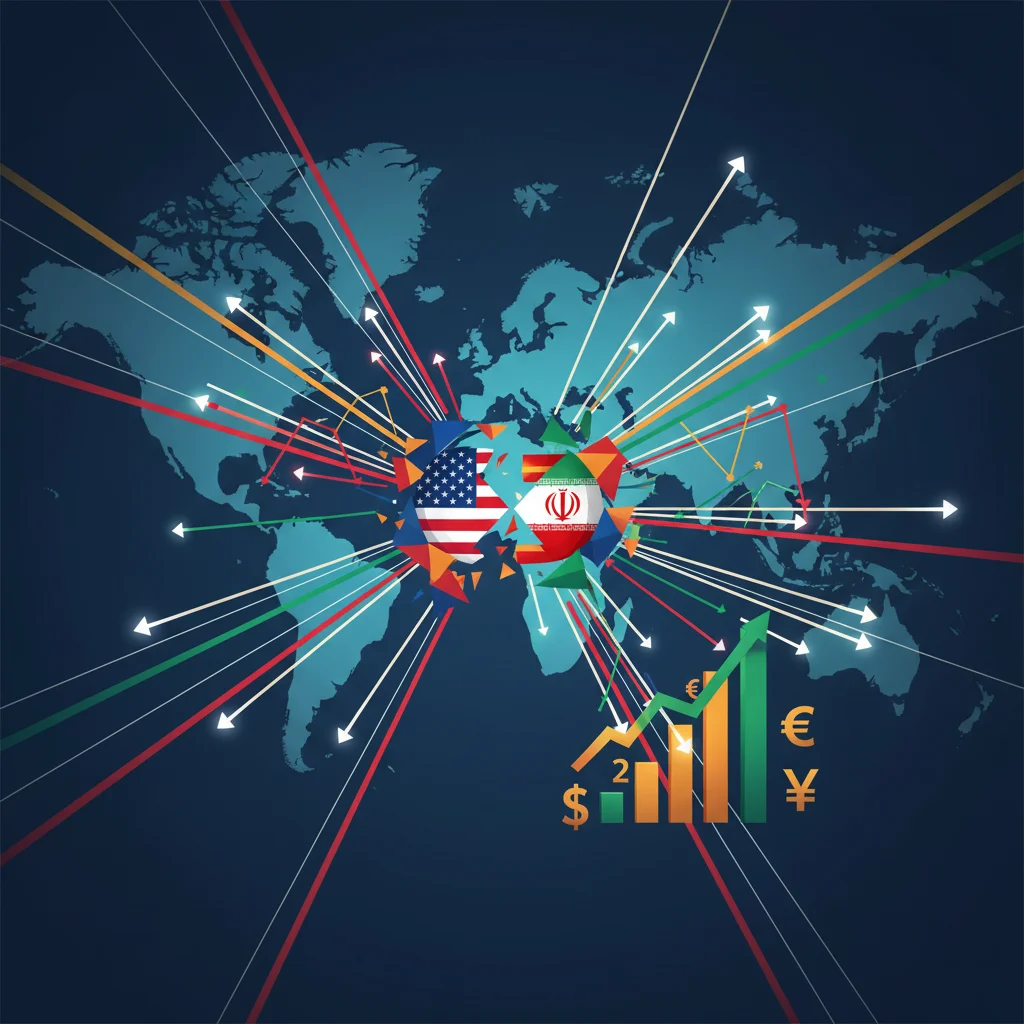
In the intricate dance of global politics, words from world leaders can carry the weight of armies and the disruptive force of market crashes. A recent declaration by the US President has sent fresh tremors through the international community, serving as a stark reminder of the fragile balance in the Middle East. Following discussions with Israeli Prime Minister Benjamin Netanyahu, the White House issued a stern warning to Iran against restarting its nuclear program, threatening significant strikes, while also giving Hamas a “very short period of time to disarm,” as reported by the Financial Times. While these headlines dominate foreign policy discussions, their true impact extends far beyond diplomatic circles, reaching deep into the global economy, influencing everything from the price of gasoline to the performance of your investment portfolio.
For investors, finance professionals, and business leaders, dismissing such events as distant political theater is a luxury we can no longer afford. The interconnectedness of the modern world means that a sabre-rattled in the Strait of Hormuz can trigger a tidal wave of volatility on the stock market floors of New York, London, and Tokyo. Understanding the potential economic fallout is not just an academic exercise; it is a critical component of robust risk management and strategic financial planning in the 21st century.
The Geopolitical Backdrop: A Decades-Old Standoff
To grasp the financial implications, one must first understand the context. The tension between the United States and Iran is not a new phenomenon. It’s a complex relationship defined by decades of mistrust, sanctions, and proxy conflicts. A central point of contention has been Iran’s nuclear ambitions. The 2015 Joint Comprehensive Plan of Action (JCPOA), commonly known as the Iran Nuclear Deal, was a landmark diplomatic effort to curb Iran’s nuclear activities in exchange for sanctions relief. However, the US withdrawal from the deal in 2018 and the subsequent re-imposition of a “maximum pressure” campaign of sanctions dramatically escalated tensions.
The recent statements add another layer of complexity. By linking Iran’s nuclear program directly with the activities of groups like Hamas, the situation becomes a multi-front pressure point. This rhetoric not only heightens the risk of direct military confrontation but also signals a potential intensification of economic warfare through sanctions and financial restrictions, impacting the global banking and trade ecosystems.
The Economic Contagion: From Oil Prices to Market Volatility
When tensions flare in the Middle East, the first and most immediate economic indicator to react is the price of crude oil. The region, particularly the Strait of Hormuz, is a critical chokepoint for global energy supplies. Approximately one-fifth of the world’s total oil consumption passes through this narrow waterway every day. Any threat of disruption, real or perceived, can cause oil prices to spike dramatically.
This “geopolitical risk premium” on oil has several cascading effects on the global economy:
- Inflationary Pressure: Higher energy costs translate directly to higher transportation and manufacturing costs for businesses, which are often passed on to consumers. This can fuel inflation, forcing central banks to consider more aggressive monetary policies, such as raising interest rates, which can in turn slow economic growth.
- Corporate Earnings: For industries heavily reliant on fuel, like airlines, shipping, and logistics, a sustained oil price hike can severely damage profit margins. Conversely, energy sector companies often see their stock values soar.
- Stock Market Jitters: Uncertainty is the enemy of the stock market. The threat of conflict creates a flight to safety, where investors sell riskier assets like stocks and move into safe havens such as gold, U.S. Treasury bonds, or the Swiss franc. This can lead to broad market downturns and increased volatility. A report from the IMF has previously highlighted how geopolitical conflicts introduce significant downside risks to global economic forecasts.
This complex interplay of factors demonstrates how a single political statement can initiate a chain reaction with profound consequences for international economics. Beyond the Blockade: How a Venezuelan Oil Tanker is Sending Ripples Through the Global Economy
A Sector-by-Sector Impact Analysis
The economic impact of heightened US-Iran tensions would not be uniform across all market sectors. A nuanced approach is required to understand the potential winners and losers. The table below outlines a simplified analysis of potential impacts.
| Market Sector | Potential Negative Impact | Potential Positive Impact |
|---|---|---|
| Energy (Oil & Gas) | Physical disruption to facilities or shipping routes in a worst-case scenario. | Higher crude oil and natural gas prices due to risk premiums, boosting revenues and stock prices. |
| Defense & Aerospace | Potential supply chain disruptions for international manufacturers. | Increased government spending on military hardware and cybersecurity, leading to larger contracts. |
| Airlines & Transportation | Significantly higher fuel costs, which constitute a major portion of operating expenses, squeezing profit margins. | Minimal to none. Some logistics companies may benefit from rerouting supply chains, but this is a niche case. |
| Financials & Banking | Market volatility can hurt investment banking revenues. A broader economic slowdown would lead to increased loan defaults. | Increased demand for risk management and hedging products. Volatility can boost trading desk revenues. |
| Technology | Supply chain disruptions, especially for hardware. A global economic slowdown could dampen consumer and enterprise spending. | Increased demand for cybersecurity services from both government and corporate clients. |
The Evolving Role of Financial Technology
In today’s digitally-driven financial landscape, the speed and nature of market reactions to geopolitical events have been transformed by financial technology. High-frequency trading (HFT) algorithms, which execute millions of trades in fractions of a second, often react to keywords in news headlines before human traders have even finished reading the first sentence. This can amplify initial price swings and contribute to flash crashes, making the market environment even more volatile.
Furthermore, the specter of intensified sanctions brings emerging technologies like blockchain into the conversation. Nations seeking to circumvent traditional, dollar-dominated banking systems may explore cryptocurrencies and decentralized finance (DeFi) platforms as alternative means of conducting international trade and moving capital. While still a nascent and challenging endeavor, the weaponization of finance by world powers is a powerful catalyst for innovation in the fintech space, pushing the boundaries of what is possible outside the conventional financial infrastructure. The aU.S. Treasury has already noted the potential for digital assets to be used to evade sanctions, highlighting it as a key area of focus. The New Silk Road: How China is Dominating the Global Luxury Food Market
Strategic Imperatives for Investors and Business Leaders
Navigating this complex environment requires more than just passive observation. It demands proactive strategy and a clear-eyed assessment of risk.
For the Investor:
- Diversification is Key: This is the oldest rule in the book for a reason. A well-diversified portfolio across different asset classes (equities, bonds, commodities) and geographic regions can help cushion the blow from a shock in one specific area.
- Consider Hedges: For sophisticated investors, this may involve using options to hedge against downside risk or gaining exposure to assets that typically perform well in times of conflict, such as gold, oil, or defense stocks.
- Maintain a Long-Term Perspective: Geopolitical crises often cause sharp, short-term market reactions. Panic-selling is rarely a winning strategy. It’s crucial to stay informed but to base investing decisions on long-term fundamentals rather than short-term news cycles.
For the Business Leader:
- Stress-Test Your Supply Chain: How resilient is your supply chain to a sudden spike in energy prices or the closure of a major shipping lane? Businesses must identify potential vulnerabilities and develop contingency plans.
- Scenario Planning: C-suite executives should engage in scenario planning to model the potential impact of various geopolitical outcomes on their operations, revenue, and financial stability.
- Monitor Political Risk: Geopolitical risk analysis should be an integral part of corporate strategy, not an afterthought. This includes monitoring not just military tensions but also the landscape of international sanctions, trade policies, and cyber threats.
The H-1B Lottery Gamble: How Flawed US Policy is Risking the Future of Tech and Finance
Conclusion: A New Paradigm of Interconnected Risk
The warnings issued by the US President to Iran and Hamas are more than just diplomatic maneuvers; they are potential catalysts for significant disruption across the global financial and economic system. From the oil fields of the Middle East to the trading floors of Wall Street, the ripple effects can and will be felt. For anyone involved in finance, investing, or global business, the key takeaway is that geopolitical literacy is no longer optional. In our interconnected world, a grasp of international affairs is as fundamental to financial success as understanding a balance sheet or a market trend. The ability to anticipate, analyze, and adapt to these geopolitical shockwaves will be what separates the resilient from the ruined in the years to come.

Related Posts
Caught in the Crossfire: A Survival Guide for Investing in Europe’s New Geopolitical Reality
Decoding the Crystal Ball: Are House Price Predictions a Fool’s Errand or an Investor’s Edge?