China’s New AI ‘Guardian’: Protecting Kids or Stifling Innovation?
The world of artificial intelligence is moving at a breakneck pace. One moment, we’re marveling at AI-generated art; the next, we’re having surprisingly coherent conversations with chatbots. This explosion in generative AI, powered by sophisticated machine learning models, has thrown open a universe of possibilities. But with great power comes great responsibility—and great concern, especially when it comes to the youngest and most vulnerable users. Now, a global superpower is making a decisive move to address these concerns head-on.
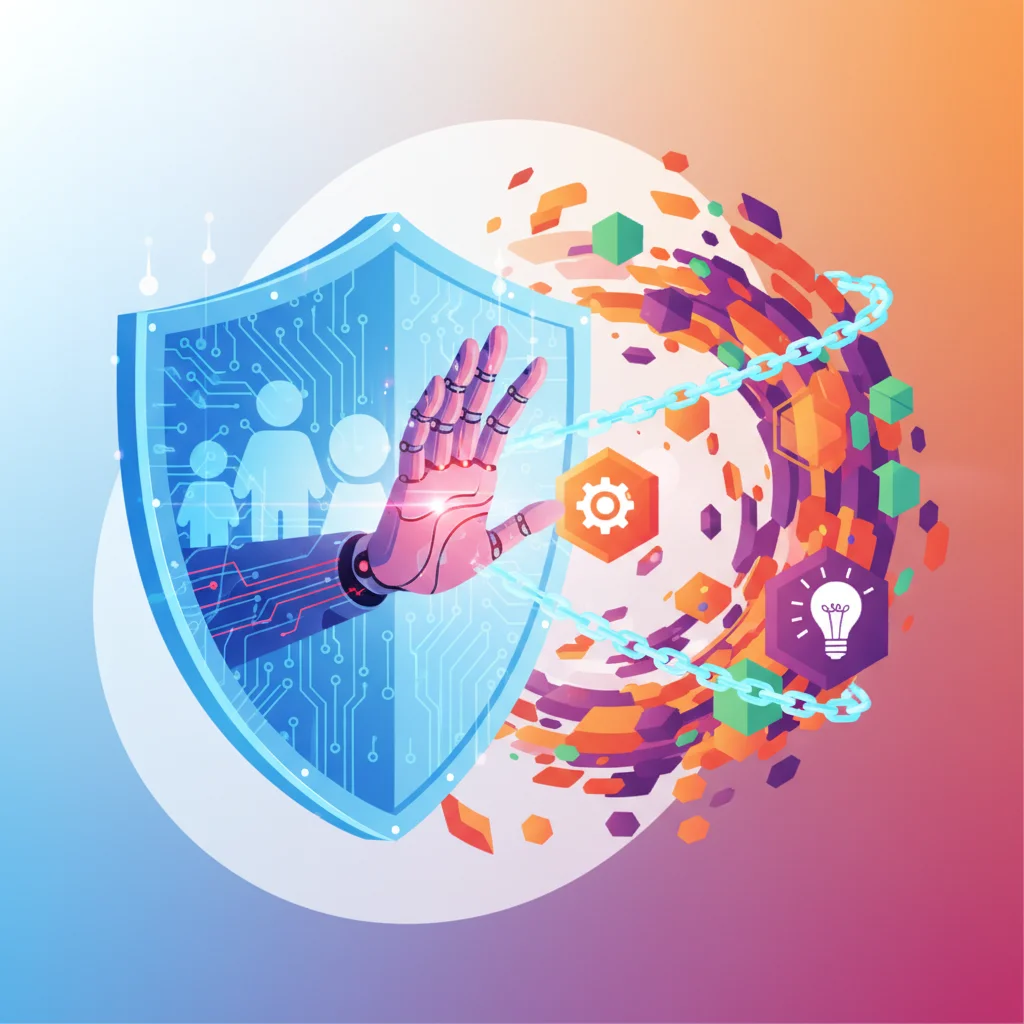
China has unveiled draft regulations aimed squarely at governing the use of AI to protect children. This isn’t just a minor policy update; it’s a significant signal from one of the world’s leading tech players about the future of AI governance. For developers, entrepreneurs, and tech professionals, this move isn’t just news—it’s a potential blueprint for future regulations and a case study in the global balancing act between innovation and control. Let’s dive deep into what Beijing is proposing, why it matters to you, and what it signals for the future of the global software and AI landscape.
Decoding Beijing’s Blueprint: What’s in the New AI Regulations?
The Cyberspace Administration of China (CAC), the country’s powerful internet watchdog, is not known for half-measures. When it decides to regulate a sector, the effects are profound. These new draft rules for generative AI and minors are detailed and prescriptive, moving far beyond vague ethical guidelines. They represent a concerted effort to build a digital “walled garden” where children can interact with AI, but only under strictly controlled conditions.
While the full text is extensive, the core tenets focus on several key areas. We’ve broken down the main pillars of the proposed regulations below.
| Regulatory Pillar | Key Provisions and Requirements |
|---|---|
| Content Filtering & Safety | Providers must ensure that generative AI services do not create or transmit content that is harmful to the physical or mental health of minors. This includes a ban on content that might induce addiction. |
| “Minor Mode” Implementation | AI services must offer a dedicated “minor mode” that tailors content, functions, and usage duration specifically for different age groups (under 8, 8-16, 16-18). |
| Data Privacy & Protection | Strict rules on collecting personal information from minors. Providers must obtain explicit consent from guardians and set up dedicated personal information protection protocols. |
| Addiction Prevention | Service providers are required to implement features that prevent children from becoming addicted, such as time limits and “rest reminders.” This builds on China’s previous crackdowns on video game time for minors. |
| Algorithm Transparency & Labeling | Content generated by AI must be clearly labeled. The regulations also call for clear explanations of how the underlying machine learning algorithms work in a way that is understandable to the public. |
These rules reflect a broader philosophy that has guided China’s tech policy for years: the state plays a central role in curating the digital environment to align with its social and political goals. It’s a stark contrast to the more hands-off approach seen in other parts of the world, and it presents a monumental challenge for any startup or established company wanting to deploy AI products in the massive Chinese market.
Beyond the Clickbait: Vince Zampella's Living Legacy and the Future of Tech Innovation
The Great Tech Paradox: Control vs. Competition
This move doesn’t exist in a vacuum. It’s the latest chapter in China’s long and complex relationship with its technology sector. For the past decade, Beijing has championed home-grown tech giants, fostering an environment of rapid innovation. Yet, in recent years, we’ve seen a series of sweeping crackdowns on everything from fintech and e-commerce to online education and gaming. The goal is twofold: to rein in the power of big tech and to ensure technology serves the state’s objectives.
Artificial intelligence, however, presents a unique paradox. China has declared its ambition to become the world’s leading AI power by 2030, a goal that requires immense investment, open data access for training models, and a culture of relentless innovation. Heavy-handed regulation, particularly rules that could limit data collection or dictate algorithmic outputs, could potentially kneecap the very industry it wants to promote. This tension between the desire for technological supremacy and the imperative for social control is the defining drama of China’s modern tech story.
The big question for developers and startups isn’t just “How do we comply?” but “Is it even possible?” How do you program a machine learning model to definitively avoid content that “induces addiction” when the definition is subjective? How does a SaaS company based in Berlin or Silicon Valley ensure its cloud-based AI service adheres to these granular, ever-shifting rules inside China? My prediction is this will lead to a bifurcated AI world. We’ll see a highly customized, state-compliant “China-spec” AI, and then there will be the AI for the rest of the world. This could create immense opportunities for “compliance-as-a-service” software but also erect a new kind of digital iron curtain in the world of artificial intelligence.
Global Ripples: Why Developers and Entrepreneurs Should Be Paying Attention
It’s easy to dismiss this as a “China problem,” but the implications are global. As the world’s second-largest economy and a hub of tech manufacturing and software development, what happens in China rarely stays in China.
The New Compliance Nightmare for SaaS and Startups
For any startup or SaaS company with global ambitions, this is a wake-up call. Entering the Chinese market now requires more than just language localization; it demands a fundamental re-architecture of your product to meet these specific “minor mode” and content-filtering requirements. The cost and complexity of this compliance could be prohibitive for smaller players, potentially cementing the dominance of domestic giants like Baidu and Tencent who have the resources to navigate the regulatory maze. This is a critical consideration for any entrepreneur building an AI-powered tool, from educational software to creative platforms.
A Paradigm Shift in Programming and Cybersecurity
For developers and machine learning engineers, the challenge is technical. The regulations demand a level of algorithmic control and content moderation that is incredibly difficult to achieve. It’s not just about filtering keywords; it’s about understanding context, nuance, and potential psychological impact—tasks that are still on the frontiers of AI research. This will spur innovation in areas like “explainable AI” (XAI) and “constitutional AI,” where models are trained with a built-in set of rules. Furthermore, the focus on data protection for minors elevates the importance of robust cybersecurity measures, making privacy-preserving programming techniques more crucial than ever.
The AI Revolution is Overheating: Are Showers and Baths the Answer for Data Centers?
A Tale of Two Internets: Comparing Global AI Governance
China’s top-down, state-driven approach provides a fascinating contrast to how other major economic blocs are handling the rise of AI. There is no single global standard for AI regulation; instead, we see a patchwork of competing philosophies.
In the European Union, the landmark AI Act categorizes AI applications based on their level of risk, from “unacceptable” (like social scoring) to “high-risk” (like in critical infrastructure). It’s a comprehensive, rights-focused framework that prioritizes individual freedoms and ethics. In the United States, the approach has been more fragmented and sector-specific, with existing laws like the Children’s Online Privacy Protection Act (COPPA) being updated to address AI, alongside a flurry of state-level initiatives and White House executive orders. The US model is generally more pro-innovation, relying on industry self-regulation and addressing harms after they occur.
China’s model is fundamentally different. It is less about a risk-based framework and more about a content-and-behavior-based framework. The primary goal is ensuring social harmony and protecting minors as defined by the state, making it the most interventionist approach of the three. This divergence will shape the future of cloud services, cross-border data flows, and international collaboration on AI research.
The Future of “Child-Safe” Automation and AI
Regardless of where you stand on China’s approach, it forces a critical global conversation: What does it truly mean to build “child-safe” AI? This initiative, while restrictive, will undoubtedly accelerate research and development in key areas. We can expect to see a surge in innovation around:
- Advanced Content Moderation: AI models designed specifically to detect and filter nuanced, psychologically harmful content for young audiences.
- Personalized “Minor Modes”: Sophisticated automation that can dynamically adjust an application’s features based on a user’s verified age.
- Ethical AI Frameworks: New programming paradigms and software tools that help developers build compliance and safety checks directly into their machine learning pipelines.
However, the challenge remains immense. Overly aggressive filtering can create sterile, uninspired digital experiences that stifle curiosity. There is a fine line between protection and censorship, and creating AI that can walk that line perfectly is a task that even the most advanced algorithms are not yet equipped to handle.
The New Trojan Horse: How Amazon Used AI to Block 1,800 North Korean Spies from Your Cloud
Ultimately, China’s crackdown on AI for children is a landmark event in the history of technology governance. It is a bold, prescriptive, and controversial attempt to tame the Wild West of generative AI. For the global tech community, it serves as a powerful reminder that the code we write does not exist in a vacuum. It operates within a complex web of cultural norms, legal frameworks, and political ideologies. As artificial intelligence becomes more deeply integrated into our lives, the debate over how to control it—and who gets to set the rules—is only just beginning.

Related Posts

Beyond the Console Wars: Was Valve’s Steam Machine a Failed Experiment or a Prophecy for Gaming’s Future?

The Great AI Firewall: Why China’s Move to Regulate AI for Kids Will Impact Everyone in Tech