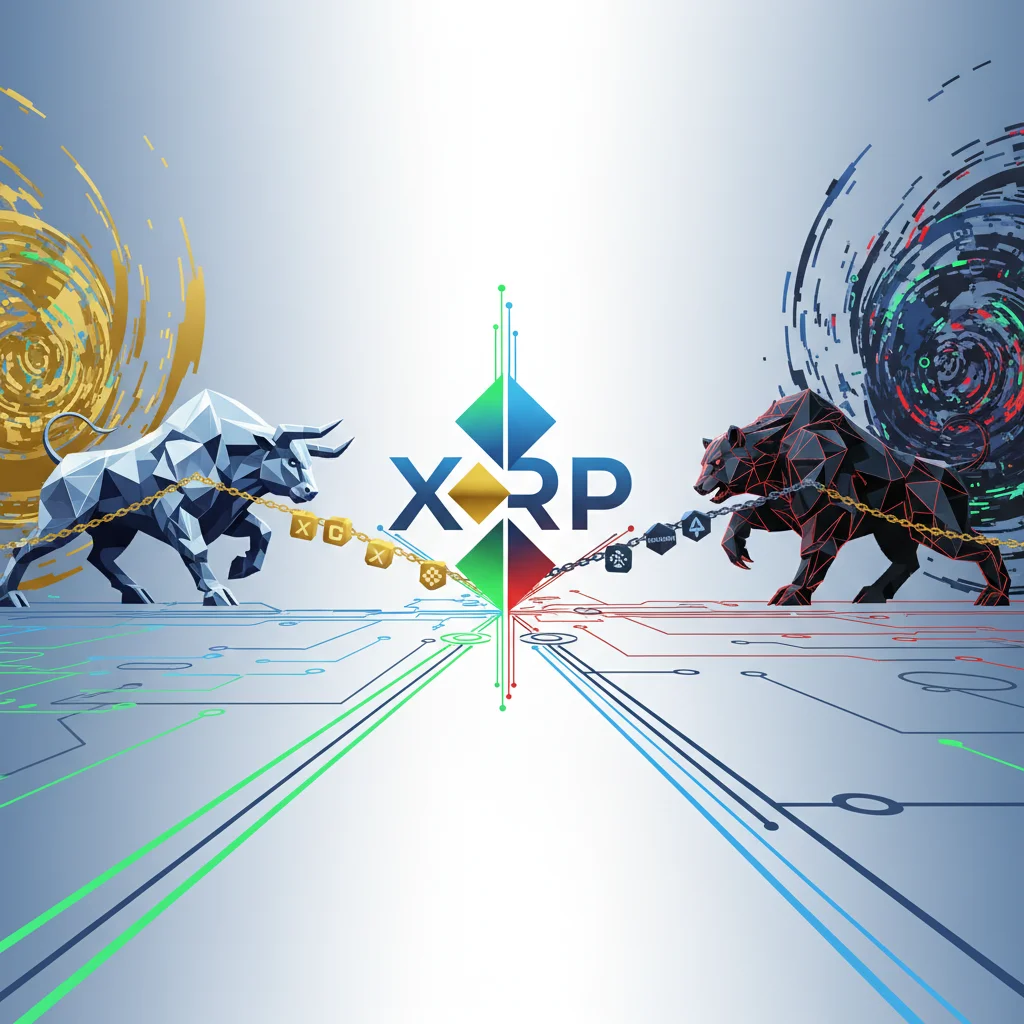
XRP at a Crossroads: The Tug-of-War Between Institutional Bulls and Exchange Bears
In the dynamic world of finance and digital assets, few stories are as compelling as a classic standoff. Right now, XRP, one of the market’s most-watched cryptocurrencies, is locked in a high-stakes battle. The asset is pressing against the formidable $2.00 psychological barrier, a level it hasn’t conquered in years. This isn’t just random market volatility; it’s a fascinating clash of two powerful, opposing forces. On one side, a surge of institutional capital is pouring in through regulated investment products. On the other, a colossal supply of XRP sits on exchanges, ready to be sold at a moment’s notice.
This equilibrium has created a tense stalemate, leaving investors, traders, and business leaders wondering: which side will break first? This isn’t merely a story about a price chart; it’s a microcosm of the entire digital asset economy, reflecting the maturation of the market, the growing pains of adoption, and the intricate dance between supply and demand. In this analysis, we’ll dissect the bullish and bearish forces shaping XRP’s destiny and explore what its future might hold in the evolving landscape of financial technology.
The Bull Case: Institutional Capital Makes Its Move
The most significant tailwind for XRP is the undeniable influx of institutional money. For years, crypto was seen as a retail-driven, speculative playground. That narrative is rapidly changing. The advent of regulated investment vehicles like Exchange-Traded Funds (ETFs) and Exchange-Traded Products (ETPs) has built a secure and familiar bridge for traditional investors to gain exposure to digital assets.
XRP is a prime beneficiary of this trend. For instance, Europe has seen a remarkable appetite for XRP-based products. 21Shares, a prominent issuer of crypto ETPs, reported that assets under management (AUM) for its XRP ETP surged by an astonishing 97% in a recent period (source). This isn’t a trivial data point; it signals a robust and growing demand from a more conservative and capital-rich investor class.
Why is this so important?
- Legitimacy and Validation: When capital flows through regulated channels like ETFs, it bestows a layer of legitimacy on the underlying asset. It tells the broader investing world that XRP is being taken seriously by professional portfolio managers.
- Sticky Capital: Unlike the often-fickle nature of retail trading, institutional investments tend to be more strategic and long-term. This creates a more stable and consistent source of demand, providing a solid floor for the price.
- Broadened Access: ETFs allow investors to buy into XRP through their traditional brokerage accounts, sidestepping the technical hurdles of crypto exchanges and digital wallets. This democratization of access vastly expands the potential buyer pool.
This trend is a cornerstone of the modern fintech revolution, where the lines between the traditional stock market and the nascent crypto market are blurring. The institutional embrace of XRP provides a powerful bullish undercurrent that cannot be ignored.
Bitcoin's K Tightrope: Navigating the Perils of Peak Leverage and Unprecedented Demand
The Bear Case: The Looming Shadow of Exchange Supply
While the demand side of the equation looks rosy, the supply side tells a different, more cautious tale. A massive amount of XRP currently resides on cryptocurrency exchanges, creating what analysts call a “supply overhang.” This is the primary force keeping the price pinned below the $2.00 mark.
On-chain data reveals that the total balance of XRP held on exchanges now exceeds 4 billion tokens. To put that in perspective, this figure represents a staggering 45% increase compared to the previous year (source). In the world of crypto, assets held on an exchange are generally considered to be readily available for sale. Unlike coins held in “cold storage” for long-term holding, this on-exchange supply represents potential selling pressure.
This creates a challenging environment for a sustained price rally. Imagine trying to fill a bucket with a hole in it. The institutional inflows (the water) are strong, but the potential sell-offs from this exchange supply (the leak) are constantly draining momentum. Every time the price approaches a key resistance level like $2.00, a portion of these holders may be tempted to take profits, effectively creating a ceiling that the price struggles to break through.
Visualizing the Stalemate: A Tale of Two Forces
To better understand the dynamics at play, let’s break down the opposing market forces in a clear, comparative format. This table highlights the fundamental conflict that is defining XRP’s current price action.
| Market Force | Key Indicator | Recent Metric | Implication for XRP Price |
|---|---|---|---|
| Institutional Demand (Bullish) | Inflows into Regulated Products (ETPs/ETFs) | +97% surge in AUM for 21Shares XRP ETP (source) | Creates consistent buying pressure and a potential price floor. Signals market maturation and validation. |
| Available Supply (Bearish) | XRP Balance on Exchanges | Over 4 billion XRP on exchanges, a 45% Year-over-Year increase. | Creates potential selling pressure (overhang) that can cap rallies and act as a price ceiling. |
The Shadow Economy of Plastic: How Gift Card Scams Threaten Modern Finance
The Broader Context: Blockchain, Banking, and the Economy
No asset exists in a vacuum. XRP’s price struggle is also influenced by the wider macroeconomic environment and the ongoing evolution of the blockchain industry. The core value proposition of Ripple, the company most closely associated with XRP, is to revolutionize international payments and the banking sector. Progress on this front—new partnerships, technological advancements, and regulatory clarity—can have a profound impact on XRP’s long-term valuation.
Furthermore, the general health of the global economy plays a critical role. In a “risk-on” environment, where investors are optimistic and seeking higher returns, assets like cryptocurrencies tend to perform well. Conversely, in a “risk-off” climate, characterized by rising interest rates and economic uncertainty, capital often flows back to safer havens. The decision-making of central banks and the performance of the traditional stock market set the stage for the entire digital asset space.
The field of economics teaches us that price is always the result of supply and demand. For XRP, this textbook principle is playing out in real-time on a global scale, showcasing the complex interplay between technological innovation, investor sentiment, and market structure.
Conclusion: A Decisive Breakout Awaits
XRP is currently a market in perfect, tense balance. The powerful, forward-looking force of institutional adoption is being met by the significant, present-day reality of a large and liquid on-exchange supply. The result is a consolidation phase below a key historical and psychological resistance level.
For investors and financial professionals, this scenario offers a compelling case study in modern market dynamics. The resolution of this standoff will not be a matter of chance. It will be triggered by a fundamental shift in one of the two core metrics: either a dramatic acceleration of institutional demand that finally absorbs the available supply or a market-moving event that compels the massive cohort of exchange holders to finally sell or hold for the long term.
Watching this battle unfold is more than just chart-gazing; it’s about understanding the maturation of a major digital asset and the ongoing integration of blockchain technology into the mainstream world of finance. The $2.00 question for XRP is not *if* this stalemate will break, but when—and in which direction.

Related Posts

The Exchange That Never Sleeps: How a Fintech Upstart is Revolutionizing South Korea’s Stock Market

The Bill Bailey Principle: Why a Minor Correction Reveals a Major Truth About Finance and Investing