The New Cold War is Frozen: Why a US Envoy to Greenland is a Major Signal for Global Investors
In the grand theater of global finance and geopolitics, major shifts are often signaled not by thunderous declarations, but by quiet, seemingly minor administrative changes. The recent appointment of a US envoy to Greenland is one such signal. While it may seem like a trivial diplomatic posting, a letter to the editor in the Financial Times correctly highlights that this move “augurs badly for the Arctic.” More than that, it serves as a critical indicator for investors, business leaders, and anyone tracking the future of the global economy. This isn’t just about diplomacy; it’s about a new great game being played on a board of ice, with trillions of dollars in resources and the future of global supply chains at stake.
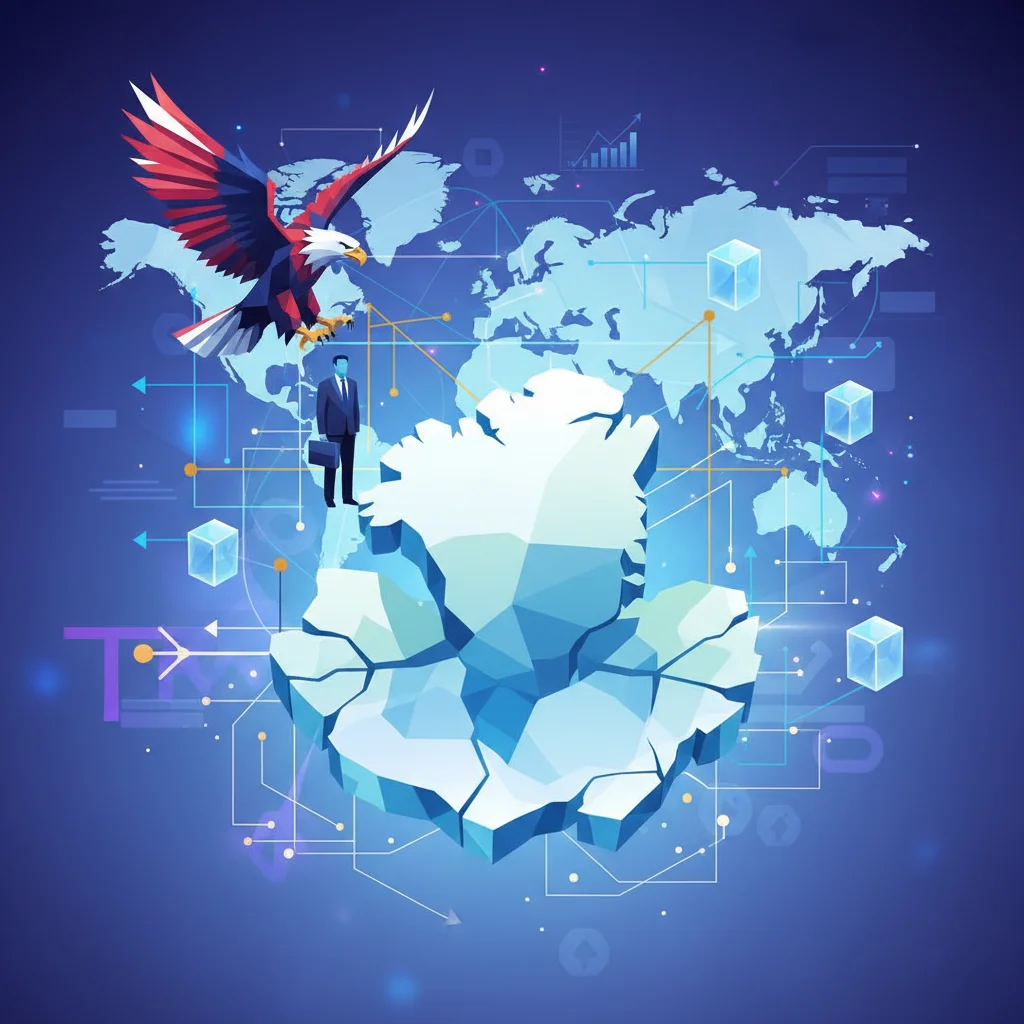
The world is awakening to the immense strategic value of the Arctic, a region transforming from a desolate wasteland into a nexus of economic and military competition. Greenland, the world’s largest island, is the epicenter of this shift. This appointment is the latest move in a high-stakes chess match, and understanding its implications is crucial for navigating the complex intersection of geopolitics, finance, and long-term investing.
The Greenland Gambit: More Than Just an Icy Expanse
To grasp the significance of this diplomatic maneuver, one must first understand Greenland’s unique position. It’s not just a vast sheet of ice; it’s a strategic linchpin for military defense, global trade, and resource security. The United States has long recognized this, maintaining a presence at Pituffik Space Base (formerly Thule Air Base), a critical node in its early-warning missile detection network. However, modern interest extends far beyond Cold War-era defense.
In 2019, former President Trump’s offer to purchase Greenland was met with public derision, but the underlying economic and strategic logic was sound, if crudely expressed. Greenland is a semi-autonomous territory within the Kingdom of Denmark, but its vast, untapped mineral wealth gives it leverage that belies its small population of around 56,000. As climate change accelerates the melting of its ice sheets, two things are happening: new, faster shipping lanes are opening between Asia and Europe, and previously inaccessible mineral deposits are becoming viable for extraction. This combination turns the Arctic from a barrier into a strategic shortcut and a treasure chest.
This is where the principles of economics collide with geopolitics. The potential for new, cost-effective shipping routes could fundamentally reshape global trade logistics, impacting everything from supply chain management to the profitability of shipping conglomerates listed on the stock market.
Beyond the Spark: Uncovering the True Origins of Financial Fire
The Trillion-Dollar Treasure Under the Ice
The true prize in Greenland is what lies beneath the ice. The island is believed to hold one of the world’s largest deposits of rare earth elements (REEs), a group of 17 metals essential for the modern global economy. From the smartphone in your pocket and the electric vehicle in your driveway to advanced weapons systems and wind turbines, nearly every piece of high-end technology relies on these minerals.
Currently, the global supply chain for REEs is a strategic vulnerability for the West. China controls an estimated 60% of global production and a staggering 85% of processing capacity. This dominance gives Beijing immense leverage, allowing it to potentially throttle supply chains for political or economic gain. For investors and business leaders, this represents a significant and often underappreciated risk.
The development of Greenland’s resources offers a potential path to diversifying this critical supply chain. The U.S. envoy appointment is a clear signal that Washington intends to be a key player in this process, fostering an environment favorable to American and allied investment in Greenlandic mining and infrastructure. Below is a summary of the key resources at stake:
| Mineral/Element | Key Applications in Modern Economy | Significance for Greenland | Current Supply Chain Concern |
|---|---|---|---|
| Rare Earth Elements (Neodymium, Dysprosium) | High-performance magnets for EV motors, wind turbines, consumer electronics, defense tech. | Kvanefjeld and Kringlerne projects hold potentially massive, world-class deposits. | Over 85% of processing is dominated by China, creating a major strategic choke point. |
| Uranium | Fuel for nuclear power plants, a key component of the clean energy transition. | Often found alongside REE deposits, creating political and environmental challenges for extraction. | Russia and its allies are major players in the global uranium market. |
| Zinc & Lead | Galvanizing steel, batteries, construction materials. A staple of industrial economics. | Historically significant for Greenland’s mining sector, with potential for new discoveries. | Less concentrated supply, but still vital for industrial output. |
| Titanium, Platinum, and more | Aerospace, medical implants, catalytic converters, and financial technology hardware. | Vast areas remain unexplored, with geological surveys indicating high potential. | Diversified but subject to geopolitical risks in sourcing countries like South Africa and Russia. |
Geopolitical Chess: The Players in the Arctic Arena
The U.S. is not acting in a vacuum. The Arctic is rapidly becoming a crowded arena for great power competition, primarily between the U.S., Russia, and China.
- The United States: Washington’s primary goals are twofold. First, to secure a stable, non-Chinese supply of critical minerals for its technology and defense industries. Second, to counter the growing military and economic influence of Russia and China in a region vital to North American security. The envoy is a tool to strengthen ties with Nuuk (Greenland’s capital) and Copenhagen, ensuring the U.S. has a seat at the table as the region’s future is decided.
- Russia: With the longest Arctic coastline, Russia views the region as its strategic backyard. It has been aggressively remilitarizing its Arctic bases and seeks to control the Northern Sea Route, a shipping lane that runs along its coast. For Russia, Arctic dominance is a matter of national pride, economic survival (through oil and gas), and military security.
- China: Despite having no Arctic territory, China has declared itself a “near-Arctic state” and is pursuing a “Polar Silk Road” strategy. It has invested heavily in Arctic science and is actively seeking resource and infrastructure deals, including in Greenland. Beijing’s strategy is to use its economic might and dominance in sectors like financial technology and infrastructure to gain a strategic foothold, a prospect that deeply worries Washington.
This three-way competition creates a volatile environment. Any disruption, whether a political shift in Greenland or a military incident in the Arctic Ocean, could have ripple effects across global markets, impacting everything from commodity prices to the stock market valuations of defense and logistics companies.
The Growth Paradox: Is Poverty a Cause or a Consequence of Economic Stagnation?
The Investment Horizon: Navigating the Arctic Economy
For the savvy investor, this geopolitical shift creates both immense opportunities and significant risks. The investment landscape is not for the faint of heart and requires a long-term perspective.
Opportunities:
- Mining and Exploration: Junior and major mining companies with licenses or prospects in Greenland could see significant valuation increases if the political and regulatory environment becomes more favorable.
- Infrastructure and Logistics: Developing the Arctic will require massive investment in ports, housing, energy, and transportation. Engineering and construction firms stand to benefit.
- Defense and Maritime: Increased military presence in the Arctic will drive demand for icebreakers, surveillance technology, and specialized equipment, benefiting defense contractors.
- Supply Chain Technology: There’s a nascent opportunity for technologies like blockchain to provide transparent and ethical tracking of minerals from mine to market, addressing ESG concerns and ensuring compliance. This could become a new frontier for fintech innovation in the commodities space.
Risks:
- Political Volatility: Greenland’s domestic politics are the single biggest risk. A change in government could halt or reverse mining-friendly policies overnight.
- High Operating Costs: The harsh Arctic environment makes exploration and extraction incredibly expensive and technically challenging.
- Environmental and Social Opposition: Strong opposition from environmental groups and parts of the local Inuit population can lead to project delays, legal challenges, and reputational damage.
- Geopolitical Flashpoints: An escalation of tensions between the U.S., Russia, and China could freeze investment and create market-wide instability.
Navigating this requires more than just standard financial analysis; it demands a deep understanding of political risk, a core component of modern trading and long-term investing strategies.
The Swedish Christmas Portfolio: Building Financial Resilience in a Volatile World
Conclusion: The Thawing Frontier of Global Finance
The appointment of a U.S. envoy to Greenland is far more than a diplomatic footnote. It is a calculated move in a new global competition, a clear signal that the Arctic is open for business and geopolitical rivalry. As the ice melts, it is revealing a new frontier not just for exploration, but for the global economy itself.
For professionals in finance, banking, and investment, the Arctic can no longer be ignored. It represents the convergence of the green energy transition, great power competition, and the global scramble for resources. Watching the diplomatic temperature in Nuuk may soon be as important as tracking interest rates from the Fed. The cold, hard reality is that the future of our technologically advanced world may be decided on this frozen island, and the financial world needs to be prepared for the thaw.

Related Posts
From Battlefields to Balance Sheets: Europe’s Defense Giants Unleash a $5 Billion Windfall for Investors

Beyond the Handshake: Decoding the Financial Shockwaves of the US-Ukraine Summit