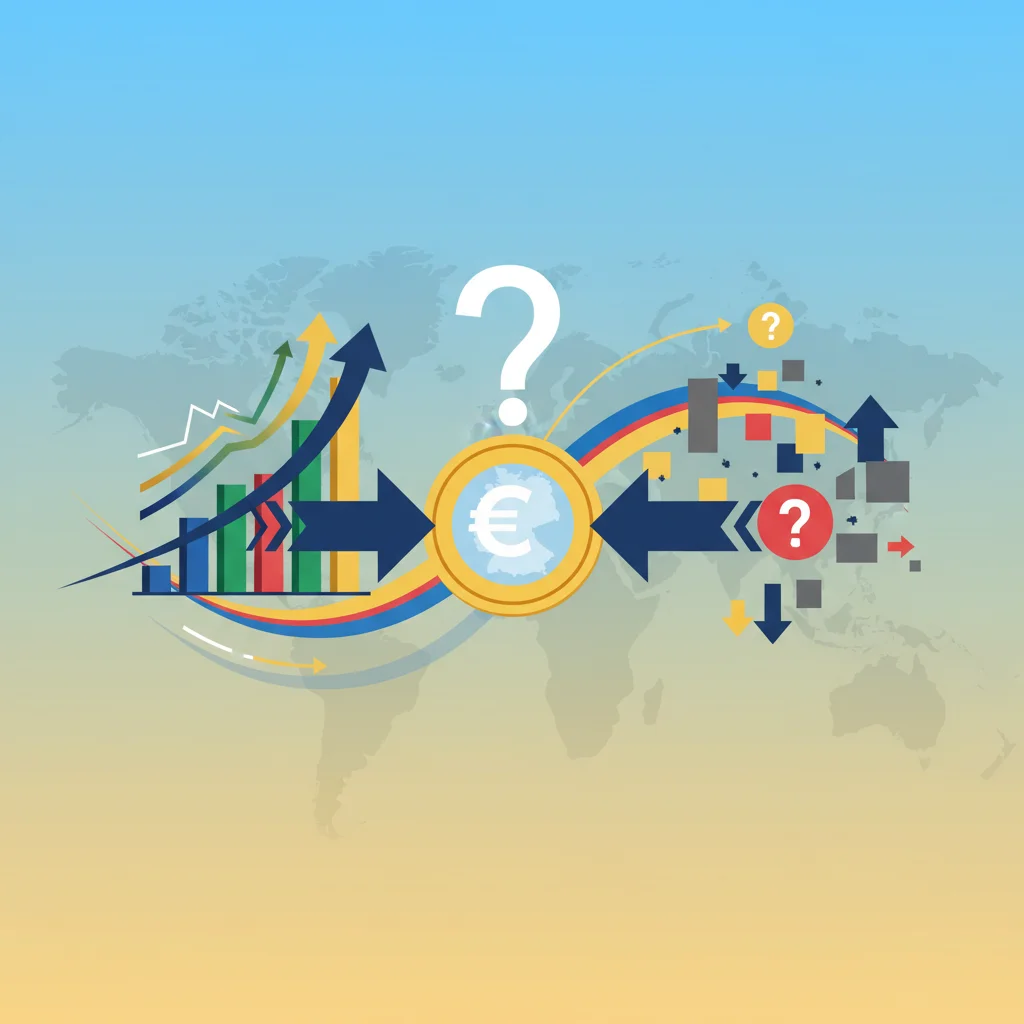
Germany’s Trillion-Dollar Question: Can a Spending Spree Save Europe’s Economy?
The European economy stands at a critical juncture. After navigating the turbulence of a global pandemic and now grappling with persistent inflation and geopolitical uncertainty, the path to robust, sustainable growth seems fraught with challenges. In the intricate web of European economics, all eyes are increasingly turning to its traditional powerhouse: Germany. For decades, Germany has been the continent’s anchor of stability, championing fiscal prudence and balanced budgets. But a growing consensus among leading economists suggests this very prudence may now be a roadblock. The future of Europe’s prosperity, they argue, might depend on Germany doing something that goes against its economic DNA: opening the fiscal floodgates.
A recent, comprehensive survey of economists conducted by the Financial Times paints a stark picture. While the Eurozone has shown resilience, the rate of increase in economic output is expected to slow significantly. This slowdown comes despite the European Central Bank’s monetary policies and post-pandemic recovery funds. According to the FT survey, the missing ingredient is a powerful, demand-driven fiscal push, and Germany is the only nation with the economic might and fiscal space to deliver it on the required scale.
The German Paradox: From Fiscal Hawk to Europe’s Last Hope
To understand the gravity of this moment, one must appreciate Germany’s long-standing economic philosophy. The concept of the “Schwarze Null” (black zero) has been a cornerstone of its policy for years, emphasizing a balanced federal budget and avoiding new debt. This discipline earned Germany a reputation for stability and became a model—and at times, a point of contention—for other Eurozone members, particularly during the sovereign debt crisis.
However, the global economic landscape has shifted dramatically. Low interest rates for the better part of a decade, followed by the economic shocks of COVID-19 and the war in Ukraine, have rewritten the rules. Today, Germany faces its own set of challenges, including an aging industrial base, high energy costs, and the monumental task of transitioning to a green economy. Sticking to rigid fiscal conservatism in the face of these headwinds not only risks Germany’s own prosperity but creates a powerful drag on the entire European project.
Economists surveyed argue that a significant increase in German public spending—on infrastructure, digital transformation, and green energy—would act as a powerful catalyst. This isn’t just about Germany helping itself; it’s about leveraging its unique position in the European single market. When the continent’s largest economy invests, it creates a powerful ripple effect that lifts all boats.
AI's Reality Check: Navigating the Risks Beyond the Hype in Business and Finance
Understanding the Spillover Effect: How German Spending Fuels Europe
The mechanism is straightforward but profound. When the German government contracts a company to build a new high-speed rail line, modernize its energy grid, or invest in cutting-edge financial technology, it triggers a chain reaction. German firms hire more workers, who in turn have more money to spend. But crucially, these firms also increase their orders for components, raw materials, and services from across the EU.
An Italian machine tool manufacturer, a French software firm, or a Polish logistics company all see a surge in demand. This “spillover effect” is the core of the argument for a German spending spree. As Germany’s imports rise, it directly boosts the GDP of its trading partners. This is particularly vital for southern European economies that have historically struggled with lower growth rates and higher unemployment.
To illustrate the potential impact, let’s consider the consensus growth forecasts from economists who have analyzed the situation. The difference between a scenario with and without a significant German fiscal expansion is notable.
The table below outlines a simplified comparison of projected annual GDP growth for the Eurozone under two different German fiscal policy scenarios.
| Scenario | Projected German GDP Growth | Projected Eurozone Average GDP Growth | Key Beneficiary Sectors |
|---|---|---|---|
| Status Quo (Limited Spending) | 0.5% – 1.0% | 0.7% – 1.2% | Stagnant; defensive stocks may outperform. |
| Aggressive Fiscal Push (+€100bn/year) | 1.8% – 2.5% | 2.0% – 2.8% | Infrastructure, Renewables, Technology, Manufacturing |
As the data suggests, an aggressive fiscal push doesn’t just double Germany’s own growth prospects; it could potentially double the growth rate for the entire Eurozone, a fact that has profound implications for the stock market, corporate earnings, and overall investor confidence.
Furthermore, how this money is spent is just as critical as how much. Will it be channeled into future-proof industries? This is where the conversation must include fintech and financial technology. A truly transformative fiscal push would involve massive investment in digital infrastructure, creating a fertile ground for fintech innovation in payments, lending, and digital banking across the EU. There’s even a nascent argument for using blockchain technology to ensure transparent and efficient allocation of these public funds, though this remains a forward-thinking concept for now. The risk is that the funds get bogged down in bureaucracy or allocated to legacy projects, blunting their transformative potential. The success of this strategy hinges on Berlin’s ability to be both bold and smart.
Navigating the Inevitable Risks: Inflation and Debt
Of course, there is no such thing as a free lunch in economics. A massive injection of government spending comes with significant risks that cannot be ignored. The primary concern, echoed by several economists in the FT report, is inflation.
The European Central Bank (ECB) has been engaged in a delicate and difficult battle to bring inflation back down to its 2% target. A huge, demand-stoking fiscal stimulus from Germany could work at cross-purposes, pouring fuel on the inflationary fire. If too much money chases too few goods and services, prices will inevitably rise, forcing the ECB to keep interest rates higher for longer. This would increase borrowing costs for businesses and households across the continent, potentially negating some of the benefits of the stimulus.
The second major risk is debt. While Germany currently boasts one of the lowest debt-to-GDP ratios among major economies, a sustained spending program would see its public debt rise. This is not just a German problem. As the Eurozone’s benchmark borrower, a significant increase in German debt could eventually impact borrowing costs for the entire bloc. Striking the right balance between necessary investment and long-term fiscal sustainability is the tightrope that policymakers must walk.
Europe's High-Stakes Gamble: The Franco-German Clash Over Russian Assets Threatens Global Finance
What This Means for Investors, Traders, and Business Leaders
For those involved in finance and investing, this debate is more than academic. The policy path Germany chooses will have direct and tangible consequences for markets and corporate strategy.
- For Investors: A German fiscal expansion would likely be bullish for European equities, particularly in cyclical sectors. Companies in construction, industrial manufacturing, renewable energy (wind, solar, hydrogen), and technology infrastructure would be direct beneficiaries. Investors might consider re-weighting their portfolios towards European assets and exchange-traded funds (ETFs) that track major European indices like the DAX and the Euro Stoxx 50.
- For Traders: The currency markets would be a key area to watch. A robust, growth-oriented fiscal policy could strengthen the Euro against other major currencies. However, concerns about inflation or debt could introduce volatility. Active trading strategies will be required to navigate the policy announcements and economic data releases from both Berlin and Frankfurt.
- For Business Leaders: Companies with supply chains integrated into the German economy should prepare for a potential surge in demand. This presents an opportunity for expansion but also a challenge to ensure capacity can meet new orders. Furthermore, the focus on green and digital transitions signals where future public-private partnership opportunities will lie. Businesses that align their strategies with these public investment priorities will be best positioned to thrive.
As one economist noted in the original survey, the era of relying solely on monetary policy from the central banking system is over. The torch is being passed to fiscal policy, and Germany is the one being asked to carry it.
Royal Mail's Pension Revolution: A Rocky Start for a Groundbreaking Model
Conclusion: A Defining Moment for Europe
Germany finds itself at a historic crossroads, with the economic fate of a continent resting heavily on its shoulders. The long-held virtues of fiscal discipline and the “Schwarze Null” are being challenged by a new reality that demands bold investment. The path forward is a calculated risk—a bet that the immediate rewards of synchronized European growth will outweigh the long-term dangers of inflation and debt.
For investors, executives, and citizens alike, the decisions made in Berlin in the coming months will reverberate for years to come. Whether Germany will embrace its role as Europe’s growth engine or retreat to the familiarity of fiscal caution remains the trillion-dollar question that will define the next chapter of the European economy.