The Canary in the Coal Mine: What a Cancelled Grouse Hunt in 1973 Teaches Us About Today’s Economy
An Unlikely Economic Indicator
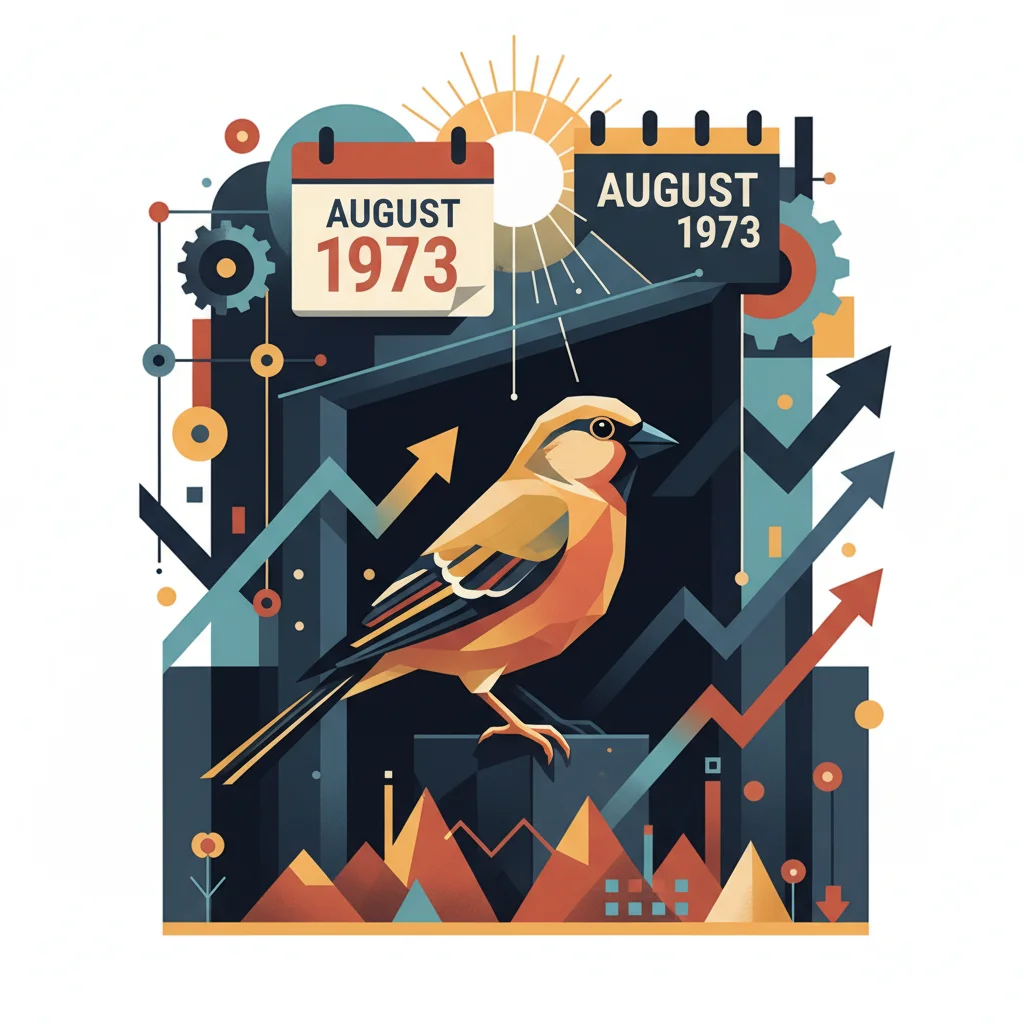
On August 12th, 1973, a peculiar silence fell over the heather-clad moors of Scotland. This day, known as the “Glorious 12th,” traditionally marks the start of the red grouse shooting season—a ritual steeped in tradition and a significant economic event for rural communities. But that year, many of the customary shotgun blasts were replaced by an unnerving quiet. The reason wasn’t a shortage of birds or a sudden surge in conservationism; it was a crisis brewing thousands of miles away in the Middle East, a crisis that was about to send shockwaves through the entire global economy.
The cancellation of a luxury pastime might seem like a trivial footnote in history. However, the story of how the 1973 oil crisis grounded the “Glorious 12th” serves as a powerful and timeless case study. It reveals the intricate, often invisible threads that connect geopolitics, commodity markets, and everyday economic activity. For today’s investors, finance professionals, and business leaders navigating a world of complex, interconnected risks, this half-century-old event offers profound lessons on second-order effects, the importance of robust risk modeling, and the enduring fragility of our global economic system.
The Shock: When the World’s Oil Taps Ran Dry
To understand why Land Rovers sat idle in Scottish estates, we must first look to the geopolitical chessboard of October 1973. In response to Western support for Israel during the Yom Kippur War, the Organization of Arab Petroleum Exporting Countries (OAPEC) declared an oil embargo against the United States and other allied nations. The impact was immediate and catastrophic.
The embargo didn’t just create long lines at gas stations; it fundamentally rewired the global financial landscape. Oil prices quadrupled almost overnight, triggering a period of “stagflation”—a toxic economic cocktail of stagnant growth, high unemployment, and rampant inflation that economists at the time thought was impossible. The comfortable post-war economic consensus was shattered, and the stock market entered a brutal bear market.
The following table illustrates the sheer velocity of this economic shock:
| Period | Average Price of Crude Oil (per barrel) | Percentage Increase |
|---|---|---|
| Pre-October 1973 | ~$3.00 | N/A |
| By March 1974 | ~$12.00 (source) | ~300% |
This wasn’t just a price adjustment; it was a paradigm shift. The crisis exposed the West’s deep dependency on foreign oil and demonstrated how commodity markets could be weaponized for political ends. For the world of finance and investing, it was a brutal lesson in geopolitical risk.
From Global Crisis to Local Disruption
The ripple effects of the oil shock spread far and wide, eventually reaching the seemingly insulated world of British country sports. As the original Financial Times article from that era detailed, the impact was threefold:
- Fuel Rationing and Cost: The most direct consequence was the scarcity and soaring price of petrol. The quintessential image of grouse shooting involves convoys of 4x4s traversing vast, remote estates. With fuel rationing in effect, the logistics became a nightmare. The cost of simply getting to the moors, let alone driving across them, became prohibitive for many.
- Economic Downturn Hits Luxury Spending: As the economy stalled and inflation eroded purchasing power, discretionary spending was the first casualty. A day of grouse shooting, which even then was a costly affair involving estate fees, staff, and accommodation, was an easy expense to cut for struggling businesses and individuals. Corporate entertainment budgets, a key source of revenue for shooting estates, were slashed.
- International Travel Collapse: A significant portion of the clientele for the “Glorious 12th” came from overseas, particularly the United States. The oil crisis crippled international travel, making it difficult and expensive for these high-spending visitors to participate. As the FT reported, “American parties, the financial backbone of many shoots, cancelled” en masse.
What happened on the Scottish moors was a microcosm of a global phenomenon. A single-point failure in a critical supply chain—in this case, energy—triggered a cascade of consequences that paralyzed sectors with no direct connection to oil extraction. It demonstrated that in a deeply interconnected global economy, no industry is an island.
The Epstein Files: Unpacking the Financial Fallout and the High Cost of Complicity
Lessons for the 21st Century Investor
Nearly 50 years later, the lessons from this peculiar disruption are more relevant than ever. The global financial system is infinitely more complex and interconnected than it was in 1973, but the underlying dynamics of risk and contagion remain the same. Here’s how the story of the Glorious 12th can inform modern investing and financial strategy.
1. The Power of Second-Order Thinking
First-order thinking is simple: an oil crisis means oil stocks go up and airline stocks go down. Second-order thinking is asking, “And then what?” It’s about anticipating the non-obvious consequences. Who in 1972 was building a financial model that linked Middle Eastern politics to the revenue of Scottish hunting estates? Very few. Today, investors must constantly look beyond the immediate headlines. A new regulation in the tech sector doesn’t just affect big tech companies; it affects their suppliers, their advertisers, the commercial real estate they occupy, and the venture capital ecosystem that funds their future competitors.
2. The Evolution of Risk Management through Financial Technology
In 1973, a trader’s tools were a telephone, a ticker tape, and their own intuition. Today, the world of fintech and financial technology provides a powerful arsenal for managing these complex risks.
- AI and Big Data: Machine learning algorithms can now scan millions of data points—from satellite imagery of oil tankers to social media sentiment—to identify correlations and potential disruptions that a human analyst would miss.
- Scenario Analysis: Sophisticated software allows hedge funds and banking institutions to model the potential impact of thousands of different “black swan” events, from pandemics to geopolitical flare-ups, helping them stress-test their portfolios against unexpected shocks.
While no model is perfect, modern fintech provides a level of foresight that was pure science fiction in the 1970s.
Beyond the Headlines: The Economic Resonance of a National Tragedy in Australia
3. Rethinking Supply Chains with Blockchain
The 1973 crisis was, at its heart, a supply chain failure rooted in centralized control. This is where emerging technologies like blockchain offer intriguing possibilities. A decentralized, transparent ledger for tracking commodities could, in theory, create more resilient and trustworthy supply chains. By providing real-time, verifiable data on the movement of goods, blockchain could help businesses and governments react more quickly to disruptions and reduce reliance on fragile, single points of failure. While still in its early days for physical commodities, the concept represents a fundamental shift in how we approach supply chain risk.
Comparing Historical Shocks and Their Ripple Effects
The 1973 crisis was a supply-side shock. To put its impact into perspective, it’s useful to compare it to other major economic dislocations, each with its own unique characteristics and second-order effects.
| Economic Shock | Primary Cause | Key Second-Order Effect Case Study |
|---|---|---|
| 1973 Oil Crisis | Geopolitical Supply Disruption | Collapse of luxury/leisure travel, impacting niche industries like grouse shooting (source). |
| 2008 Financial Crisis | Systemic Failure in the Banking Sector | A “lost decade” of suppressed wage growth and a sharp rise in the gig economy. |
| 2020 COVID-19 Pandemic | Global Health Crisis & Lockdowns | Massive disruption to semiconductor supply chains, halting production in the automotive industry. |
Each event underscores the same core lesson: the initial crisis is often just the beginning of the story. The most significant and lasting impacts are frequently felt in sectors that seem, at first glance, to be far removed from the epicenter.
Political Headwinds: How the 2025 Global Landscape Will Shape Your Investments
Conclusion: The Enduring Wisdom of the Moors
The tale of the Glorious 12th that wasn’t is more than a historical curiosity. It is a parable for our times. It teaches us that the global economy is not a series of independent silos but a deeply interconnected ecosystem where a tremor in one part can cause a tidal wave in another. For anyone involved in finance, trading, or strategic business planning, the message is clear: look for the non-obvious connections. Stress-test your assumptions against the unimaginable. And remember that sometimes, the most insightful leading indicator of a major turn in the stock market or the global economy might just be the sound of silence on a remote Scottish moor.