The Perfect Storm: How Putin, Trump, and Xi Are Forcing a New Reality on the Global Economy
A Continent Forged in Crisis Faces Its Greatest Test
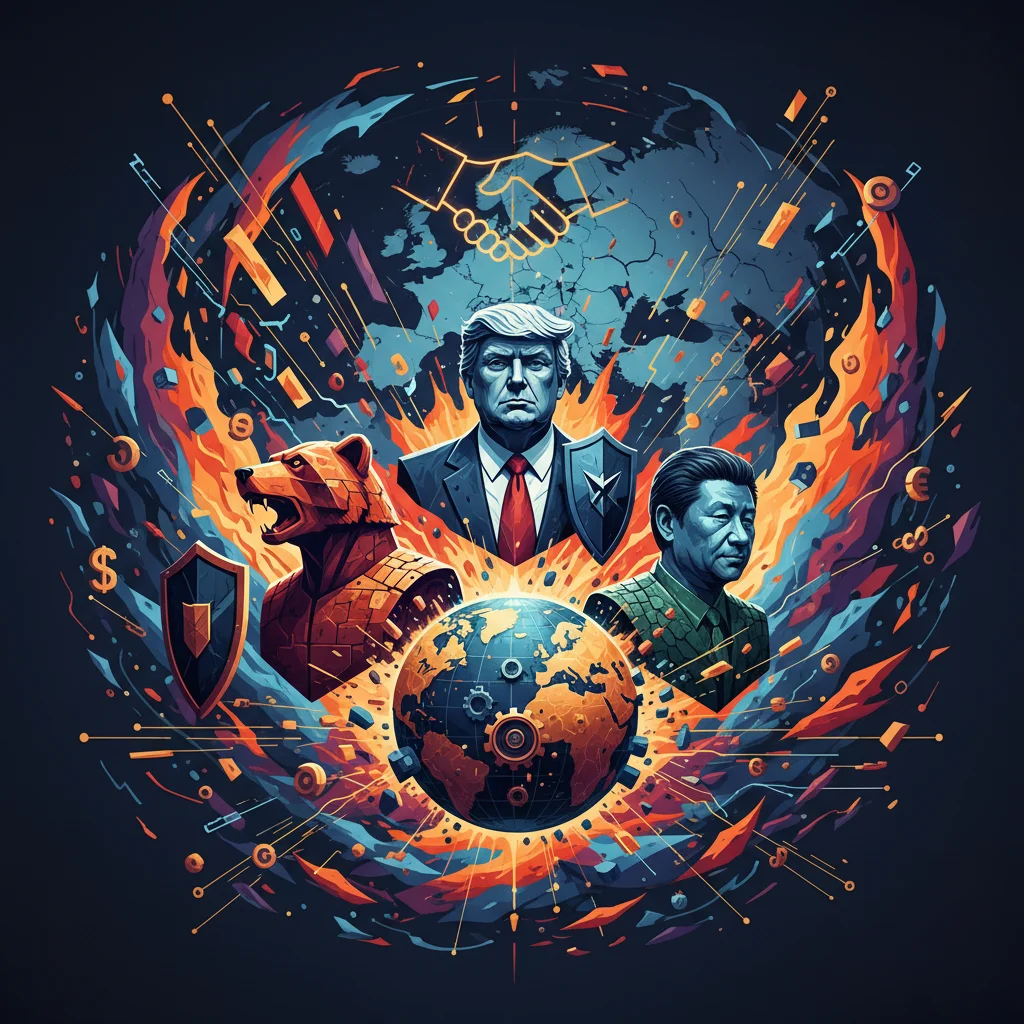
Jean Monnet, one of the European Union’s founding fathers, famously believed that “Europe will be forged in crises, and will be the sum of the solutions adopted for those crises.” This philosophy has been tested time and again, from sovereign debt crises to Brexit. Yet, the continent now faces a geopolitical perfect storm—a convergence of three distinct but interconnected shocks that threaten to upend the global economic and security order that has prevailed for decades. For investors, finance professionals, and business leaders, understanding this triple threat from Russia’s Vladimir Putin, the United States’ Donald Trump, and China’s Xi Jinping is no longer an academic exercise; it is an urgent necessity for navigating the turbulent waters ahead.
The post-Cold War era of hyper-globalization, characterized by relatively stable geopolitics and integrated supply chains, is decisively over. We are entering a new, more fragmented and dangerous world. Each of these three forces represents a fundamental challenge to the assumptions that have underpinned international economics and investing for a generation. Together, they create a paradigm shift that will reshape everything from the stock market and international trade to the very architecture of global finance.
Shock One: The Military Earthquake from the East
Vladimir Putin’s full-scale invasion of Ukraine in February 2022 was more than an act of aggression; it was a seismic event that shattered the illusion of perpetual peace in Europe. The immediate human and political costs were devastating, but the economic aftershocks continue to reverberate through the global economy. The war triggered a severe energy crisis, particularly in Germany, which had built its industrial model on cheap Russian gas. This, in turn, fueled an inflationary surge that central banks are still struggling to contain.
The long-term implications for finance and investing are profound. European nations have been jolted into a massive rearmament program. Germany, for instance, has committed to a €100 billion special fund for its military and pledged to meet the NATO target of spending 2% of GDP on defense. This represents a historic pivot in fiscal policy, redirecting capital towards the defense, aerospace, and cybersecurity sectors. For investors, this creates new, albeit somber, opportunities. The conflict has also accelerated Europe’s green transition as a matter of national security, creating further momentum for investments in renewable energy and related financial technology (fintech) solutions that support the transition.
However, the war also introduces a persistent risk premium for European assets. The proximity to a major conflict, coupled with ongoing economic uncertainty, has made international investors more cautious, impacting trading volumes and valuations on the European stock market.
The Price of Stability: Why Australia's New Hate Speech Laws Matter for Your Portfolio
Shock Two: The Political Hurricane from the West
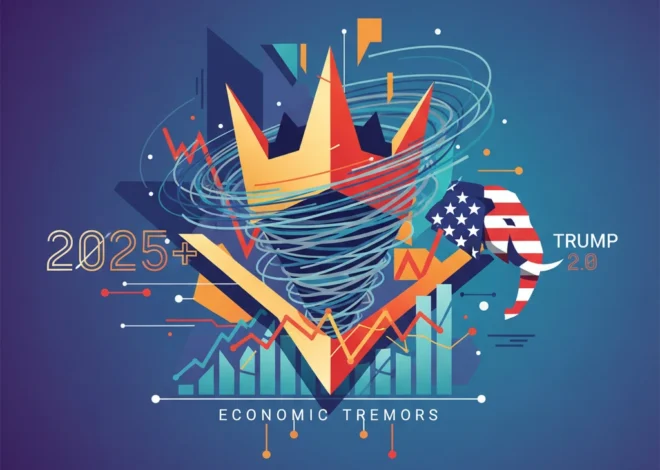
The second, and perhaps most unsettling, shock for European leaders is the potential return of Donald Trump to the White House. A second Trump presidency threatens to dismantle the two pillars of the transatlantic relationship: the U.S. security guarantee and a rules-based trading system. His open skepticism of NATO and threats to not defend allies who fail to meet defense spending targets have sent shockwaves through European capitals.
Equally disruptive is the looming threat of a trade war. Trump has floated the idea of a universal 10% tariff on all imports into the U.S., with tariffs potentially exceeding 60% for Chinese goods. Such a move would be a cannonball to the hull of the global trading system, triggering retaliatory measures and throwing global supply chains into chaos. For an export-oriented economy like the EU, this protectionist turn would be catastrophic, severely impacting its automotive, manufacturing, and luxury goods sectors.
To understand the potential economic impact, consider the shift from the current system to a protectionist framework:
| Policy Area | Current Transatlantic Framework | Potential “Trump 2.0” Framework |
|---|---|---|
| Security Alliance | NATO’s Article 5 collective defense guarantee is considered ironclad. | U.S. commitment becomes conditional, creating strategic uncertainty. |
| Trade Policy | Based on WTO rules, with ongoing disputes but a cooperative structure. | Unilateral imposition of high tariffs (e.g., 10% universal tariff). |
| Market Impact | Relative stability, with predictable trade and capital flows. | Extreme volatility, supply chain disruption, and potential currency wars. |
| Global Banking & Finance | Coordinated regulatory approach and dollar-dominated stability. | Increased financial fragmentation and challenges to the dollar’s status. |
Shock Three: The Economic Tsunami from the Far East
While Russia presents a military threat and the U.S. a political one, China under Xi Jinping poses a complex, long-term economic and systemic challenge. The EU has officially labeled China a “partner, competitor and systemic rival,” a label that captures the deep ambiguity in the relationship. Europe’s economy, particularly Germany’s, is deeply intertwined with China’s, making any talk of a full “decoupling” unrealistic. Instead, the strategy is one of “de-risking”—reducing critical dependencies in areas like raw materials, pharmaceuticals, and technology.
This de-risking process is fraught with difficulty and will have a significant impact on the global economy. It forces multinational corporations to re-evaluate their supply chains, a costly and complex undertaking that could weigh on corporate profits for years. Furthermore, the strategic competition with China is increasingly playing out in the technology domain. From artificial intelligence and quantum computing to blockchain and the future of digital currencies, the race for technological supremacy is a core component of this geopolitical rivalry. China’s advancements in fintech and its ambitions for the digital yuan are a direct challenge to the Western-dominated banking and financial system.
For the financial world, this means navigating a landscape where economic decisions are increasingly subordinate to national security concerns. The flow of capital, technology, and data will face new restrictions, creating a more balkanized global economy. This is a fundamental reversal of the trends that have powered the stock market for the last 30 years.
Cracks in the Foundation: Private Equity's Lending Crisis and Fintech's Growing Pains
The Unprecedented Convergence
What makes the current moment so perilous is that these three shocks are not happening in isolation. They are interconnected and mutually reinforcing. A U.S. retreat from global leadership under Trump would likely embolden both Putin and Xi. Russia’s aggression is being economically sustained, in part, by China. The West’s united front against Russia could fracture over disagreements on trade policy or defense burden-sharing.
This convergence is accelerating the demise of the unipolar, U.S.-led world order and giving rise to a more chaotic, multipolar system. For decades, the U.S. dollar, U.S. Treasury bonds, and the U.S. security guarantee formed the bedrock of the global financial system. As that bedrock begins to crack, we can expect greater volatility in currency and bond markets. The economics of globalization are giving way to the economics of security, where resilience, not just efficiency, is the primary goal.
In this new era, investors must fundamentally reassess risk. Country risk, currency risk, and political risk are no longer secondary considerations. A deep understanding of geopolitics is now as crucial as traditional financial analysis for successful trading and long-term investing. The old playbooks are being torn up, and new ones must be written for a world where the lines between economics, finance, and international security have been irrevocably blurred.
Returning to Jean Monnet’s vision, Europe is indeed being forged in this triple crisis. The response—a push for greater defense integration, energy independence, and technological sovereignty—could lead to a stronger, more cohesive union. This path will be paved with immense challenges, but it also presents unique opportunities. The crises are forcing Europe to confront its weaknesses and, in doing so, may unlock new avenues for growth and innovation. For the rest of the world, the lesson is clear: the ground is shifting beneath our feet, and the ability to adapt will determine the winners and losers in this new global era.