From Food Parcels to Financial Portfolios: The Investment Case for the Social Economy
The Hidden Economic Engine in Your Local Community
In the quiet town of Stockport, a model is emerging that challenges our fundamental assumptions about commerce, charity, and capital. It’s called Re:dish Good Stuff, a “social supermarket” where members can purchase fresh, healthy food at a significant discount. For many, it’s a lifeline. As one member shared, it “helps me to afford Christmas.” While this narrative of community support is powerful, to view it solely through the lens of social welfare is to miss the bigger picture. This is not just a story about food; it’s a story about the future of finance, a new frontier for investing, and a resilient economic model forged in the crucible of modern economic pressures.
For investors, finance professionals, and business leaders, the rise of social enterprises like Re:dish represents more than a philanthropic sideline. It signals a paradigm shift. These organizations are pioneering a hybrid model that blends the social mission of a non-profit with the operational efficiency and sustainability of a for-profit business. They are real-world laboratories testing new solutions to systemic problems—from supply chain inefficiency and food waste to the erosion of purchasing power in an inflationary economy. Understanding this model is no longer optional; it’s essential for anyone navigating the complexities of the 21st-century stock market, banking landscape, and the broader global economy.
Deconstructing the Social Supermarket: A Superior Economic Model
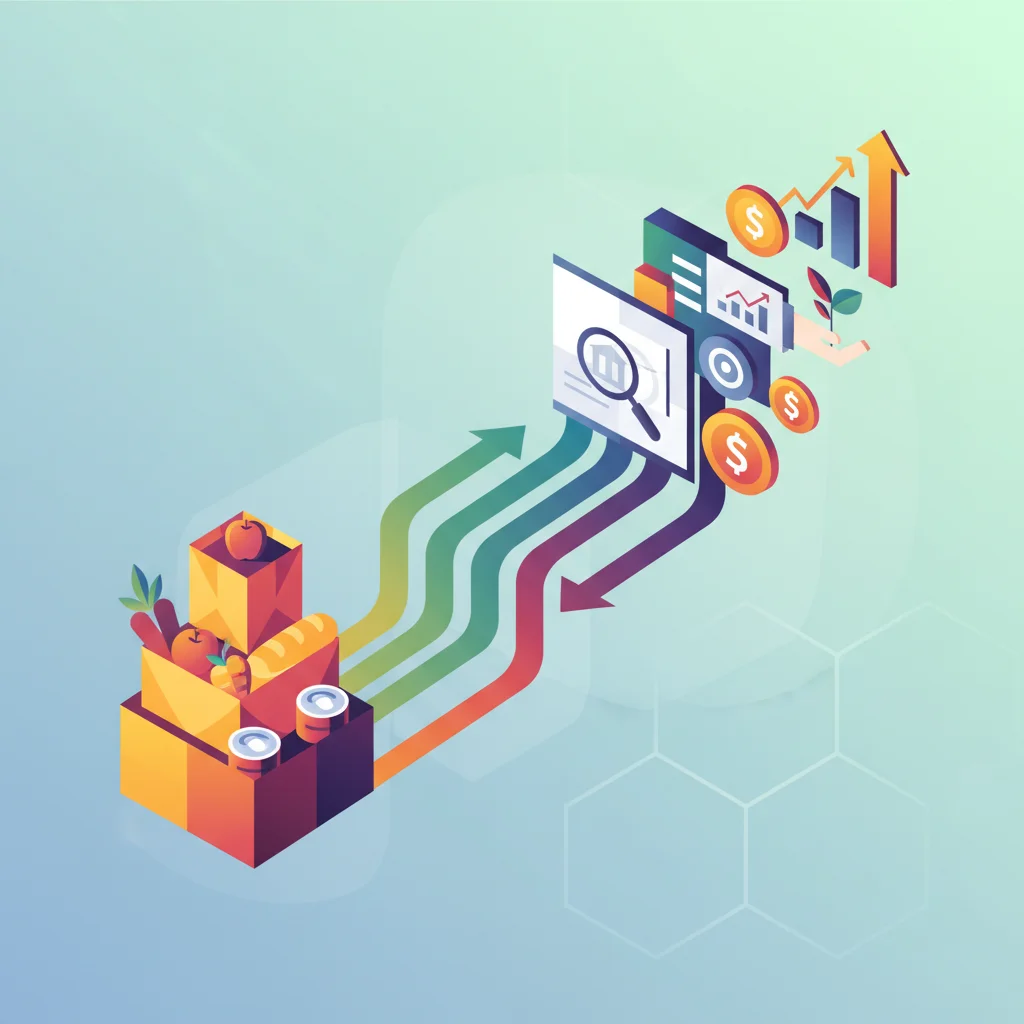
To appreciate the financial ingenuity at play, we must first distinguish the social supermarket from its more traditional cousin, the food bank. While both address food insecurity, their underlying economic principles are worlds apart. A food bank typically operates on a pure donation-and-distribution model, providing pre-selected parcels to those in need. In contrast, a social supermarket operates on a subsidized retail model.
The model is elegant in its simplicity:
- Sourcing: They partner with major retailers and suppliers to acquire surplus food that is perfectly good but may be approaching its “best before” date, have damaged packaging, or is simply overstocked. This is a critical intervention in the food supply chain, tackling the staggering problem of commercial food waste.
- Membership: Access is typically granted via a small membership fee, creating a consistent, albeit modest, revenue stream and fostering a sense of community and ownership among patrons.
- Retail Experience: Members shop in a store-like environment, choosing their own products. This preserves dignity and autonomy, a stark contrast to the handout model.
- Pricing: Goods are sold at heavily discounted prices, allowing members’ limited budgets to stretch significantly further.
This structure creates a virtuous cycle. Retailers reduce waste-disposal costs and meet corporate social responsibility goals. Consumers gain access to affordable, healthy food with dignity. And the enterprise itself builds a sustainable operational framework that is less reliant on sporadic charitable giving. It is, in essence, a market-based solution to a market-generated problem.
The table below illustrates the key differences between these three models, highlighting the unique economic advantages of the social enterprise approach.
| Attribute | Traditional Supermarket | Traditional Food Bank | Social Supermarket |
|---|---|---|---|
| Primary Goal | Profit Maximization | Emergency Food Aid | Social Impact & Financial Sustainability |
| Economic Model | Retail (Buy Low, Sell High) | Charity (Donation-Based) | Subsidized Retail (Hybrid) |
| Customer Role | Consumer | Recipient | Member / Customer |
| Source of Goods | Wholesale Supply Chain | Donations (Public & Corporate) | Surplus from Commercial Supply Chain |
| Impact on Waste | Contributes to Waste | Indirectly Reduces Waste | Directly Reduces & Monetizes Waste |
| Key Metric | Revenue / Profit Margin | Number of Parcels Distributed | Member Well-being & Revenue Stability |
This model effectively creates a new, efficient market for goods that would otherwise be destroyed, turning a liability (waste) into a social and economic asset.
Beyond the Hype: A Philosophical Guide to Navigating Market Superstition
The Investor’s Perspective: ESG, Impact Investing, and New Asset Classes
For decades, the worlds of finance and social good were largely separate. Today, that wall is crumbling. The rise of Environmental, Social, and Governance (ESG) criteria has fundamentally reshaped the landscape of modern investing. Global ESG assets are projected to exceed $41 trillion in 2022 and are on a path to surpass $50 trillion by 2025, representing a massive shift in how capital is allocated. (source)
Social supermarkets are a perfect case study in ESG-aligned enterprise. They are:
- Environmental: By intercepting food waste, they reduce landfill use and the associated methane emissions, a potent greenhouse gas.
- Social: They directly address food insecurity, improve community health outcomes, and provide dignified support systems.
- Governance: They operate with a clear social mission, transparent partnerships, and a focus on stakeholder value over pure shareholder profit.
This goes beyond simply “feeling good.” This is about risk mitigation and identifying long-term, sustainable value. Companies with strong ESG performance are increasingly seen as better managed and more resilient to macroeconomic shocks. For a finance professional, analyzing an enterprise like Re:dish is no different from analyzing a tech startup; it’s about evaluating the model, the market, the scalability, and the potential for return—only here, the “return” is measured in both dollars and social impact.
Financial Technology (Fintech) as the Great Enabler
The editor’s note hints at a future where technology supercharges the social economy. The current model, while effective, is often localized and operationally intensive. This is where financial technology and adjacent innovations like blockchain can act as a force multiplier, enabling scale, transparency, and new investment avenues.
Consider the potential applications:
- Supply Chain Transparency: A blockchain ledger could provide an immutable record of food from the point it’s declared “surplus” to the moment it’s sold at a social supermarket. This provides unparalleled transparency for corporate partners, regulators, and investors, verifying impact claims with cryptographic certainty. This level of data integrity is a game-changer for ESG reporting.
- Fractionalized Investment: Fintech platforms could allow retail investors to directly fund specific social enterprises through micro-investments or community bonds, democratizing impact investing beyond institutional players.
- Automated Logistics & Trading: Smart contracts could automate the entire process—triggering logistics providers when a certain volume of surplus is available and facilitating instant payment upon delivery. This reduces overhead and creates a more dynamic, responsive system for managing perishable goods.
- Impact Metrics as an Asset: Verifiable data on “kilograms of food saved” or “number of families fed” could be tokenized themselves, creating a new type of financial instrument for impact-focused funds. This moves beyond traditional stock market assets into a new realm of value creation.
This technological integration transforms a community initiative into a highly efficient, data-driven ecosystem. It provides the hard data and accountability that the world of high finance demands before deploying capital at scale. A 2021 report by Deloitte highlighted how blockchain is already enhancing food supply chains by boosting transparency and efficiency, a principle directly applicable here. (source)
The Erasmus+ Reroute: Why the UK's Potential Return is a Major Signal for the Economy and Investors
A Macroeconomic Imperative in an Age of Uncertainty
The emergence of social supermarkets is not happening in a vacuum. It is a direct and rational response to powerful macroeconomic forces that are reshaping our world. The global economy is grappling with persistent inflation, which erodes the real value of wages and savings. In the UK, food and non-alcoholic beverage prices rose by 19.1% in the year to April 2023, the second-highest rate in over 45 years. (source)
This is not a temporary blip; it’s a structural challenge. Central banking policies designed to control inflation, such as raising interest rates, can also slow economic growth, putting further pressure on household budgets. In this environment, models that increase the efficiency of the economy and provide price stability for essential goods are not just “nice to have”—they are critical infrastructure.
The social supermarket model acts as a natural economic stabilizer at the community level. By creating a parallel market for surplus goods, it introduces a deflationary pressure point for consumers, allowing them to maintain a standard of living that would otherwise be impossible. For economists and policymakers, these enterprises offer a valuable lesson: resilience in a volatile economy may come not from top-down government programs alone, but from fostering innovative, decentralized, market-based social safety nets.
India's "Goldilocks" Moment: Why the RBI is Keeping Rates Low and What It Means for Your Investments
Conclusion: The Future of Value
The story of Re:dish in Stockport is far more than a heartwarming Christmas tale. It is a dispatch from the future of our economy. It demonstrates that social and financial returns are not mutually exclusive; they can be two sides of the same coin. The social supermarket is a sophisticated economic entity that tackles food waste, addresses the cost-of-living crisis, and offers a tangible, investable opportunity for those in the world of finance.
For business leaders, it is a call to reimagine supply chains and corporate responsibility. For those in banking and financial technology, it is a greenfield opportunity to build the platforms and tools that will power the next generation of the social economy. And for investors, from institutional funds to individuals shaping their stock market portfolios, it is a clear signal that the most profound value in the coming decades will be found at the intersection of innovation, sustainability, and human dignity.

Related Posts
The Social Capital Dividend: What a Yorkshire Town Can Teach Wall Street About Real Investment
The ROI of a Fish and Chip Supper: Deconstructing the Economics of Corporate Goodwill