The £100 Billion Question: Is Post-Brexit Trade Holding Back the UK Economy?
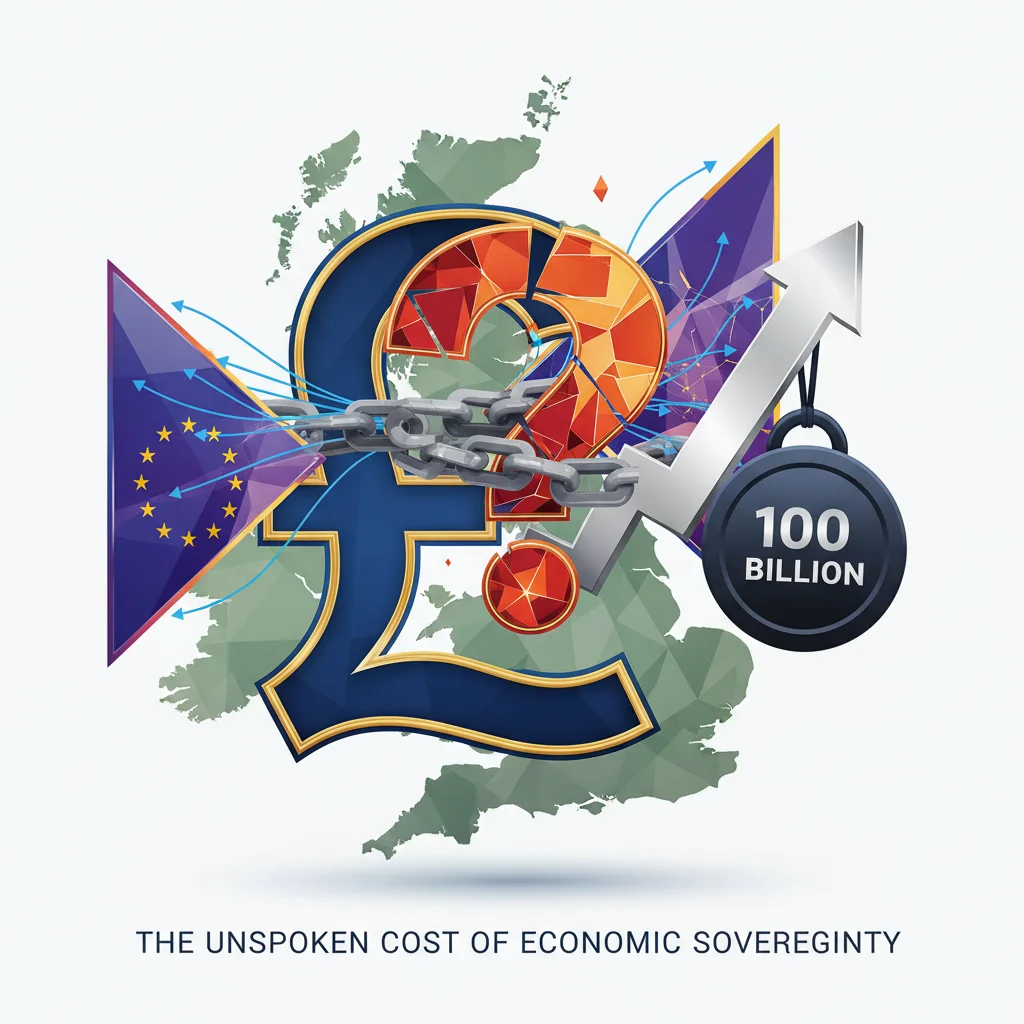
The Unspoken Cost of Economic Sovereignty
The promise of post-Brexit Britain was one of frictionless global trade, unshackled from European bureaucracy and free to chart its own economic destiny. The reality, however, appears to be a far more complex and costly affair. Years after the implementation of the UK-EU Trade and Cooperation Agreement (TCA), a stark picture is emerging from the front lines of British business: the new trading relationship is not a superhighway, but a landscape fraught with friction, paperwork, and unforeseen costs.
A recent, sobering survey of nearly 900 exporters has thrown this reality into sharp relief. It found that a mere 16% believe the TCA is working well for their businesses. This isn’t just a teething problem; it’s a persistent drag on a significant portion of the UK economy, impacting everything from small artisanal producers to large-scale manufacturers. The frustrations are deepening, and the economic consequences are becoming too large to ignore. For investors, finance professionals, and business leaders, understanding the anatomy of this trade friction is crucial to navigating the future of the UK’s stock market and overall economic health.
Deconstructing the Trade and Cooperation Agreement (TCA)
At its core, the TCA was designed to provide tariff-free and quota-free trade in goods between the UK and the EU. On paper, this sounds like a continuation of seamless commerce. However, the devil is in the detail—or rather, in the non-tariff barriers that have replaced the seamless integration of the Single Market and Customs Union. These barriers represent the new cost of doing business with our closest trading partner.
The challenges stem from the fact that the UK is now a ‘third country’ in the eyes of the EU. This status introduces a labyrinth of administrative and regulatory hurdles that simply did not exist before. Below is a breakdown of the primary pain points that are stifling British exporters.
| Challenge Area | Description & Business Impact |
|---|---|
| Customs Declarations & Red Tape | Every consignment now requires extensive customs paperwork (such as the C88/SAD form), leading to significant administrative costs, delays at ports, and the need for specialist customs agents. This disproportionately affects smaller businesses without dedicated logistics departments. |
| Rules of Origin | To qualify for tariff-free trade, goods must prove they are “originating” from the UK. This is immensely complex for modern supply chains where components are sourced globally. A car assembled in the UK might not qualify if too many of its parts come from outside the UK or EU, creating a major headache for the manufacturing sector. |
| VAT & Import Duties | The rules for charging and reclaiming Value Added Tax (VAT) have become highly complicated. Businesses now face intricate processes for B2C and B2B sales, often resulting in unexpected duties for customers and cash flow problems for exporters. |
| Sanitary & Phytosanitary (SPS) Checks | Exporters of animal and plant products (a cornerstone of the UK’s food and agriculture sector) now face rigorous physical checks and require expensive Export Health Certificates for every shipment. This has led to spoiled goods, lost orders, and some businesses ceasing EU trade altogether. |
These barriers are not just inconvenient; they represent a fundamental increase in the cost and complexity of UK-EU trading. This friction directly impacts corporate profitability, supply chain resilience, and, ultimately, the investment appeal of UK-based companies with heavy EU exposure.
From Wild West to Westminster: A Deep Dive into the UK's New Crypto Regulation Blueprint
The Macroeconomic Ripple Effect: From Port Delays to Market Volatility
The struggles of individual exporters are coalescing into a significant headwind for the entire UK economy. The Office for Budget Responsibility (OBR), the UK’s independent fiscal watchdog, has maintained a consistent and stark forecast. They project that the new trading relationship will, in the long run, reduce the UK’s long-run productivity by 4% and that both total imports and exports will be around 15% lower than if the UK had remained in the EU. This is not a political statement; it is a sober assessment of the economic impact of introducing trade barriers where none previously existed.
This reduction in trade intensity has several knock-on effects that should concern anyone involved in UK finance and investing:
- Inflationary Pressure: Increased shipping costs, administrative fees, and occasional tariffs are passed on to consumers. This trade friction has been a contributing factor to the UK’s persistent inflation, complicating the Bank of England’s monetary policy and eroding real returns on investments.
- Reduced Competitiveness: UK goods are now more expensive and slower to arrive in the EU market compared to their EU-based competitors. This erodes market share and forces UK companies to either absorb costs, hurting their margins, or raise prices, hurting their sales.
- Investment Chilling Effect: Uncertainty and rising costs deter foreign direct investment (FDI). International firms looking for a European base are now less likely to choose the UK if their primary goal is to serve the EU market, impacting long-term growth and capital flows into the UK stock market.
Sector-Specific Headwinds: A Varied Landscape of Challenges
The impact of the TCA is not uniform across the economy. Certain sectors have been hit particularly hard, demonstrating the specific ways in which non-tariff barriers can cripple established business models.
The UK’s automotive and manufacturing sectors, for instance, are caught in the “rules of origin” trap. As the industry pivots towards electric vehicles, sourcing batteries from Asia could jeopardise the tariff-free status of cars exported to the EU, a critical market. This presents a multi-billion-pound challenge that requires urgent strategic decisions on domestic battery production and supply chain re-engineering.
Similarly, the financial services sector, a titan of the UK economy, faces its own distinct set of post-Brexit challenges. While not directly covered by the TCA, the loss of financial “passporting” rights has fragmented the European financial market. Major banking institutions have had to relocate specific operations and staff to hubs within the EU to continue serving European clients seamlessly. According to a study by New Financial, over 400 financial firms have moved part of their business from the UK to the EU, representing a significant shift in the architecture of European finance.
Nissan's £450M Gambit: Why the New Leaf EV is a Bellwether for the UK Economy and EV Investing
Bridging the Divide: Can Technology and Policy Pave a Smoother Path?
Faced with this persistent friction, the focus must shift from identifying problems to engineering solutions. A combination of innovative technology and pragmatic policy-making is essential to mitigate the economic damage and build a more resilient trading future.
The field of financial technology, or fintech, offers some of the most promising avenues. Start-ups and established players are developing platforms that can automate customs declarations, simplify VAT calculations, and provide seamless cross-border payment solutions. These tools can dramatically reduce the administrative burden on small and medium-sized enterprises (SMEs), effectively democratizing access to the EU market once more.
In the long term, emerging technologies like blockchain hold the potential to revolutionize supply chain management. By creating a secure, transparent, and immutable ledger of a product’s journey from factory to consumer, blockchain could one day make proving “rules of origin” a simple, digital process, eliminating mountains of paperwork and reducing the risk of fraud in international trading. While still in its nascent stages for mainstream adoption, its potential to solve some of the TCA’s most fundamental problems is a key area for future investment and development.
On the policy front, the UK government is pursuing initiatives like the “Single Trade Window,” a digital platform intended to streamline data submission for traders. Furthermore, ongoing diplomatic efforts to ease SPS checks and find common ground on professional qualifications are vital. These incremental improvements, while not a silver bullet, can collectively reduce the friction that is currently hampering growth.
Investing in the Automated Home: The Financial Future of Domestic Robotics
Conclusion: A Call for Adaptation in a New Economic Era
The evidence is clear: the UK-EU Trade and Cooperation Agreement, in its current form, is a significant impediment for a vast majority of British exporters. The dream of frictionless trade has been replaced by a daily reality of red tape, added costs, and strategic uncertainty. This is not merely a business issue; it is a core challenge to the UK’s economic outlook, with profound implications for economics, inflation, investment, and growth.
For those in the world of finance, the takeaway is twofold. Firstly, the risk profile for UK companies heavily reliant on EU trade has fundamentally changed, requiring deeper due diligence and a clear-eyed assessment of supply chain vulnerability. Secondly, this disruption creates a powerful impetus for innovation. The next generation of British success stories may well be the fintech firms that solve these complex trade challenges, the manufacturers who re-shore their supply chains, and the exporters who successfully pivot to new global markets. Navigating this new era requires resilience, strategic foresight, and an unwavering focus on adaptation.