The Swedish Christmas Portfolio: Building Financial Resilience in a Volatile World
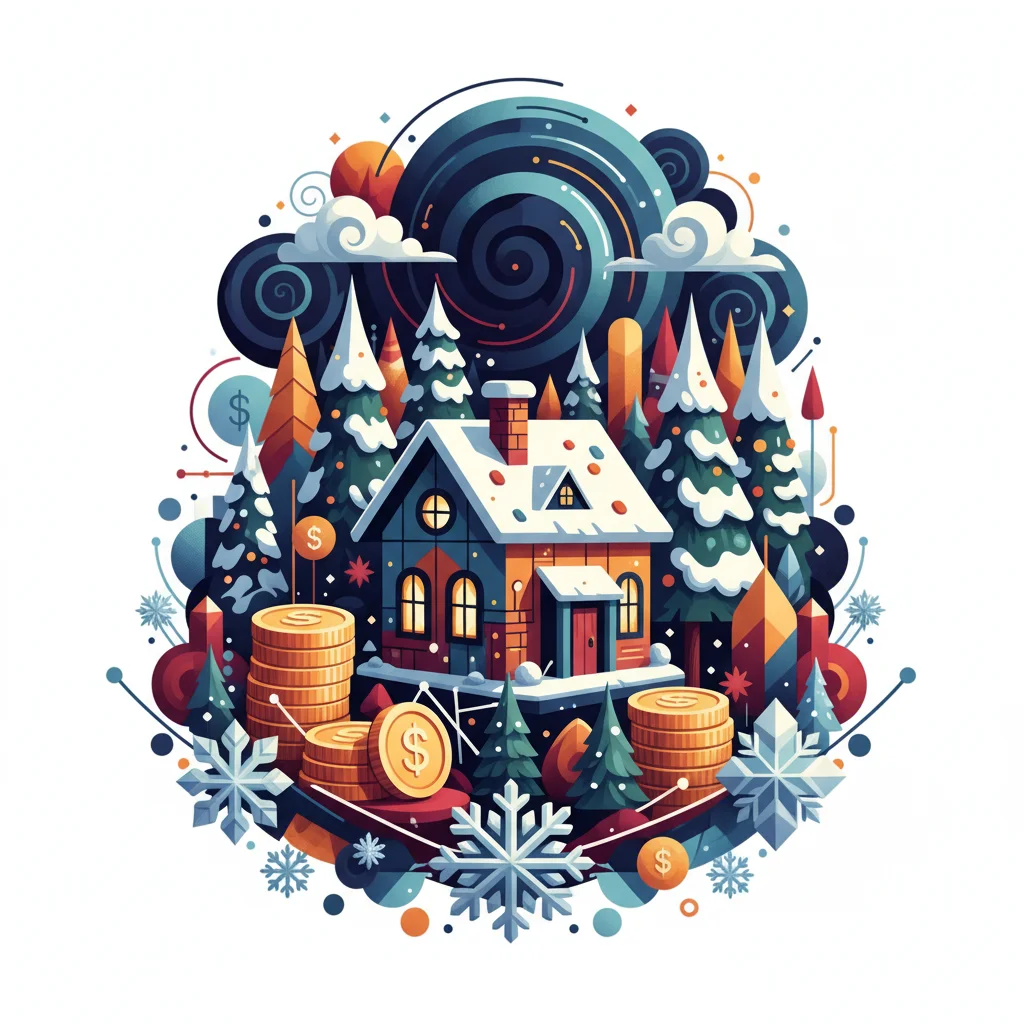
Imagine a scene straight from a storybook: a solitary house, its windows glowing with candlelight, nestled deep within a snow-dusted Swedish forest. It’s an image of warmth, stability, and serene preparation against the vast, dark wilderness. This idyllic picture, captured in a recent Financial Times piece on a fairytale Swedish Christmas, offers more than just festive charm. For investors, business leaders, and finance professionals, it serves as a powerful metaphor for navigating the modern global economy.
The world of finance is our own dark forest—vast, unpredictable, and often intimidating. The howling winds of market volatility, the unseen risks lurking in the shadows of geopolitical instability, and the disorienting pace of technological change can make even the most seasoned investor feel lost. In this environment, how do we build our own “candlelit house”—a portfolio, a business, a financial strategy—that is not only resilient but also poised for growth? The answer may lie in the very principles embodied by that Swedish winter scene: long-term planning, robust construction, and the intelligent use of light to illuminate the path forward.
This article will explore how the ethos of a traditional Swedish Christmas can be translated into a modern investment philosophy. We will deconstruct this metaphor to uncover actionable strategies for building a resilient financial future, leveraging cutting-edge financial technology, and understanding the macroeconomic forces that shape our world.
Building Your Financial “House”: The Foundation of a Resilient Portfolio
A house in the middle of a Swedish winter must be built to last. Its foundation must be deep, its walls insulated, and its structure sound enough to withstand heavy snow and biting winds. The same is true for an investment portfolio. A portfolio thrown together hastily, based on fleeting market trends or “hot tips,” is like a flimsy shack—liable to collapse at the first sign of an economic storm.
The foundation of a strong portfolio is diversification. This timeless principle of not putting all your eggs in one basket is crucial for mitigating risk. It involves spreading investments across a variety of asset classes, geographies, and industries. Just as a builder uses different materials—stone for the foundation, timber for the frame, slate for the roof—an investor should use a mix of assets to construct their portfolio.
- The Foundation (Low-Risk Assets): This includes government bonds and high-grade corporate bonds. They provide stability and predictable, albeit lower, returns, anchoring the portfolio during stock market downturns.
- The Frame (Growth Assets): This is primarily composed of equities, or stocks. Investing in a mix of large-cap, mid-cap, and small-cap companies across different sectors of the economy provides the potential for significant long-term growth.
- The Insulation (Alternative Investments): Assets like real estate, commodities, and private equity can act as insulation. They often have a low correlation to the traditional stock market, meaning they may perform well when stocks are down, providing an additional layer of protection.
Building this structure isn’t a one-time event. It requires regular maintenance—rebalancing your portfolio to ensure the asset allocation remains aligned with your long-term goals and risk tolerance. This disciplined approach is the financial equivalent of checking the roof for leaks and reinforcing the walls before the winter storm hits.
UK Housing Correction: Decoding the £2,000 Price Drop and What It Means for Your Investments
The Candlelight: Illuminating the Path with Financial Technology
In our fairytale, candlelight pushes back the darkness, allowing the inhabitants to see clearly and navigate their home safely. In modern finance, our “candlelight” is data, and its carriers are the revolutionary tools of financial technology (fintech). Sweden, the setting of our story, is ironically a global powerhouse in this very field. It is one of Europe’s leading fintech hubs, home to giants like Klarna and iZettle (now part of PayPal), with a fintech ecosystem valued at over €100 billion.
Fintech provides the illumination necessary for today’s investors to make informed decisions. It democratizes access to information and tools that were once the exclusive domain of large institutional banks. The impact of this technological shift on banking, trading, and investing is profound.
Here is a comparison of traditional financial methods versus their modern fintech counterparts:
| Financial Activity | Traditional Approach | Modern Fintech Solution |
|---|---|---|
| Portfolio Management | Human financial advisor, manual rebalancing, high fees. | Robo-advisors using algorithms for automated investing and rebalancing at a lower cost. |
| Stock Trading | Calling a broker, high commission fees, delayed execution. | Online trading platforms with zero-commission trades and real-time market data access. |
| Banking & Payments | Physical branch visits, slow wire transfers, reliance on cash. | Digital-only banks, peer-to-peer payment apps, and instant global transfers. |
| Data Analysis | Relying on quarterly reports and mainstream news. | AI-powered analytics platforms that scan alternative data (e.g., satellite imagery, social media sentiment) for trading signals. |
This technological leap empowers the individual investor, providing brighter, more powerful “candles” than ever before. It allows us to analyze the stock market with greater precision, manage our finance with more efficiency, and react to changes in the economy with unprecedented speed.
Navigating the Forest: Macroeconomics and Global Uncertainty
No matter how well-built our house or how bright our candles, we cannot ignore the forest outside. The global economy is a complex, interconnected ecosystem influenced by countless factors, from central banking policies to geopolitical shifts. Understanding the principles of economics is essential for navigating this terrain.
The Swedish model itself offers an interesting case study. It’s often characterized as a “middle way,” blending a robust, innovative capitalist engine with a comprehensive social safety net. This approach has historically provided a high degree of economic stability and resilience. According to the OECD, Sweden has demonstrated strong economic performance over the long term, adapting to global shocks while maintaining high living standards. This balance between dynamism and stability is a lesson for investors who must navigate the twin forces of risk and reward.
Today’s “forest” is particularly dense with challenges:
- Inflationary Pressures: Central banks worldwide are grappling with inflation, using interest rate hikes as their primary tool. This cools the economy but also increases borrowing costs and can put pressure on stock market valuations.
- Geopolitical Fault Lines: Conflicts and trade disputes create uncertainty, disrupting supply chains and causing volatility in commodity prices.
- Technological Disruption: The rise of AI and other transformative technologies creates both immense opportunity and the risk of displacing entire industries.
A successful investor doesn’t try to predict every falling branch. Instead, they study the health of the forest. They understand the seasons of the economic cycle and position their portfolio to weather both winter storms and summer growth. This means staying informed, focusing on long-term trends over short-term noise, and maintaining the discipline of the financial plan you so carefully constructed.
The Blockchain Hearth: A New Source of Financial Warmth?
At the center of our Swedish home is the hearth—the fireplace that provides warmth, light, and a central gathering point. In the financial system of the future, blockchain technology could become the new digital hearth. It is a decentralized, immutable ledger that offers a fundamentally new way to record transactions and establish trust without a central intermediary like a bank.
While often associated with volatile cryptocurrencies, the underlying financial technology of blockchain has the potential to rebuild core parts of our financial infrastructure, making them more transparent, efficient, and secure. A report by Deloitte highlights how blockchain can transform everything from cross-border payments to stock settlement.
Imagine a trading system where the ownership of a stock is transferred and settled in seconds, not days, dramatically reducing counterparty risk. Consider a global payment network where money moves as freely and cheaply as an email, revolutionizing international trade and remittances. This is the promise of blockchain—a warm, transparent, and trustworthy “hearth” for a globalized economy.
However, this fire is still new and, at times, untamed. The technology is evolving, regulatory frameworks are still being built, and the space is rife with speculation. For investors, approaching blockchain means treating it as a powerful but volatile new element—perhaps a small, carefully managed part of an “alternative investment” allocation, but not yet the foundation upon which the entire house is built.
Conclusion: Your Fairytale of Financial Success
The image of a candlelit house in a Swedish forest is more than a festive daydream; it is a blueprint for financial resilience. It teaches us that in a world of overwhelming complexity and volatility, the path to success lies in returning to first principles.
First, build a robust and diversified “house”—a portfolio designed to withstand the inevitable storms of the stock market. Second, use the “candlelight” of modern fintech and data to illuminate your decisions, but do so with wisdom and an awareness of the risks. Third, understand the “forest” of the global economy, respecting its power and unpredictability. Finally, keep an eye on emerging technologies like blockchain, which may one day form the very hearth of our financial system.
By embracing this philosophy of preparation, resilience, and intelligent innovation, you can transform your financial journey from a source of anxiety into your own fairytale—a story of stability, growth, and enduring success, no matter how dark the woods may get.
The Architect's Portfolio: Rebuilding Your Financial Future with the Principles of Design

Related Posts
The Whale in the Portfolio: A 19th-Century Lesson on Stranded Assets and the Modern Energy Transition
The EU’s Billion-Dollar Disconnect: Why a Fragmented Telecom Market Threatens Europe’s Economic Future