The Algorithmic Witch Hunt: How AI Is Turning Social Media into a Modern-Day Salem
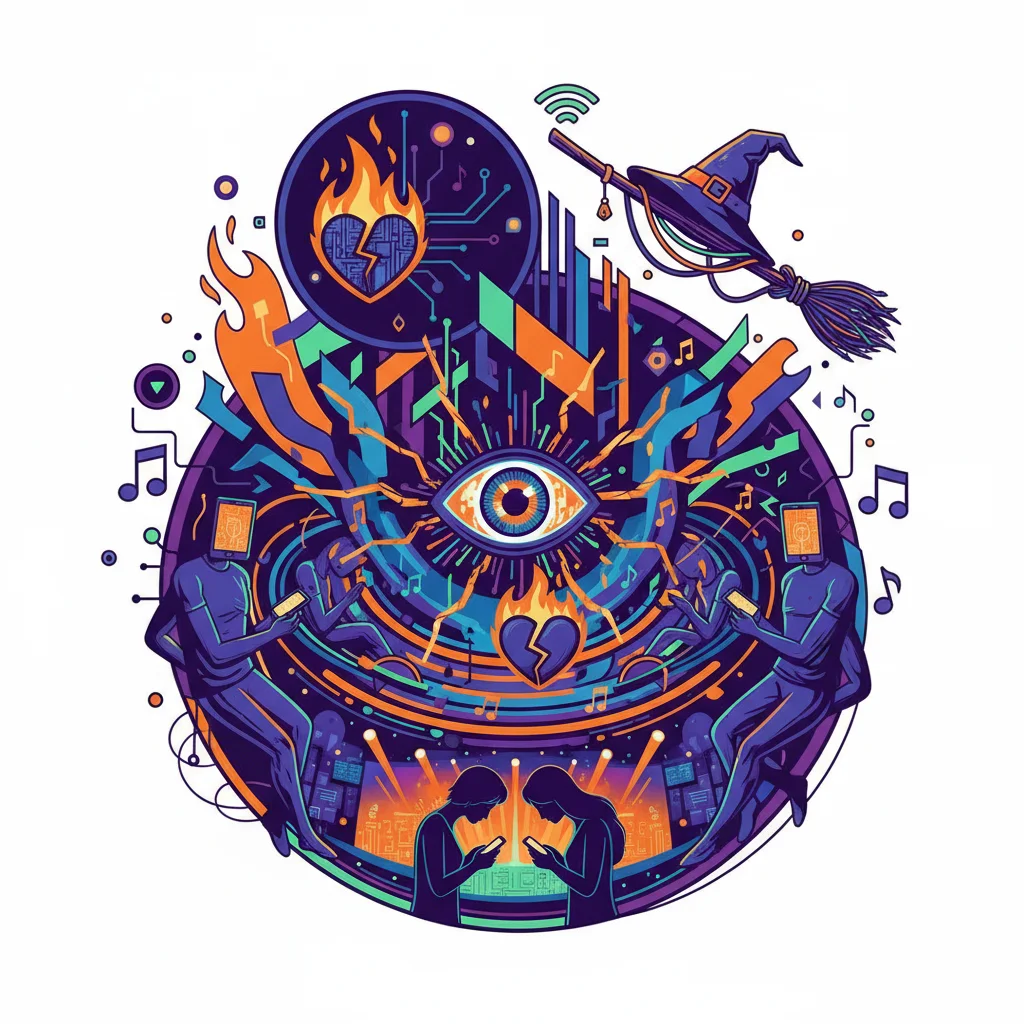
It starts with a snippet. A 15-second video, stripped of context, showing a couple engrossed in their phones during a Coldplay concert. The caption is snarky: “Can’t even enjoy a concert without their phones.” The algorithm sees a spark of engagement—a few angry comments, a hundred retweets—and pours gasoline on it. Within hours, the couple are digital effigies, symbols of everything wrong with modern society. They are judged, condemned, and sentenced in the court of public opinion, all before anyone asks a single question.
This scenario, drawn from a poignant observation in the Financial Times, isn’t an isolated incident. It’s a feature, not a bug, of our modern digital public square. We’ve built a system that feels eerily familiar to the paranoid fervor of the Salem witch trials of 1692. But this time, the mob isn’t carrying pitchforks and torches; they’re wielding smartphones. And the force amplifying their accusations isn’t superstition; it’s sophisticated artificial intelligence.
For those of us in the tech world—developers, entrepreneurs, and innovators—it’s easy to dismiss this as a “social problem.” But it’s a technology problem. The very software, cloud infrastructure, and machine learning models we build are the engines of this modern-day madness. Understanding how we got here is the first step toward architecting a better, more humane digital future.
The Anatomy of a Digital Mob: Salem 1692 vs. The Internet Today
The parallels between the 17th-century witch hunts and modern online pile-ons are chillingly precise. In Salem, accusations were based on “spectral evidence”—claims that a witch’s spirit had appeared to the accuser in a dream. It was flimsy, unfalsifiable, and emotionally potent. Today, our spectral evidence is the out-of-context video clip, the misconstrued tweet, or the screenshot shared without its surrounding conversation.
In both eras, the process bypasses due process. The accusation itself is treated as proof of guilt. The public spectacle becomes the punishment, long before any real facts can be established. The pressure to join the chorus of condemnation is immense, lest you be seen as a sympathizer and become the next target. A study published in Psychology Today notes that online mobs often provide a sense of “communal belonging and moral righteousness,” making participation feel not just easy, but virtuous.
To truly grasp the similarities, let’s compare the mechanics of these two phenomena.
Here is a breakdown of the core components of a witch hunt, then and now:
| Component | Salem Witch Trials (1692) | Modern Digital Mobs (Today) |
|---|---|---|
| Accusation Trigger | “Spectral evidence,” personal grudges, social non-conformity. | Out-of-context clips, old posts, perceived slights, ideological differences. |
| Evidence Standard | Hearsay, emotional testimony, confessions under duress. | Screenshots without context, viral rumors, algorithmic amplification. |
| The “Court” | A formal court heavily influenced by public hysteria and religious dogma. | The court of public opinion on platforms like X (Twitter), TikTok, and Reddit. |
| The Punishment | Social ostracization, imprisonment, execution. | Doxxing, job loss, brand destruction, severe mental distress, de-platforming. |
| Speed & Scale | Spread by word-of-mouth over weeks, confined to a few towns. | Spreads globally in minutes via automation and AI, reaching millions. |
The most significant differentiator is the last one: Speed & Scale. The Salem witch trials, while horrific, were geographically contained. Today’s digital outrage is powered by a global cloud infrastructure capable of turning a local dispute into an international incident in the time it takes to make a coffee. And the engine driving that amplification is AI.
The UK's New Digital Nanny: Is AI-Powered Nudity Blocking a Solution or a Slippery Slope?
The Code Behind the Chaos: How Machine Learning Fuels the Fire
Social media platforms are not neutral platforms. They are meticulously designed SaaS products built to maximize one thing: engagement. The machine learning algorithms at their core are not programmed to discern truth, promote empathy, or provide context. They are programmed to identify and amplify content that elicits the strongest reactions.
And what elicits a stronger reaction than outrage?
Here’s how the technological stack contributes to the problem:
- Engagement-Optimized Algorithms: The core AI models behind your feed learn that content sparking anger, fear, and indignation generates more comments, shares, and clicks than nuanced or positive content. As a result, the system automatically prioritizes and force-feeds outrage to a wider audience, creating a vicious feedback loop. Research from institutions like MIT has shown that false news and emotionally charged content spreads significantly farther, faster, and more broadly than the truth.
- The Automation of Amplification: It’s not just humans hitting “share.” Sophisticated bot networks, often powered by their own rudimentary AI, can be deployed to artificially boost a narrative, making a fringe opinion seem like a mainstream consensus. This automated outrage manufacturing is a key tool in disinformation campaigns and targeted harassment.
- Frictionless Virality: The programming of these platforms is designed to be frictionless. A single tap can share a condemning video with thousands of followers. There are no built-in “speed bumps” to encourage critical thinking, fact-checking, or consideration of context before participating in a pile-on.
As developers and tech leaders, we write the code that executes these processes. We build the models that learn these patterns. The “move fast and break things” ethos of many startups has led to the creation of incredibly powerful systems of social control, often without a deep consideration of the societal “things” we are breaking.
From Digital Stocks to Cybersecurity Threats
When a digital mob forms, the consequences extend beyond hurt feelings. Public shaming has become a potent cybersecurity threat, both to individuals and organizations. The same tactics used to condemn a couple at a concert can be weaponized against a startup, a CEO, or a developer who makes an off-hand comment.
This weaponization includes:
- Doxxing: Maliciously publishing private and identifying information (home address, phone number, family details) online, leading to real-world harassment and danger.
- Reputational Attacks: Coordinated campaigns to “review bomb” a product, flood a company’s support channels, or destroy an individual’s professional credibility. For a new startup, whose reputation is one of its most valuable assets, such an attack can be an extinction-level event.
- Denial-of-Service (Social): Overwhelming a brand’s social media and communication channels with so much vitriol that they can no longer engage with actual customers or perform normal business functions.
The rise of generative AI adds another terrifying layer to this. Soon, it will be trivial to create fake audio or video evidence to launch a digital witch hunt, making it even harder for the truth to prevail. Protecting against these narrative-based attacks is the next frontier of cybersecurity. It’s no longer just about protecting servers and data; it’s about protecting truth and reputation in an environment designed to amplify lies.
The Way Forward: Can We Program Empathy?
It’s easy to feel pessimistic, but we are not powerless. The same tools that created this problem can be used to fix it. The path forward lies in conscious, ethical innovation and a shift in the philosophy of software development.
What could this look like in practice?
- Context-Aware AI: Imagine a new generation of machine learning models trained not just for engagement, but for context. An AI that could identify when a video clip is a small part of a much longer video and automatically provide a link to the full source. Or an algorithm that detects a sudden, coordinated spike in negative activity around a user and flags it as a potential mobbing event, perhaps even rate-limiting the visibility of the pile-on.
- Architectural “Speed Bumps”: What if programming interfaces incorporated moments of friction? For example, prompting a user, “This story is spreading fast, and the facts are still emerging. Are you sure you want to share?” A simple intervention like this could dramatically reduce the spread of knee-jerk reactions. A 2021 Twitter experiment that prompted users to read an article before retweeting it showed promising results in encouraging more informed sharing.
- New Metrics for Success: For startups in the social space, the key is to move beyond Daily Active Users (DAUs) and engagement time as the sole metrics of success. What if we measured “Time Well Spent,” “Constructive Conversations,” or “Bridged Divides”? Building a business model around healthier interaction is the ultimate challenge and opportunity.
This isn’t a call for censorship. It’s a call for better architecture. We don’t need to police speech; we need to build digital spaces that are less conducive to mob formation. We need to re-align the incentives of the software with the health of society.
The couple at the Coldplay concert deserved to enjoy their night without becoming unwilling pawns in a global culture war. The victims of the Salem witch trials deserved due process. The lesson from 1692 is that when fear, outrage, and a lack of due process combine, tragedy follows. Our responsibility as the architects of this new world is to learn that lesson and start coding a more just, contextual, and humane digital future. The witch hunt must not be automated.
When Lifelines Fail: Can AI and Automation Prevent the Next 999 Outage?