The £5,000 Leggings: A Sobering Case Study on Fintech’s Dark Side and Hidden Investment Risks
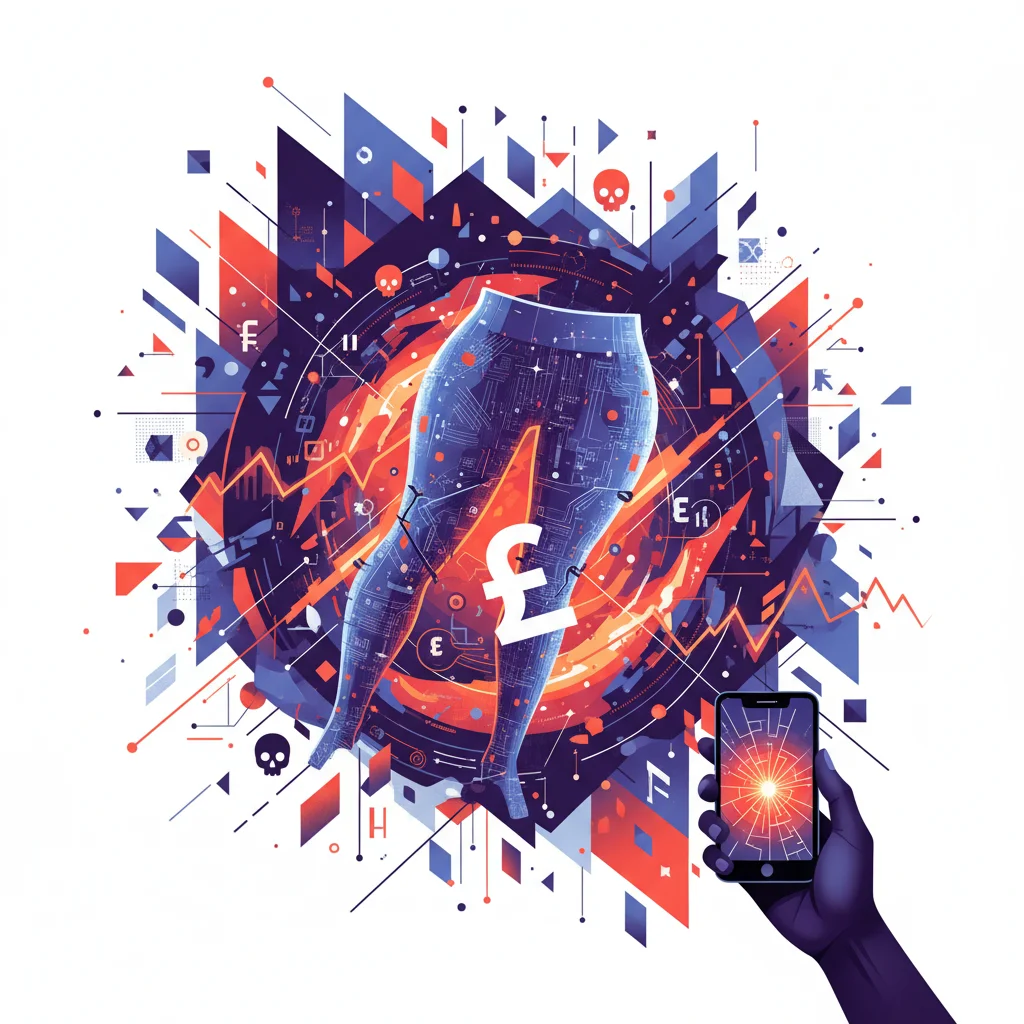
It sounds like a cautionary tale whispered among online shoppers: a simple purchase spirals into a financial nightmare. For Clare Lane, this tale became a reality. A transaction for two pairs of leggings, intended to be a minor expense, metastasized into a staggering £5,000 liability. The culprit? A cleverly disguised subscription service she says she “had no idea” she had joined. While the immediate shock is personal, the story’s implications ripple across the entire landscape of modern finance, from consumer banking to high-stakes investing and the very architecture of our digital economy.
This incident is not an isolated case of bad luck; it is a symptom of a sophisticated and often predatory ecosystem thriving in the shadows of the booming subscription economy. It serves as a critical case study for investors, finance professionals, and business leaders, revealing the hidden risks associated with companies that prioritize aggressive growth over ethical transparency. In an era dominated by financial technology (fintech), understanding the mechanics and dangers of these “dark patterns” is no longer optional—it’s essential for sound financial stewardship and sustainable investment strategy.
The Subscription Economy: A Double-Edged Sword
The subscription model has fundamentally reshaped commerce. For businesses, it offers the holy grail: predictable, recurring revenue. This stability is incredibly attractive to the stock market, often leading to higher valuations for companies with strong subscription bases. For consumers, it promises convenience, access over ownership, and curated experiences. From streaming services to meal kits, subscriptions have become an integral part of modern life.
The global subscription e-commerce market is a testament to this shift, projected to grow from hundreds of billions to over a trillion dollars in the coming years. According to one market analysis, the industry is expected to reach a staggering $2.4 trillion by 2028, showcasing a compound annual growth rate (CAGR) that dwarfs traditional retail. This explosive growth has been a major driver in the fintech sector, with countless platforms emerging to manage recurring billing, customer lifecycle, and payment processing. But within this success story lies a darker narrative.
The very mechanisms that make subscriptions seamless for legitimate services—automated payments, stored credit card information, and low-friction sign-ups—are the same tools exploited by bad actors. When a company’s primary goal shifts from providing value to simply trapping a customer in a payment loop, the model’s efficiency becomes its most dangerous weapon. Clare Lane’s experience is a stark reminder that the line between convenience and coercion can be perilously thin.
The Unseen Ledger: Gauging the Economic Shockwaves of Social Tragedy in Australia
“Dark Patterns”: The Insidious Architecture of Deception
What happened to Ms. Lane is a classic example of “dark patterns”—user interfaces intentionally designed to trick users into doing things they might not otherwise do. These are not simple design flaws; they are calculated psychological manipulations embedded in the digital architecture of a website or app. They exploit cognitive biases to steer users toward the most profitable outcome for the company, often at the user’s expense.
The U.S. Federal Trade Commission (FTC) has been increasingly vocal about these practices, outlining a variety of tactics that harm consumers. In a 2022 report, the FTC highlighted how these designs can “trick or manipulate users into buying products or services or giving up their privacy.”
To better understand this, let’s compare ethical subscription practices with the deceptive “dark patterns” that lead to financial distress.
| Ethical Subscription Practice | Deceptive “Dark Pattern” Equivalent |
|---|---|
| Clear & Conspicuous Disclosure: Subscription terms, costs, and renewal dates are presented upfront before the purchase is finalized. | Hidden Terms: Key subscription details are buried in fine print, hidden in complex legal documents, or obscured by pre-checked boxes. |
| Informed Consent: The user must take an explicit, affirmative action (e.g., checking a box) to agree to a recurring charge. | Sneak-into-Basket: A subscription is added to the user’s cart automatically during the checkout process for a one-time purchase. |
| Simple Cancellation: The process to cancel a subscription is as easy and straightforward as the process to sign up for it. | Roach Motel: The design makes it incredibly easy to get into a situation (subscribe) but frustratingly difficult to get out of it (cancel). |
| Regular Reminders: The service sends notifications about upcoming payments, especially before a free trial ends or a significant renewal occurs. | Forced Continuity: The service is silent about upcoming charges, relying on user forgetfulness to secure payment. |
These patterns are not just a consumer rights issue; they are a critical signal for anyone involved in finance and investing. A company that relies on dark patterns is building its revenue on a foundation of deception, which carries immense reputational and regulatory risk.
The Investor’s Dilemma: Deconstructing “Recurring Revenue”
For the investment community, the term “recurring revenue” is often synonymous with stability and growth. However, the £5,000 leggings saga should serve as a wake-up call. Not all recurring revenue is created equal. It’s imperative for investors, from venture capitalists to those managing public market portfolios, to perform deeper due diligence.
Here’s what this means in practice:
- Scrutinizing Churn Rates: High voluntary or involuntary churn can be a red flag. If a company is losing customers as fast as it acquires them, it may indicate a poor value proposition or, worse, that customers are fleeing after discovering deceptive charges.
- Analyzing Customer Support Tickets: A high volume of complaints related to billing, cancellations, or “unauthorized charges” is a direct signal of problematic business practices. This data is often a better indicator of a company’s health than its marketing materials.
- Evaluating the User Experience: Investors should personally go through the sign-up and cancellation process for a company’s service. Is it transparent? Is it easy to opt-out? This hands-on research can reveal the presence of dark patterns that financial statements alone cannot.
The role of banking and financial technology platforms is also crucial. As gatekeepers of the payment ecosystem, they have a responsibility to protect consumers. Enhanced fraud detection algorithms, clearer transaction descriptors on bank statements, and more streamlined dispute resolution (chargeback) processes are vital. The rise of virtual credit cards, a key fintech innovation, also empowers consumers by allowing them to create single-use card numbers or set spending limits, effectively cutting off unwanted recurring charges at the source.
The Billion-Dollar Handover: Deconstructing the Art and Impact of a CEO's Exit
The Path Forward: Regulation, Technology, and Transparency
Regulators are taking notice. The landscape is slowly shifting towards greater consumer protection. In the UK, the Financial Conduct Authority (FCA) is increasingly focused on ensuring financial products are designed with customer well-being in mind. This regulatory pressure forces businesses to reconsider practices that prioritize profit over fairness.
Beyond regulation, technology itself may offer a solution. While fintech has enabled the problem, it could also be the key to solving it. Consider the potential of blockchain technology and smart contracts. A subscription managed via a smart contract could be radically transparent. The terms—cost, duration, cancellation policy—would be encoded into an immutable ledger. Payments would be automatically executed based on these pre-agreed, publicly verifiable rules, giving the consumer unprecedented control and clarity. While mainstream adoption is still distant, it points to a future where financial agreements are built on cryptographic trust rather than faith in a company’s terms of service document.
This is not merely a technological fantasy; it represents a fundamental shift in the philosophy of economics and commerce, moving from a model of information asymmetry (where the company knows more than the customer) to one of radical transparency. China's Economic Engine Is Sputtering: A Red Flag for Global Investors?
Conclusion: From a Personal Loss to a Collective Lesson
Clare Lane’s £5,000 leggings are more than just a shocking headline. Her story is a powerful illustration of the systemic risks embedded in our increasingly complex digital economy. It highlights the urgent need for a multi-faceted response that involves vigilant consumers, ethical business leaders, discerning investors, and proactive regulators.
For professionals in finance, technology, and business, the lesson is clear: short-term gains achieved through deceptive practices are a long-term liability. True value is built on trust, transparency, and a relentless focus on the customer. As the digital frontier continues to expand, the principles of sound economics and ethical conduct must serve as our compass. Otherwise, we risk building a financial ecosystem where the next £5,000 surprise is just a single, ill-advised click away.

Related Posts
Beyond the Gravy: What Your Christmas Dinner Cost Reveals About the Global Economy

Beyond the Fine Print: Why a UK Insurance Shake-Up Signals a New Era for Financial Transparency