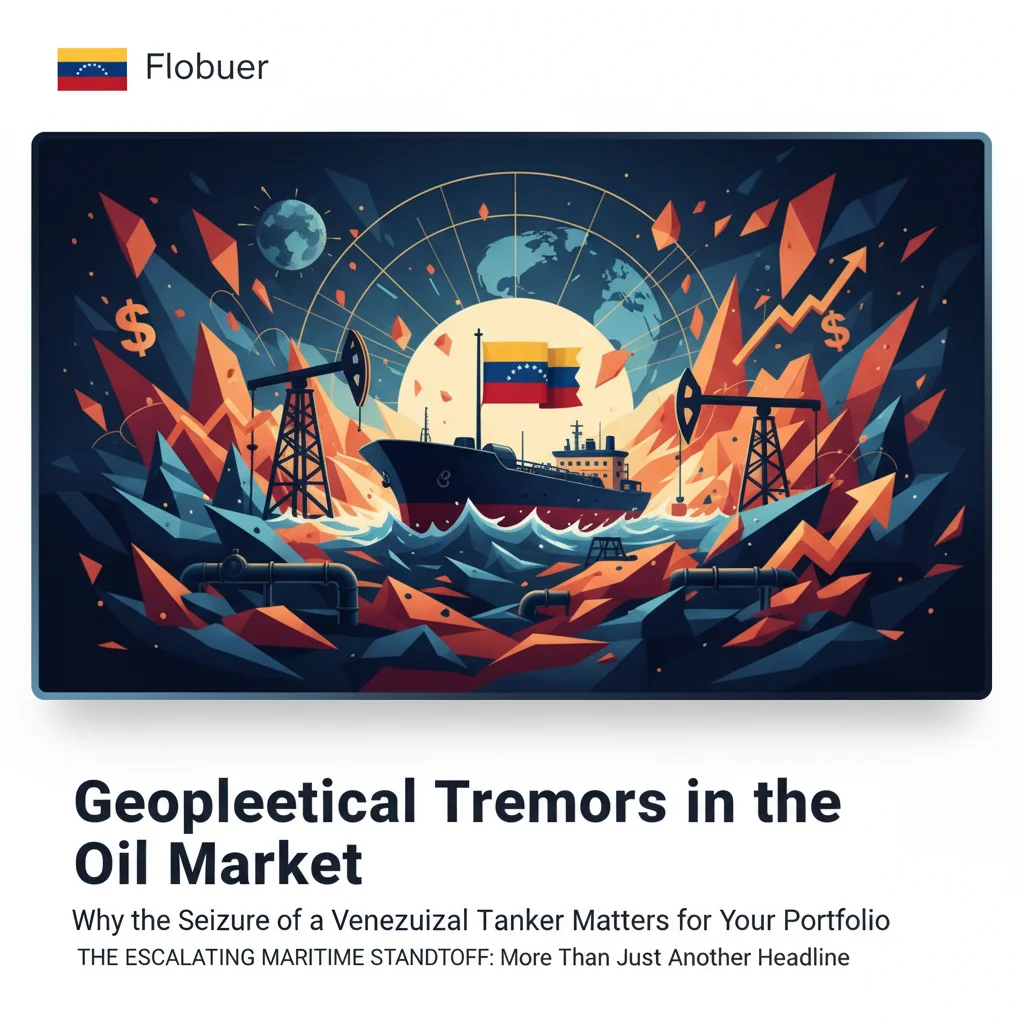
Geopolitical Tremors in the Oil Market: Why the Seizure of a Venezuelan Tanker Matters for Your Portfolio
The Escalating Maritime Standoff: More Than Just Another Headline
In the high-stakes world of international relations and global finance, some events ripple far beyond their geographical origins. The recent move by the United States to pursue a third oil tanker with links to Venezuela is one such event. While it might seem like a distant political maneuver, this action, following a declaration by former President Donald Trump to blockade sanctioned tankers, sends a powerful signal to the global energy markets, investors, and anyone involved in international trade. This isn’t just about a single ship; it’s about the weaponization of economic policy, the stability of the global oil supply, and the intricate dance of geopolitics that directly impacts the world’s economy.
For investors, finance professionals, and business leaders, understanding the undercurrents of this development is crucial. It’s a real-time case study in how political risk translates into market volatility, influencing everything from oil futures and shipping stocks to the broader stock market. To truly grasp the implications, we must look beyond the immediate news and delve into the complex machinery of international sanctions, their effect on the energy sector, and what this escalation means for the future of global trading and investing.
A Brief History of a Protracted Economic Siege
The current standoff did not emerge from a vacuum. It is the latest chapter in a long-running saga of U.S. sanctions aimed at the Venezuelan government. These measures, significantly intensified since 2017, target the country’s lifeblood: its state-owned oil and gas company, Petróleos de Venezuela, S.A. (PDVSA). The stated goal has been to pressure the ruling party by cutting off its primary source of revenue. According to the Congressional Research Service, these sanctions have included blocking the property and interests of the Venezuelan government and PDVSA within U.S. jurisdiction and restricting their access to U.S. financial markets.
The sanctions regime is multifaceted, creating a complex web for any entity involved in the global finance and banking sectors:
- Financial Sanctions: Restricting Venezuela’s ability to issue new debt and equity, effectively cutting it off from traditional capital markets.
- Oil Sector Sanctions: Prohibiting transactions with PDVSA, including a U.S. embargo on Venezuelan crude oil imports.
- Secondary Sanctions: Targeting non-U.S. entities, including shipping companies and foreign oil firms, that continue to do business with Venezuela’s oil sector. This is the mechanism being used to seize tankers.
This “maximum pressure” campaign has had a catastrophic effect on Venezuela’s oil output, a key factor for anyone analyzing global energy economics. Once a powerhouse producing over 3 million barrels per day (bpd), its production has plummeted.
The Price of a Parcel: Deconstructing Evri's Business Model and Its Economic Fallout
To illustrate this dramatic decline, consider the production data from recent years. The collapse is not merely a statistic; it represents a significant volume of crude oil removed from the global market, a factor that can introduce significant volatility.
| Year | Average Production (Thousand Barrels Per Day) | Key Sanction Events |
|---|---|---|
| 2017 | 1,911 | U.S. imposes first major financial sanctions on PDVSA. |
| 2019 | 796 | U.S. imposes a full oil embargo and sanctions PDVSA. |
| 2021 | 555 | Sanctions regime continues; illicit trade networks form. |
| 2023 | ~750 | Slight recovery amid temporary sanction relief and changing dynamics. |
Data synthesized from reports by U.S. Energy Information Administration (EIA) and OPEC.
The Ripple Effect: From the Caribbean Sea to Your Portfolio
The seizure of an oil tanker is a kinetic event with far-reaching financial consequences. Investors and business leaders must monitor these developments for their potential impact across several key areas:
1. Oil Price Volatility and the Energy Sector
The most direct impact is on the price of crude oil. While Venezuela’s current output is a fraction of its former glory, any disruption to the global supply chain can spook the market. The seizure of tankers introduces a new layer of risk for shippers and insurers, which can lead to higher transportation costs (war risk premiums) and a reluctance to service certain routes. For the stock market, this means increased volatility for major oil producers (like Chevron, ExxonMobil), oilfield services companies (like Schlumberger, Halliburton), and shipping firms. A sustained campaign could tighten the supply of heavy crude, for which Venezuelan oil was known, potentially benefiting producers in Canada and Mexico who can fill the gap.
2. The Geopolitics of Trading and Investment
This escalation serves as a stark reminder that geopolitical risk is a primary factor in international investing. Companies with any exposure to Venezuela, or even those operating in the broader Latin American region, face heightened uncertainty. Furthermore, the use of secondary sanctions forces international companies to make a choice: do business with the U.S. or do business with a sanctioned entity. This has profound implications for global supply chains and forces a geopolitical alignment that can disrupt established trading partnerships. Business leaders must now factor in not just economic viability but also political allegiance when making strategic decisions.
The Unseen Ledger: Gauging the Economic Shockwaves of Social Tragedy in Australia
3. The Future of Maritime Law and Insurance
The act of seizing vessels on the high seas, even under a sanctions framework, tests the limits of international maritime law. For the massive global shipping and insurance industries, this creates a precarious environment. Insurers may refuse to cover vessels or cargo believed to be in breach of U.S. sanctions, effectively paralyzing a significant portion of the world’s tanker fleet. This raises costs and complexity for legitimate operators and pushes sanctioned trade further into a “shadow fleet” of older, less regulated ships, increasing environmental and safety risks. This operational side of the global economy is often overlooked but is critical to its functioning.
Navigating the Murky Waters: Strategic Takeaways
As this situation evolves, what should a savvy investor or executive be thinking about? The key is not to react to every headline but to understand the underlying trends and position oneself accordingly.
First, recognize that energy markets will likely remain sensitive to geopolitical shocks. Diversification within an energy portfolio, considering investments in renewables and alternative energy sources, can hedge against the volatility inherent in fossil fuels, which are so often tied to political instability. Understanding the nuances of energy economics—such as the difference between sweet and heavy crude and who produces each—can provide a significant analytical edge.
Second, enhance due diligence in all international transactions. The reach of U.S. secondary sanctions is long. It is no longer enough to know your customer; you must know your customer’s customer. The compliance burden on the international banking system will continue to grow, making robust regulatory technology (RegTech), a subset of fintech, more critical than ever.
The Billion-Dollar Handover: Deconstructing the Art and Impact of a CEO's Exit
Finally, monitor the broader geopolitical chessboard. The U.S.-Venezuela conflict is intertwined with U.S. relations with China, Russia, and Iran—all of whom have provided lifelines to the Venezuelan regime. A shift in any of these relationships could dramatically alter the sanctions landscape. Watching these macro trends is just as important as watching the daily fluctuations of the stock market.
The pursuit of a third Venezuelan oil tanker is a single move in a much larger, multi-dimensional game. For those in the world of finance, it’s a powerful reminder that the calm surfaces of our spreadsheets and market charts are constantly being roiled by deep, powerful currents of global politics. Understanding them is the key to navigating what comes next.

Related Posts

Beyond the Balance Sheet: Why a Local Florist’s Success is a Major Signal for the Stock Market
The Trillion-Dollar Threat Beneath the Waves: Why Russia’s Deep-Sea Strategy is a Ticking Time Bomb for the Global Economy