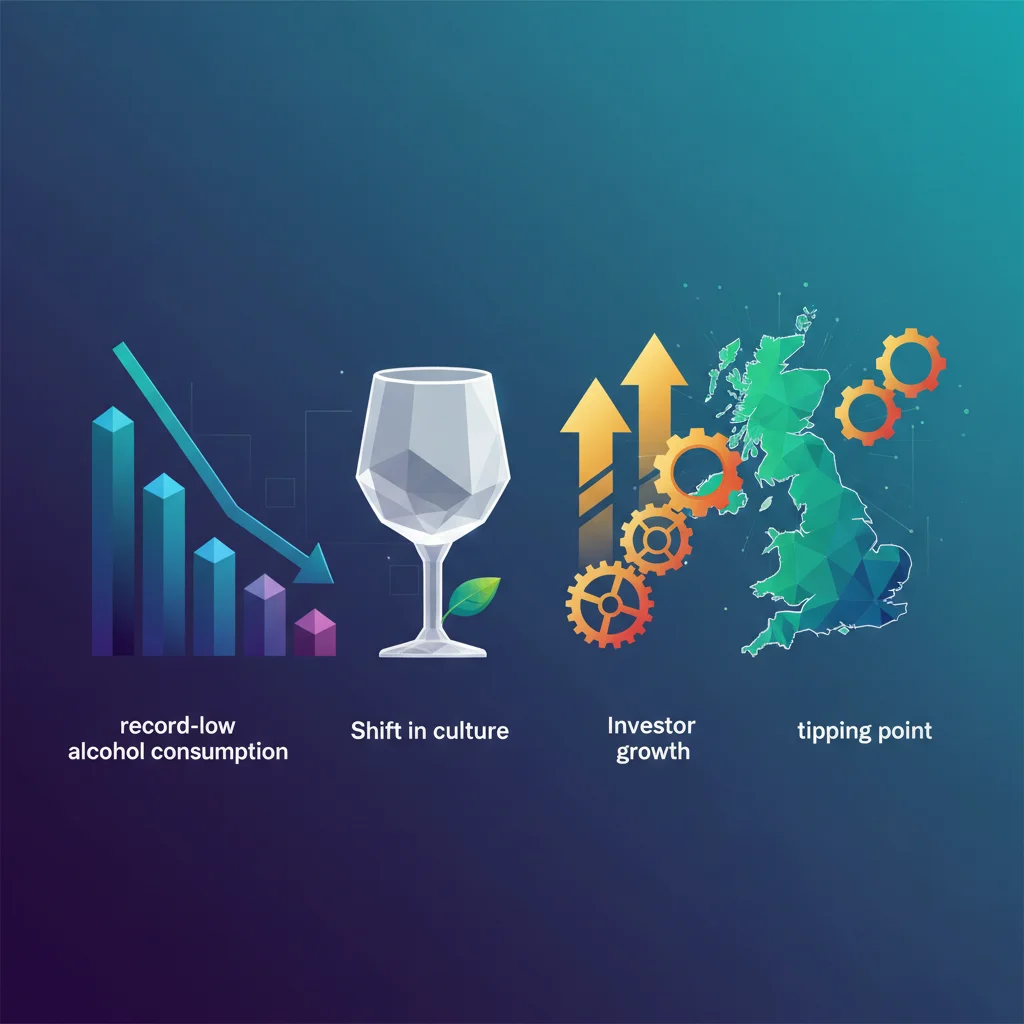
The Sobering Economy: Why Britain’s Record-Low Alcohol Consumption is a Tipping Point for Investors
A seismic shift is underway in British culture, and its tremors are being felt far beyond the local pub. For centuries, alcohol has been deeply woven into the social and economic fabric of the nation. Yet, new data reveals a startling trend: alcohol consumption in Britain has plummeted to its lowest level since records began. This isn’t just a fleeting health fad; it’s a profound transformation in consumer behavior with significant implications for the economy, the stock market, and the future of investing in the consumer goods sector.
According to a detailed analysis by the Financial Times, the volume of alcohol purchased per person has seen a dramatic decline. This isn’t a story about a sudden surge in teetotalism, but rather a more nuanced and powerful trend: the rise of the mindful drinker. People aren’t necessarily giving up alcohol entirely; they’re simply drinking less, drinking better, and increasingly seeking sophisticated non-alcoholic alternatives. For business leaders, finance professionals, and savvy investors, ignoring this cultural pivot is no longer an option. The question is no longer *if* this trend will impact the market, but *how* to strategically navigate the opportunities and risks it presents.
The Data Behind the Downturn: A Statistical Snapshot
The numbers paint a clear and compelling picture of changing habits. The decline is not an overnight phenomenon but a steady, accelerating trend that has now reached a historic milestone. Understanding the specifics is crucial for anyone involved in economic analysis or market forecasting.
The core finding is that alcohol consumption has fallen to the lowest point since data collection started. As highlighted in the original FT report, this trend is primarily driven by a move towards moderation rather than complete abstinence. This distinction is vital for market analysis, as it suggests a shift in preference and quality over quantity, rather than an outright rejection of the product category.
To put this into perspective, let’s examine the key drivers and demographic shifts fuelling this change:
| Factor | Description & Impact |
|---|---|
| Generational Shift (Gen Z) | Younger consumers, particularly Gen Z, are drinking significantly less than previous generations. They prioritize wellness, mental health, and control, often viewing excessive drinking as undesirable or unproductive. |
| The “Sober Curious” Movement | A growing cultural movement encouraging individuals to question their relationship with alcohol. It promotes periods of abstinence or mindful moderation, popularised by social media influencers and wellness advocates. |
| Rise of Premium Alternatives | The market for high-quality, adult non-alcoholic beverages (craft sodas, kombucha, non-alcoholic spirits, and beers) has exploded. Consumers are willing to pay a premium for a sophisticated experience without the alcohol. |
| Health & Wellness Focus | Increased public awareness of the health risks associated with alcohol, from physical health to mental wellbeing, is a major catalyst for reduced consumption (source). |
This multi-faceted shift signals a permanent alteration in the consumer landscape. It’s not a temporary blip driven by a single factor, but a convergence of powerful social, cultural, and health-related trends. This structural change necessitates a re-evaluation of long-term strategies for businesses in the beverage, hospitality, and retail sectors.
The Dupe Economy: What Skincare Knockoffs Reveal About Market Disruption and Investment Strategy
Investment Implications: Navigating a Shifting Market
For those in finance and investing, this trend is a double-edged sword. It presents a clear threat to legacy companies heavily reliant on traditional alcohol sales, while simultaneously creating a fertile ground for growth and innovation in emerging categories. A sophisticated approach to asset allocation and trading in this sector is now essential.
1. Re-evaluating the Giants of the Stock Market
Global beverage conglomerates like Diageo, Anheuser-Busch InBev, and Pernod Ricard are at a crossroads. Their stock performance is increasingly tied to their ability to pivot. Investors should scrutinize quarterly reports not just for overall revenue, but for the growth percentage of their NoLo portfolios. A company that is successfully acquiring innovative non-alcoholic brands or developing its own compelling alternatives (like Guinness 0.0) is demonstrating foresight and adaptability. Conversely, a company that dismisses the trend or is slow to innovate may face long-term headwinds and valuation pressures.
2. The Rise of the “NoLo” Unicorns
The most exciting opportunities lie with the disruptors. Brands like Athletic Brewing (non-alcoholic beer) and Seedlip (non-alcoholic spirits) have achieved massive valuations by catering specifically to this new market. Venture capital and private equity are pouring into this space, seeking the next big winner. For the retail investor, this can be a challenging area to access directly, but it’s worth watching for IPOs or acquisitions by publicly traded companies. The growth trajectory of these niche brands often outpaces the broader market, offering significant upside potential.
3. The Role of Financial Technology (Fintech)
Modern fintech platforms are becoming indispensable tools for analyzing these nuanced consumer shifts. Hedge funds and institutional investors use alternative data—gleaned from credit card transactions, social media sentiment, and e-commerce trends—to get a real-time pulse on consumer behavior. This financial technology allows for a granular understanding of which brands are gaining traction long before it becomes apparent in official company earnings. Furthermore, some platforms are even exploring the use of blockchain to ensure supply chain transparency for premium non-alcoholic ingredients, guaranteeing provenance and quality for a discerning consumer base willing to pay more for authenticity.
This data-driven approach, powered by advancements in banking and tech, provides a competitive edge in a rapidly changing market. The days of relying solely on traditional market research are over; the future of consumer goods investing is in real-time, tech-enabled analysis.
The '29' Factor: What a Simple Math Puzzle Reveals About Hidden Risks in Finance
Broader Economic and Sectoral Ripples
The impact of declining alcohol consumption extends far beyond the beverage industry itself. The principles of economics dictate that such a significant shift in spending will create winners and losers across the entire economy.
Hospitality and Leisure
Pubs, bars, and restaurants have long relied on high-margin alcohol sales to bolster their profitability. As consumers drink less, these businesses must adapt. Successful establishments are now curating sophisticated “zero-proof” cocktail menus, investing in premium soft drinks, and focusing more on their food offerings. The traditional “wet-led” pub model is under immense pressure, and its survival may depend on its ability to transform into a more inclusive, food-focused community hub. This shift has direct implications for commercial real estate valuations and small business lending within the hospitality sector.
Government and Public Finance
Governments face a complex fiscal equation. Alcohol duties are a significant source of tax revenue. A sustained decline in consumption will lead to a shortfall that must be addressed. According to the data, this is already a measurable trend. However, this potential loss in revenue could be offset by long-term savings in public healthcare. Reduced alcohol consumption is linked to lower rates of numerous chronic diseases, potentially easing the burden on national health services. Economic modelers and public policy experts are closely watching this trade-off, which will influence future fiscal policy and public health initiatives.
Conclusion: A Toast to a New Era
Britain’s record-low alcohol consumption is more than a statistic; it is a profound indicator of a society in transition. It reflects a deeper cultural shift towards health, wellness, and mindful living. For investors and business leaders, this is a critical moment of recalibration.
The future belongs to those who can look past the old paradigms and embrace the new realities of the consumer market. It requires a deep understanding of the demographic and psychological drivers behind the trend, a willingness to innovate and adapt product offerings, and a sophisticated approach to financial analysis that leverages modern financial technology. The “sobering” of the British consumer is not a threat, but a multi-billion-pound opportunity for those with the vision to see it.

Related Posts

The Bondi Principle: Why Courage is the Most Undervalued Asset in Finance and Leadership

The West End Anomaly: A Deep Dive into Retail Resilience and What It Signals for the UK Economy