Beyond the Ban: How TikTok’s New Deal Rewrites the Rules for AI, Cloud, and Global Tech
The End of a Saga? Not So Fast.
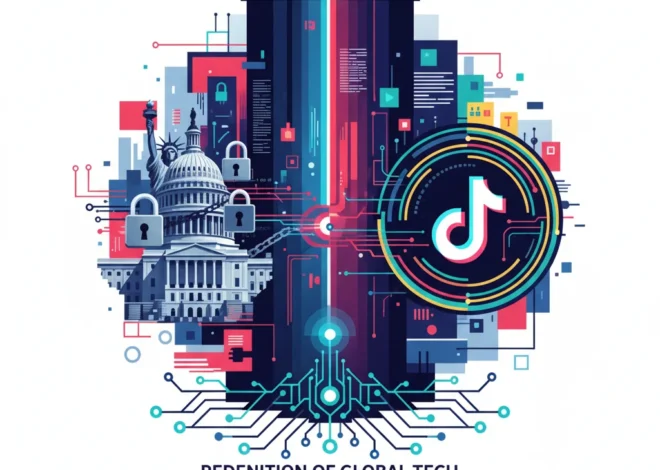
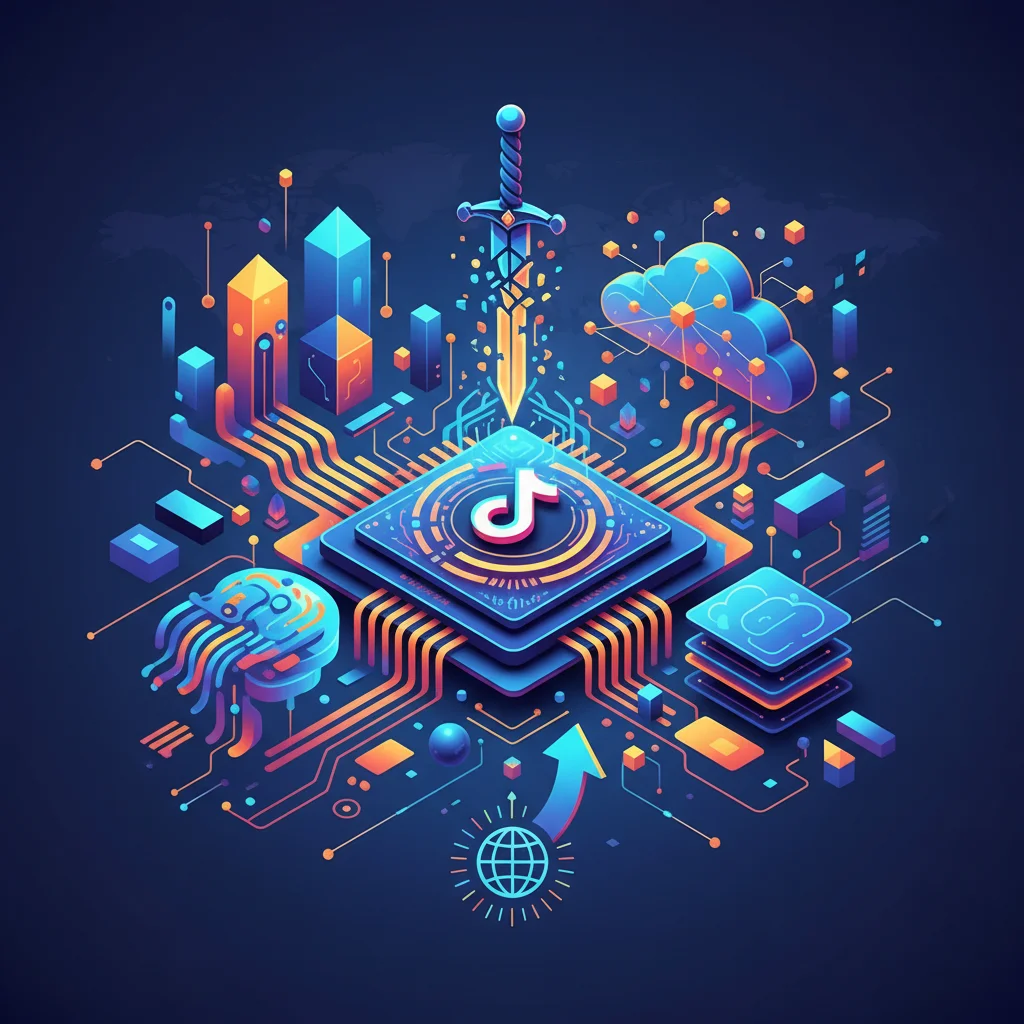
For years, the sword of Damocles has been hanging over TikTok’s US operations. The narrative was simple yet seismic: a wildly popular social media app, owned by Chinese parent company ByteDance, posed an unacceptable national security risk. The US government’s ultimatum was clear: sell your US operations or face a complete ban. Now, after years of high-stakes negotiations and political maneuvering, it appears a different path has been forged. ByteDance has reportedly signed agreements designed to appease Washington’s concerns, potentially ending the immediate threat of a ban and the forced sale of its most valuable international asset.
But to see this as merely the end of a corporate drama is to miss the forest for the trees. This isn’t just about one app. This is a landmark moment that draws a new map for the future of global technology. It’s a story about data sovereignty, the weaponization of artificial intelligence, the critical role of cloud infrastructure, and the immense challenges facing software companies in an increasingly fragmented world. For developers, entrepreneurs, and tech leaders, the fine print of this deal offers a glimpse into the new rules of the game—a game where cybersecurity and geopolitics are now inextricably linked.
The Core Conflict: It Was Never Just About Dance Videos
To understand the solution, we must first appreciate the problem’s depth. The US government’s concerns weren’t about viral dance challenges or sea shanties. They were rooted in two fundamental technological pillars: data and algorithms.
First, there’s the data. TikTok, like any modern social media platform, collects a vast trove of user information—viewing habits, location data, biometric information, and personal messages. The fear was that, under China’s 2017 National Intelligence Law, the Chinese government could compel ByteDance to hand over sensitive data on millions of American citizens. This concern isn’t theoretical; it’s a foundational issue of data privacy and national security in the digital age. In a world where data is the new oil, allowing a strategic adversary to tap into your reserves is seen as a non-starter.
Second, and perhaps more insidiously, is the algorithm. TikTok’s “For You” page is a marvel of machine learning. Its uncanny ability to serve up a perfectly tailored, endlessly scrolling feed of content is the secret sauce to its addictive appeal. However, this powerful recommendation engine is a double-edged sword. US officials worried that this AI could be subtly manipulated to push propaganda, sow discord, or influence public opinion on a massive scale. An algorithm that can make a niche song a global hit could, in theory, also be used to amplify narratives favorable to an authoritarian government. This represents a new frontier of information warfare, one fought not with soldiers, but with sophisticated programming and predictive models.
Reddit vs. Australia: The High-Stakes Legal Battle Over AI, Privacy, and the Future of the Internet
Deconstructing the Solution: Welcome to “Project Texas”
The agreements ByteDance has signed are widely understood to be the culmination of a multi-billion-dollar initiative codenamed “Project Texas.” This isn’t a simple handshake deal; it’s a complex technological and organizational restructuring designed to create a digital fortress around US user data and operations. While full details are still emerging, the core components represent a new paradigm for global SaaS (Software as a Service) platforms.
The plan, largely negotiated with the Committee on Foreign Investment in the United States (CFIUS), is built on three pillars:
- Data Localization in the Cloud: The cornerstone of the deal is moving all US user data to a domestic cloud infrastructure. ByteDance has partnered with Oracle to host this data on US soil. This means that from the moment a user in America creates a video, their data will be routed to and stored exclusively in Oracle’s cloud, completely firewalled from ByteDance’s other global data centers. According to reports from Reuters, this migration is a monumental technical undertaking, effectively creating a separate data ecosystem for a single country.
- Algorithm and Source Code Scrutiny: To address fears of algorithmic manipulation, the deal allows for unprecedented third-party oversight. Oracle, along with approved US government auditors, will be able to inspect TikTok’s source code and its powerful recommendation AI. This is a radical step. For a tech company, its core algorithm is a crown jewel. Allowing outsiders to poke around under the hood is a massive concession, aimed at proving the content recommendation engine is free from foreign influence.
- Independent Governance: A new, US-based entity called TikTok US Data Security Inc. (USDS) has been created to oversee all data security and content moderation functions. This 1,000-plus person unit, operating semi-independently and reporting to a board approved by the US government, acts as an internal watchdog, ensuring that data access protocols are strictly followed and that the platform’s operations align with US regulations.
A New Blueprint for Global Tech: What This Means for You
The ripples from this deal will be felt across the entire tech landscape, from the largest enterprise SaaS providers to the smallest bootstrapped startups. Here’s why it matters:
For Entrepreneurs and Startups:
The era of building one global platform and deploying it everywhere is over. The TikTok saga proves that data sovereignty is now a critical business consideration. Startups with international ambitions must now think about “geopolitical compliance” from day one. This means designing systems with the flexibility to store data in specific regions, accommodate local regulations, and potentially operate under different governance models in different countries. The cost and complexity of going global have just increased significantly.
For Developers and Engineers:
The demand for expertise in cybersecurity, privacy engineering, and distributed systems is about to explode. Developers will be tasked with building bifurcated systems—architectures that can isolate data and operations by region without compromising the core user experience. This involves complex challenges in programming, database management, and network infrastructure. Furthermore, the concept of “auditable code” will become more prevalent, requiring developers to write cleaner, more transparent, and well-documented code, especially for sensitive machine learning models.
The New Titans: Why TIME Magazine's Nod to AI's Architects is a Defining Moment for Our Future
For the Future of Innovation:
This deal highlights a growing tension between national security and technological innovation. While the regulations are designed to protect citizens, they also risk creating a “splinternet”—a balkanized digital world where data and services cannot flow freely across borders. This could stifle collaboration, slow down the pace of innovation, and make it harder for the best ideas to achieve global scale. On the other hand, it could also spur innovation in privacy-preserving technologies and automated compliance systems, creating new market opportunities.
A Tale of Two Architectures
To visualize the profound shift this deal represents, let’s compare the traditional model of a global tech platform with the new “Project Texas” model.
| Feature | Traditional Global Platform Model | “Project Texas” Model (Data Localization) |
|---|---|---|
| Data Storage | Data is often stored in global data centers, optimized for performance and cost, potentially crossing borders. | US user data is strictly isolated and stored on a domestic cloud infrastructure (Oracle Cloud). |
| Algorithm & Code Oversight | Source code and AI models are proprietary, black-boxed trade secrets, guarded closely by the company. | Source code and recommendation AI are subject to review and audit by a trusted US third party and government agencies. |
| Governance & Operations | A single global team manages operations, content moderation, and security policies worldwide. | A separate, US-based entity (USDS) with an independent board oversees all sensitive US operations. |
| Cybersecurity Approach | Focus on protecting a global perimeter from external threats. | Focus on internal firewalls, access controls, and verifiable data residency to prevent cross-border data flows. |
This table illustrates a fundamental re-architecting of how a global tech company must operate. It’s a shift from a unified, borderless approach to a federated, trust-but-verify model dictated by national interest. As a Forbes article notes, data sovereignty is becoming a major driver of cloud strategy for multinational corporations.
The Secret Crystal Fueling the AI Revolution That Almost No One Can Make
The Road Ahead: A More Complicated Digital World
The TikTok-ByteDance deal is more than a reprieve; it’s a blueprint. It signals the end of the internet’s naive, borderless adolescence and the beginning of a more mature, and far more complicated, adulthood. We are entering an era where a company’s success will depend not just on the quality of its software or the brilliance of its AI, but on its ability to navigate a treacherous landscape of geopolitics and regulation.
For the tech industry, the path forward will require a new level of sophistication. It will demand more investment in robust cybersecurity, more transparent governance, and more flexible cloud architectures. The need for automation in compliance and security monitoring will become paramount. While this new reality presents immense challenges, it also creates opportunities for innovation. The companies that thrive will be those that embrace this complexity, building trust not just with their users, but with the nations in which they operate. The TikTok saga is far from over; in many ways, it’s just the beginning of a much larger story.