AI & The Economy: A Warning from the Bank of England, or an Unprecedented Opportunity?
The future of work has arrived, and it’s powered by artificial intelligence. This isn’t a distant sci-fi concept; it’s a present-day economic reality that has captured the attention of the world’s most influential financial leaders. Recently, Andrew Bailey, the Governor of the Bank of England, added his significant voice to the conversation, stating that AI is “likely to displace jobs” across the economy. While this headline might spark fears of mass unemployment, Bailey’s full message contains a crucial nuance: this technological shift might not be a cliff edge, but rather a profound and challenging transition.
This isn’t just a conversation for tech enthusiasts. It’s a critical topic for investors, finance professionals, and business leaders who must navigate the seismic shifts AI will bring to the global economy. Bailey’s warning is a call to action, urging a proactive approach to reskilling and adaptation. In this deep dive, we will dissect the Governor’s comments, explore the historical context of technological disruption, and analyze the specific implications for the finance, banking, and investing landscapes.
Deconstructing the Central Banker’s Message
When a central bank governor speaks about employment, markets listen. Andrew Bailey’s comments were not a casual observation but a reflection of the deep analysis happening within institutions that steer national economies. His core argument distinguishes between two often-conflated concepts: job displacement and mass unemployment.
- Job Displacement: This refers to the process where specific tasks, roles, or even entire job categories become obsolete due to automation or new technology. A worker is “displaced” from their current role.
- Mass Unemployment: This is a broader economic condition where a large percentage of the total workforce is jobless and actively seeking employment, indicating a systemic failure of the economy to create new roles.
Bailey’s perspective is that while AI will certainly cause the former, it doesn’t have to lead to the latter. The critical variable is adaptation. “The key thing is that we have to train people to move into the jobs that will be using AI,” he emphasized. This places the onus on governments, corporations, and individuals to foster a culture of continuous learning and reskilling. For the Bank of England, this isn’t just a social issue; it’s a matter of economic stability. A smooth transition maintains productivity growth and consumer spending, while a rocky one could lead to economic stagnation and social unrest.
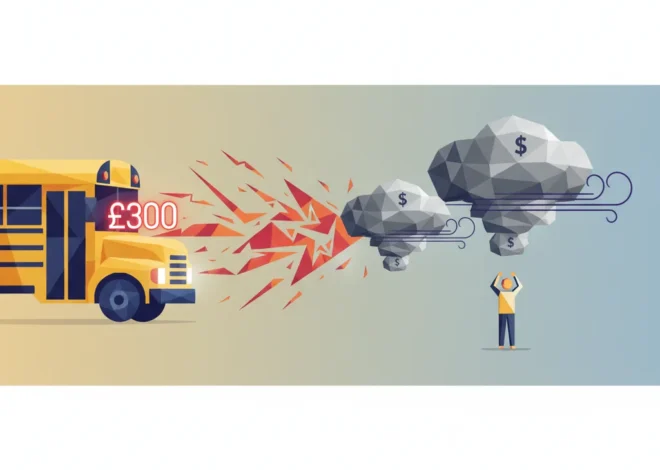
This view aligns with broader research on the topic. A report by Goldman Sachs suggests that while Generative AI could expose the equivalent of 300 million full-time jobs to automation, it could also be a major driver of labor productivity, potentially increasing annual global GDP by 7% over a decade.
Navigating the Tides of Power: Why Hanwha's Stake in Austal is a Global Economic Bellwether
Echoes of the Past: Is This a New Industrial Revolution?
History provides a valuable lens through which to view the current AI-driven transformation. Every major technological leap has been met with fears of widespread job loss. In the early 19th century, the Luddites famously smashed textile machinery, fearing it would destroy their livelihoods. In the 20th century, the advent of computers and automation in factories led to similar anxieties.
In most historical cases, technology has been a force of “creative destruction”—a term coined by economist Joseph Schumpeter. While old jobs were destroyed, new, often more productive and higher-skilled jobs were created in their place. The mechanization of agriculture displaced millions of farm workers, but it also fueled the growth of manufacturing and urban centers. The computer revolution eliminated armies of typists and clerks but created new industries in software development, IT support, and digital marketing.
The question today is whether AI is different. Its ability to perform cognitive tasks, not just manual ones, puts a new range of white-collar professions in the crosshairs. However, the fundamental economic principle may hold true. The productivity gains from AI could create enormous new wealth, fueling demand for new goods and services and, consequently, new jobs that we can’t yet imagine.
The Impact on Finance, Banking, and Fintech
The financial services industry is at the epicenter of the AI revolution. As a sector built on data analysis, risk assessment, and process optimization, it is uniquely positioned to be transformed by financial technology. This transformation will be a double-edged sword, creating immense efficiencies while displacing established roles.
Below is a look at how AI is likely to reshape roles within the finance and banking sectors.
| Area of Impact | Roles with High Exposure to Automation | Emerging or Augmented Roles |
|---|---|---|
| Investing & Trading | Routine portfolio analysis, manual trade execution, basic financial modeling | Quantitative analysts designing AI trading algorithms, AI ethics officers overseeing model fairness, specialists in alternative data |
| Retail Banking | Bank tellers, loan application processors, customer service call centers | AI-driven personalization experts, fraud detection strategists using machine learning, user experience (UX) designers for digital banking platforms |
| Compliance & Risk | Manual transaction monitoring, preliminary due diligence checks | Cybersecurity experts protecting AI systems, compliance specialists training AI on new regulations, model risk managers validating AI outputs |
| Fintech & Blockchain | Basic data entry for smart contracts, repetitive testing of applications | Blockchain developers integrating AI for on-chain analytics, prompt engineers for financial LLMs, AI/ML Ops specialists in fintech firms |
This table illustrates that the future isn’t about humans versus machines, but humans *with* machines. Professionals who can leverage AI tools to enhance their analytical, strategic, and creative capabilities will be in high demand. The rise of fintech has already shown how technology can democratize financial services; AI will accelerate this trend, making sophisticated financial tools and advice more accessible.
Beyond the Barrel: The Real Economic and Geopolitical Stakes in Venezuela's Oil Saga
The Investor’s Playbook for the AI Economy
For investors, navigating this transition requires a sophisticated approach that looks beyond the hype. The AI boom has already sent shockwaves through the stock market, but sustainable, long-term value creation requires careful analysis.
1. The “Picks and Shovels” Strategy: Just as in the gold rush, selling picks and shovels was often more profitable than digging for gold. In the AI era, this means investing in the foundational companies that power the revolution. This includes semiconductor manufacturers, cloud computing providers, and cybersecurity firms that protect the vast data AI relies on.
2. The “Intelligent Implementers”: The real long-term winners may not be the AI creators but the established companies that successfully integrate AI to transform their core business. Look for legacy companies in sectors like banking, healthcare, or logistics that are using AI to slash costs, improve efficiency, and create a durable competitive advantage. This is where deep industry knowledge meets cutting-edge financial technology.
3. The Human Capital Arbitrage: Companies that invest heavily and effectively in reskilling their workforce will be more resilient and innovative. When analyzing a company’s long-term prospects, investors should start asking questions about its human capital strategy. How is it preparing its employees for an AI-driven future? A company with a clear plan is a company that is managing long-term risk. A recent report from the World Economic Forum highlights that “analytical thinking and creative thinking” remain the most important skills, suggesting that companies fostering these human-centric abilities will thrive (source).
4. Understanding the Risks: The path forward is not without peril. Investors must be wary of an AI bubble in the stock market, where valuations become detached from fundamentals. Furthermore, regulatory risk is significant. Governments around the world are grappling with how to regulate AI, and future legislation could dramatically impact the profitability of certain business models.
Beyond the Firewall: Why the Coupang Data Breach is a Defining Moment for Tech Investing
Conclusion: From Disruption to Opportunity
Andrew Bailey’s message should not be interpreted as a prophecy of doom, but as a pragmatic assessment from one of the world’s leading economic stewards. The AI-driven job displacement is not a possibility; it is a certainty. The critical question is how we respond.
This technological wave demands a coordinated effort from policymakers, business leaders, and individuals. It requires a fundamental reimagining of education and corporate training. For those in the world of finance and investing, it demands a new framework for evaluating risk, identifying opportunity, and understanding value. The companies that thrive will be those that see AI not as a simple tool for cost-cutting, but as a catalyst for human ingenuity. The transition will be challenging, but for those with the foresight to adapt, the dawn of the AI economy represents an unparalleled opportunity for growth and innovation.

Related Posts
Beyond the Billions: Deconstructing the UK’s £11.7bn Borrowing Surge and Its Ripple Effect on the Economy

The Great Christmas Migration: What Holiday Travel Reveals About the Economy, Investing, and Fintech