UK’s Economic Crossroads: Unemployment Rises, But Real Wages Offer a Surprising Silver Lining
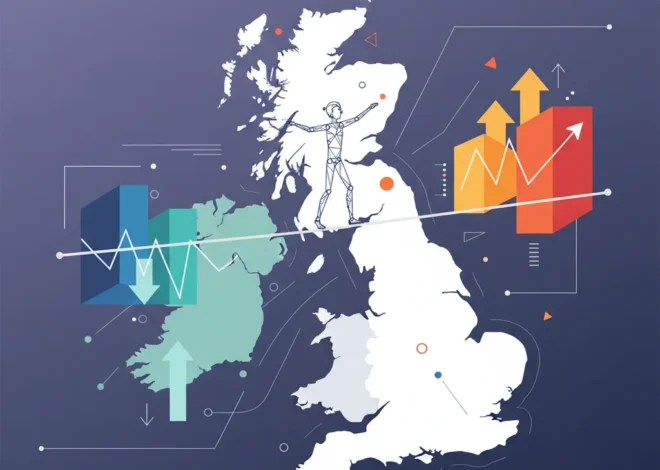
The latest dispatches from the UK’s economic front line present a complex and seemingly contradictory picture. The headline news, delivered by the Office for National Statistics, points to a cooling labour market, with the unemployment rate ticking up. Yet, beneath this sobering statistic lies a narrative of resilience: average earnings continue to outpace inflation, providing a crucial cushion for household finances. This economic paradox—a simultaneous rise in joblessness and real-term pay—signals that the UK is not in a straightforward downturn but rather navigating a complex period of realignment.
For investors, business leaders, and finance professionals, deciphering these mixed signals is paramount. Is the rising unemployment a harbinger of a deeper recession, or is it a necessary cooling-off period engineered by the Bank of England to tame inflation? And what does the persistence of real wage growth mean for consumer spending, corporate profits, and the future trajectory of the stock market? This analysis will delve deep into the data, explore the underlying economic forces at play, and provide a strategic outlook on what this means for your financial decision-making.
Deconstructing the Latest Labour Market Data
To understand the full picture, we must first break down the key metrics. The latest figures paint a nuanced portrait of an economy in transition, where areas of weakness are balanced by pockets of surprising strength. The data suggests a labour market that is losing some of its post-pandemic tightness but has not yet buckled under the pressure of higher interest rates.
Here is a snapshot of the key indicators based on the most recent reports:
| Economic Indicator | Latest Figure / Trend | Implication |
|---|---|---|
| Unemployment Rate | Risen to 5.1% (source) | Indicates a loosening in the labour market as more people are looking for work than there are available positions. |
| Job Vacancies | Flatlining | Suggests businesses are becoming more cautious about hiring amidst economic uncertainty, reducing demand for new staff. |
| Average Earnings Growth (Regular Pay) | Remains higher than inflation (source) | Real-term wage growth is positive, meaning the average worker’s purchasing power is increasing, which supports consumer spending. |
| Market Characterization | “Subdued Labour Market” (source) | A general slowdown in hiring activity and an increase in the supply of labour, moving away from the “red hot” market of the previous year. |
This “subdued” state is precisely what monetary policymakers have been aiming for. By raising interest rates, the central bank intended to cool demand—including the demand for labour—to bring inflation back down to its 2% target. The rise in unemployment to 5.1%, while concerning for those affected, is a statistical sign that this policy is taking effect. However, the resilience in wage growth complicates the narrative, suggesting that inflationary pressures may still be lurking within the system.
Hollywood Heists, Trading Triumphs, and Berkshire's Quiet Shake-Up: Anatomy of a Power Play
The Real Wage Growth Paradox: A Lifeline for the Economy?
The most fascinating element of the current economic landscape is the persistence of real wage growth. For over a year, households were squeezed as the cost of living soared, and pay packets failed to keep pace. The reversal of this trend is a significant development for the UK economy.
Why is Real Wage Growth So Important?
Real wage growth is the measure of how much your pay has increased after accounting for inflation. If your pay rises by 5% but inflation is 6%, your real wages have fallen by 1%. Conversely, if your pay rises by 6% and inflation is 4%, your real wages have grown by 2%, and you have more purchasing power. This metric is a far more accurate gauge of household financial health than nominal pay figures alone.
The current positive real wage growth acts as a critical support pillar for consumer spending, which is the largest component of the UK’s GDP. When people feel their financial situation is improving, they are more likely to spend on goods and services, from retail and hospitality to travel. This spending keeps businesses afloat, supports jobs, and prevents the economy from sliding into a severe contraction. This resilience is a key reason why the UK has, so far, avoided a deep recession despite the headwinds.
What’s Driving This Growth?
Several factors contribute to this wage resilience:
- Labour Scarcity in Skilled Sectors: Despite rising overall unemployment, there remains a shortage of workers with specific, in-demand skills, particularly in technology, engineering, and healthcare. Companies in these sectors must offer competitive salaries to attract and retain talent.
- Public Sector Pay Deals: Recent pay agreements for public sector workers after a period of industrial action have boosted the national average.
- Lagged Effects: Many of today’s pay deals are a delayed reaction to last year’s peak inflation, as workers and unions negotiated for increases to compensate for the historic squeeze on living standards.
This dynamic creates a complex challenge for the Bank of England. While wage growth supports the economy, excessively high growth could fuel a “wage-price spiral,” where higher wages lead to higher business costs, which are then passed on to consumers as higher prices, perpetuating inflation. Monitoring this balance will be central to future interest rate decisions.
Scoops, Stocks, and Social Justice: The Billion-Dollar Battle for Ben & Jerry's Soul
Implications Across the Financial Spectrum
This set of economic data has far-reaching consequences, influencing everything from individual investment portfolios to national corporate strategy. Understanding these ripple effects is key to navigating the months ahead.
For Investors and the Stock Market
The stock market’s reaction to this kind of news is often nuanced. A rising unemployment rate can be bearish, as it signals a slowing economy and potentially lower corporate earnings. However, it can also be bullish if it convinces the central bank to cut interest rates sooner than expected. Lower rates reduce borrowing costs for companies and make stocks relatively more attractive compared to bonds.
Here’s how different sectors might be affected:
- Consumer Discretionary: Companies selling non-essential goods (e.g., luxury items, cars, holidays) are highly sensitive to consumer confidence. Resilient real wages are a positive, but rising job insecurity is a negative. Expect volatility in this sector.
- Consumer Staples: Businesses selling essential goods (e.g., food, household products) tend to be more resilient during economic slowdowns. They are likely to remain stable performers.
- Financials and Banking: The banking sector’s performance is tied to the path of interest rates. The prospect of rate cuts could squeeze lending margins, but a healthier overall economy would reduce the risk of loan defaults.
A prudent investing strategy in this environment involves diversification and a focus on companies with strong balance sheets and pricing power—those that can maintain profitability even in a “subdued” economic climate.
For Business Leaders and Corporate Strategy
For those in the C-suite, the message is one of cautious optimism. The flatlining of job vacancies across the economy (source) indicates that the frantic “war for talent” of the last two years is over. This provides some breathing room on recruitment costs. However, the pressure to retain key staff remains, especially with wages still rising. The focus for businesses should shift from aggressive expansion to operational efficiency, productivity gains, and strategic workforce planning.
The Role of Financial Technology (Fintech)
This economic environment accelerates the need for innovation, particularly in financial technology. As businesses and individuals seek greater efficiency and control over their finances, the demand for fintech solutions will grow.
- For Businesses: Fintech platforms offering streamlined payments, automated accounting, and alternative financing solutions become more valuable as companies look to trim costs and manage cash flow effectively.
- For Individuals: The rise of automated investing and trading platforms, budgeting apps, and digital banking services empowers people to manage their money more effectively amidst uncertainty. These tools can help individuals take advantage of market movements and protect their savings against inflation.
While not a mainstream solution for this specific economic problem, the principles of decentralization found in technologies like blockchain also speak to a broader trend of seeking more resilient and transparent financial systems, a theme that gains traction during times of conventional economic stress.
From Wish Lists to Wall Street: How AI Gift-Finders Signal a New Economic Reality
Conclusion: A Call for Nuanced Perspective
The UK economy is at a pivotal moment, characterized by conflicting signals that defy simple interpretation. The rise in unemployment to 5.1% is a clear sign of a cooling economy, a deliberate outcome of stringent monetary policy. Yet, the concurrent growth in real wages provides a powerful undercurrent of consumer resilience that has kept the economy afloat.
For anyone involved in finance, from the individual investor to the corporate CEO, the key takeaway is the need to look beyond the headlines. This is not a time for panic but for strategic positioning. The economic landscape is not one of uniform decline but of sectoral shifts and evolving dynamics. The coming months will be critical, with all eyes on the Bank of England and incoming inflation data to signal the next turn in this complex journey.
Success in this environment will belong to those who can appreciate the nuance, balance the risks and opportunities, and leverage the right tools—including cutting-edge fintech—to navigate the path ahead. The era of easy growth is over, but for the well-informed and strategically agile, opportunities remain abundant.

Related Posts
The UK’s Economic Puzzle: Rising Unemployment, Resilient Wages, and What It Means for Your Finances

Beyond Bentleys and Salmon: A Deep Dive into the UK-South Korea Trade Deal’s Financial Implications