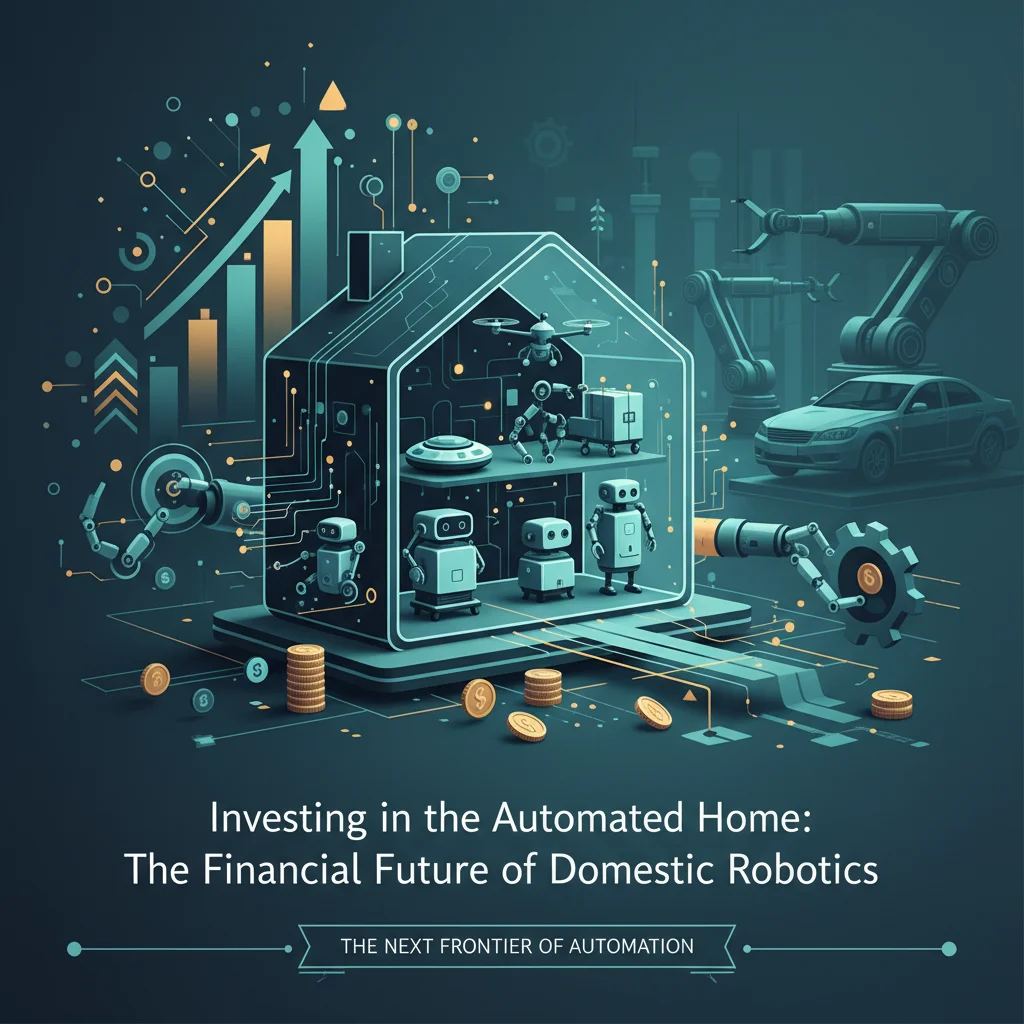
Investing in the Automated Home: The Financial Future of Domestic Robotics
The Next Frontier of Automation: From the Factory Floor to Your Front Door
For decades, the narrative of robotics has been dominated by images of massive, powerful arms assembling cars on factory floors or tireless machines sorting packages in vast warehouses. This industrial automation revolutionised manufacturing and logistics, driving unprecedented efficiency and economic growth. But now, a quieter, more personal revolution is underway. The same forces of artificial intelligence, machine learning, and advanced sensor technology are being miniaturised, refined, and packaged for a new environment: our homes. The robots are coming, not to replace factory workers, but to do the ironing, improve your tennis serve, and even help educate your children.
This transition from industrial behemoths to domestic helpers represents more than just a technological leap; it signals the birth of a new economic sector with profound implications for investors, financial institutions, and the broader economy. As we stand on the cusp of the automated home era, the question for savvy professionals is no longer “if,” but “how”—how to understand, navigate, and capitalise on this transformative market.
Meet the New Household Staff: A Glimpse into the Future
The vision of a Rosie the Robot-style humanoid butler has been a staple of science fiction for nearly a century. Today, companies are turning that fiction into a tangible reality. Texas-based Apptronik is developing humanoid robots like Figure 01, designed to work alongside humans in a variety of environments, including eventually the home (source). But the revolution isn’t just about humanoids. It’s about specialised, intelligent machines designed for specific tasks.
Dyson, a name synonymous with high-end home appliances, has been secretly working on a new generation of domestic robots. Prototypes reveal machines capable of tidying up, putting away dishes, and cleaning furniture—tasks that require a sophisticated understanding of object recognition and delicate manipulation. Similarly, the concept of “cobots,” or collaborative robots, is finding a domestic foothold. Imagine a machine that doesn’t just wash your clothes, but also irons and folds them. This isn’t a far-off dream; it’s the active focus of major R&D departments.
The applications extend beyond chores into leisure and education. Japanese automation giant Omron has developed Forpheus, a table-tennis-playing robot that acts as a tireless, AI-powered coach, adapting to a player’s skill level to help them improve. Meanwhile, companion robots like Miko are being designed to engage with children, offering educational content and interactive play, positioning themselves as a new pillar in the ed-tech landscape (source). Even home security is being automated, with systems like Sunflower Labs using autonomous drones to patrol a property, providing a level of surveillance previously reserved for high-security facilities.
The Billion-Dollar Battle for a Slogan: Why a Brand Dispute Is a Major Signal for Investors
The “Robot-as-a-Service” (RaaS) Model: A Fintech-Driven Revolution
One of the most significant barriers to mass adoption has always been cost. A sophisticated, multi-purpose domestic robot could easily carry a price tag comparable to a small car. This is where modern financial technology and innovative business models come into play. The industry is rapidly moving away from a simple one-time purchase model towards a “Robot-as-a-Service” (RaaS) subscription.
This model, pioneered in the software industry (SaaS), transforms a large capital expenditure into a manageable operational expense. Instead of buying a robot, consumers would pay a monthly fee for its services, including hardware, software updates, maintenance, and support. This approach dramatically lowers the barrier to entry and creates a predictable, recurring revenue stream for manufacturers—a highly attractive feature for those analysing the stock market potential of these companies. The RaaS model will require a robust ecosystem of fintech solutions, from seamless payment processing and subscription management to specialised insurance products and financing options, creating a secondary market of opportunities in the banking and financial services sectors.
Below is a comparison highlighting the financial shift this model represents for the consumer:
| Metric | Traditional Appliance Purchase | Robot-as-a-Service (RaaS) Model |
|---|---|---|
| Upfront Cost | High (e.g., $15,000 – $50,000+) | Low to None (Installation/Activation Fee) |
| Ongoing Costs | Unpredictable (Repairs, Maintenance) | Predictable (Fixed Monthly Subscription) |
| Technology Upgrades | Requires new purchase (Obsolescence) | Included (Software updates, potential hardware swaps) |
| Financial Model | Capital Expenditure (Asset Ownership) | Operational Expenditure (Service Subscription) |
| Fintech Integration | Traditional financing (loans, credit) | Subscription billing, usage-based pricing, embedded insurance |
An Investor’s Guide to the Domestic Robotics Market
The domestic service robot market is poised for explosive growth. While still in its nascent stages, market projections indicate a significant expansion over the next decade. For investors and business leaders, identifying the potential winners requires looking beyond the hardware. The long-term value will be captured by companies that master the trifecta of hardware, software, and data.
When evaluating investment opportunities in this space, consider the following:
- The AI and Software Stack: A robot’s physical dexterity is impressive, but its intelligence is what creates lasting value. Companies with superior AI for navigation, object recognition, and adaptive learning will have a significant competitive moat. The ability to process data at the edge and in the cloud is paramount.
- The Data Ecosystem: Domestic robots are, fundamentally, data-gathering devices. They map our homes, learn our habits, and understand our preferences. The ability to securely collect, anonymise, and leverage this data to improve services (and potentially create new revenue streams) is a critical factor. This is where the economics of the platform truly shine.
- Hardware Specialisation vs. Generalisation: Is the future dominated by single-task robots (a robotic cook, a robotic cleaner) or a general-purpose humanoid? The market will likely support both. Investors should analyse which approach is more scalable and profitable in the short and long term before making decisions on trading specific company stocks.
- Path to Profitability: The R&D costs are immense. A clear and credible path to profitability, likely through a RaaS model, is essential. Analyse a company’s customer acquisition cost (CAC) versus its lifetime value (LTV) projections.
Established players like Dyson and Omron are leveraging their existing manufacturing and distribution networks, while a host of venture-backed startups are pushing the boundaries of innovation. This creates a dynamic and competitive landscape ripe for strategic investing.
Sun, Sand, and Scrutiny: A Radical New Deal for Britain's Offshore Financial Havens?
The Inevitable Hurdles: Data Privacy, Security, and Trust
The automated home is not without its challenges. The same sensors and cameras that allow a robot to navigate a living room also create unprecedented privacy concerns. These devices will have an intimate view of our lives, collecting vast amounts of data. Who owns this data? How is it protected? The potential for misuse or cyber-attacks is a significant risk that could derail public trust and slow adoption.
This is where emerging technologies could play a role. A decentralised ledger technology like blockchain could potentially be used to create an immutable and transparent record of a robot’s actions and data access, giving users more control and audibility over their private information. Robust regulation and industry-wide security standards will be essential to building the consumer confidence necessary for this market to flourish. As the FT article notes, robots can be “clumsy and expensive” in their current form, and overcoming these technical and ethical hurdles is as crucial as perfecting the technology itself.
The PepsiCo-Elliott Truce: Inside the High-Stakes Deal That Averted a Corporate War
Conclusion: The Dawn of a New Asset Class
The integration of advanced robotics into our daily lives is an inevitability. This technological wave will do more than just free up our time; it will reshape consumer spending, create new service-based business models, and present one of the most compelling investment theses of the coming decade. From the fintech platforms that will power the RaaS economy to the manufacturers building the machines themselves, the opportunities are vast and varied.
For individuals, business leaders, and investors, the key is to view domestic robots not as mere gadgets, but as the foundation of a new, automated domestic economy. Understanding the interplay of hardware, software, finance, and data will be crucial to navigating this exciting and disruptive new frontier. The robots are indeed coming, and they’re bringing a new world of economic opportunity with them.