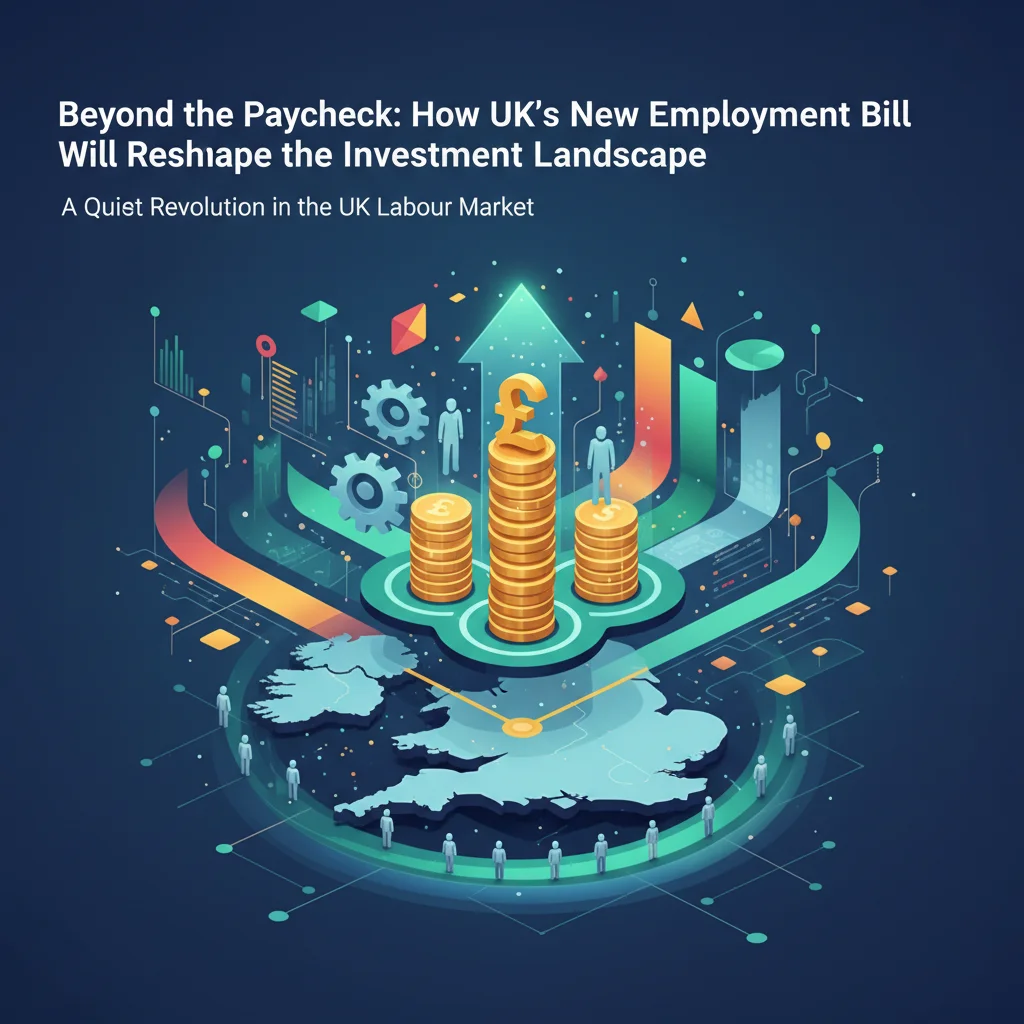
Beyond the Paycheck: How the UK’s New Employment Bill Will Reshape the Investment Landscape
A Quiet Revolution in the UK Labour Market
In what might appear to be a routine legislative update, the UK’s new Employment Rights Bill has successfully cleared its final parliamentary hurdle, a development celebrated by Business Secretary Peter Kyle. While the headlines focus on worker protections, the true story for investors, finance professionals, and business leaders lies beneath the surface. This legislation is not merely a social policy adjustment; it’s a significant economic event poised to send ripples across the UK stock market, redefine corporate risk, and create new opportunities within the financial technology sector.
For decades, the UK economy has increasingly relied on a flexible, often precarious, workforce. The rise of the gig economy, zero-hours contracts, and fluctuating work patterns became hallmarks of modern commerce, particularly in sectors like retail, hospitality, and logistics. This model offered businesses unparalleled agility and cost control. However, the new bill fundamentally challenges this status quo, introducing a new era of predictability and stability for workers. For the financial world, this shift necessitates a complete re-evaluation of company valuations, operational risks, and the long-term health of the UK economy.
Decoding the New Rules of Engagement: What’s Actually Changing?
To understand the financial implications, we must first grasp the core changes this legislation introduces. It’s a multi-faceted overhaul aimed at rebalancing the relationship between employer and employee. The primary pillars of the bill address predictability of hours, control over tips and gratuities, and enhanced flexible working rights. These changes move the needle from employer convenience towards employee stability.
Here is a breakdown of the key transformations and how they compare to the previous regulatory environment:
| Provision | Previous Landscape | New Mandate Under the Employment Rights Bill | Primary Business Impact |
|---|---|---|---|
| Predictable Working Patterns | Workers on zero-hours or atypical contracts had no legal right to request a more predictable schedule. | Eligible workers gain the statutory right to request a more predictable working pattern. Employers must deal with requests in a reasonable manner. | Increased administrative burden, potential rise in fixed labour costs, and reduced staffing flexibility. |
| Tips and Gratuities | Employers could legally retain a portion of tips paid by card, or use them to “top up” wages to the minimum wage, a practice that varied widely. | Employers are now legally required to pass on 100% of tips to staff without deductions, ensuring a fair and transparent distribution. | Potential need for new payroll systems. Direct impact on take-home pay for staff in hospitality, potentially affecting staff retention. |
| Flexible Working Requests | Employees had to have 26 weeks of continuous service before they could request flexible working arrangements. | The right to request flexible working becomes a “day one” right, available from the first day of employment. The process for employers to reject a request is also tightened. | Companies must be prepared to manage a higher volume of requests and justify rejections more robustly, impacting operational planning. |
These changes collectively signal a structural shift in the UK’s labour market dynamics. The era of ultimate flexibility at minimal cost is drawing to a close, forcing businesses to adapt or face significant operational and financial headwinds.
The Global Grind: Why Starbucks' Labor Unrest is a Red Flag for Investors
The Macroeconomic Ripple Effect: A New Chapter for the UK Economy
The impact of this bill extends far beyond individual company balance sheets; it has the potential to reshape the UK’s broader economic landscape. From a macroeconomic perspective, the legislation introduces both opportunities and challenges. Proponents argue that by providing more stable incomes, the bill will bolster consumer confidence and spending. A worker with a predictable monthly income is far more likely to make significant purchases, take out a loan, or invest, creating a virtuous cycle of economic activity. According to a study by the Living Wage Foundation, unpredictable work is a major driver of in-work poverty, and alleviating this could have positive knock-on effects for the economy.
Conversely, critics raise concerns about potential job losses and inflationary pressures. Businesses heavily reliant on flexible labour, particularly small and medium-sized enterprises (SMEs), may find the increased costs and administrative burdens unsustainable. This could lead to reduced hiring, or in worst-case scenarios, business closures. Furthermore, if companies pass these increased labour costs onto consumers, it could contribute to inflationary pressures, a key concern for the Bank of England and the country’s overall economics. The true test will be in how this new equilibrium between flexibility and security affects national productivity—a persistent challenge for the UK economy.
The Investor’s Playbook: Navigating a Transformed Labour Market
For investors and finance professionals, the passage of this bill is a call to action. It requires a forensic re-examination of portfolios and investment strategies, particularly those with heavy exposure to the UK domestic market. The key is to identify which sectors and companies are most vulnerable and which may prove resilient or even benefit.
Sectors Under the Microscope:
- Hospitality & Retail: These sectors are the most directly impacted. Companies with a high proportion of staff on zero-hours contracts will face a direct hit to their operating models. Investors should scrutinize labour costs as a percentage of revenue and inquire about management’s strategy for adapting to the new laws.
- Gig Economy Platforms: The foundational business model of many delivery and ride-sharing apps is built on workforce flexibility. While many of their workers are classified as self-employed contractors, this legislation increases regulatory pressure and could foreshadow future laws aimed directly at their model.
- Logistics & Warehousing: This sector often relies on agency workers and flexible contracts to manage fluctuating demand. Companies will need to invest in more sophisticated workforce planning and potentially absorb higher costs.
Astute investing in this new environment means looking beyond the traditional financial statements. It involves a deeper dive into a company’s human capital strategy. How a company manages its workforce is now a leading indicator of its future financial performance. Companies that have already invested in fair wages and stable contracts may now have a competitive advantage, demonstrating a more sustainable and resilient business model. This shift aligns perfectly with the principles of ESG investing, where strong social governance is seen as a proxy for robust long-term management.
Scoops, Stocks, and Social Justice: The Billion-Dollar Battle for Ben & Jerry's Soul
The Financial Technology and Banking Response
Every major economic shift creates a demand for new tools and services, and this one is no different. The financial technology (fintech) and banking sectors are uniquely positioned to capitalize on the challenges and opportunities presented by the Employment Rights Bill. The increased complexity of managing payroll, scheduling, and legal compliance creates a burgeoning market for innovative solutions.
We can expect to see a surge in demand for sophisticated Human Resources (HR) and payroll fintech platforms. These systems can help businesses automate the process of managing flexible working requests, ensure transparent distribution of tips, and model the financial impact of offering more predictable contracts. This is a clear growth area for B2B financial technology providers.
Furthermore, as more workers transition to stable incomes, there will be new opportunities in consumer banking and finance. A worker who previously couldn’t get a mortgage due to an unpredictable income may now be eligible. This could spur a new wave of demand for banking products, from loans to investment accounts. Fintech apps focused on financial wellness, budgeting, and automated savings will also become more relevant to a workforce that has greater visibility into its future earnings.
Looking further ahead, one could even speculate on the role of blockchain technology. The bill’s emphasis on transparency, particularly regarding tips, aligns with the core tenets of distributed ledger technology. A blockchain-based system could provide an immutable and transparent record of tip allocation, eliminating disputes and ensuring compliance. While still nascent, this demonstrates how deep the technological response to this legal shift could go.
Conclusion: A New Economic Paradigm
The Employment Rights Bill is far more than a simple piece of legislation. It is a catalyst for a fundamental re-evaluation of the relationship between capital and labour in the UK. For business leaders, it’s a mandate to innovate in workforce management. For the economy, it’s a high-stakes experiment in balancing flexibility with security. But for investors and the financial community, it is a clear signal that the rules of the game have changed.
The companies that thrive in this new environment will be those that view their workforce not as a variable cost to be minimized, but as a strategic asset to be nurtured. As the dust settles, the stock market will begin to differentiate between businesses built on sustainable, socially responsible models and those built on the now-crumbling foundations of precarious work. This bill isn’t just about employment rights; it’s about the future direction of the UK economy and the very definition of a sound investment.
The £10.9 Billion Question: How Pandemic Fraud Reshaped the Future of Public Finance

Related Posts
The £47 Billion Gamble: Was the UK’s COVID Loan Scheme a Lifeline or a License to Steal?
The UK’s Economic Puzzle: Rising Unemployment, Resilient Wages, and What It Means for Your Finances