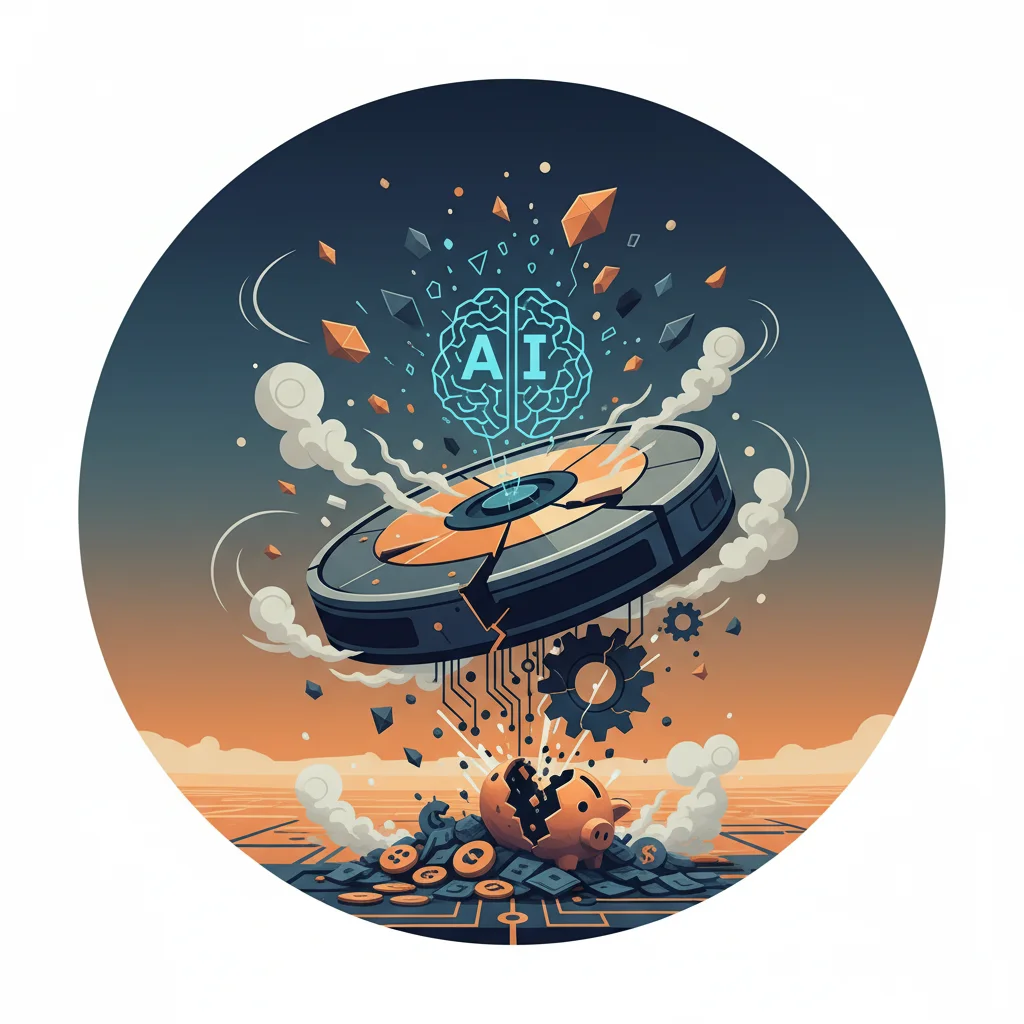
The Dust Settles: Why Roomba’s AI Dream Ended in a Bankruptcy Nightmare
It was the sound of the future—a gentle whirring as a small, disc-shaped robot diligently cleaned your floors. For two decades, the Roomba wasn’t just a vacuum cleaner; it was a symbol of accessible home automation, a friendly introduction to practical artificial intelligence for millions. Its parent company, iRobot, was a pioneer, a name synonymous with American innovation. Today, that name is synonymous with something else: bankruptcy.
In a stunning fall from grace, the US-listed group that put a robot in countless homes has filed for bankruptcy protection. The final chapter? A takeover by its primary Chinese supplier, a move that starkly illustrates the brutal realities of the modern consumer electronics market. This isn’t just the story of a failed company; it’s a cautionary tale for startups, a case study for tech leaders, and a profound lesson on the fleeting nature of hardware dominance in a software-defined world.
How did the king of robotic vacuums get so thoroughly swept away? The answer is a complex mix of intense competition, regulatory roadblocks, and a potential failure to evolve beyond its initial groundbreaking invention.
The Rise and Stall of a Robotics Pioneer
Founded in 1990 by MIT roboticists, iRobot had a pedigree of serious tech, initially focusing on military and disaster-response robots. But it was the launch of the Roomba in 2002 that catapulted the company into the public consciousness. It was a marvel. Using a suite of sensors and clever algorithms—a nascent form of consumer-grade AI—it could navigate complex home layouts, avoid stairs, and return to its dock to charge. It was a game-changer.
For years, iRobot dominated the market it created. It refined its software, improved its navigation with advanced machine learning models for mapping and object recognition, and built a powerful brand. But while iRobot was perfecting its product, the world was catching up. Fast.
The market became flooded with competitors, particularly from Asia. Brands like Shark, Eufy, and Roborock began offering similar—and sometimes superior—features at a fraction of the price. They leveraged efficient supply chains and aggressive pricing strategies, turning a premium, innovative product into a commoditized appliance. Suddenly, iRobot’s premium price tag became harder to justify. The “moat” around its business wasn’t as deep as it seemed.
The Hidden Fuse of the AI Revolution: Are We About to Run Out of Power?
The Amazon Lifeline That Snapped
By 2022, facing mounting pressure, iRobot saw a powerful lifeline: Amazon. The e-commerce and cloud giant agreed to acquire the company for a staggering $1.7 billion. The synergy seemed perfect. Amazon would gain a foothold in home robotics, integrating Roomba into its Alexa-powered smart home ecosystem. In return, iRobot would get the vast resources and market access of one of the world’s largest companies.
But the deal immediately drew intense scrutiny from regulators in both the US and Europe. The concerns were twofold:
- Antitrust: Regulators worried that Amazon could use its platform to unfairly promote Roomba over competing robot vacuums, stifling competition.
- Data Privacy: This was the bigger, more modern concern. Roombas with advanced mapping technology create detailed floor plans of users’ homes. This data is incredibly valuable, revealing a person’s lifestyle, wealth, and even the number of inhabitants. The prospect of this data falling into Amazon’s hands raised significant cybersecurity and privacy red flags.
The regulatory battle dragged on for 18 months. During this period of uncertainty, iRobot was in limbo. It took on significant debt, including a $200 million loan from Carlyle, just to stay afloat while waiting for the deal to close. In January 2024, the inevitable happened. Facing insurmountable opposition from EU regulators, Amazon pulled the plug. The lifeline was cut, and iRobot was left adrift with a mountain of debt and a deteriorating market position.
To understand the rapid decline, consider this timeline of key events:
| Date | Event | Significance |
|---|---|---|
| 2002 | Roomba is launched | Creates the consumer robotics vacuum market. |
| 2015-2020 | Rise of Competitors | Brands like Shark and Roborock enter the market, increasing price pressure. |
| August 2022 | Amazon Acquisition Announced | A $1.7bn deal offers a promising exit and integration into a larger ecosystem. |
| 2023 | Regulatory Scrutiny Intensifies | Antitrust and data privacy concerns in the US and EU stall the deal. |
| January 2024 | Amazon Deal Collapses | Amazon terminates the acquisition, paying iRobot a $94m break-up fee (source). |
| June 2024 | Bankruptcy Filing | iRobot files for Chapter 11 and agrees to be acquired by its supplier. |
Lessons for Today’s Tech Innovators and Startups
The collapse of a household name like iRobot offers critical lessons for everyone in the tech industry, from entrepreneurs with a new gadget idea to developers working on the next big SaaS platform.
1. Hardware is a Trojan Horse, Not the Treasure
iRobot sold a product. Its competitors, especially those integrated into larger smart home ecosystems, are selling a service. The physical robot is just the entry point. The long-term value is in the data it collects, the software updates that improve its functionality, and its integration with other services. Companies that understand this build their strategy around the software and cloud infrastructure, not just the plastic and silicon. For modern startups, the goal shouldn’t be to sell a box; it should be to use the box to build a recurring relationship with the customer.
Apple's AI Inertia: How Chinese Rivals Are Weaponizing AI to Topple the iPhone
2. Innovation Isn’t Just R&D—It’s Business Model
iRobot continued to innovate on its technology. Its high-end models feature incredibly sophisticated AI for navigation and obstacle avoidance, a testament to their engineering and programming prowess. However, they were out-innovated on price, supply chain, and go-to-market strategy. True, sustainable innovation involves rethinking not just what your product does, but how you sell it, how you build it, and how you create long-term value. A subscription model for advanced AI features? A platform for third-party developers? These are the kinds of business model innovations iRobot failed to successfully pivot towards.
3. The Danger of Acquisition Limbo
Waiting for an acquisition to close can be fatal. For 18 months, iRobot’s strategic direction was effectively frozen, contingent on the Amazon deal. This period of uncertainty likely led to a brain drain, a pause in bold new initiatives, and an inability to react swiftly to market shifts. For any startup considering an exit, this is a crucial takeaway: a deal isn’t done until the money is in the bank, and a prolonged M&A process can bleed a company dry long before regulators have their final say.
What’s Next for the Humble Robot Vacuum?
The story of iRobot is a poignant end to a chapter in consumer robotics, but it’s not the end of the book. The dream of home automation is stronger than ever. The difference is that the future of this technology likely belongs not to standalone pioneers, but to the giants who control the overarching smart home ecosystems—Amazon, Google, Apple—and the hyper-efficient international manufacturers who can produce incredible hardware at scale.
As the dust settles, iRobot’s legacy will be that of a company that brought the future into our homes but couldn’t adapt to the future it helped create. It’s a stark reminder that in the relentless world of technology, even the most brilliant innovations can end up collecting dust if they fail to build a business model as intelligent as their machines.
Code of Silence: The Terrifying Cost of Speaking Truth to Power in Tech

Related Posts
From Battlefield to Production Line: The Ukrainian Startup Exporting War-Tested AI Drone Tech to Germany
Hollywood’s Civil War: The High-Stakes Financial Battle Tearing Warner Bros. Apart