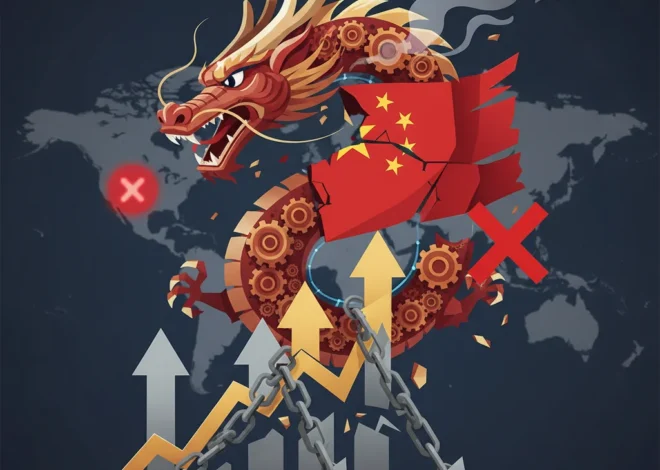
Beyond the Verdict: What Jimmy Lai’s Conviction Means for Hong Kong’s Future as a Global Finance Hub
The conviction of billionaire media tycoon Jimmy Lai in Hong Kong on charges of conspiring to commit sedition and foreign collusion marks a watershed moment, not just for the city’s political landscape, but for the global financial community. The verdict against the 76-year-old founder of the now-shuttered pro-democracy newspaper, Apple Daily, sends a powerful signal about the shifting legal and commercial ground in one of the world’s most important economic centers. For investors, finance professionals, and business leaders, this case transcends headlines; it strikes at the very core of the principles that made Hong Kong a bastion of international commerce: the rule of law, freedom of information, and judicial independence.
This development forces a critical re-evaluation of the risks and opportunities associated with the Hong Kong market. As the city navigates its new reality under Beijing’s National Security Law (NSL), the global community is watching closely, asking a pivotal question: Can a financial hub thrive when the bedrock of its legal and political autonomy is fundamentally altered? The answer will have profound implications for the future of finance, investing, and the broader Asian economy.
The Man and the Message: Understanding the Significance of Jimmy Lai
To grasp the full weight of this verdict, one must understand who Jimmy Lai is. He is not merely a businessman; he is a symbol. Arriving in Hong Kong as a stowaway from mainland China with nothing, he built a business empire, first with the clothing retailer Giordano and later with the media conglomerate Next Digital, which published the fiercely pro-democracy Apple Daily. His story was the quintessential Hong Kong dream—a testament to the city’s once-vaunted environment of free-market capitalism and personal liberty.
Apple Daily was known for its unapologetic criticism of the Hong Kong and Chinese governments, a stance that made it a beacon for the city’s pro-democracy movement and a thorn in Beijing’s side. The charges against Lai, stemming from articles published and interviews given, are directly linked to his media operations. As such, his conviction is widely seen as the final nail in the coffin for press freedom in the city, a freedom that is not just a political ideal but a crucial component of a transparent and efficient market economy. Accurate, unfettered information is the lifeblood of trading and investing, and its suppression creates an opacity that investors inherently distrust.
Decoding the National Security Law: A New Legal Framework
The legal instrument at the heart of this case is the National Security Law (NSL), imposed on Hong Kong by Beijing in June 2020 following massive pro-democracy protests. The law criminalized acts that were previously considered protected speech and has been used to arrest over 200 people, including activists, politicians, and journalists. Its broad and vaguely worded provisions have been a primary source of concern for the international business community, creating a climate of uncertainty.
Understanding the core tenets of the NSL is crucial for any entity operating in or investing through Hong Kong. The law targets four main categories of offenses:
| Offense Category | Description and Implications for Business |
|---|---|
| Secession | Breaking away from the country. The broad definition could potentially include advocating for ideas that challenge Beijing’s sovereignty claims. |
| Subversion | Undermining the power or authority of the central government. This could be interpreted to include severe criticism of economic policies or state-owned enterprises. |
| Terrorism | Using violence or intimidation against people. Also includes disrupting essential public services, which could have implications for labor strikes or protests impacting business operations. |
| Collusion with Foreign Forces | Conspiring with foreign entities to impose sanctions or engage in other hostile activities. This is a major concern for multinational corporations, as normal business lobbying or compliance with home-country sanctions (like those from the US) could be construed as collusion (source). |
The law’s extraterritorial reach—meaning it can apply to offenses committed outside of Hong Kong by non-residents—adds another layer of complexity for global firms and investors. The risk, however remote, is that standard due diligence or critical corporate research could fall foul of these ambiguous “red lines.”
The Ripple Effect: Investor Confidence and the Hong Kong Economy
The erosion of judicial autonomy has tangible consequences for Hong Kong’s economy and its standing as a financial powerhouse. Investor confidence is not built on tax incentives alone; it rests on predictability, transparency, and the rule of law. The NSL, and high-profile cases like Lai’s, have introduced a significant “political risk premium” for assets traded on the Hong Kong stock market.
The performance of the Hang Seng Index (HSI) in recent years reflects this growing unease. While global markets have seen periods of strong growth, the HSI has languished, weighed down by geopolitical tensions and concerns over Beijing’s regulatory crackdowns. In 2023, Hong Kong saw a significant decline in IPO activity, with funds raised plummeting to a two-decade low, a stark indicator that companies are becoming wary of listing in the city (source). This directly impacts the entire financial ecosystem, from banking and investment advisory to trading and asset management.
Furthermore, there is growing evidence of a quiet exodus of capital and talent. While official data is hard to parse, anecdotal reports and population statistics suggest that both expatriates and Hong Kong locals are leaving the city, taking their wealth and expertise with them. A 2022 survey by the European Chamber of Commerce found that 25% of responding companies planned to fully relocate their operations out of Hong Kong within a year, with another 24% planning a partial relocation (source). This brain drain poses a long-term threat to the city’s competitiveness in high-skill sectors like financial technology (fintech) and asset management.
Solving the Market's Puzzle: An Investor's Guide to the Modern Financial Crossword
The Future of Finance and Fintech in the Pearl of the Orient
Despite these headwinds, it would be premature to write off Hong Kong entirely. The city retains formidable strengths. Its currency peg to the US dollar provides stability, its tax system remains attractive, and its physical and financial infrastructure is world-class. Most importantly, it remains the single most effective and integrated conduit for capital flowing into and out of mainland China’s vast economy.
However, the nature of its role may be changing. Rather than a truly international financial center, Hong Kong is increasingly seen as a specialized “offshore” hub for mainland China. This pivot presents both opportunities and challenges.
For the burgeoning fintech and blockchain sectors, the new environment is particularly complex. Financial technology thrives on data, and concerns about data security and privacy under the NSL are paramount. International fintech firms may hesitate to house their servers or process sensitive global customer data in Hong Kong, fearing potential access by mainland authorities. Similarly, the ethos of blockchain technology—built on principles of decentralization and censorship resistance—stands in stark contrast to the trend of increasing centralization and control in the city. Navigating this ideological and practical divide will be a key challenge for innovation in Hong Kong’s financial sector.
A New Playbook for Investing and Operating in Hong Kong
For business leaders and investors, the old Hong Kong playbook is obsolete. A new, more nuanced approach is required, one that treats political and regulatory risk as a primary variable, not an afterthought.
- Re-evaluate Risk Models: Standard economic and financial models must be updated to incorporate the high degree of political uncertainty. The potential for sudden regulatory shifts or the sanctioning of individuals and companies is no longer a tail risk; it is a core consideration.
- Diversify Geographic Exposure: For companies using Hong Kong as their sole Asian headquarters, it is now prudent to consider a “Hong Kong Plus One” strategy, establishing a secondary base in a location like Singapore to mitigate risk and ensure business continuity.
- Scrutinize Supply Chains and Data Flows: Businesses must have a crystal-clear understanding of their data architecture. Where is data stored? Who has access? Compliance with a growing web of international data privacy laws and the NSL requires sophisticated legal and technical expertise.
- Stay Informed on Non-Financial Factors: Keeping abreast of political developments, judicial appointments, and the application of the NSL in various cases is now as important as tracking the stock market. Economics and politics are inextricably linked in the new Hong Kong.
Robinhood's Indonesian Gambit: Tapping into a Nation of 19 Million New Investors
Conclusion: An Economic Identity at a Crossroads
The conviction of Jimmy Lai is more than the conclusion of a single legal case. It is a landmark event that crystallizes the profound transformation of Hong Kong. It confirms that the legal and political firewall that separated the city’s system from mainland China’s is porous, if not dismantled. For the global financial community, this necessitates a fundamental recalibration. The city’s undeniable advantages as a gateway to China now come with a clear and present set of political risks that cannot be ignored.
Hong Kong’s future as a global finance hub is not over, but its identity is irrevocably changing. It is shifting from a Western-style international center governed by common law to a Chinese financial center operating under a new and evolving set of rules. The world of finance, banking, and investing must adapt to this new reality, navigating its complexities with open eyes and a clear understanding of the new risks involved.