UK’s Petrol Car Ban on the Chopping Block: A U-Turn’s Impact on the Economy, Investing, and Your Portfolio
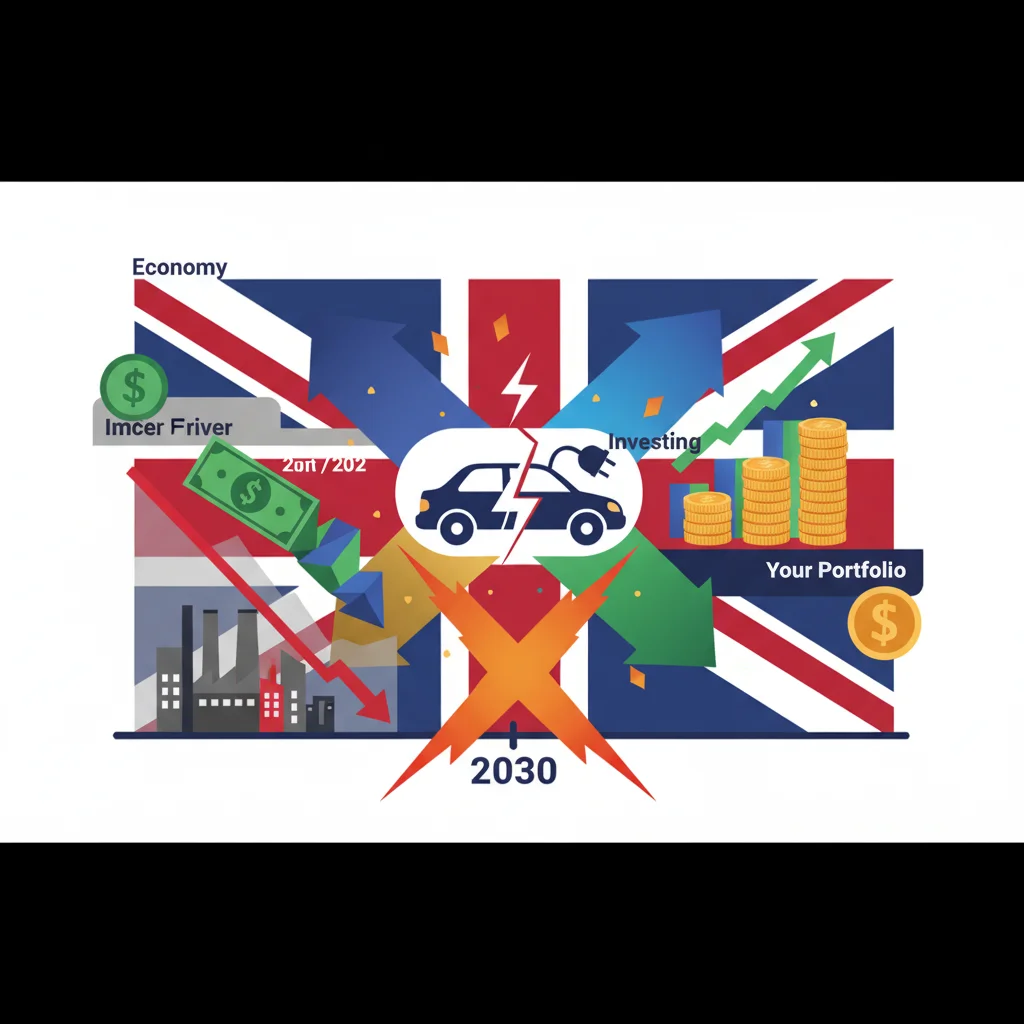
In a move sending shockwaves through the automotive, energy, and financial sectors, the UK’s Conservative Party has announced its intention to completely scrap the ban on new petrol and diesel cars if it wins the upcoming general election. The party’s leader has labeled the existing policy, which mandates a phase-out by 2035, as “destructive” and a form of “economic self-harm” (source). This potential policy reversal is far more than a debate about environmental targets; it represents a pivotal moment for the UK economy, posing critical questions for investors, business leaders, and anyone with a stake in the country’s financial future.
The decision throws a wrench into long-term strategic planning for countless businesses and could redefine the UK’s position in the global green technology race. For professionals in finance, banking, and trading, this isn’t just news—it’s a significant market signal that demands careful analysis. What are the ripple effects on the stock market? How does this alter the landscape for green investing? And what does it say about the stability of UK economic policy? Let’s delve into the profound financial implications of this proposed U-turn.
A Policy Paved with Uncertainty: The History of the UK’s Car Ban
To understand the magnitude of this announcement, it’s crucial to appreciate the policy’s turbulent history. The UK’s path to vehicle electrification has been a winding road, marked by shifting goalposts that have already created a challenging environment for long-term investment. What began as a component of a broader net-zero strategy has become a political football, leaving industries in a state of flux.
The timeline below illustrates the policy’s evolution, highlighting the regulatory uncertainty that has plagued the sector for years.
| Policy Iteration | Proposed Ban Date | Key Features & Context |
|---|---|---|
| Original 2017 Plan | 2040 | Initial commitment to phase out new petrol and diesel cars and vans, aligning with other European nations at the time. |
| Boris Johnson’s “Green Industrial Revolution” (2020) | 2030 | An ambitious acceleration of the timeline, aiming to position the UK as a world leader in EV technology and manufacturing. This sparked a wave of investment announcements. |
| Rishi Sunak’s “Pragmatic” Delay (2023) | 2035 | The date was pushed back by five years, citing concerns about the cost of living and the need for more time to build out charging infrastructure. This move was criticized by some carmakers who had already invested heavily based on the 2030 deadline (source). |
| Proposed Conservative Manifesto Pledge (2024) | Scrapped Entirely | A complete reversal, removing the legislative deadline for ending the sale of new internal combustion engine (ICE) vehicles. |
This constant shifting undermines business confidence. Multi-billion-pound decisions, such as building battery gigafactories or retooling assembly lines, rely on a stable and predictable regulatory framework. The proposed scrapping of the ban entirely introduces a new level of uncertainty that could freeze or redirect capital flows destined for the UK’s green economy.
Unintended Alliances: How US Tariffs are Forging a New Economic Bloc in Asia
Economic Self-Harm or a Necessary Correction? Analyzing the Financial Arguments
The core of the debate lies in two conflicting views of economic reality. On one hand, proponents of scrapping the ban argue it will protect consumers and legacy industries from a costly and rushed transition. On the other, critics contend that it will inflict far greater long-term damage by stifling innovation and deterring investment in the technologies of the future.
The Case for Scrapping the Ban:
- Consumer Affordability: With electric vehicles still carrying a higher upfront cost than their petrol counterparts, a ban forces a significant expense on households already grappling with inflation. This move is framed as a pro-consumer measure to ease the financial burden.
- Infrastructure Readiness: The UK’s public charging infrastructure, while growing, still faces challenges in reliability and geographic coverage. Proponents of the reversal argue that the grid and charging network are not ready for a 2035 cliff-edge, and a market-led approach is more practical.
- Protecting Legacy Jobs: The argument is made that a slower transition protects jobs in the traditional automotive supply chain, from manufacturing engine components to mechanics specializing in internal combustion engines.
The Case Against Scrapping the Ban:
- Investment Deterrence: The UK has been actively courting billions in private investment for battery plants and EV production facilities. Policy uncertainty is a major red flag for international investors. Companies like Tata Group (owner of JLR) and Nissan have committed huge sums based on the UK’s presumed transition. As the Society of Motor Manufacturers and Traders (SMMT) noted, the industry needs a “clear, consistent strategy” to secure investment (source). Scrapping the ban could see that capital flow to the EU or US, where policy direction is clearer.
- Loss of Competitive Edge: The global automotive market is moving electric. By removing the regulatory driver, the UK risks falling behind in technology, R&D, and manufacturing expertise. This could turn the UK from a potential leader into a laggard, dependent on importing the very technology it could have been producing.
- Stranded Assets: Companies that have already invested heavily in EV technology and infrastructure based on UK government promises could see the value of those assets diminished, impacting their balance sheets and stock market valuations.
Impact on the Stock Market, Trading, and Your Investment Strategy
For investors and finance professionals, this policy shift is a significant event that necessitates a re-evaluation of portfolios and sector outlooks. The ripple effects will be felt across multiple segments of the stock market.
Automotive and Supply Chain Stocks
The most immediate impact will be on automotive stocks. Traditional manufacturers with a slower EV transition plan might see a short-term reprieve. However, those who have invested heavily in aligning with the UK’s previous 2030/2035 targets, like Jaguar Land Rover, face a strategic nightmare. Their UK-focused investments may now be misaligned with domestic policy. This creates a complex picture for trading, where stock valuations will be buffeted by political polls as much as by sales figures.
Energy and Infrastructure Sector
Companies focused on building and operating EV charging networks, such as BP Pulse and Shell Recharge, have business models predicated on exponential EV growth. A policy reversal clouds their revenue projections and could lead to a slowdown in infrastructure investment. This uncertainty also affects the wider energy sector, as projections for future electricity demand from transport will need to be drastically revised.
Green Finance and ESG Investing
This is a significant blow to the UK’s ambition to be a global leader in green finance. Environmental, Social, and Governance (ESG) investing relies on clear government direction to de-risk green projects. Scrapping a cornerstone climate policy sends a signal that the UK’s environmental commitments are not steadfast. ESG-focused funds may now view the UK with greater skepticism, potentially reducing the flow of capital into UK-based renewable energy, financial technology (fintech) for sustainability, and other green ventures. The move could increase the perceived risk profile of UK assets in the eyes of a global investment community that increasingly prioritizes sustainability.
The Reverse Advent Calendar: A Surprising Economic Indicator for Modern Investors
The Global Race: How the UK Stacks Up
No economic decision is made in a vacuum. The UK’s potential policy pivot contrasts sharply with the direction of other major economic blocs, which could leave it at a competitive disadvantage.
- The European Union: The EU has held firm on its “Fit for 55” package, which includes a ban on new combustion-engine car sales from 2035. UK-based car manufacturers who export to the EU (a massive market for them) will still need to produce EVs, regardless of UK domestic policy. This creates a dual-track problem, complicating production and potentially making UK factories less efficient.
- China: As the world’s largest EV market, China is aggressively promoting New Energy Vehicles (NEVs) through subsidies and regulations. Chinese brands like BYD are rapidly expanding into Europe, and a UK market open to petrol cars for longer could become a prime target for their advanced, and often cheaper, EV models, challenging domestic players.
- United States: Through the Inflation Reduction Act (IRA), the US is offering massive subsidies for domestic EV and battery production, creating a powerful “pull” factor for investment. A UK that is simultaneously weakening its “push” factors (like a phase-out ban) risks a significant capital flight across the Atlantic.
By stepping back, the UK risks becoming a market for outdated technology while the rest of the world accelerates towards the future of mobility. This has profound implications for the country’s long-term economic health and technological sovereignty.
What This Means for Banking and Financial Professionals
The implications for the banking and finance industry are direct and multifaceted. Professionals in the sector must now factor this new variable into their models and advice.
- Corporate Banking & Lending: Lenders will need to reassess the risk profiles of businesses across the automotive supply chain. A company specializing in EV battery components might have seemed like a safe bet yesterday, but its risk profile changes if its primary market (the UK) shrinks or becomes less certain. Conversely, a traditional component maker may see its lifespan extended.
- Investment and Wealth Management: Financial advisors must now discuss the heightened political risk associated with UK-listed automotive, infrastructure, and green energy stocks. Portfolio diversification and a clear understanding of a company’s international exposure versus its UK-specific exposure become even more critical.
- Innovation and Fintech: The growth of the green economy has been a catalyst for innovation in financial technology, from platforms for trading carbon credits to blockchain-based systems for ensuring supply chain transparency for battery materials. Policy uncertainty can chill the funding environment for such startups, as venture capital becomes warier of the UK market.
The ROI of Respect: How Workplace Civility Impacts Your Bottom Line
Conclusion: A Crossroads for the UK Economy
The proposal to scrap the UK’s petrol car ban is a landmark event that transcends environmental policy. It is a fundamental question about the future direction of the UK economy. Will the nation prioritize short-term consumer relief and the protection of legacy industries, or will it embrace the disruption required to compete in the high-tech, green economy of the future?
For investors, business leaders, and finance professionals, the key takeaway is the re-emergence of significant political and regulatory risk in the UK market. The ultimate decision will have lasting consequences for the stock market, for the flow of international investment, and for the nation’s economic competitiveness. As the election approaches, all eyes will be on this policy, not just as a climate pledge, but as a critical indicator of the UK’s long-term financial and industrial strategy.