An 88-Year Streak Broken: Why VW’s German Factory Closure Signals a Seismic Shift in the Global Economy
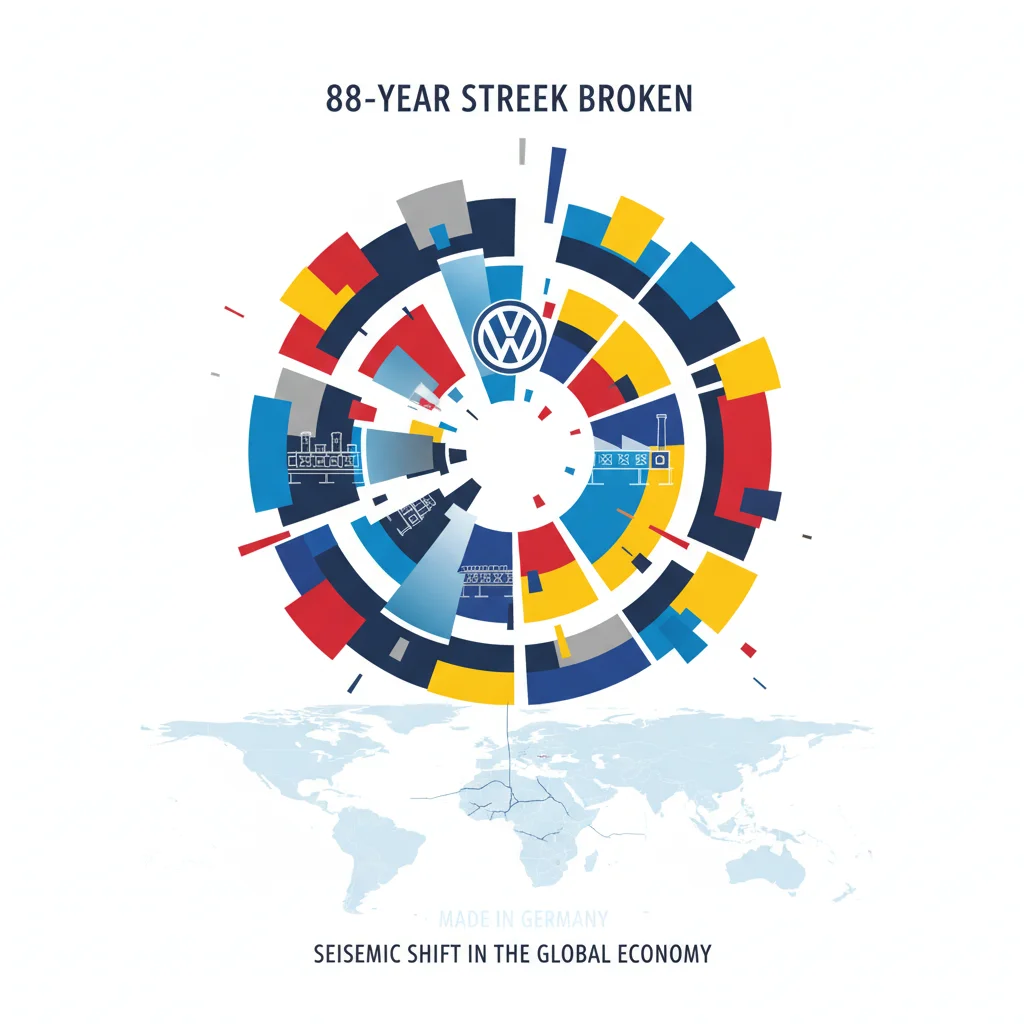
For nearly a century, Volkswagen has been more than just an automaker; it has been the thrumming engine of the German economy and a global symbol of industrial prowess. The phrase “Made in Germany” carries a weight of quality and reliability largely built on the chassis of VW cars. That’s why the recent announcement sent shockwaves through the worlds of finance and industry: for the first time in its 88-year history, Volkswagen is permanently closing a production line in Germany. The cessation of manufacturing at its Dresden site is not merely a footnote in a corporate report; it’s a stark headline signaling a confluence of crises that threaten to reshape the global automotive landscape and the very foundations of the European economy.
This decision, driven by what the company calls “weak demand in its key markets,” is a canary in the coal mine. It points to a perfect storm of slowing EV adoption, fierce international competition, and punishing macroeconomic headwinds. For investors, business leaders, and anyone with a stake in the global stock market, understanding the layers behind this closure is critical to navigating the turbulent road ahead.
The Symbolic Fall of the “Transparent Factory”
The facility in question is no ordinary assembly plant. The Dresden site, known as the “Gläserne Manufaktur” or “Transparent Factory,” was designed as a showpiece. With its glass-walled exterior, it was created to showcase the pinnacle of German engineering, first with the luxury Phaeton sedan and more recently with the all-electric ID.3. It was a statement of confidence and a tourist attraction, embodying the pride of a nation’s flagship industry. Its closure is therefore doubly significant—it is both a practical business decision and the shuttering of a powerful symbol.
The fact that this is the first such closure on German soil in Volkswagen’s 88-year history cannot be overstated. German labor laws, powerful unions, and a culture of corporate-social responsibility have historically made domestic factory closures unthinkable. That this line has been crossed reveals the sheer magnitude of the pressure Volkswagen is under. The easy-growth era is over, and the brutal realities of a new competitive environment are setting in.
A Perfect Storm: Deconstructing the “Weak Demand”
Volkswagen’s official reason—weak demand—is a deceptively simple explanation for a complex web of interconnected problems. The reality is that the automotive giant is being battered from multiple directions at once, a situation that has profound implications for global economics and investment strategies.
- The EV Market Hits a Speed Bump: The initial gold rush into electric vehicles is slowing. Early adopters have made their purchases, but the mainstream market is proving more hesitant. Concerns over high purchase prices, inadequate charging infrastructure, and range anxiety are causing many potential buyers to pause. Furthermore, government subsidies that propped up the market are being rolled back across Europe, removing a key purchasing incentive.
- The Onslaught from the East: While European automakers struggle with their complex EV transition, Chinese brands like BYD, Nio, and Geely are flooding the market with technologically advanced and, crucially, more affordable electric vehicles. They have benefited from years of government support, dominance in the battery supply chain, and a more agile, software-first development approach. This has eroded the competitive moat that German manufacturers long enjoyed.
- Macroeconomic Misery: The global economic climate is hostile to big-ticket purchases. Stubborn inflation, rising interest rates orchestrated by central banking institutions, and stagnant real wage growth are squeezing household budgets. A new car is often the first major expense to be deferred when financial uncertainty looms. This directly impacts sales volumes and puts immense pressure on manufacturers’ margins.
- Germany’s Own Economic Woes: This closure is also a symptom of a broader malaise within Germany itself. Once the undisputed powerhouse of Europe, the nation is now grappling with the fallout from its heavy reliance on Russian energy, a manufacturing sector hit hard by global supply chain disruptions, and an export-led model that is vulnerable to a slowing Chinese economy. The £1 Million Royal-Backed App That Vanished: A Fintech Cautionary Tale
These factors combine to create a challenging environment where legacy automakers are forced to make historically unprecedented decisions. Below is a summary of the key pressures impacting the industry.
| Challenge | Description | Impact on Volkswagen |
|---|---|---|
| Intensified EV Competition | Lower-cost, software-rich EVs from Chinese and US (Tesla) manufacturers are capturing significant market share globally. | Erosion of market share in key markets like China and pressure on pricing and profitability for its ID series of EVs. |
| Slowing Consumer Demand | High inflation, rising interest rates, and economic uncertainty are causing consumers to delay large purchases like new vehicles. | Reduced order backlog, forcing production cuts and leading to decisions like the Dresden factory closure. |
| High Production Costs | Energy, labor, and regulatory compliance costs in Germany are among the highest in the world, making domestic production less competitive. | Reduces the profitability of German-made vehicles and incentivizes shifting production to lower-cost countries. |
| Software Development Hurdles | VW’s software division, Cariad, has faced significant delays and challenges, impacting the rollout and functionality of new models. | Damages brand reputation and puts VW at a disadvantage against competitors who excel at user experience and over-the-air updates. |
The Ripple Effect on Investing, Finance, and the Broader Economy
The closure of a single production line in Dresden will not sink Volkswagen, but its ripple effects will be felt far and wide. For those involved in investing and trading, it serves as a critical risk indicator for the entire European industrial sector.
Firstly, it casts a shadow over the German “Mittelstand”—the vast network of small and medium-sized enterprises that form the backbone of the country’s industrial supply chain. These highly specialized firms depend on the orders from giants like VW. A production cut in one area means cancelled contracts and potential financial distress for dozens of suppliers, threatening jobs and regional economic stability.
Secondly, it raises difficult questions for policymakers in Brussels and Berlin. The EU’s ambitious “Green Deal” and push towards electrification were intended to foster a new era of sustainable growth. However, it may have inadvertently opened the door for Chinese dominance. This forces a difficult conversation about protectionism versus free trade, and how to support a strategic industry without stifling competition or innovation.
Finally, for global investors, this event highlights the vulnerability of legacy industries in high-cost jurisdictions. It underscores the need to re-evaluate portfolios heavily weighted towards traditional European manufacturing. The stock market is a forward-looking mechanism, and this news signals that the path ahead for companies like Volkswagen is fraught with structural, not just cyclical, challenges. The Monroe Doctrine 2.0: What a US 'Peace Through Strength' Policy Means for the Global Economy
Can Technology Be the Engine of a Turnaround?
While the outlook is challenging, it is not hopeless. The crisis could serve as the catalyst for much-needed change. Volkswagen’s survival and future success will depend on its ability to innovate its way out of its current predicament. This extends beyond the vehicle itself into the very processes that build and deliver it.
One area ripe for disruption is the supply chain. The current model is fragile and opaque. Advanced financial technology and logistics platforms are essential for creating more resilient systems. Some futurists even argue that technologies like blockchain could one day offer a secure, transparent ledger for tracking every component from its raw material origin to its installation in a vehicle, streamlining processes and reducing costs. While still a nascent concept in manufacturing, the pressure to find competitive efficiencies is immense.
Ultimately, the core challenge is a cultural and technological transformation. Volkswagen must accelerate its transition from a hardware-centric manufacturer to a software-and-service-oriented mobility provider. This involves mastering everything from in-car operating systems to subscription-based features and data monetization—a world that looks more like Silicon Valley than Wolfsburg. A Dangerous Silence: How US-Japan-China Tensions Over Taiwan Are Shaking Global Finance
A Warning Sign on the Global Dashboard
The end of vehicle production in Dresden is a powerful symbol of a world in flux. It represents the painful collision of a legacy industrial model with the disruptive forces of electrification, geopolitical shifts, and a challenging global economy. As Europe’s largest auto producer, Volkswagen’s struggles are a microcosm of the challenges facing the entire continent.
This is not just a story about cars. It’s a story about industrial strategy, the future of work, and the shifting centers of global economic power. For investors and business leaders, the message is clear: the assumptions of the past are no longer a reliable guide to the future. The road ahead will be defined by disruption, and only those who can adapt to the new terrain will be able to navigate it successfully. The question that remains is whether this closure will be the wake-up call that sparks a true industrial renaissance, or simply the first of many such announcements to come.