The £1,000 Ski Trip: How Currency Headwinds are Reshaping European Travel and Investment
The Unseen Force on the Slopes: Why Your European Holiday Now Costs More
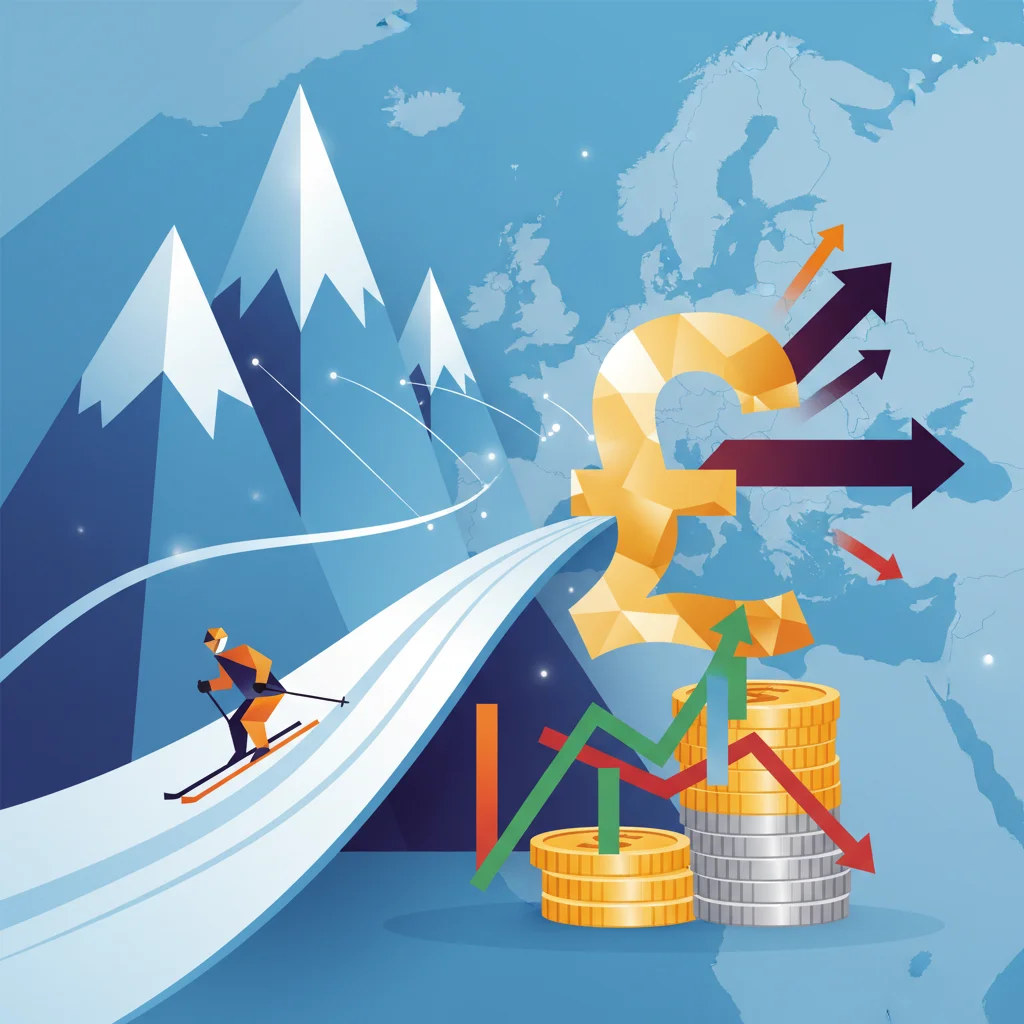
For many professionals across the UK, the annual ski trip is a cherished ritual—a chance to swap the trading floor for the black diamond run, the boardroom for a panoramic mountain view. Yet, as the winter season approaches, a formidable off-piste challenge has emerged, one not found on any trail map: the persistent weakness of the British pound against the euro. This subtle shift in the foreign exchange market is having a tangible impact, turning a week of alpine escape into a significantly more expensive venture and serving as a powerful lesson in global economics.
What may seem like a simple holiday budgeting issue is, in fact, a microcosm of the broader challenges facing the UK economy. The fluctuating value of sterling is a critical indicator watched closely by those in finance, investing, and international business. It directly influences everything from the cost of imported goods to the profitability of multinational corporations. For the individual, it’s a stark reminder that macroeconomic trends have real-world consequences, felt most keenly when swiping a card abroad. This year, the cost of a continental ski trip for a UK-based individual has been pushed up considerably, a direct consequence of the pound’s slide.
Dissecting the Currency Impact: A Look at the Numbers
The financial pinch is not just a feeling; it’s a quantifiable reality. A comprehensive analysis of holiday costs reveals the direct correlation between currency values and consumer purchasing power. According to a recent report from Post Office Travel Money, the sterling’s depreciation has added a significant premium to European ski holidays for British tourists compared to the previous season. This isn’t merely about the price of a lift pass or ski hire; it’s a cumulative effect that touches every aspect of the trip, from the cost of a morning coffee to an evening meal.
While prices have risen across the board, savvy consumers and investors can still find value by analysing the data. The report highlights that certain resorts offer a much better financial proposition than others. Bardonecchia in Italy, for instance, has once again been crowned Europe’s best-value resort for adult skiers, offering a relative haven from the harshest price hikes (source). Conversely, traditionally popular but premium resorts in Switzerland and France have seen costs escalate, making them a tougher sell for the budget-conscious.
To illustrate the disparity in costs, let’s examine a comparison of popular European ski resorts. The data below, based on the Post Office’s Ski Resort Report, outlines the estimated costs for key items like a six-day ski pass, equipment hire, lessons, and daily food and drink.
| Resort | Country | Estimated Total Cost (GBP) | Key Insight |
|---|---|---|---|
| Bardonecchia | Italy | £532 | Retains its position as the best-value option. |
| Borovets | Bulgaria | £550 | A close contender, offering significant value outside the Eurozone. |
| Sauze d’Oulx | Italy | £648 | Represents a mid-range Italian option. |
| Morzine | France | £818 | A popular French resort showing a noticeable price increase. |
| Zermatt | Switzerland | £1,149 | Among the most expensive, exacerbated by the strong Swiss franc. |
This data clearly demonstrates that strategic destination selection can mitigate a significant portion of the currency-driven cost increases. For investors and business leaders, this is a lesson in market analysis: just as one diversifies a portfolio, diversifying travel destinations based on economic conditions can yield substantial savings. The Unlikely Guru: What the World of Finance Can Learn from a Union Boss's Playbook
Beyond the Piste: The Macroeconomic Forces at Play
To truly understand why your après-ski is costing more, we must look beyond the resort and into the complex world of international economics and finance. A currency’s value is not arbitrary; it is a reflection of a country’s economic health, investor confidence, and monetary policy relative to other nations.
Several key factors are contributing to the pound’s current position:
- Interest Rate Differentials: Central banks, like the Bank of England (BoE) and the European Central Bank (ECB), use interest rates to manage inflation. When one central bank is perceived as being more aggressive in its rate-hiking cycle, it can attract foreign capital, strengthening its currency. The delicate dance between the BoE and ECB has created fluctuations in the GBP/EUR exchange rate.
- Inflation Data: Persistent, high inflation in the UK erodes purchasing power and can weigh on the currency. While inflation is a global issue, the UK’s specific blend of energy price shocks and labour market tightness has presented a unique challenge.
- Economic Growth Outlook: The projected GDP growth of a nation is a primary driver of investor sentiment. A gloomy forecast for the UK economy compared to the Eurozone can lead investors to favour euro-denominated assets, thereby weakening the pound. This sentiment is often reflected in the performance of the stock market.
- Geopolitical Factors: Global stability, trade agreements, and political certainty all play a role. The ongoing adjustments to the UK’s trading relationship with the EU continue to influence the long-term valuation of sterling.
These macroeconomic currents are the invisible hands guiding the numbers you see on the currency exchange board. The cost of a ski holiday is merely a symptom of these much larger, interconnected economic forces. Netflix's Billion Gambit: Analyzing the Warner Bros Acquisition That's Reshaping Hollywood
Navigating the Financial Moguls: Practical Strategies for a Volatile World
While we cannot control the global currency markets, we can adopt smarter strategies to mitigate their impact. This applies not only to holiday planning but also to personal investing and business operations.
For the savvy traveler, the rise of financial technology, or fintech, offers powerful tools. Challenger banks and multi-currency account providers often provide far superior exchange rates and lower fees than traditional high-street banking institutions. Planning ahead, locking in rates for accommodation and lift passes by paying in full upfront, or opting for all-inclusive packages can also protect against adverse currency swings.
For business leaders and investors, the principles are the same, just on a larger scale. The challenges highlighted by the ski trip scenario are precisely why corporate treasurers engage in currency hedging and forward contracts. In the world of international trading, managing foreign exchange (Forex) risk is not optional; it is a fundamental component of financial strategy. The evolution of fintech and even emerging technologies like blockchain are continuously offering new, more efficient ways to manage cross-border transactions and reduce exposure to currency volatility. As a travel industry spokesperson noted, the cost-of-living crisis coupled with unfavourable exchange rates is forcing a major rethink of pricing and value propositions.
The bigger picture reveals a dual impact of a weaker pound. While it makes foreign travel and imports more expensive for UK residents, it simultaneously makes the UK a more affordable destination for international tourists and its exports cheaper on the global market. This can provide a boost to the tourism sector and export-oriented businesses, creating a complex and multifaceted economic landscape. The Gehry Effect: How One Architect's Vision Reshaped Modern Investing and Economics
Conclusion: From the Slopes to the Stock Market
The rising cost of a European ski trip is more than just a travel headline; it is a practical, relatable case study in modern economics. It demonstrates the intricate web connecting central bank decisions, global investor sentiment, and the price of a glühwein on a mountaintop. It underscores the importance of financial literacy, whether you’re budgeting for a family holiday or diversifying a multi-billion-pound investment portfolio.
Understanding the dynamics of the GBP/EUR exchange rate provides valuable insight into the health of the UK economy and its position on the world stage. As consumers and professionals, being aware of these forces allows us to make more informed decisions, seek out value, and strategically navigate a financial world that is as challenging and unpredictable as any black diamond run.

Related Posts

Praise the Youth and They Will Flourish: Ireland’s Ancient Proverb as a Modern Blueprint for Economic Growth

The Taiwan Strait: Why This Geopolitical Flashpoint is a Ticking Time Bomb for the Global Economy
