The AI Gold Rush Hits a Speed Bump: What Broadcom’s Stock Tumble Really Means
For months, it has felt like a rocket ship that only goes up. The stock market, supercharged by an insatiable appetite for all things artificial intelligence, has been shattering records. Led by titans like Nvidia, the narrative has been simple: AI is the future, and the companies building its foundation are on an unstoppable trajectory. Then, a single day reminded everyone that even rocket ships need to refuel, and sometimes, they hit a little turbulence.
The S&P 500 and Nasdaq both recently retreated from all-time highs, and the catalyst wasn’t some catastrophic economic news. It was a subtle signal from a semiconductor giant, Broadcom. The company saw its stock drop sharply, pulling a significant portion of the tech sector down with it. While a one-day dip might seem trivial, it’s the reason behind it that has developers, entrepreneurs, and investors sitting up and paying attention. It’s a story about sky-high expectations, the complex reality of the AI supply chain, and a market that might finally be asking the tough questions.
This isn’t a sign to panic. It’s a sign to get smart. Let’s break down what happened, why it matters for the entire tech ecosystem, and what it signals for the future of AI, software, and innovation.
The Tremor in the Tech World: Deconstructing Broadcom’s Dip
On the surface, the news from Broadcom seemed positive. The company, a crucial but often overlooked player in the AI hardware space, beat earnings expectations and even raised its full-year revenue forecast, largely on the back of strong AI-related demand. They projected a staggering $11 billion in revenue from AI chips alone for the year.
So, why the drop? In a market “priced for perfection,” good news sometimes isn’t good enough. Despite the impressive numbers, Broadcom’s stock tumbled by over 4 percent in a single session. The ripple effect was immediate, hitting other AI darlings like Nvidia, Super Micro Computer, and Marvel Technology. The reason boils down to a single, powerful force: investor sentiment. After a year of meteoric rises, investors were looking for a forecast so astronomically high that it would justify the stock’s already massive valuation. When Broadcom delivered merely “excellent” news instead of “reality-bending” news, some decided it was time to take profits off the table.
This highlights a critical vulnerability in the current AI boom: the valuations are built on future promises, not just current performance. It’s a reminder that market psychology can be just as powerful as a company’s balance sheet.
Beyond Nvidia: Understanding the Diverse AI Hardware Stack
To truly grasp why the Broadcom news resonated so deeply, you have to understand that the AI hardware ecosystem is not a monolith dominated solely by Nvidia. While Nvidia’s GPUs are the undisputed kings of training large machine learning models, they aren’t the only critical component. Broadcom represents a different, equally vital part of the puzzle: custom silicon and networking.
Broadcom specializes in creating ASICs (Application-Specific Integrated Circuits). These are custom-designed chips tailored for a single purpose, making them incredibly efficient. Major cloud providers like Google and Meta work with companies like Broadcom to develop their own custom AI chips (like Google’s TPUs) to run their massive AI workloads more efficiently and cost-effectively, especially for “inference”—the process of using a trained model to make predictions.
Here’s a simplified look at the different layers of the hardware stack that powers the AI revolution:
| Hardware Layer | Key Players | Primary Role in the AI Ecosystem |
|---|---|---|
| General-Purpose GPUs | Nvidia, AMD | The workhorses for training large, complex AI models. Highly flexible and powerful. |
| Custom Silicon (ASICs/FPGAs) | Broadcom, Marvell, Google (TPU), Amazon (Trainium) | Optimized for specific AI tasks (often inference). Offers superior performance-per-watt for high-volume operations. |
| Networking & Interconnects | Broadcom, Arista Networks, Nvidia (Mellanox) | The high-speed fabric that connects thousands of chips together in a data center, crucial for distributed training. |
| High-Bandwidth Memory (HBM) | SK Hynix, Samsung, Micron | Specialized memory stacked directly on the chip package, providing the massive bandwidth AI processors need to function. |
Broadcom’s performance is a bellwether for the health of the custom chip and networking infrastructure segments. The market’s reaction suggests that investors are starting to look beyond the GPU-centric training narrative and are now scrutinizing the long-term profitability and growth of the entire AI supply chain.
X's €120M Blue Tick Blunder: A Costly Lesson in Digital Trust and a Warning for All Tech
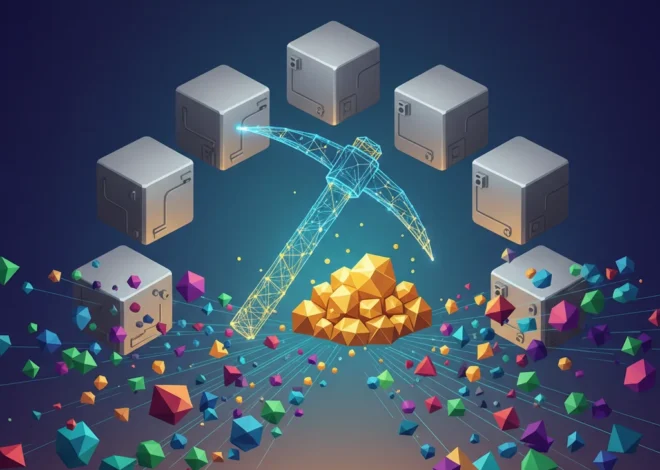
This Broadcom “hiccup” is a healthy dose of reality. It forces a more nuanced conversation about the different economic models at play. Training models is a one-time (or periodic) capital-intensive cost. Inference happens every single time a user interacts with an AI service, making it an ongoing operational cost. Companies are desperately seeking ways to lower this cost, and that’s where custom silicon and efficient networking—Broadcom’s bread and butter—become mission-critical. I predict we’ll see a divergence in the market over the next 12-18 months. The hype around “AI for everything” will cool, but investment will pour into companies that provide tangible efficiency gains, better automation tools, and robust cybersecurity for these new AI systems. The real, sustainable value will be found in the picks and shovels, not just the gold.
What This Market Jitter Means for You
A dip in a few tech stocks might seem distant, but its implications reach every corner of the tech industry. Whether you’re writing code, building a company, or just trying to understand the next wave of technology, this market signal contains valuable lessons.
For Developers and Tech Professionals
The fundamental demand for your skills is not changing. This market correction doesn’t erase the transformative power of artificial intelligence. However, it does signal a shift in focus. The emphasis will move from purely theoretical model-building to practical, efficient deployment.
- Hardware Awareness: Understanding the difference between programming for a GPU versus an ASIC or TPU will become a more valuable skill. Performance engineering and optimization will be paramount.
- Full-Stack AI: Expertise in the entire pipeline—from data engineering and MLOps to building scalable SaaS applications that leverage AI—will be in high demand.
- Efficiency and Automation: Companies will be obsessed with reducing the cost of running AI models. Skills in model quantization, distributed computing, and creating efficient inference engines will set you apart.
For Entrepreneurs and Startups
The era of getting funded just by adding “AI” to your pitch deck is likely drawing to a close. VCs, taking their cues from the public markets, will become more discerning. This is both a challenge and an opportunity.
- Focus on Real Problems: The market for AI-powered solutions that offer clear ROI—such as process automation, enhanced cybersecurity, or tangible cost savings—will remain incredibly strong. Your value proposition needs to be crystal clear.
- Beware the “Hype Tax”: Valuations for startups may see a correction. Focus on building a sustainable business with solid unit economics rather than chasing an inflated valuation. According to some analysts, the market is experiencing a “period of consolidation” (source), which means only the strongest will thrive.
- The “Picks and Shovels” Opportunity: The biggest opportunities may not be in building the next foundational model, but in creating the tools, platforms, and software that help other companies deploy AI more securely, cheaply, and effectively.
Wall Street's 2026 Crystal Ball: Why a Tech Tsunami Could Redefine Your Career and Business
For the Broader Tech Community
This is a sign of a maturing market. The initial, explosive “Big Bang” of generative AI is transitioning into a phase of sustainable expansion. The technology is real, and its integration across every industry is inevitable. However, the path forward will involve volatility, corrections, and a constant re-evaluation of value. The key takeaway is to separate the underlying technological innovation from the often-fickle sentiment of the stock market.
The AI Gold Rush: Why the Smart Money is Looking Beyond the Magnificent Seven
Conclusion: From Irrational Exuberance to Sustainable Innovation
The brief stumble of the US stock market, triggered by a nuanced forecast from Broadcom, is far more than a footnote in financial news. It’s a critical inflection point in the story of artificial intelligence. It marks the moment when the market’s blind optimism was met with a healthy dose of analytical rigor.
This isn’t the beginning of the end for the AI boom. It’s the end of the beginning. The foundational technology is here to stay, but the focus is now shifting from unbridled potential to demonstrable performance, from hype to hardware reality, and from a single-company narrative to a rich, competitive ecosystem. For those building, creating, and investing in technology, the message is clear: the AI revolution is still in its early innings, but the game is getting more complex, and only those who understand the entire field will win.

Related Posts

The New Titans: Why TIME Magazine’s Nod to AI’s Architects is a Defining Moment for Our Future
The AI Gold Rush: Why the Smart Money is Looking Beyond the Magnificent Seven