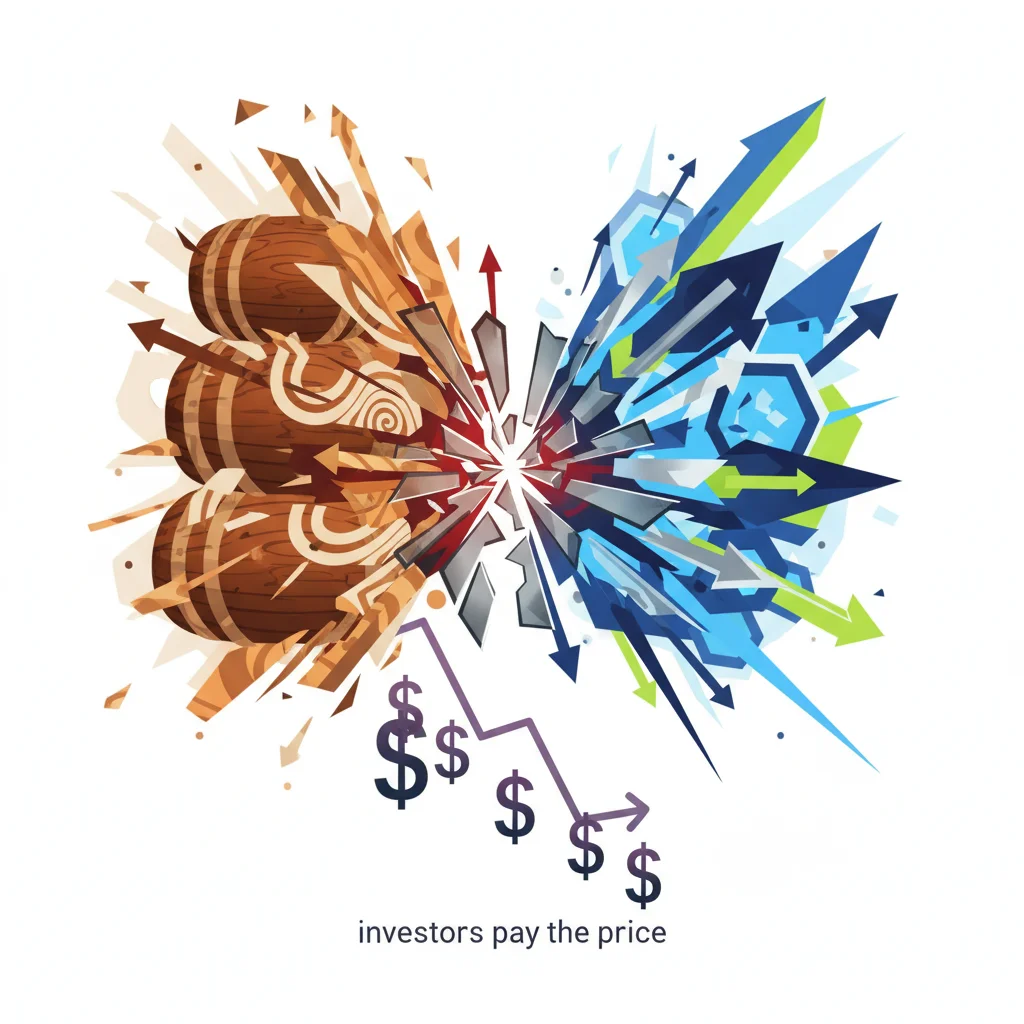
The Cracker Barrel Conundrum: When Nostalgia Clashes with Modernity, Investors Pay the Price
In the world of corporate strategy, few balancing acts are as precarious as the one between preserving a cherished brand identity and the relentless push for modernization. Get it right, and you unlock new markets while retaining your loyal base. Get it wrong, and you risk alienating your core customers, spooking the stock market, and becoming a cautionary tale. This is the difficult lesson Cracker Barrel Old Country Store is currently learning, as a recent, and quickly reversed, attempt to update its image has coincided with a significant cut to its financial outlook.
The chain, a beloved staple of American highways known for its Southern comfort food and old-timey retail stores, has found itself at a crossroads. Its attempt to subtly modernize—including a less rustic logo—drew criticism, most notably from former President Donald Trump. Months later, the company announced disappointing sales figures and a lowered forecast, sending a clear signal to investors that the road ahead is as bumpy as the country lanes its brand evokes. This situation offers a powerful case study for business leaders, marketing strategists, and anyone involved in investing, revealing the profound financial risks of misreading your customer base in a politically polarized and economically strained environment.
The Anatomy of a Rebrand Reversal
At the heart of the issue was a strategic initiative to “evolve the brand.” This often translates to a corporate desire to attract a younger, more diverse demographic. For Cracker Barrel, this involved testing a new logo that was cleaner and more modern, shedding some of the rustic, hand-drawn feel of its iconic sign. While seemingly a minor tweak, for a brand built entirely on nostalgia and a specific vision of American heritage, it was anything but.
The backlash was swift, particularly from its established customer base who saw the change as a departure from the values they associated with the brand. The criticism was amplified when Donald Trump weighed in on social media, accusing the company of going “woke.” In today’s hyper-sensitive cultural landscape, such a label can be a death knell for a brand that relies on a more traditional demographic. Cracker Barrel quickly retreated, halting the rollout of the new logo. However, the damage to consumer perception, and subsequently its bottom line, appears to have been done.
Bitcoin's Tightrope Walk: Navigating the Return of Macroeconomic Headwinds
The Financial Fallout: A Look at the Numbers
Brand perception doesn’t exist in a vacuum; it translates directly to financial performance. Following the controversy, Cracker Barrel was forced to slash its business outlook for the fiscal year, a move that sent tremors through the stock market. The company’s leadership cited a “challenging consumer environment” and a noticeable drop in customer traffic as primary reasons for the downgrade.
Let’s examine the specifics of the revised forecast, which paints a sobering picture for investors.
| Financial Metric | Previous Guidance | Revised Guidance | Implication |
|---|---|---|---|
| Full-Year Revenue | $3.5B – $3.6B | $3.4B – $3.5B | Significant reduction in expected sales |
| Comparable Store Sales Growth (Restaurant) | 1% – 3% | 0% – 1% | Stagnant to minimal growth expected |
| Operating Income Margin | 4.7% – 5.3% | 3.6% – 4.1% | Sharp decline in profitability |
| Earnings Per Share (EPS) | $5.00 – $5.50 | $3.75 – $4.15 | Over 20% reduction at the midpoint |
As the table illustrates, this wasn’t a minor adjustment. The sharp cuts, particularly to operating margin and EPS, signal deep-seated issues. A company doesn’t revise its forecast this dramatically unless it sees a fundamental and unexpected shift in its business. For those involved in trading Cracker Barrel’s stock (NASDAQ: CBRL), this was a clear sell signal, and the stock price reflected this sentiment, tumbling after the announcement. The company’s shares have fallen more than 30 per cent in 2024, a stark indicator of lost investor confidence.
A Wider Lens: The Economy, Politics, and Consumer Behavior
Cracker Barrel’s woes cannot be entirely attributed to a logo. The company is also navigating a turbulent macroeconomic environment. High inflation has squeezed household budgets, forcing many consumers to cut back on discretionary spending like dining out. The broader economy is experiencing a slowdown in certain sectors, and the restaurant industry is particularly vulnerable. Competitors are fighting for a smaller pool of consumer dollars, making every strategic decision, and every misstep, that much more critical.
However, the political dimension adds a unique and potent layer of complexity. We have seen similar scenarios play out with other major brands, such as Bud Light and Target. Companies are increasingly finding themselves caught in the crossfire of the culture wars. A marketing campaign or a new policy, once considered an internal matter, can now ignite a national firestorm, leading to boycotts and sustained financial damage. The challenge is immense: how do you appeal to a broad, diverse America without alienating a vocal and powerful segment of your existing customer base? For investors, this political risk is becoming a non-negotiable factor in their analysis. It’s a variable that traditional economic models struggle to quantify but one that can have devastating real-world impacts on a company’s valuation.
This situation also highlights the need for companies to embrace transparency in their strategic shifts. Unlike the immutable and transparent record-keeping of a blockchain ledger, brand perception is fluid and can be permanently damaged by actions that seem inauthentic or evasive. When a company appears to be changing its core identity without a clear and compelling reason that resonates with its customers, it breaks a fundamental bond of trust.
Bitcoin's Winter Volatility: A Trader's Playbook for Navigating December's Big Moves
Lessons for Investors and Corporate Leaders
The Cracker Barrel saga offers several crucial takeaways for stakeholders across the business and finance spectrum.
- Know Thy Customer (Intimately): The most glaring lesson is the failure to appreciate the deep-seated connection customers have with the brand’s nostalgic appeal. Before any rebranding, leaders must invest in deep qualitative research to understand the emotional drivers of their customer loyalty. Modern fintech tools can provide vast amounts of data, but they cannot replace genuine human insight.
- Authenticity Over Everything: Modernization efforts must feel like a natural evolution, not a forced repudiation of the past. If your brand is built on tradition, any change must be framed within that tradition. A sudden pivot toward a generic, modern aesthetic is a recipe for alienation. As CEO Julie Masino acknowledged, “We’re not going to be a modern brand… We’re a brand that helps people connect to their past.” This realization, though late, is critical.
- Quantifying Political Risk: For the investment community, this is a wake-up call. Political and social risk is no longer an “edge case.” Analysts and portfolio managers must develop frameworks to assess a company’s vulnerability to cultural backlash. This includes analyzing its customer demographics, brand positioning, and the track record of its leadership in navigating sensitive issues. The stability of the banking relationships that support these corporations can also be influenced by such reputational volatility.
The Road Ahead for Cracker Barrel
Having retreated from its modernization push, Cracker Barrel’s management is now focused on shoring up its core business and winning back disenfranchised customers. Their strategy involves doubling down on what made them successful: value, hospitality, and a consistent, comforting experience. They plan to focus on operational execution, menu innovation that aligns with their brand, and reinforcing their image as a welcoming “home away from home.”
For investors, the path forward requires cautious optimism. The brand is strong and has a long history of customer loyalty that can be repaired. However, the company must prove it can execute its back-to-basics strategy effectively in a difficult economic climate. The next few quarters will be crucial. Key metrics to watch will be comparable store sales, customer traffic trends, and operating margins. Any sign of stabilization in these areas could signal a buying opportunity for long-term investors who believe in the enduring power of the Cracker Barrel brand. But the margin for error has become razor-thin, and the market will be watching with an unforgiving eye.
The Investor's Fog of War: Navigating Market Uncertainty in an Age of Geopolitical Turmoil
Ultimately, Cracker Barrel’s story is a vivid reminder that in business, as in life, knowing who you are is the foundation of all success. In the quest for growth, it’s dangerously easy to lose sight of the essence that attracted customers in the first place. For this iconic American brand, the journey back to health begins with a simple, yet powerful, act: remembering its roots.