On the Brink: Why the US-Indonesia Trade Pact Is Faltering and What It Means for the Global Economy
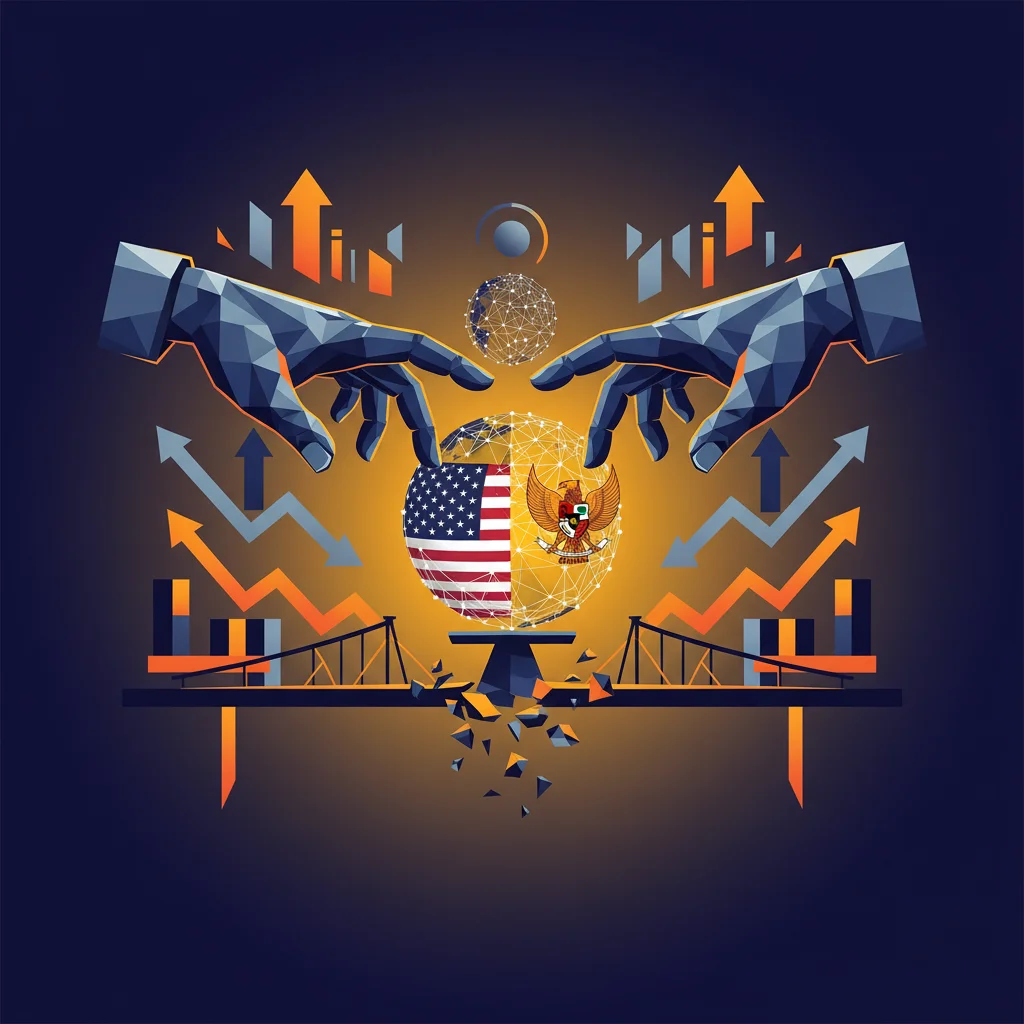
In the high-stakes world of international diplomacy and global economics, a handshake can seal a billion-dollar deal, or it can be the prelude to a protracted standoff. In July, Washington and Jakarta appeared to have forged a landmark agreement, a pivotal step in strengthening economic ties and reshaping critical supply chains. Fast forward to today, and that promising pact is teetering on the edge of collapse, with Washington accusing Jakarta of backtracking on key commitments. This isn’t just a diplomatic spat; it’s a tremor that could send shockwaves through the global economy, impacting everything from electric vehicle manufacturing to the strategic balance of power in the Indo-Pacific.
The core of the dispute, as reported by the Financial Times, is Washington’s belief that Indonesia is reneging on the terms of the July agreement. This development throws a wrench into the United States’ broader strategy of “friend-shoring”—diversifying supply chains away from China by strengthening partnerships with key allies. For investors, business leaders, and finance professionals, the potential fallout demands close attention. The stability of commodity prices, the future of green energy supply chains, and the geopolitical risk profile for Southeast Asia are all in play.
The Anatomy of the Deal: More Than Just Trade
To understand why this potential collapse is so significant, we must first appreciate what the deal represented. This was not a standard trade agreement focused solely on tariffs and quotas. It was a strategic alignment aimed at securing the supply of critical minerals, particularly nickel—a vital component in the batteries that power electric vehicles (EVs) and the broader green energy transition.
Indonesia is the world’s largest producer of nickel, controlling over half of the global supply. For the U.S., which is racing to build out its domestic EV industry and reduce its reliance on Chinese-processed materials, a stable partnership with Indonesia is paramount. The agreement was intended to pave the way for a limited free-trade deal that could grant Indonesian nickel exports preferential treatment, potentially allowing them to qualify for lucrative U.S. EV tax credits under the Inflation Reduction Act (IRA).
The deal was a cornerstone of the U.S. Indo-Pacific Economic Framework (IPEF), a strategic initiative designed to counter China’s economic influence in the region. By integrating Indonesia more closely into a U.S.-led economic bloc, Washington hoped to achieve two critical goals: secure its supply chains and strengthen its geopolitical footing in a region vital to global trading and commerce.
Bitcoin's Tightrope Walk: Navigating the Return of Macroeconomic Headwinds
Where It All Went Wrong: The Sticking Points
The breakdown in trust appears to stem from differing interpretations and subsequent actions related to the agreement’s terms. While the exact details of the discord are not fully public, the friction likely centers on Indonesia’s long-standing policy of “resource nationalism.”
President Joko Widodo’s government has championed a “downstream” industrial policy, banning the export of raw nickel ore to force foreign companies to invest in building smelters and processing plants within Indonesia. This strategy aims to capture more of the value chain, create high-skilled jobs, and transform Indonesia from a mere supplier of raw materials into a major industrial power. According to a Reuters report, this policy has already attracted tens of billions of dollars in investment, primarily from Chinese companies who now dominate the country’s nickel processing sector.
Washington likely sought commitments on labor standards, environmental protection, and market access that Jakarta now finds difficult to reconcile with its domestic industrial strategy and its existing partnerships. The U.S. is wary of effectively subsidizing a nickel supply chain that is heavily reliant on Chinese capital and technology and has been criticized for its environmental and labor practices.
Here is a simplified look at the conflicting priorities that are likely at the heart of the disagreement:
| U.S. Strategic Objectives | Indonesia’s National Interests |
|---|---|
| Secure a stable, non-China-dominated nickel supply chain for its EV industry. | Maximize economic value from its natural resources through domestic processing (“downstreaming”). |
| Promote high environmental, social, and governance (ESG) standards in mineral extraction. | Maintain rapid economic growth and industrialization, sometimes prioritizing speed over stringent regulations. |
| Counter China’s economic influence in Southeast Asia through strategic partnerships. | Maintain a neutral, “non-aligned” foreign policy, balancing relationships with both the U.S. and China. |
| Ensure U.S. companies have fair market access and investment opportunities. | Protect domestic industries and leverage foreign investment to build national champions. |
Implications for Investors and the Global Stock Market
The potential collapse of this deal is not an abstract foreign policy issue; it has tangible consequences for the world of finance and investing.
1. Commodity Market Volatility: The nickel market is already notoriously volatile. Uncertainty surrounding the world’s largest producer and its access to the massive U.S. market could trigger significant price swings. Traders and investors in the commodities space should brace for increased turbulence.
2. The EV Sector and Stock Market: Companies like Tesla, Ford, and GM have staked their futures on a massive EV transition. The cost and stability of their battery supply chains are critical variables in their financial models. A protracted dispute could delay cost reductions, squeeze margins, and introduce a new layer of geopolitical risk to their stocks. The entire EV ecosystem, from battery makers to charging infrastructure companies, would feel the impact.
3. Emerging Market Investment Risk: This episode serves as a stark reminder of the political and regulatory risks inherent in emerging market investing. Indonesia has been a popular destination for foreign capital, with its economy showing robust growth. However, this standoff highlights the potential for sudden policy shifts that can alter the investment landscape. As noted by the OECD, policy certainty is a key driver for sustainable foreign direct investment.
4. The Future of Financial Technology (Fintech) and Digital Trade: Modern trade agreements are increasingly focused on digital chapters, covering everything from cross-border data flows to regulations for financial technology. A failure to reach an agreement on physical goods like nickel could chill cooperation on the digital front, slowing the integration of Southeast Asia’s burgeoning digital economy with Western financial systems. This could be a setback for fintech firms looking to expand in one of the world’s fastest-growing internet markets. The promise of using technologies like blockchain for transparent and secure supply chain finance also gets more complicated when the underlying trade relationships are unstable.
Bitcoin's Silent Squeeze: Unpacking the Liquidity Crisis Rocking the Crypto Market
The Path Forward: Can the Deal Be Saved?
Is the deal dead, or is this simply aggressive negotiation? Both sides have a strong incentive to find a resolution. The U.S. desperately needs to diversify its critical mineral supply chains. For Indonesia, preferential access to the U.S. market and American investment in higher-value processing would be a massive economic boon and a way to counterbalance its heavy reliance on China.
A potential compromise might involve a phased approach, where Indonesia agrees to incrementally adopt higher environmental and labor standards in exchange for gradually increasing access to U.S. markets and technology. Washington may also need to accept the reality that China’s role in Indonesia’s nickel sector is, for now, a sunk cost and focus on influencing the future direction of the industry rather than trying to undo the past.
However, if a compromise cannot be reached, the consequences will be significant. The U.S. will be forced to look elsewhere for its nickel supply, potentially to allies like Canada or Australia, though none can match Indonesia’s scale. Indonesia, in turn, would become even more economically dependent on China, solidifying Beijing’s dominance over a mineral that is to the 21st-century green economy what oil was to the 20th.
This standoff is a microcosm of the new era of global economics—an era defined not by frictionless free trade, but by geopolitical competition, resource security, and the complex interplay of national interests. For those in the world of finance, banking, and investment, navigating this new terrain requires a deeper understanding of the political forces shaping the markets. The US-Indonesia trade deal is more than a headline; it’s a critical stress test for the future of the global economic order.
Bitcoin's Winter Volatility: A Trader's Playbook for Navigating December's Big Moves