AI’s Secret Weapon Against Superbugs: Code, Cure, and the Cash Conundrum
Imagine a world where a simple paper cut could be a death sentence. Where routine surgeries become life-threatening gambles. This isn’t the plot of a dystopian sci-fi novel; it’s the future we’re hurtling towards, a future without effective antibiotics. The enemy? Drug-resistant bacteria, or “superbugs,” a silent pandemic that already claims over a million lives a year.
For decades, our arsenal against these microscopic threats has been dwindling. The pipeline for new antibiotics has run dry, with pharmaceutical giants largely abandoning the field due to poor returns. The process was too slow, too expensive, and the odds of success were astronomically low. But now, a new ally has joined the fight, emerging from an entirely different field: artificial intelligence.
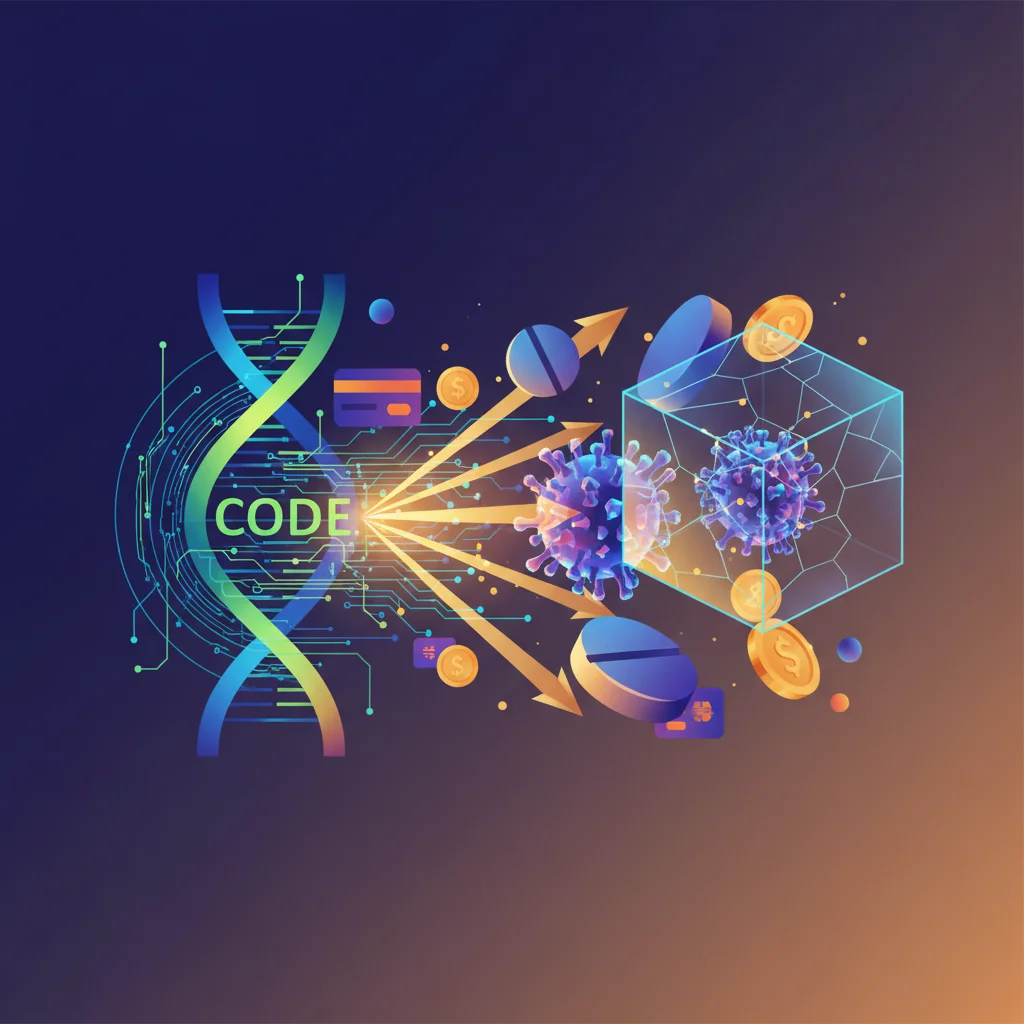
Startups and academic labs are now deploying sophisticated machine learning algorithms to do what humans can’t: rapidly identify and design new drugs capable of defeating our most resilient bacterial foes. This is a story of incredible technological innovation, where lines of programming code and powerful cloud computing platforms are becoming humanity’s best hope. Yet, this technological revolution is colliding with a harsh economic reality. The groundbreaking software may be ready, but the market is not. Let’s explore how AI is changing the game and the critical financial bottleneck that threatens to stop this progress in its tracks.
The Silent Pandemic: Why We’re Losing the War on Bugs
Before we dive into the AI-driven solution, it’s crucial to understand the scale of the problem. Antimicrobial Resistance (AMR) occurs when bacteria, viruses, fungi, and parasites evolve over time and no longer respond to medicines, making infections harder to treat and increasing the risk of disease spread, severe illness, and death.
The numbers are staggering. A landmark study revealed that in 2019, AMR was directly responsible for an estimated 1.27 million deaths worldwide—more than HIV/AIDS or malaria. The traditional drug discovery process is an arduous journey, often taking more than a decade and costing billions of dollars to bring a single new drug to market. It’s a game of trial and error on a massive scale. This high-risk, low-reward environment has pushed most major pharmaceutical companies to exit the antibiotic research space, leaving a dangerous void.
Enter the Digital Biologist: How AI is Rewriting Drug Discovery
This is where artificial intelligence flips the script. Instead of manually screening thousands of chemical compounds in a lab, scientists can now train machine learning models to do the heavy lifting with superhuman speed and precision. Think of it as a digital biologist with the ability to analyze millions of molecular structures simultaneously.
Here’s how it works:
- Data Training: Researchers feed an AI model vast amounts of data about existing molecules, including their chemical structures and their known effects on various types of bacteria.
- Pattern Recognition: The model learns to identify the specific features and properties that make a compound an effective antibiotic. It’s an advanced form of pattern recognition, far beyond human capacity.
- Predictive Power: Once trained, the AI can be unleashed on massive digital libraries containing billions of potential drug compounds. It predicts which molecules are most likely to be effective, even against bacteria with novel resistance mechanisms.
- Rapid Identification: This process of automation reduces the discovery phase from years to mere days or weeks.
A prime example of this power comes from a team at MIT, led by computational biologist James Collins. They used a deep learning model to screen a library of over 100 million compounds. In a matter of days, the AI identified a powerful molecule they named “halicin.” What was remarkable was that halicin not only worked against a range of drug-resistant bacteria, including the notoriously difficult Clostridioides difficile and Acinetobacter baumannii, but it did so using a mechanism that bacteria would find difficult to develop resistance to (source). This was a monumental proof-of-concept for AI in the field.
To illustrate the dramatic shift this technology represents, let’s compare the traditional and AI-powered approaches.
| Phase | Traditional Approach | AI-Powered Approach |
|---|---|---|
| Initial Screening | Years of manual lab screening of thousands of compounds. | Days or weeks of automated virtual screening of millions of compounds. |
| Cost | Extremely high, with billions spent on R&D for each successful drug. | Significantly lower initial discovery costs due to speed and automation. |
| Novelty | Often relies on modifying existing classes of antibiotics. | Can identify completely novel structures and mechanisms of action. |
| Technology Used | High-throughput screening hardware, wet-lab chemistry. | Machine learning models, cloud computing, massive datasets. |
Beyond the Battlefield: How AI and a Revolutionary Scanner are Decoding Brain Trauma in Real-Time
The Billion-Dollar Bottleneck: Why Brilliant Code Isn’t Enough
With such a promising technological leap, you’d expect investors to be lining up to fund the startups pioneering this space. But they’re not. The problem isn’t the science; it’s the broken business model of antibiotics.
This is the “antibiotic paradox”: the most valuable new antibiotics are the ones doctors want to use the least. To prevent bacteria from developing resistance to a powerful new drug, it’s held in reserve and used only as a last resort for the most critical infections. While this is sound medical practice, it’s a disaster for business. Low sales volumes mean a company can’t recoup its massive development and clinical trial costs, which still run into the hundreds of millions or even billions of dollars.
Felix Wong, co-founder of the AI-driven drug discovery startup Phare Bio, notes that while the technology is exciting, “the commercial path forward is still a big question mark” for many investors. Big Pharma learned this lesson the hard way and largely fled the market. Now, the small, innovative startups armed with cutting-edge AI are running into the same financial wall. They can accelerate discovery, but they can’t change the market dynamics on their own. Venture capitalists, who look for scalable, high-growth opportunities, see a field where even a successful product is designed for limited use. It’s a tough sell.
The AI Gold Rush Goes Public: Anthropic's IPO Move Ignites a High-Stakes Race with OpenAI
Hacking the System: Can We Engineer a New Economic Model?
If the code works but the business model is broken, then the model itself needs to be re-engineered. Fortunately, innovative ideas are emerging to “de-link” the profitability of an antibiotic from the volume of sales. The goal is to reward companies for the innovation and societal value of creating a new drug, not for how many pills they can sell.
Two main approaches are gaining traction:
- The ‘Netflix’ Subscription Model: Pioneered in the UK, this model involves governments paying pharmaceutical companies a flat annual fee for access to a valuable antibiotic, regardless of how much is used. This functions like a subscription, providing a predictable revenue stream that encourages R&D. The UK has already piloted this with companies like Pfizer and Shionogi (source). It’s a move towards treating antibiotics as a vital piece of public health infrastructure, like a fire department—you pay to have it ready, hoping you never have to use it.
- Market Entry Rewards & Legislation: In the United States, bipartisan legislation like the Pasteur Act aims to solve this problem by offering federal contracts to developers of critically needed new antibiotics. These contracts would provide a substantial reward upon a drug’s approval, ensuring a return on investment and encouraging companies to enter and stay in the market.
These solutions shift the financial burden from the patient or hospital to the public sector, reframing the development of new antibiotics as a matter of national and global security. For the tech professionals, developers, and entrepreneurs in the AI drug discovery space, these policy innovations are just as important as any breakthrough in programming or algorithm design.
The Wallpaper App: Why MKBHD's 'Icons' Shutdown is a Masterclass for Every Startup
The Future is a Collaboration: Code, Chemistry, and Policy
The fight against superbugs has reached a critical inflection point. We have developed powerful artificial intelligence and SaaS-like platforms that can unlock a new golden age of antibiotic discovery, turning a decade-long slog into a rapid, data-driven sprint. The innovation is here, and it is breathtaking.
However, technology alone cannot win this war. The ultimate success of these AI-powered solutions depends on our ability to build a new economic framework that values and rewards this life-saving work. It requires a grand collaboration between the brightest minds in software engineering, the most brilliant chemists and biologists, and the most forward-thinking policymakers and investors.
The challenge is clear: we must not let 21st-century science be defeated by a 20th-century business model. The code has been written to find the cure. Now, we must write the policies and create the markets to deliver it.