The Great British Wallet Squeeze: Why a Record Drop in Spending is a Red Flag for the UK Economy
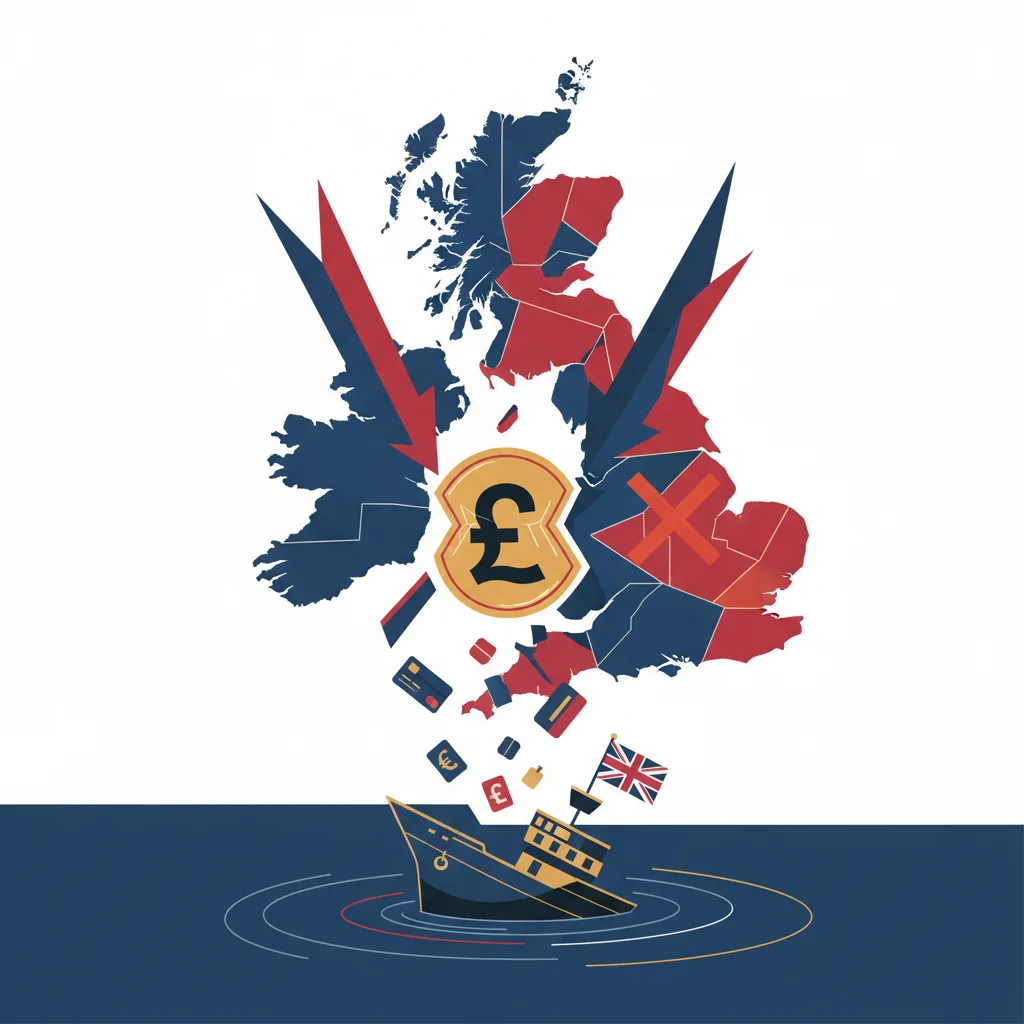
In the complex world of economics, consumer spending is the engine room of the national ship. When it sputters, everyone on board feels the jolt. Recent data has just sent one of those powerful jolts through the UK economy, revealing a sharp, unsettling contraction in consumer card spending. The decline is the most significant since the lockdown-era anomaly of February 2021, a statistic that should command the attention of investors, business leaders, and anyone with a stake in the UK’s financial future.
According to figures highlighted by the Financial Times, this downturn isn’t a minor blip; it’s a clear signal of deep-seated consumer anxiety. But what is truly driving this caution? The primary culprit appears to be a potent cocktail of fiscal uncertainty, particularly surrounding the UK budget, mixed with the persistent hangover of high inflation and elevated interest rates. This isn’t just about people buying one less coffee; it’s a fundamental reassessment of household finance, with significant ripple effects for the stock market, the banking sector, and the broader economy.
In this analysis, we will dissect the data, explore the macroeconomic forces at play, and provide an expert perspective on what this spending slump means for the future of British business and investment.
Dissecting the Downturn: A Look at the Data
To understand the gravity of the situation, we must look beyond the headline number. The drop in spending is not uniform; it reveals a clear and telling split between what consumers deem essential versus what they can live without. While spending on necessities like groceries and fuel remains relatively stable (albeit inflated by higher prices), the axe has fallen squarely on discretionary categories.
Here is a representative breakdown of how different sectors are faring in this new era of consumer caution, based on aggregated industry data.
| Spending Category | Year-on-Year Change (Estimate) | Key Driver |
|---|---|---|
| Grocery & Supermarkets | +2.5% | Price inflation on essential goods |
| Restaurants & Hospitality | -8.1% | Consumers cutting back on eating out |
| Clothing & Fashion Retail | -6.7% | Delay of non-essential purchases |
| Travel & Airlines | -9.3% | Postponement of holiday plans and big-ticket travel |
| Home Improvement | -11.5% | High borrowing costs and housing market slowdown |
This data paints a vivid picture of a consumer under pressure. The comparison to February 2021 is particularly insightful. Back then, the UK was emerging from a strict Covid-19 lockdown, and spending patterns were distorted by unique circumstances. Today’s decline, however, occurs in a fully open economy, making it a far more organic and concerning indicator of consumer health. It suggests that the “rainy day” households have been saving for has arrived, and a period of financial battening down the hatches is underway.
This trend is further corroborated by the Bank of England’s own data, which has consistently shown a slowdown in consumer credit growth and an increase in household savings rates in recent months. People are not only spending less but are actively trying to pay down debt and build a cash buffer—classic defensive behaviour in an uncertain economic climate (source).
Solving the Market's Matrix: Why Investing is Like the Ultimate Crossword Puzzle
The Perfect Storm: Fiscal Policy, Inflation, and Interest Rates
A sudden drop in consumer confidence of this magnitude is rarely caused by a single factor. It is the result of multiple pressures converging on household budgets simultaneously.
- Budget Uncertainty: The original report squarely blames uncertainty surrounding the UK budget (source). When households are unsure about future tax policies, public service funding, and the overall direction of government fiscal strategy, they tend to err on the side of caution. A lack of clear, confidence-inspiring policy from the government creates a vacuum, which consumers fill with anxiety and reduced spending. This highlights the profound connection between political stability and economic activity.
- The Inflation Shadow: While headline inflation may be falling from its peak, the cumulative effect of the past two years of price rises has permanently eroded purchasing power. According to the Office for National Statistics (ONS), real wages have only recently returned to positive growth after a prolonged squeeze (source). For many families, their income simply doesn’t stretch as far as it used to, forcing difficult choices between needs and wants.
- The High Cost of Borrowing: The Bank of England’s aggressive interest rate hikes, designed to tame inflation, have made mortgages, loans, and credit card debt significantly more expensive. This directly reduces the disposable income available for spending, particularly for homeowners coming off fixed-rate mortgage deals. The chilling effect on the housing market also dampens spending on related goods, such as furniture and home improvements.
From an investing perspective, this environment calls for a flight to quality. It’s time to scrutinize balance sheets and favour companies with low debt, strong cash flow, and a loyal customer base in non-discretionary sectors. Furthermore, the crisis is accelerating the adoption of financial technology. The demand for sophisticated budgeting apps, debt management tools, and accessible micro-investing platforms will only grow as consumers seek greater control over their strained finances. This is not just a crisis; it’s an accelerator for innovation in the fintech space.
The Ripple Effect: From High Street to the Stock Market
Consumer spending accounts for roughly 60% of the UK’s Gross Domestic Product (GDP). A sustained decline, therefore, is not just a problem for retailers; it’s a direct threat to national economic growth and a leading indicator of a potential recession.
The implications are far-reaching:
- Retail and Hospitality: These sectors are on the front line. We can expect to see increased pressure on profit margins, potential store closures, and a highly competitive environment where discounts and promotions become the norm.
- The Stock Market: The FTSE and other UK indices will reflect this consumer-led slowdown. Companies heavily reliant on UK discretionary spending will likely see their valuations come under pressure. Investors will pivot towards more defensive stocks, such as utilities, consumer staples, and healthcare, which are less sensitive to economic cycles. This shift can create volatility in the market, presenting both risks and opportunities for active trading.
– Banking and Finance: For the banking industry, lower spending means reduced transaction volumes and less demand for consumer credit. More worryingly, it raises the risk of defaults on loans and credit cards, which could lead to an increase in loan loss provisions and impact bank profitability.
Germany's Hydrogen Paradox: A Multi-Billion Euro Bet on an Empty Market?
Navigating the New Economic Reality: A Forward Look for Investors
In this challenging climate, a passive approach is insufficient. Both individuals and institutions must be proactive in reassessing their financial strategies. The key is to understand the underlying currents, not just the surface waves.
For the savvy investor, this period of uncertainty offers a chance to re-evaluate and reposition. The focus should be on resilience. Which companies have pricing power? Who serves a need, not a want? Which businesses are using technology to become more efficient and better serve the new, cost-conscious consumer? The answers to these questions will separate the winners from the losers in the coming months.
The role of fintech and innovative financial technology cannot be overstated. From AI-driven financial advisors that help people optimize their budgets to platforms that offer fractional share investing, technology is empowering individuals to navigate economic hardship. Even concepts on the frontier, like blockchain, offer long-term potential for creating more efficient and transparent financial systems, though their immediate impact on this crisis is limited. The core takeaway is that technological adaptation is no longer optional for the financial services industry; it is essential for survival and growth.
The Bell Tower Portfolio: Building Your Financial Sanctuary in a Volatile World
Conclusion: A Call for Confidence and Clarity
The dramatic fall in UK consumer spending is a flashing red light on the dashboard of the economy. It is the real-world consequence of a year of financial pressure, compounded by a lack of clear and confidence-inspiring economic leadership. This is not a statistical abstraction; it is the sound of millions of households tightening their belts in unison.
For policymakers, the message is a plea for stability and clarity. For businesses, it is a mandate to adapt, innovate, and provide genuine value. And for investors, it is a reminder that in the world of finance and economics, understanding human psychology is just as important as reading a balance sheet. The path forward will be challenging, but for those who can read the signals and respond with agility, periods of great uncertainty are also periods of great opportunity.