From Wish Lists to Wall Street: How AI Gift-Finders Signal a New Economic Reality
The Silent Revolution in Your Shopping Cart
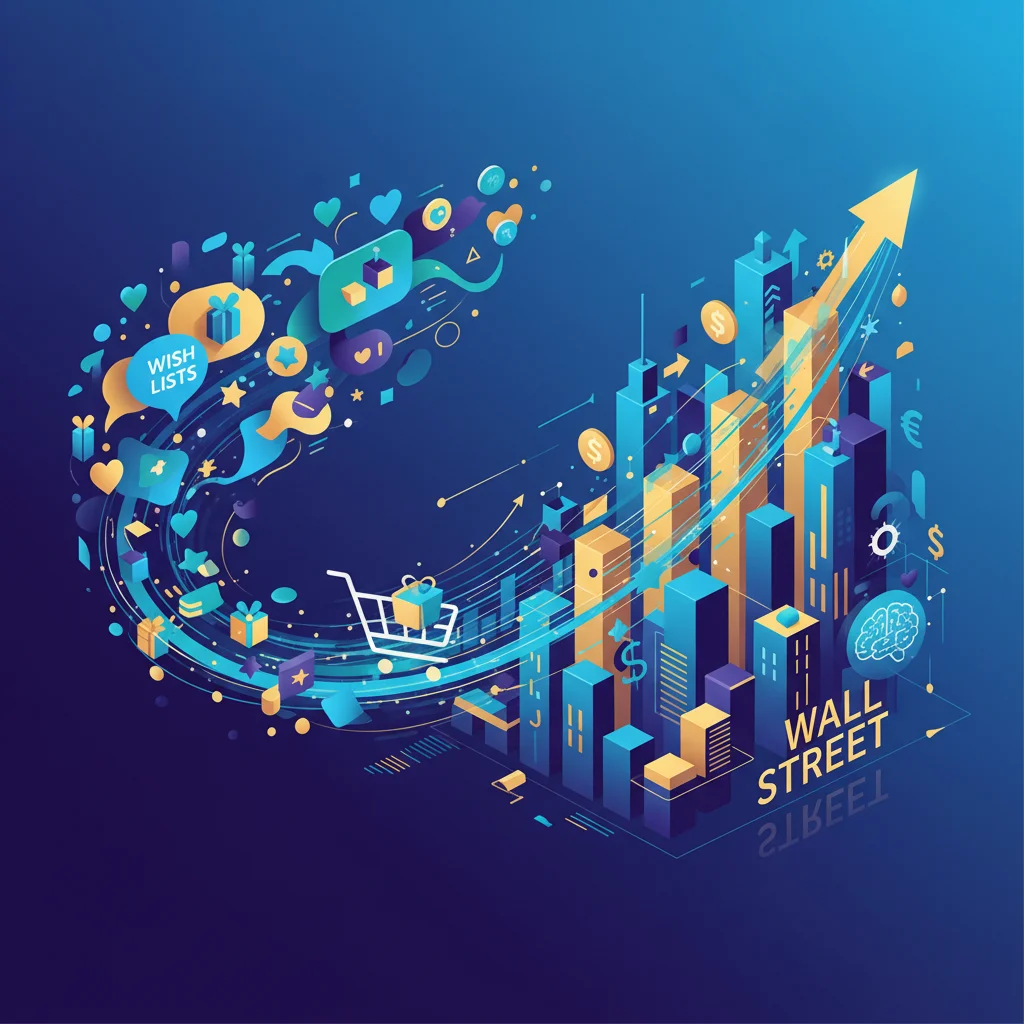
This holiday season, a quiet but profound shift occurred in the age-old tradition of gift-giving. Shoppers, stumped by what to buy for their notoriously hard-to-please relatives, didn’t just browse catalogs or wander aimlessly through department stores. Instead, a growing number turned to a new kind of consultant: artificial intelligence. As reported by the BBC, chatbots and AI tools are rapidly becoming the go-to solution for finding the perfect present, transforming a festive chore into a streamlined, data-driven process.
While this may seem like a trivial application of a world-changing technology, it’s a powerful signal—a canary in the coal mine for a much larger economic and financial transformation. The same AI that suggests a bespoke gift for your aunt who loves gardening and 19th-century literature is a simplified cousin of the sophisticated algorithms reshaping global finance, investing, and corporate strategy. This trend is more than a novelty; it’s a microcosm of the AI-powered future, and for business leaders and investors, understanding its implications is no longer optional.
Deconstructing the AI-Powered Consumer Journey
At its core, the use of AI in shopping addresses a fundamental economic principle: overcoming information asymmetry and decision fatigue. A consumer faces a near-infinite choice of products. An AI, by processing vast datasets on product features, reviews, and user preferences, can narrow this down to a highly relevant selection. This isn’t just about convenience; it’s about economic efficiency.
Consider the process:
- Input: A user provides natural language prompts, such as, “I need a gift for my dad who is a 65-year-old retired engineer, loves sci-fi movies, and is getting into cooking.”
- Processing: The AI model cross-references these keywords and concepts against millions of product listings, reviews, and articles. It understands the relationship between “engineer” and “gadgets,” “sci-fi” and “collectibles,” and “cooking” and “high-quality kitchenware.”
- Output: The system generates a curated list of suggestions, from a high-tech sous vide machine to a limited-edition model of a spaceship from a classic film.
This process has profound implications for the retail sector. The traditional marketing funnel is being inverted. Instead of businesses pushing products onto consumers through broad advertising, consumers are pulling personalized recommendations from an AI intermediary. This shift threatens the business models of companies reliant on brand recognition and mass-market advertising alone and elevates those who can master the new landscape of data-driven, personalized commerce. For those tracking the stock market, the performance of e-commerce giants versus traditional retailers in the coming years will be a testament to who adapts to this new reality most effectively.
Shein and Temu Under Fire: A Political Storm with Stock Market Consequences
The Ripple Effect: From E-Commerce Valuations to Fintech Innovation
The rise of AI-driven consumption is not an isolated event. It is a leading indicator of a wave of disruption that extends deep into the world of financial technology (fintech) and banking. The underlying technology—leveraging large language models (LLMs) and predictive analytics to provide personalized recommendations—is the very same engine driving the next generation of financial services.
The parallel is striking. An AI gift-finder that suggests a product based on a user’s profile is functionally similar to a robo-advisor that suggests an ETF portfolio based on an investor’s risk tolerance and financial goals. Both systems ingest complex data, identify patterns, and deliver a tailored, actionable recommendation. This convergence represents a massive opportunity for the banking and investing sectors.
Imagine a future where your banking app doesn’t just show your balance but acts as a holistic financial assistant. Powered by AI, it could:
- Analyze your spending habits (gleaned from transaction data) to suggest budget optimizations.
- Proactively recommend investment opportunities in the stock market that align with your stated ethical preferences and risk profile.
- Automate micro-investments, rounding up your daily purchases and moving the difference into a diversified portfolio.
- Offer dynamic credit products, with interest rates adjusted in real-time based on your financial health.
This isn’t science fiction; it’s the road map for the future of fintech. Companies that successfully build and deploy these AI-driven platforms will not only capture market share but will also fundamentally change consumer expectations for financial services. This transition from static, product-based banking to dynamic, advisory-based financial technology is a central theme for any long-term investor in the sector.
Mapping the New Economic Value Chain
The integration of AI into consumer and financial life redraws the entire economic value chain. The traditional model is being systematically dismantled and replaced by a more dynamic, data-centric framework. The table below illustrates this fundamental shift, highlighting the impact on key business functions.
| Business Function | Traditional Economic Model | AI-Driven Economic Model |
|---|---|---|
| Marketing & Sales | Mass advertising, demographic targeting, brand-centric campaigns. | Hyper-personalization, AI-driven recommendation engines, one-to-one marketing. |
| Customer Service | Call centers, reactive support, standardized scripts. | Proactive AI chatbots, predictive issue resolution, personalized support journeys. |
| Product Development | Market research surveys, focus groups, long development cycles. | Real-time trend analysis from data, predictive modeling for demand, rapid prototyping. |
| Finance & Investing | Human advisors, standardized financial products, periodic portfolio reviews. | Robo-advisors, dynamic and personalized financial instruments, continuous AI-powered portfolio optimization. |
| Pricing Strategy | Static or seasonal pricing, competitor-based pricing. | Dynamic, real-time pricing based on demand, inventory, and individual user data. |
This table makes it clear that we are not merely witnessing an upgrade of existing tools, but a paradigm shift in economics itself. Businesses that fail to adapt their operations to this new model will find themselves at a severe competitive disadvantage, struggling with higher customer acquisition costs and lower efficiency.
Broader Implications for the Global Economy
Zooming out from individual businesses, the widespread adoption of AI in commerce and finance carries macroeconomic consequences. This technology has the potential to act as a powerful deflationary force. By optimizing supply chains, reducing marketing waste, and enabling dynamic pricing, AI can drive down the marginal cost of production and distribution. A study by Accenture suggests that AI has the potential to increase corporate profitability by an average of 38% and could boost economic growth significantly by 2035 (source).
However, this transition is not without its challenges. It will necessitate a significant shift in the labor market, de-emphasizing routine tasks and placing a premium on skills related to AI management, data science, and creative problem-solving. Furthermore, the potential for AI to exacerbate economic inequality is real. If the productivity gains from AI are not broadly distributed, we could see a further concentration of wealth in the hands of those who own and control the technology. Central banks and governments will need to develop new frameworks to navigate these complex dynamics, ensuring that the AI-driven economy fosters inclusive growth.
Interestingly, some theorists are exploring how advanced technologies like AI and even blockchain could be used to create more transparent and efficient economic systems. While still nascent, the idea of using distributed ledgers for supply chain verification or AI for more accurate economic forecasting highlights the frontier of modern economics.
Beyond the Balance Sheet: The New Economics of Purpose-Driven Business
Conclusion: The Gift That Keeps on Giving
The seemingly simple act of using a chatbot to find a Christmas gift is a harbinger of a new economic era. It reveals a future where consumption, commerce, and finance are all mediated by intelligent, personalized systems. For the average person, this promises a world of greater convenience and tailored experiences. For business leaders and investors, it represents both a monumental challenge and an unprecedented opportunity.
The key takeaway is that AI is no longer a peripheral technology; it is becoming the central nervous system of the modern economy. Understanding its trajectory—from a simple gift-finder to the engine of global trading and finance—is essential for anyone looking to navigate the markets and build resilient, future-proof businesses. The revolution won’t be televised; it’s already happening, one personalized recommendation at a time.

Related Posts
The Air Fryer Economy: What a Simple Kitchen Appliance Reveals About Market Trends, Fintech, and the Future of Investing
A Canary in the Coal Mine: What One Restaurant’s Closure Reveals About the Broader Economy