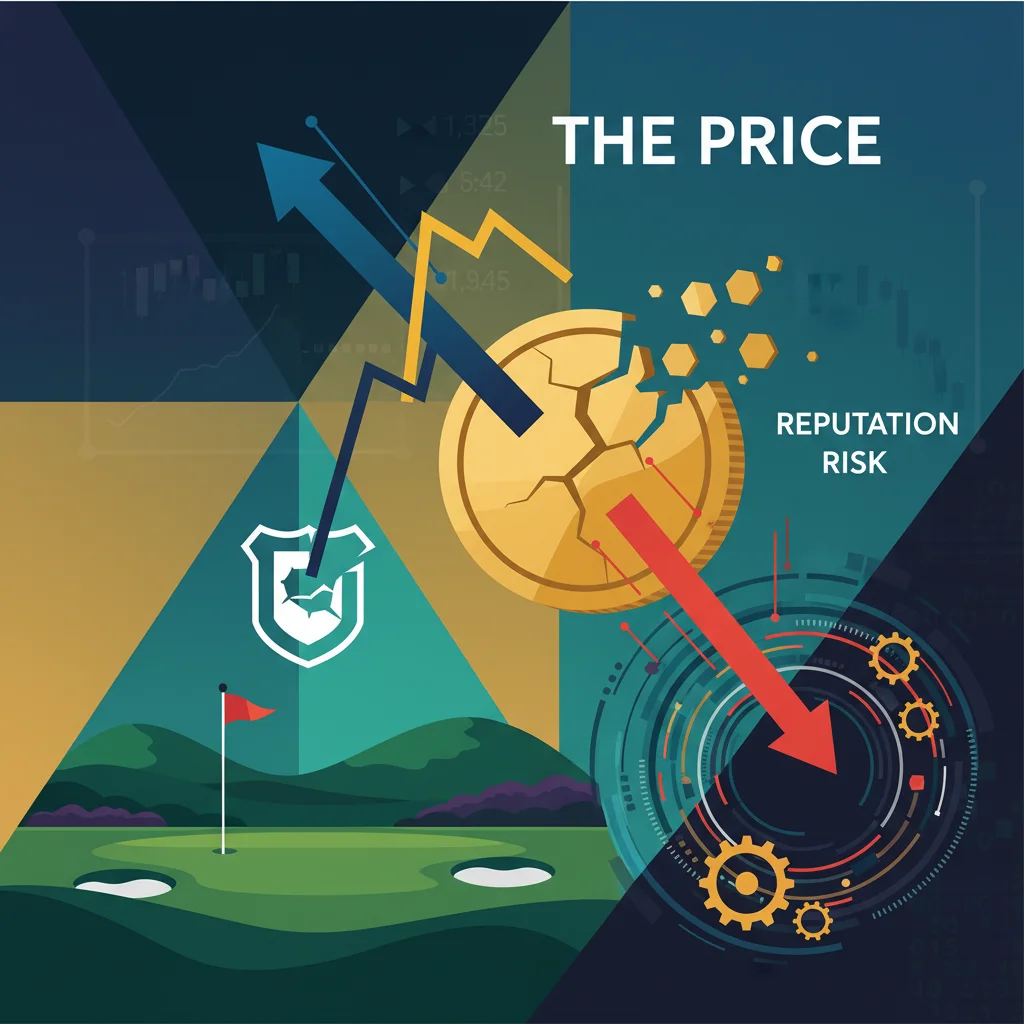
The Price of a Name: What a Scottish Golf Course Rebrand Teaches Investors About Reputation Risk
In the world of high finance and corporate strategy, the most significant indicators of market shifts often come from unexpected places. It’s not always a central bank announcement or a quarterly earnings report that provides the clearest lesson. Sometimes, it’s the quiet, deliberate renaming of a golf course in St Andrews, Scotland. Recently, The Duke’s Course, named for the former Prince Andrew, was rebranded as the Craigtoun Course. On the surface, this is a local news story. But for astute investors, finance professionals, and business leaders, it is a powerful case study in one of the most critical, and often underestimated, assets on any balance sheet: reputation.
This single decision encapsulates a major shift in the global economy—a transition towards a model where intangible assets like brand trust, social license, and ethical standing have direct, quantifiable financial consequences. The renaming is not merely a marketing exercise; it is a calculated financial move to mitigate risk, protect future revenue streams, and align with the evolving values of consumers and investors. This article will deconstruct this event to explore the financial calculus of rebranding, the rising dominance of ESG (Environmental, Social, and Governance) principles in investing, and the crucial lessons for navigating today’s complex economic landscape.
The Balance Sheet of a Brand: Quantifying Reputational Risk
For decades, a royal association was the gold standard of brand endorsements, an implicit guarantee of quality and prestige. However, in an age of unprecedented transparency and social accountability, such associations can transform from an asset into a significant liability overnight. The controversy surrounding Prince Andrew created a clear and present danger to the course’s brand equity. This isn’t just about public perception; it’s about tangible financial metrics.
Reputational risk directly impacts a company’s bottom line in several ways:
- Customer Attrition: Modern consumers increasingly make purchasing decisions based on brand values. A tainted name can lead to boycotts, loss of memberships, and a decline in patronage.
- Sponsorship and Partnerships: Corporate sponsors are fiercely protective of their own brands. They will quickly sever ties with any entity that could cause negative “brand contagion.”
- Employee Recruitment and Retention: Top talent wants to work for respected organizations. A company with a poor public reputation will struggle to attract and keep the best people, increasing recruitment costs and impacting innovation.
- Valuation and Stock Market Performance: For publicly traded companies, reputational damage can have a swift and brutal effect on share price. According to the World Economic Forum, on average, more than 25% of a company’s market value is directly attributable to its reputation (source).
The decision to rebrand the course to the “Craigtoun Course” is a classic example of risk mitigation. It’s a surgical move to excise the source of the liability and replace it with a neutral, geographically relevant name. This is an investment in stability and a prerequisite for future growth. In the language of finance, the management team identified a depreciating, high-risk asset (the name) and swapped it for one with lower volatility and greater potential for appreciation.
Navigating the Crypto Winter: Decoding Bitcoin's Bear Market and Charting the Path to a Bottom
The ESG Imperative: From Niche to Necessity
The St Andrews case is a textbook illustration of the “S” (Social) and “G” (Governance) in ESG investing. Ten years ago, a decision like this might have been debated internally for months. Today, it’s a near-automatic response driven by a powerful force in the global economy: the tidal wave of capital flowing into ESG-compliant assets.
Investors are no longer just looking at price-to-earnings ratios and dividend yields. They are applying sophisticated screens to assess a company’s resilience to non-financial risks. A company’s governance structure, its relationship with its community, and its ethical standing are now key performance indicators. Global ESG assets are on track to exceed $53 trillion by 2025, representing more than a third of projected total assets under management (source). This isn’t a trend; it’s a fundamental reshaping of the market.
What this means for business leaders is that proactive governance is paramount. The management of the golf course demonstrated strong governance by recognizing the risk and acting decisively. This action sends a powerful signal to stakeholders—from bankers to members—that the organization is managed responsibly. In the cold world of economics, this translates to a lower risk profile, which can lead to more favorable terms from lenders and a higher valuation from potential investors.
To illustrate the growing importance of these factors, consider the divergence in how markets treat companies with strong versus weak ESG profiles.
| Factor | Company with Strong ESG Profile | Company with Weak ESG Profile |
|---|---|---|
| Capital Access | Access to a larger pool of investment capital from ESG-focused funds; potentially lower cost of capital. | Excluded from many investment portfolios; may face higher borrowing costs from banks. |
| Brand Resilience | Higher customer loyalty and trust, providing a buffer during market downturns. | Vulnerable to consumer boycotts and negative social media campaigns. |
| Regulatory Risk | Better positioned to adapt to new environmental and social regulations. | Higher risk of fines, sanctions, and costly litigation. |
| Talent Acquisition | “Employer of choice” status, attracting top-tier talent. | High employee turnover and increased recruitment challenges. |
Reputation as an Asset in the Digital Finance Era
The principles highlighted by this rebranding extend far beyond traditional brick-and-mortar businesses. In the fast-paced world of financial technology, or fintech, reputation is arguably the single most important asset.
The fintech and blockchain sectors are built on the promise of disrupting traditional banking and finance by offering more efficient, transparent, and accessible systems. However, this potential is constantly threatened by reputational damage from scams, hacks, and market volatility. The collapse of platforms like FTX wasn’t just a financial failure; it was a catastrophic failure of trust that cast a long shadow over the entire industry.
This is where the concept of proactive reputation management becomes critical. Modern financial technology offers tools that can both harm and heal a brand’s reputation. High-frequency trading algorithms can now be programmed to scrape news and social media sentiment, automatically selling off a stock at the first sign of a scandal. Conversely, technologies like blockchain can be used to build a new paradigm of corporate transparency.
Imagine a company using a distributed ledger to provide an immutable record of its supply chain, proving its products are ethically sourced. Or a fintech platform using blockchain to offer customers verifiable proof of its solvency in real-time. This is the future of corporate governance—using financial technology not just for transactions, but for building radical transparency and, consequently, an unshakeable brand. Just as the Craigtoun Course shed a name to restore trust, the next generation of financial firms will build trust by embracing verifiable openness from the ground up.
The Hidden Burn Rate: How Disposable Vapes Are Igniting Financial Risk in the Economy
Actionable Lessons for Investors and Executives
The rebranding of a single golf course provides a rich seam of insights for anyone operating in the modern economy. The core takeaway is that “off-balance-sheet” items like reputation and public trust have become primary drivers of financial performance. Here are key lessons to apply:
- Conduct Regular Reputational Audits: Just as you audit your financials, you must audit your brand’s associations and public sentiment. What are your vulnerabilities? Which partnerships or endorsements carry latent risk? Use modern data analytics and financial technology tools to monitor your brand’s health in real-time.
- Integrate ESG into Core Strategy: ESG is not a separate department; it is a lens through which all strategic decisions—from investments to marketing—should be viewed. A strong ESG posture is a powerful form of long-term risk management that can insulate your business from market shocks.
- View Rebranding as a Capital Investment: Don’t frame a necessary rebrand as a simple marketing expense. According to some analyses, the cost of a major corporate rebrand can range from hundreds of thousands to millions of dollars (source). This is a capital expenditure made to protect the firm’s most valuable asset: its future earning potential. The ROI should be measured in retained customers, new market opportunities, and a de-risked corporate profile.
- Embrace Proactive Transparency: In an era of skepticism, the best defense is a good offense. Don’t wait for a crisis to force you to be transparent. Use technology to proactively communicate your company’s values and operational integrity. This builds a reservoir of goodwill that can be drawn upon during inevitable challenges.
The table below summarizes a framework for thinking about reputational risk management from an investment and leadership perspective.
| Risk Category | Potential Financial Impact | Mitigation Strategy |
|---|---|---|
| Association Risk | Loss of sponsorships, customer boycotts, stock price decline. | Regularly audit all brand partnerships, endorsements, and even naming rights. Act decisively to sever toxic ties. |
| Governance Failure | Regulatory fines, shareholder lawsuits, difficulty securing banking and investment. | Implement a strong ESG framework. Ensure board independence and transparent reporting. |
| Social/Ethical Missteps | Negative viral news cycles, employee walkouts, long-term brand erosion. | Embed a strong ethical culture. Invest in diversity and inclusion. Have a crisis communication plan ready. |
| Digital/Cybersecurity Risk | Data breaches leading to loss of customer trust and massive financial liability. | Invest heavily in cybersecurity infrastructure. Utilize fintech and blockchain solutions for enhanced security. |
The Yen's Shadow: Why the Bank of Japan's Next Move is Shaking the Crypto Market
Conclusion: The New Economy of Trust
The transformation of The Duke’s Course into the Craigtoun Course is more than a name change. It is a financial transaction executed on the currency of public trust. It signifies a world where the principles of economics are inextricably linked with ethics, governance, and social sentiment. For investors, it’s a reminder to look beyond the numbers and analyze the resilience of a company’s reputation. For business leaders, it’s a call to action to treat brand and reputation not as soft marketing concepts, but as hard assets that must be managed, protected, and invested in with the same rigor as any physical plant or financial instrument. In the 21st-century economy, the most valuable assets are the ones built on integrity.

Related Posts

Beyond the Balance Sheet: Why a Community Warm Space is a Critical Indicator for the Modern Investor

The Trillion-Dollar Blind Spot: Why Indonesia’s Deforestation Plan is a Systemic Risk for Global Finance