The Carbon Tax is Coming for Your Shopping Cart: What the EU’s CBAM Expansion Means for Global Finance
Imagine your weekly shopping trip. You might pick up a new set of garden shears, a screwdriver, or perhaps you’re finally replacing that old washing machine. These everyday purchases seem far removed from the high-stakes world of international climate policy and global finance. However, a significant shift in European Union regulations is about to connect them in a way that will ripple through the global economy, impacting everything from corporate balance sheets to your investment portfolio.
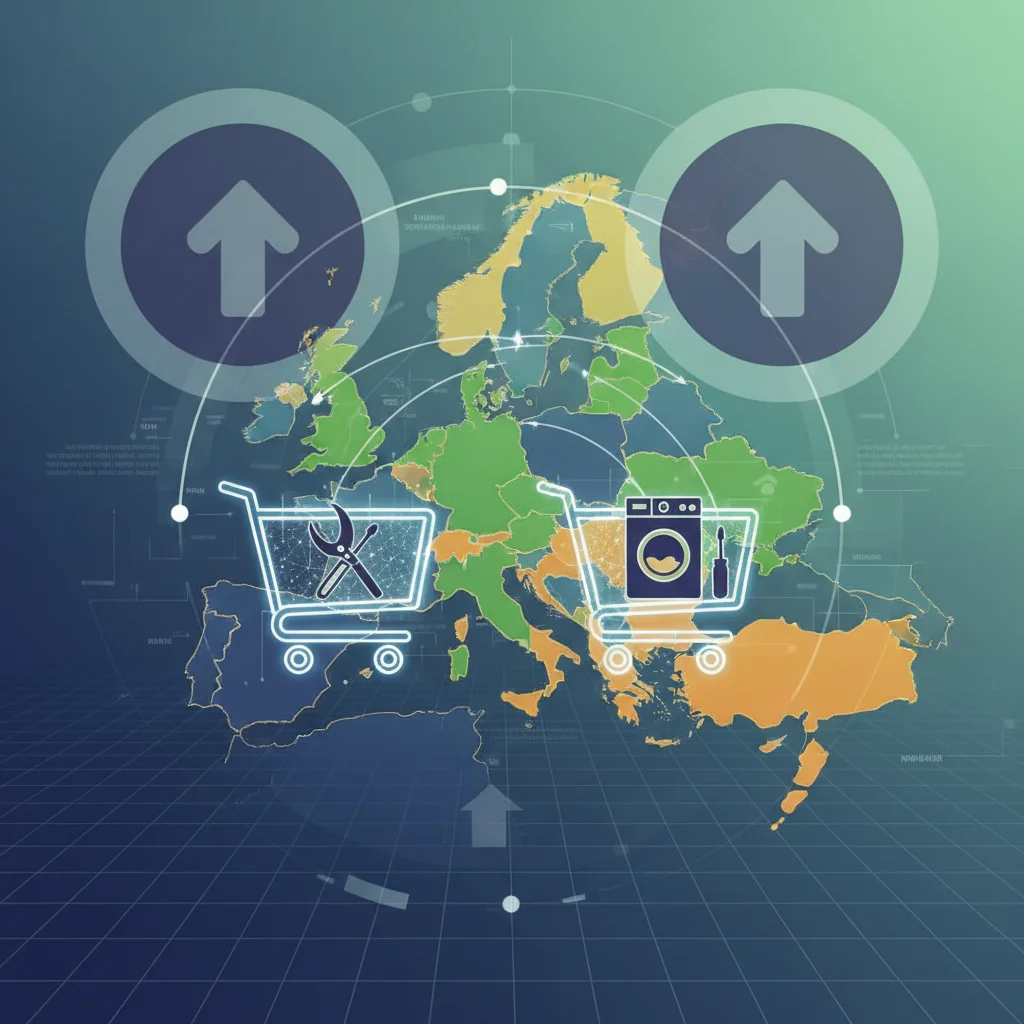
The EU has announced its intention to expand its groundbreaking Carbon Border Adjustment Mechanism (CBAM) to include a wider range of “downstream” products, such as finished goods like tools, nuts, bolts, and even household appliances. Initially focused on raw materials like steel and cement, this expansion is a clear signal: the era of carbon-cost accountability is moving from the factory floor to the retail shelf. For business leaders, investors, and finance professionals, understanding this evolution is no longer optional—it’s critical for navigating the future of global trade and economics.
What is the Carbon Border Adjustment Mechanism (CBAM)?
Before diving into the expansion, let’s demystify the CBAM itself. At its core, the CBAM is a climate policy tool designed to tackle a problem known as “carbon leakage.” For years, the EU has operated an Emissions Trading System (ETS), which forces its domestic industries to pay for their carbon emissions. This creates a cost for polluting, incentivizing companies to invest in greener technology.
However, this created a competitive disadvantage. A European steel manufacturer paying a high price for carbon could be undercut by a foreign competitor in a country with lax or non-existent environmental regulations. Carbon leakage occurs when EU companies, to avoid these costs, move their production to such countries, or when EU products are simply replaced by more carbon-intensive imports. The result? Emissions aren’t actually reduced; they’re just outsourced.
The CBAM is the EU’s answer. It functions as a levy on certain goods imported into the EU, based on the greenhouse gas emissions embedded in their production. In essence, it forces importers to pay the same carbon price that domestic producers pay, leveling the playing field and ensuring the EU’s climate ambitions aren’t undermined by global trade dynamics. As noted by the Financial Times, the primary goal is to close loopholes that allow carbon-intensive imports to circumvent the EU’s climate laws.
From Steel Beams to Washing Machines: The Scope Widens
The initial phase of CBAM, which entered a transitional period in October 2023, targeted sectors with high emissions and a significant risk of carbon leakage. Now, the proposed expansion marks a crucial and complex new chapter.
The logic behind this move is to prevent “resource shuffling.” A company outside the EU could previously import raw steel, which is covered by CBAM, turn it into a car part or a washing machine drum—products not yet covered—and then export the finished item to the EU, effectively sidestepping the carbon levy. By extending the tax to these “downstream” products, the EU aims to make its carbon pricing policy far more robust.
To illustrate the significance of this change, consider the products now being scrutinized for inclusion:
| Original CBAM Sectors (Examples) | Proposed Expansion (Downstream Product Examples) |
|---|---|
| Iron & Steel | Nuts, bolts, screws, washers |
| Aluminium | Aluminium structures, containers, and household items |
| Cement | Finished concrete products (potential future inclusion) |
| Fertilisers | Chemical compounds using primary fertilisers |
| Electricity & Hydrogen | Finished goods like garden tools, kitchenware, and washing machines |
This expansion transforms CBAM from a targeted industrial policy into one with broad implications for consumer goods and complex international supply chains. According to a European Commission Q&A, this phased approach allows for refinement before the definitive system fully kicks in from 2026. Navigating the Fiscal Tightrope: Labour's Pre-Budget Balancing Act and What It Means for the UK Economy
The Ripple Effect: Global Economics and Geopolitical Tensions
While the EU sees CBAM as a necessary climate tool, many of its trading partners view it with suspicion, decrying it as “green protectionism.” Nations like China, India, and Turkey, which are major exporters to the EU, have raised concerns that the mechanism is a disguised trade barrier that unfairly penalizes their industries. The administrative burden alone—calculating and verifying the embedded carbon in thousands of products—is a monumental challenge, particularly for smaller businesses in developing countries.
This policy will inevitably reshape global trade flows. Companies may seek to reroute their supply chains through countries with lower carbon footprints or more advanced carbon accounting systems. It could also accelerate the “friend-shoring” trend, where trade is increasingly concentrated among geopolitical allies with similar regulatory standards. For the global economy, this means potential price increases for consumers as the cost of carbon is passed on, alongside the risk of retaliatory tariffs and escalating trade disputes at the World Trade Organization.
A New Paradigm for Finance, Trading, and Investing
The financial world must adapt quickly to this new reality. The expansion of CBAM solidifies the integration of carbon risk into mainstream finance and investment analysis.
Impact on Investing and the Stock Market:
For investors, CBAM introduces a new layer of risk and opportunity. Companies heavily reliant on carbon-intensive, non-EU supply chains will face significant margin pressure. Their stock market valuations could suffer if they fail to adapt. Conversely, companies that have already invested in decarbonizing their supply chains or are based in regions with their own carbon pricing schemes (like the UK or California) will gain a distinct competitive advantage. ESG (Environmental, Social, and Governance) investing will move beyond broad screening to demand granular, product-level carbon data. A company’s ability to track and report this data will become a key indicator of its operational efficiency and long-term resilience.
The Role of Banking and Financial Technology:
The transition requires immense capital. Businesses will need financing to re-engineer their products, overhaul their supply chains, and invest in green technology. This presents a massive opportunity for the banking sector to fund this green transition through loans, bonds, and other financial instruments. Simultaneously, the immense data challenge of CBAM compliance opens the door for financial technology innovation. Fintech firms are developing platforms to automate carbon footprint calculations, manage compliance reporting, and facilitate the trading of carbon certificates. This convergence of climate policy and financial technology is creating an entirely new market for “carbon finance” services.
Carbon as a Traded Commodity:
CBAM effectively exports the EU’s carbon price globally. This will have a profound impact on the economics of carbon trading. As more countries and corporations are forced to account for their emissions, the demand for carbon credits and offsets will likely grow, making carbon markets more liquid and sophisticated. This elevates the importance of understanding the dynamics of carbon as a tradable asset class. Beyond the Broken Glass: The Hidden Economic Shockwaves of a Local Business Break-In
Navigating the Labyrinth: Challenges vs. Opportunities
For business leaders, the path forward is complex. The expansion of CBAM presents both formidable hurdles and strategic openings. A 2023 report by the Boston Consulting Group highlights that proactive preparation is key to turning this regulatory burden into a competitive edge.
Below is a summary of the key considerations for businesses:
| Challenges | Opportunities |
|---|---|
| Increased Costs: Direct costs from purchasing CBAM certificates and indirect costs from compliance and reporting. | Competitive Advantage: Companies with low-carbon products can market this as a key differentiator and potentially gain market share. |
| Data Complexity: Accurately calculating and verifying embedded emissions for multi-component products is a huge undertaking. | Supply Chain Resilience: The need for transparency forces companies to better understand their supply chains, reducing other risks. |
| Regulatory Uncertainty: The rules are still evolving, creating a challenging environment for long-term planning. | Innovation Driver: CBAM incentivizes investment in R&D for greener materials, cleaner energy, and more efficient production processes. |
| Trade Friction: Potential for disputes and retaliatory measures from non-EU trading partners. | Enhanced Brand Reputation: Demonstrating climate leadership can improve brand image with consumers, investors, and regulators. |
The critical takeaway is that waiting is not a strategy. Businesses that begin mapping their supply chains, engaging with suppliers on emissions data, and investing in carbon accounting systems now will be best positioned to thrive in this new environment. Beyond the Headlines: Decoding the Puzzle of Today's Global Economy
Conclusion: The Carbon-Adjusted Future is Here
The EU’s decision to extend its carbon border tax from industrial materials to everyday items like garden tools and washing machines is a landmark moment. It signals the end of treating climate policy and trade policy as separate domains. This is the new face of globalization—one where market access is increasingly tied to environmental performance.
This shift creates a complex web of challenges and opportunities that will redefine industries and investment strategies for decades to come. It forces a radical transparency onto global supply chains and makes carbon a tangible cost on corporate income statements. For those in finance, investing, and business leadership, the message is clear: the economics of the future will be carbon-adjusted, and the time to prepare is now.