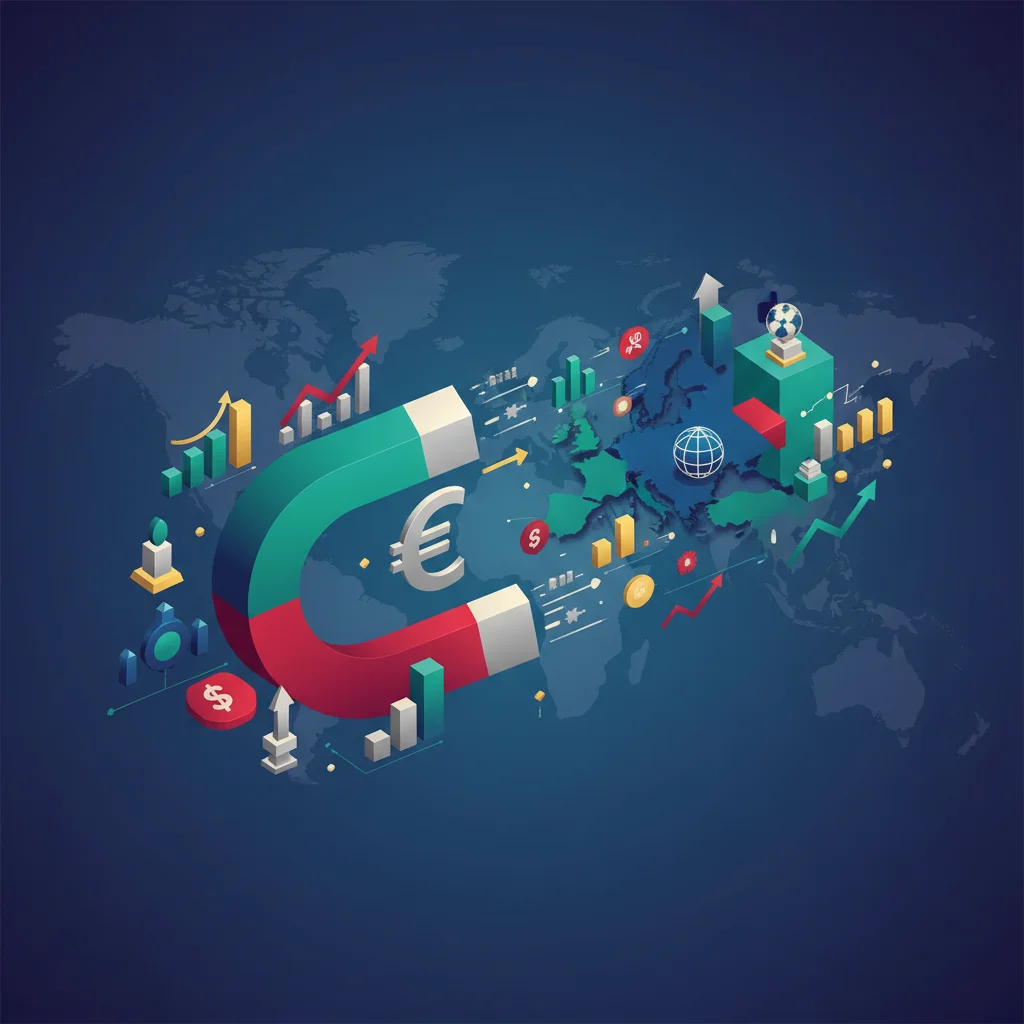
Europe’s Trillion-Dollar Magnet: Why Global Investors Are Betting Big on the Continent
In the grand theater of global finance, the spotlight is dramatically shifting. For decades, North America, with its dynamic markets and venture capital prowess, has been the undisputed heavyweight champion in attracting private capital. But a new contender has quietly and powerfully entered the ring. Europe, once seen as a more conservative and fragmented market, is now attracting a record-breaking deluge of investment, signaling a profound realignment in the world of high-stakes investing.
Recent data reveals a stunning trend: European funds have captured a record share of the global private capital market. In a year marked by economic uncertainty, these funds successfully raised an astonishing $311 billion, securing 29% of the total global fundraising. This isn’t just a statistical anomaly; it’s a testament to a strategic pivot by the world’s most sophisticated investors, who are increasingly looking to the continent for stability, growth, and future-proof returns.
But what is fueling this monumental shift? The answer lies in a powerful convergence of long-term vision, geopolitical necessity, and massive, state-supported spending sprees. At the heart of this boom is infrastructure—not the aging bridges and roads of yesteryear, but the critical infrastructure of tomorrow.
The Unprecedented Surge: A Look at the Numbers
The scale of this capital inflow is best understood through the hard data. While global fundraising for private capital—an asset class that includes private equity, venture capital, private debt, and real assets—saw a general downturn, Europe bucked the trend. According to data from Preqin cited by the Financial Times, Europe’s 29% share of the $1.1 trillion raised globally in the past year is a historic high.
This surge is even more remarkable when contrasted with other regions. North American funds, while still leading in absolute terms, saw their share of the global pie shrink. This relative decline highlights a deliberate diversification strategy by Limited Partners (LPs)—the institutional investors like pension funds and sovereign wealth funds that pour money into private funds.
To put this regional shift into perspective, let’s examine the breakdown of private capital fundraising:
| Region | Share of Global Fundraising (Past Year) | Key Investment Drivers |
|---|---|---|
| North America | ~55% (Decreasing Share) | Technology, Venture Capital, Buyouts |
| Europe | 29% (Record High) | Infrastructure (Energy & Digital), Private Credit, Sustainability |
| Asia-Pacific | ~14% (Facing Headwinds) | Growth Equity, Consumer Technology |
| Rest of World | ~2% | Niche Markets, Natural Resources |
As the table illustrates, Europe’s rise is not just a story of its own success, but also a reflection of a changing global risk appetite. Investors are increasingly prioritizing assets that offer long-term, predictable cash flows, and Europe’s infrastructure boom provides exactly that.
The Great Disconnect: Why a Strong US Economy Feels So Bad and What It Means for Your Investments
The Twin Engines: Energy Transition and Digital Sovereignty
The driving force behind Europe’s appeal is a massive, continent-wide spending spree on two critical pillars of the modern economy: energy and data.
1. The Green Energy Gold Rush
The global push towards decarbonization has found its epicenter in Europe. The European Union’s ambitious Green Deal and REPowerEU plans are not just policy documents; they are multi-trillion-euro roadmaps for a complete overhaul of the continent’s energy infrastructure. This has created a once-in-a-generation opportunity for private capital.
Investors are pouring billions into:
- Renewable Energy Projects: From sprawling offshore wind farms in the North Sea to vast solar arrays in Spain and Portugal.
- Grid Modernization: Upgrading outdated electricity grids to handle intermittent renewable sources and increased demand from electric vehicles.
- Energy Storage Solutions: Funding the development and deployment of large-scale battery storage facilities, a critical component for a stable green grid.
- Hydrogen Infrastructure: Investing in the nascent but promising ecosystem for green hydrogen production and transport.
These are not speculative bets. They are long-term investments in essential assets, often backed by government subsidies, long-term power purchase agreements, and a clear regulatory mandate. This unique combination of public policy and private finance creates a highly attractive, de-risked environment for investors seeking stable, inflation-linked returns.
2. Building the Digital Fortress
Parallel to the green transition is a race for digital sovereignty. European leaders are determined to reduce their reliance on foreign technology and build a robust, secure digital backbone. This ambition is fueling immense private investment in:
- Data Centers: The physical homes for the cloud are being built at a record pace across the continent, from Dublin to Frankfurt.
- Fiber Optic Networks: Expanding high-speed internet access to every corner of the continent requires massive capital outlay, which private funds are eager to provide.
- 5G and Telecom Towers: The rollout of next-generation mobile technology is a capital-intensive endeavor perfectly suited for infrastructure funds.
This focus on digital infrastructure taps into the unstoppable growth of data, cloud computing, and AI, making it a cornerstone of the modern `economy` and a magnet for forward-thinking investors.
Why Now? The Geopolitical and Economic Context
The surge in European private capital isn’t happening in a vacuum. It’s a direct response to the shifting sands of the global geopolitical and economic landscape. While the infrastructure story is compelling, several other factors are convincing investors to place their chips on Europe.
First, the relative stability of the European political and regulatory framework is a major draw. Despite internal debates, the EU provides a predictable legal environment compared to the escalating trade tensions and political polarization seen elsewhere. For investors managing multi-decade infrastructure projects, this predictability is priceless. The continent’s established `banking` and legal systems provide a solid foundation for complex financial transactions.
Second, the private credit market in Europe is maturing rapidly. As traditional banks have pulled back from certain types of lending due to stricter capital requirements, private credit funds have stepped in to fill the void. This provides crucial financing for mid-market companies and infrastructure projects, creating a self-reinforcing cycle of growth. This evolution in corporate `finance` is a critical, though often overlooked, part of Europe’s success story.
Finally, there’s a valuation argument. While the `stock market` in the US has been driven to new heights by a handful of mega-cap tech stocks, European assets, both public and private, have often traded at a discount. Savvy investors see an opportunity to acquire high-quality assets and businesses on the continent at more reasonable prices, presenting a compelling case for long-term value creation.
The ROI of a Christmas Toy: An Investor's Guide to Social Impact and Economic Resilience
Implications for the Future of Investing
This tectonic shift in capital allocation carries profound implications for everyone from individual investors to global business leaders. The numbers are staggering; some of the largest funds raised, such as those by EQT and CVC, have collected tens of billions of euros each, underscoring the sheer scale of institutional confidence.
For Investors: The trend highlights the growing importance of private markets and real assets in a diversified portfolio. While direct `investing` in a multi-billion dollar infrastructure fund is out of reach for most, the themes driving this boom—sustainability, digitalization, and energy independence—are accessible through public markets via ETFs, specialized stocks, and bonds. Understanding where the “smart money” is flowing provides a valuable roadmap for navigating future `economics`.
For Business Leaders: The availability of vast pools of private capital in Europe creates new opportunities for growth, M&A, and infrastructure development. Companies in the energy, `fintech`, and technology sectors, in particular, will find a receptive audience among investors. This influx of capital could accelerate innovation and competition across the European `economy`.
For the Financial Industry: The rise of European private capital challenges the traditional dominance of US-based fund managers. It fosters a more competitive and multi-polar world of `financial technology` and asset management. We may see more innovation in fund structures and `trading` platforms originating from European financial hubs as they manage this newfound influence.
China's Economic Engine Sputters: What a Three-Year Low in Services Means for Global Investors
A New Era for European Finance
The record-breaking flow of private capital into Europe is more than a headline—it’s a verdict. The world’s largest investors have looked at the global landscape and concluded that the continent offers a compelling blend of ambition, stability, and opportunity. Fueled by the twin revolutions in energy and digital infrastructure, Europe is cementing its position not as an alternative to North America, but as a co-equal pillar of the global financial system.
The challenges, of course, remain. Navigating 27 different regulatory systems, managing political risks, and ensuring that this capital translates into real, productive growth will be a monumental task. But for now, the message from the market is clear: the European moment has arrived, and it’s being funded with hundreds of billions of dollars.

Related Posts

The Slovakian Tiger: How a Small Nation Became the World’s Automotive Superpower

Location, Location, Illusion: Why Your Investment Fund’s Address Is Not Where Your Money Is