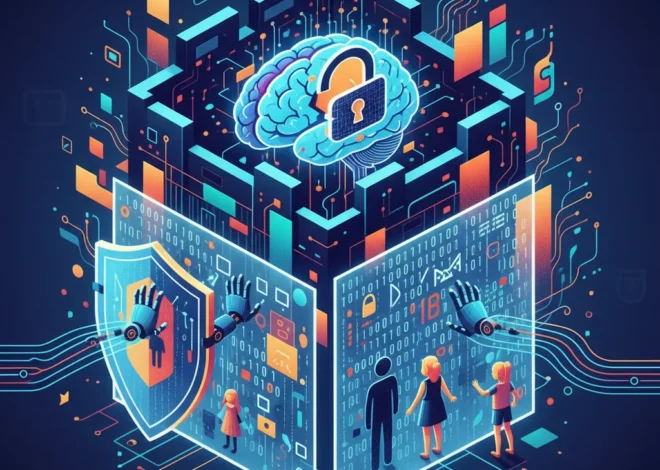
Beyond the ‘Ding’: The Unseen Tech and Ethical Maze of Smart Doorbells
You’ve been there. You’re dropping off a package for a neighbor, maybe telling a slightly exaggerated story to a door-to-door salesperson, or having a private conversation on the sidewalk. Then you spot it: the small, cyclopean eye of a Ring, Nest, or Wyze doorbell, silently observing. That sudden, chilly realization that you’re on camera is a quintessentially modern experience, a moment captured perfectly in a recent Financial Times article where the author was “caught out” in a candid moment.
But these devices are far more than just digital peepholes. They are sophisticated, interconnected endpoints in a vast, privately-owned surveillance network. For developers, entrepreneurs, and tech professionals, the smart doorbell isn’t just a consumer gadget; it’s a masterclass in modern technology convergence, blending artificial intelligence, cloud computing, the SaaS model, and complex questions of cybersecurity and ethics. It’s a microcosm of the tech world we’re building—convenient, powerful, and fraught with unintended consequences.
Let’s pull back the curtain and look beyond the simple “ding” to understand the powerful engine humming just beneath the surface.
The Anatomy of an All-Seeing Eye: It’s All About the Software
To the average consumer, a smart doorbell is a piece of hardware. But to us in the tech industry, we know the hardware is just the vessel. The real product is the service, a sophisticated ecosystem built on layers of software and cloud infrastructure.
Here’s what’s really happening when someone approaches your door:
- The AI-Powered Sentry: This isn’t your grandpa’s passive motion detector. Modern doorbells use machine learning models, often processed both on-device (edge computing) and in the cloud, to differentiate between a person, a package, a vehicle, or a stray cat. This is automation in action, reducing false positives and making alerts meaningful. The device’s AI is constantly learning, its algorithms refined through millions of data points from devices worldwide.
- The Cloud Backbone: When motion is detected, the video footage isn’t just stored on a local SD card. It’s encrypted and instantly uploaded to a massive cloud infrastructure (like Amazon’s AWS, in Ring’s case). This allows for instant access from anywhere in the world, but it also means your front porch is now data on a server you don’t control.
- The SaaS Business Model: The real genius behind companies like Ring is their pivot to a SaaS (Software as a Service) model. The initial hardware sale is just the beginning. The recurring revenue comes from subscriptions like Ring Protect, which unlock crucial features like long-term video storage and advanced alerts. This model creates a sticky ecosystem that makes switching to a competitor costly for the consumer.
This trifecta of AI, cloud, and SaaS has transformed a simple utility into a powerful data-gathering platform, creating immense value and an entirely new market. For startups looking to innovate, this playbook is a powerful example of how to build a moat around a hardware product using the power of software and recurring revenue.
AI vs. Antitrust: Why Getty's Standoff with Regulators is a Warning for All of Tech
The Social Contract, Rewritten by Code
Every society operates on an unspoken social contract, a set of assumptions about public and private spaces. Smart doorbells are actively rewriting that contract without public debate. The expectation of privacy on a public sidewalk or a neighbor’s porch is eroding. As the FT article notes, we’ve shifted “from a world where privacy was the default to one where we assume we are being watched.” (source)
This has profound psychological implications:
- The Chilling Effect: Knowing you might be recorded can subtly alter behavior. A casual chat becomes more guarded. A delivery driver feels pressure to perform for an unseen audience. This constant, low-level surveillance can stifle spontaneity and create a culture of performative compliance.
- Privatized Policing: Apps like Ring’s Neighbors create a decentralized, community-run surveillance network. While it can help solve local crimes, it also raises concerns about bias, vigilantism, and the creation of “digital curtain-twitchers.” Police departments are increasingly partnering with these companies to request footage, blurring the lines between private security and state surveillance.
- The Legal Gray Area: The law is struggling to keep up. In the UK, a court ruled that a homeowner’s use of a Ring doorbell broke data protection laws and contributed to harassment of a neighbor. This landmark case highlights the legal tightrope users and manufacturers are walking.
As technologists and entrepreneurs, we are the architects of this new social contract. The code we write and the products we build have real-world social consequences that extend far beyond the user interface.
As someone who has spent years in software development and followed the growth of IoT, the smart doorbell phenomenon is both fascinating and deeply unsettling. We’re witnessing the ‘consumerization’ of surveillance technology that was once the domain of governments and corporations. The true innovation here wasn’t just the hardware, but the frictionless user experience that made mass surveillance palatable—even desirable.
Where does this go next? The logical progression is deeper integration of predictive AI. Imagine a future where your home security system doesn’t just react, but predicts. It could analyze patterns of life in your neighborhood, cross-reference it with public data, and flag “anomalous behavior” before a crime ever occurs. This is the ‘pre-crime’ scenario of science fiction, brought to you by a subscription service. For developers, the ethical questions become immense. The programming challenge isn’t just about making the tech work; it’s about building in safeguards against bias and ensuring transparency. The data sets used to train these machine learning models could inadvertently institutionalize existing social biases, turning a tool for security into one for discrimination. We are at a crossroads where “privacy by design” must become a foundational principle, not an afterthought.
The Competitive Landscape: A Battle for the Front Door
The success of Ring (acquired by Amazon for over $1 billion) and Google’s Nest has created a fiercely competitive market. For entrepreneurs and tech leaders, analyzing this landscape reveals key strategies in the modern tech economy.
Here’s a simplified look at how major players stack up, focusing on their strategic differences:
| Company (Parent) | Core Strategy | AI & Automation Focus | Potential Privacy Concern |
|---|---|---|---|
| Ring (Amazon) | Ecosystem Dominance (integration with Alexa, Prime). Focus on community networking (Neighbors app). Hardware-first with a strong SaaS upsell. | Broad motion detection, package alerts, and a push towards advanced event recognition. Leverages AWS for scale. | Close ties with law enforcement; data is part of the massive Amazon ecosystem. |
| Nest (Google) | AI-First (integration with Google Assistant). Focus on superior intelligence and seamless automation within the Google Home ecosystem. | Advanced facial recognition (“Familiar Faces”), sophisticated event differentiation (person vs. animal vs. vehicle). Leverages Google’s AI/ML prowess. | Data is integrated into the vast Google data-mining apparatus, used for ad targeting and profile building. |
| Arlo | Premium Quality & Security. Positions itself as a more security-focused, independent alternative with higher-resolution cameras and flexible plans. | Focus on high-fidelity detection, 4K video, and advanced object classification. Offers local storage options as a nod to privacy. | Primarily a subscription-based model, meaning loss of features without paying; potential for security vulnerabilities as an independent player. |
This table illustrates that the battle isn’t just about camera resolution; it’s about data, ecosystem lock-in, and the power of artificial intelligence to create a smarter, more automated experience.
The Anatomy of a Tech Blunder: Why Human Error is Your Biggest Threat (And How AI Can Help)
The Unlocked Door: Cybersecurity in the Age of Smart Homes
With great connectivity comes great responsibility—and great vulnerability. Every smart doorbell is an internet-connected computer sitting on the edge of a home network, making it a tempting target for malicious actors. The cybersecurity implications are enormous.
The risks aren’t theoretical. We’ve seen numerous instances of IoT devices being compromised:
- Credential Stuffing & Account Takeovers: Hackers use stolen passwords from other data breaches to gain access to user accounts, allowing them to view camera feeds and personal information.
- Network Vulnerabilities: A poorly secured device can provide an entry point for an attacker to pivot into a user’s entire home network, accessing other sensitive devices.
- Man-in-the-Middle Attacks: On poorly secured Wi-Fi networks, attackers can potentially intercept the video stream between the device, the cloud, and the user’s phone.
For developers and startups in the IoT space, this underscores a critical lesson: cybersecurity cannot be an afterthought. Building secure software requires a multi-layered approach, including end-to-end encryption, regular security audits, two-factor authentication by default, and a transparent process for disclosing and patching vulnerabilities. The trust of your users is your most valuable asset, and a single major breach can destroy it permanently.
€3 Billion Bird: How Quantum Systems' AI Drones are Redefining European Tech and Defense
Conclusion: Building a More Thoughtful Future, One Doorbell at a Time
The smart doorbell is a marvel of modern innovation. It’s a testament to the power of cloud computing, the intelligence of AI, and the scalability of SaaS models. It offers genuine convenience and a sense of security to millions.
But as we’ve seen, it also represents a fundamental shift in our relationship with privacy, community, and security. It places immense power in the hands of a few large corporations and raises complex ethical questions that we are only just beginning to grapple with. The next time you walk past a smart doorbell, remember the complex web of software, data, and social implications behind its silent, watchful gaze. For those of us building the future of technology, it serves as a powerful reminder that our greatest responsibility is not just to innovate, but to do so with foresight, empathy, and a deep understanding of the human impact of our creations.

Related Posts

Snap’s Strategic Surrender: Why Settling the Addiction Lawsuit is a Canary in the Coal Mine for Big Tech

The Takedown of a Shadow Banker: How Investigative Journalism Unmasked a Global Financial Scam Network