The Economic War of Words: Why Russia Might Be Cheering for Western Headlines
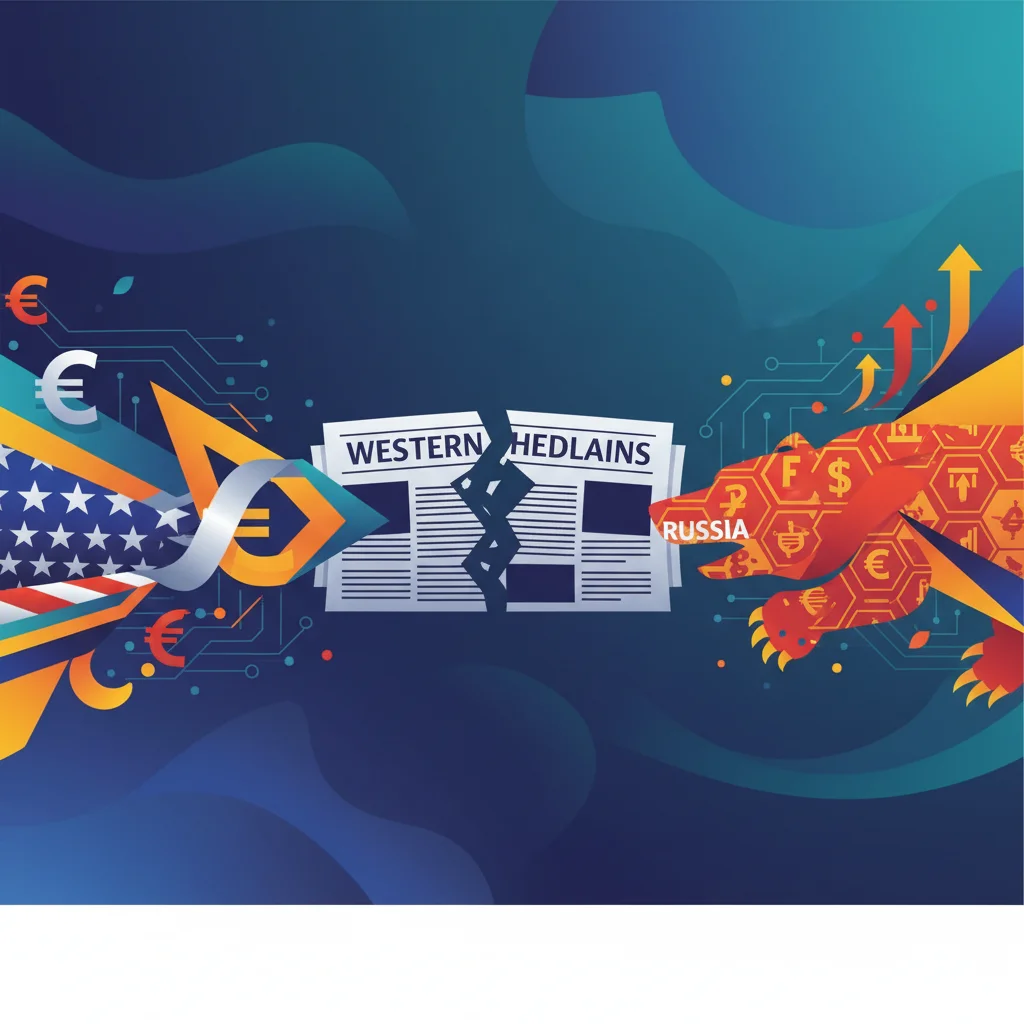
In the complex theater of global geopolitics, the battle is not only fought with military hardware or economic sanctions but also with narratives, perceptions, and headlines. A provocative title of a letter to the Financial Times, “One might believe Russia relished such headlines,” encapsulates a crucial, often overlooked, aspect of the current economic conflict: the war for hearts, minds, and investor confidence. In an age of instant information and algorithm-driven news cycles, the framing of economic data can be as potent a weapon as any trade embargo.
For investors, finance professionals, and business leaders, understanding this narrative warfare is no longer an academic exercise—it’s a critical component of risk management and strategic planning. The daily barrage of news about inflation, energy crises, and market volatility isn’t just noise; it’s the soundtrack to a global power struggle where sentiment can drive markets as much as fundamentals. This post delves into the headlines that might draw a smirk in Moscow, dissects the deeper economic realities they often obscure, and explores the implications for the future of finance, investing, and technology.
The Weaponization of Economic Narratives
Every economic indicator, from inflation rates to GDP figures, tells a story. However, that story can be interpreted in myriad ways. Geopolitical adversaries are keenly aware that sowing doubt, division, and despair within an opponent’s populace and financial markets can be incredibly effective. The goal is to create a self-fulfilling prophecy: if headlines can convince a population that their economy is failing and that sanctions are backfiring, it can lead to political pressure to change course, creating a victory without a single shot fired.
This strategy hinges on exploiting several key psychological and market dynamics:
- Negativity Bias: Humans are hardwired to pay more attention to negative news. Headlines about “soaring energy bills” or a “looming recession” are far more clickable and memorable than nuanced reports on long-term energy diversification.
- Market Sentiment: The stock market is notoriously susceptible to sentiment. Fear and uncertainty can trigger sell-offs, erode wealth, and damage corporate and consumer confidence, creating real economic pain from perceived threats.
- Oversimplification: Complex economic issues are often boiled down to simple, digestible (and often misleading) headlines. “Sanctions Fail as Ruble Soars” is a powerful narrative, even if it ignores the underlying mechanisms propping up the currency and the long-term decay in Russia’s productive capacity.
In this environment, Russia doesn’t need to create fake news; it simply needs to amplify the West’s own anxieties and internal debates. The most effective propaganda often contains a kernel of truth, making it all the more potent.
Decoding the Headlines Russia “Relishes”
Let’s examine the types of headlines that serve the narrative of Western decline and Russian resilience. By juxtaposing the simplistic headline with the complex reality, we can see how the narrative war is waged. This comparison highlights the critical need for deeper analysis in modern investing and economics.
| The “Relished” Headline Narrative | The Deeper Economic Reality |
|---|---|
| “Western Sanctions Backfire as Russian Ruble Hits Record Highs” | The Ruble’s post-invasion recovery was engineered through draconian capital controls, forced conversions of export revenues, and artificially high interest rates. It was a sign of economic isolation, not strength. Meanwhile, sanctions have crippled Russia’s access to critical technology, leading to a “long, slow degradation” of its economic potential, particularly in high-value sectors like aviation and tech, as detailed by analysis from institutions like the Carnegie Endowment for International Peace. |
| “Europe Faces Freezing Winter as Russian Gas Cuts Bite” | While energy prices did spike dramatically, the crisis spurred an unprecedented acceleration in energy diversification. Europe rapidly built LNG import capacity, secured new suppliers, and doubled down on renewable energy investments. The International Energy Agency (IEA) reported that the EU’s natural gas consumption fell by a staggering 19% in late 2022 and early 2023 (source), demonstrating remarkable resilience and permanently reducing its dependence on Russia. |
| “Record Inflation Cripples Western Consumers, Proving Sanctions Harm Us More” | Inflation was a global phenomenon driven by a confluence of factors, including post-pandemic supply chain disruptions, massive fiscal stimulus, and shifting consumer demand—not solely the sanctions on Russia. While energy price shocks were a contributor, central banks like the U.S. Federal Reserve have since demonstrated their ability to use monetary policy to bring inflation back towards target levels, a tool unavailable to a politically constrained Russian central bank. |
The Financial Puzzle: Decoding the Key Concepts Every Modern Investor Must Master
The Role of Fintech and Blockchain in the Information War
The speed and scale of this narrative warfare are supercharged by modern financial technology. The fintech revolution has democratized access to information and trading, but it has also created fertile ground for the rapid spread of sentiment-driven volatility.
Algorithmic trading systems, which execute millions of trades based on news sentiment analysis, can react to a headline in microseconds, creating momentum that human traders then follow. Social media platforms and “meme stock” communities can amplify a particular narrative, whether true or false, and move markets in ways that are detached from underlying fundamentals. This creates a challenging environment where the perception of economic reality can, for a time, become the reality of the stock market.
Simultaneously, blockchain technology presents a fascinating duality in this conflict. On one hand, cryptocurrencies and decentralized finance (DeFi) have been explored as potential avenues for circumventing traditional banking sanctions. The transparent yet pseudonymous nature of blockchain offers a new frontier in the cat-and-mouse game of international finance.
On the other hand, the core ethos of blockchain—decentralization and verifiable truth—offers a potential antidote to state-controlled narratives. A future financial system built on shared, immutable ledgers could, in theory, reduce the ability of any single actor to manipulate information for geopolitical gain. This makes the continued development of financial technology a critical area to watch in the evolution of economic statecraft.
Beyond the Hype: A Financial Analyst's Guide to Navigating the Black Friday Economy
Navigating the Fog: A Guide for Investors and Leaders
For those tasked with allocating capital and leading businesses, cutting through the narrative fog is paramount. Relying on headlines is a recipe for poor decision-making. A more robust framework is required:
- Prioritize Primary Sources: Instead of relying on news summaries, go to the source. Read the reports from central banks, the IMF, the World Bank, and reputable economic think tanks. Look at the raw data on capital flows, trade balances, and industrial production. For example, a deep dive into Russia’s federal budget reveals a ballooning deficit driven by war spending, a fact often missing from headlines about its “resilient” economy (source).
- Think in Probabilities, Not Absolutes: The future is not a single, predictable outcome. Instead of asking “Will there be a recession?” ask “What is the probability of a recession, and how deep might it be under various scenarios?” This approach, common in professional trading, helps avoid emotional reactions to binary headlines.
- Extend Your Time Horizon: Geopolitical and economic shifts take years, not days, to play out. Russia’s demographic decline, its technological isolation, and Europe’s green energy transition are powerful, long-term trends. A short-term focus on headline volatility can cause investors to miss these fundamental tectonic shifts.
- Diversify Beyond Narratives: A well-diversified portfolio is the best defense against being wrong about any single geopolitical narrative. True diversification means exposure across geographies, asset classes, and industries, providing resilience no matter which nation’s narrative appears to be “winning” in a given month.
Beyond the Flames: What a Hong Kong Tragedy Teaches Investors About 'Black Swan' Risks
Conclusion: Winning the Long Game
It is entirely plausible that Russia’s leadership relishes headlines of Western economic anxiety. They represent a potential crack in the resolve of the coalition opposing them and feed a domestic narrative of a strong Russia weathering a Western storm. But for the discerning investor and strategic thinker, these headlines should be seen not as conclusions, but as starting points for deeper inquiry.
The real story of the global economy is rarely found in the headline; it’s written in the footnotes of central bank reports, the balance sheets of innovative companies, and the long-term capital flows that follow stability, rule of law, and technological progress. The economic war of words is a powerful sideshow, but the main event is, and always will be, the underlying fundamentals of innovation, productivity, and resilience. The nations and investors who keep their focus on these fundamentals are the ones who will ultimately win the long game, long after the noisy headlines have faded.