Netflix’s Endgame: Decoding the Billion-Dollar Warner Bros. Deal and Its Impact on the Stock Market
The New Kings of Hollywood: Why Netflix’s Potential Warner Bros. Deal is a Financial Earthquake
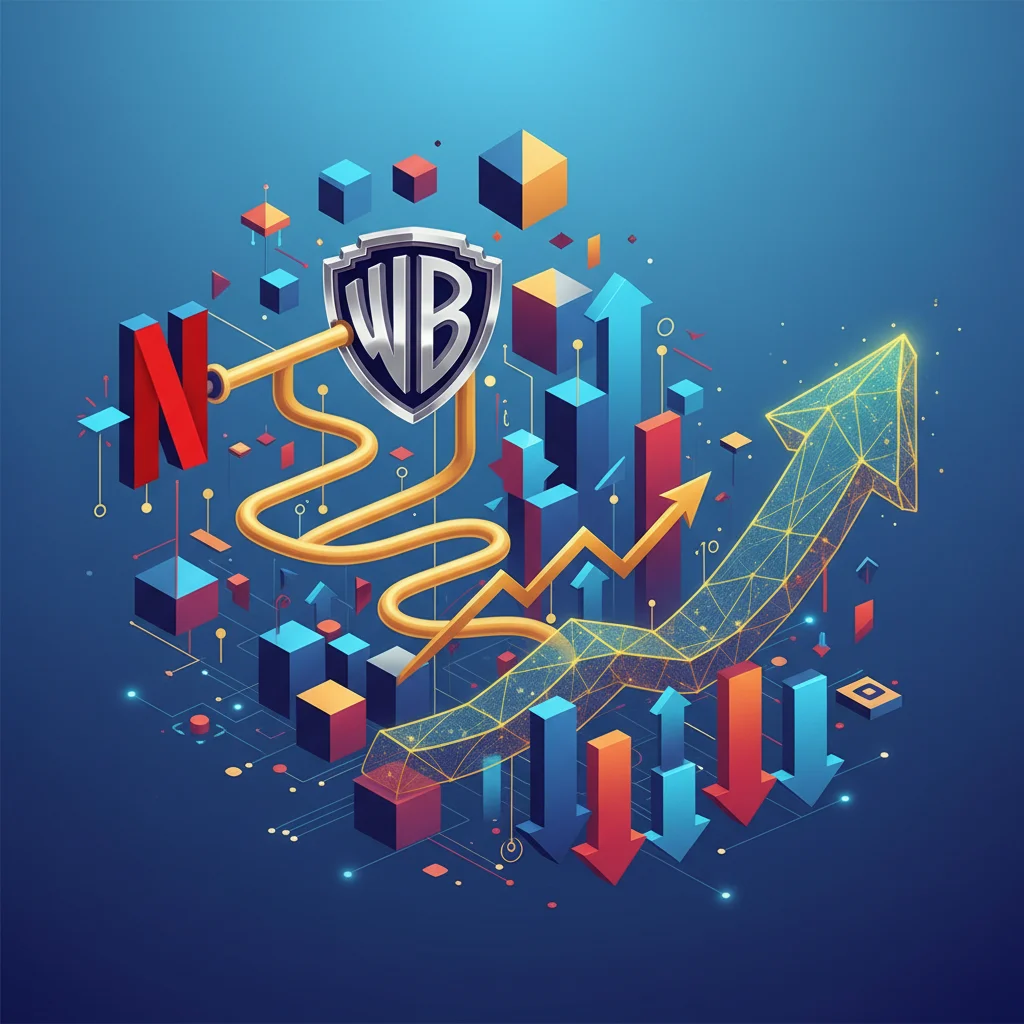
In the high-stakes world of streaming, a seismic shift is underway. Reports are surfacing that Netflix, the undisputed giant of subscription video on demand, is the leading contender in a bidding war for a landmark deal with Warner Bros. Discovery. According to an initial report by the BBC, Netflix has outmaneuvered formidable rivals, including Comcast and the Paramount Skydance partnership, to position itself at the front of the line. This isn’t just another content acquisition; it’s a strategic masterstroke that signals a new, more pragmatic era for the entertainment industry, with profound implications for investing, the stock market, and the fundamental economics of media.
For years, the “streaming wars” were a land grab, a relentless race for subscriber growth at any cost. Companies burned through billions, hoarding content in walled gardens and betting that exclusive rights would build unassailable moats. That era is definitively over. Today, the game is about profitability, sustainable growth, and shrewd financial maneuvering. This potential Netflix-Warner Bros. alliance is the most significant evidence of this new paradigm, representing a full-circle moment for an industry grappling with economic reality.
Anatomy of a Power Play: What’s on the Table?
While the exact terms remain under wraps, this is not a full-scale acquisition. Instead, it’s likely a complex and far-reaching licensing and distribution agreement. Warner Bros. Discovery (WBD), helmed by CEO David Zaslav, is sitting on a mountain of iconic intellectual property (IP)—from the DC Universe to Harry Potter and the vast HBO library. However, the company is also shouldering a staggering debt load, reported to be around $43 billion as of late 2023. Zaslav’s strategy has been clear: monetize these assets aggressively, even if it means abandoning the exclusivity-at-all-costs doctrine that defined the early streaming wars.
For Netflix, this deal is a calculated masterstroke. The cost of producing original, high-quality content continues to skyrocket. By licensing a trove of proven, beloved content from a legacy studio, Netflix can achieve several critical finance objectives:
- Reduce Churn: A deep library of re-watchable classics keeps subscribers engaged between blockbuster original releases.
- Lower Subscriber Acquisition Cost (SAC): Attracting new customers with universally recognized titles is often more cost-effective than marketing brand-new, unproven shows.
- Strengthen Global Appeal: WBD’s content has a built-in global audience, reinforcing Netflix’s international dominance.
This move highlights a crucial shift in corporate strategy. Netflix is evolving from a tech disruptor focused solely on its own ecosystem to a hybrid media conglomerate that understands the power of strategic partnerships. It’s a pragmatic recognition that in the current economy, no single company can produce enough content to satisfy global demand alone.
The Mona Lisa's Price Tag: Decoding the Louvre's Bold Economic Strategy
The Contenders: A Tale of Financial Fortunes
To understand why Netflix emerged as the frontrunner, it’s essential to look at the financial health of the key players. Netflix, having successfully navigated its own stock market correction and implemented a profitable ad-supported tier, is operating from a position of strength. Its rivals, Comcast (owner of Peacock) and Paramount (owner of Paramount+), are still grappling with the costly transition from legacy media to streaming, with their streaming divisions often acting as a drag on overall profitability.
Below is a snapshot comparing the key bidders, illustrating the financial disparity that likely influenced the negotiations.
| Company (Streaming Service) | Global Subscribers (Est.) | Recent Quarterly Revenue | Market Capitalization (Approx.) |
|---|---|---|---|
| Netflix | 247 million+ (source) | $8.54 Billion (Q3 2023) | ~$210 Billion |
| Comcast (Peacock) | 30 million (source) | $949 Million (Peacock, Q3 2023) | ~$175 Billion (Parent Co.) |
| Paramount Global (Paramount+) | 63 million+ | $1.67 Billion (DTC, Q3 2023) | ~$9 Billion |
As the data shows, Netflix’s scale, revenue, and market valuation give it the financial firepower to make aggressive bids that competitors, particularly the heavily scrutinized Paramount, may struggle to match. This financial dominance is a key factor in its ability to dictate the terms of the next phase of the media industry’s evolution.
Stock Market Tremors and the Investor’s Dilemma
For those involved in investing and trading, this news sends a cascade of signals across the market. The immediate reaction is likely to be bullish for Netflix (NFLX) and potentially stabilizing for Warner Bros. Discovery (WBD).
- For Netflix (NFLX): Investors will likely see this as a validation of its market leadership and a cost-effective strategy for growth. It reinforces the narrative that Netflix is the indispensable utility of the streaming world, the primary aggregator that all content creators must eventually deal with. This could lead to a positive re-rating of the stock.
- For Warner Bros. Discovery (WBD): For WBD, this is a double-edged sword. In the short term, a massive cash infusion from Netflix would be welcome news, helping to service debt and fund new productions. The stock could see a relief rally. However, the long-term question for investors is what WBD becomes if it’s no longer the exclusive home of its best content. Does it risk devaluing its own streaming service, Max, into a second-tier player?
- For Competitors (CMCSA, PARA): For Comcast and Paramount, losing this bid is a significant blow. It underscores their struggle to compete at the highest level and may force investors to question the long-term viability of their streaming ambitions. This could accelerate conversations around further industry consolidation.
The sophisticated financial technology that powers modern trading platforms will process this news in microseconds, but the deeper strategic implications will unfold over months and years. This is a moment for investors to reassess their thesis on the entire media sector.
The Broader Economic and Technological Ripple Effect
The impact of this deal extends far beyond Wall Street. It reshapes the creative economy of Hollywood, influencing everything from talent negotiations to production budgets. With one dominant buyer setting the terms, smaller production houses and independent creators may find their negotiating power diminished. It centralizes power in a way not seen since the golden age of the studio system.
Furthermore, this consolidation of content libraries raises interesting questions about the role of technology. As licensing deals become more complex, involving global rights, ad-supported windows, and dynamic royalty payments, the need for robust financial technology solutions becomes paramount. There’s growing chatter in tech circles about using technologies like blockchain to create transparent, immutable ledgers for tracking content rights and automating royalty distributions. While not yet mainstream, a deal of this magnitude could accelerate innovation in the fintech space as it applies to media rights management, streamlining the complex banking and payment flows between global media giants.
Beyond the Headlines: How a High Street Bust Exposes Deep Cracks in Our Financial System
Conclusion: The Dawn of the Streaming Hegemon
The reported Netflix-Warner Bros. deal is more than a headline; it’s a chapter closing and another one beginning. It marks the end of a costly and unsustainable war of attrition and the dawn of a new era defined by financial pragmatism and market consolidation. Netflix, by leveraging its financial might and market position, is not just acquiring content; it is solidifying its role as the central hub of global entertainment.
For investors, business leaders, and consumers, the message is clear: the media landscape is being redrawn. The economics of streaming have matured, and the winners are those with the scale, capital, and strategic foresight to adapt. As this deal moves closer to reality, the entire industry will be watching, forced to decide whether to partner with the new king or risk being left behind in the kingdom it built.

Related Posts

The Elephant in the Market: Is Reliance Jio’s IPO Set to Redefine India’s Economic Landscape?

The Billion-Dollar Loophole: How Venture Global’s Legal Win Over Repsol Is Shaking the Global Energy Market