Beyond the Ticker: Decoding the Intricate Puzzle of Modern Finance
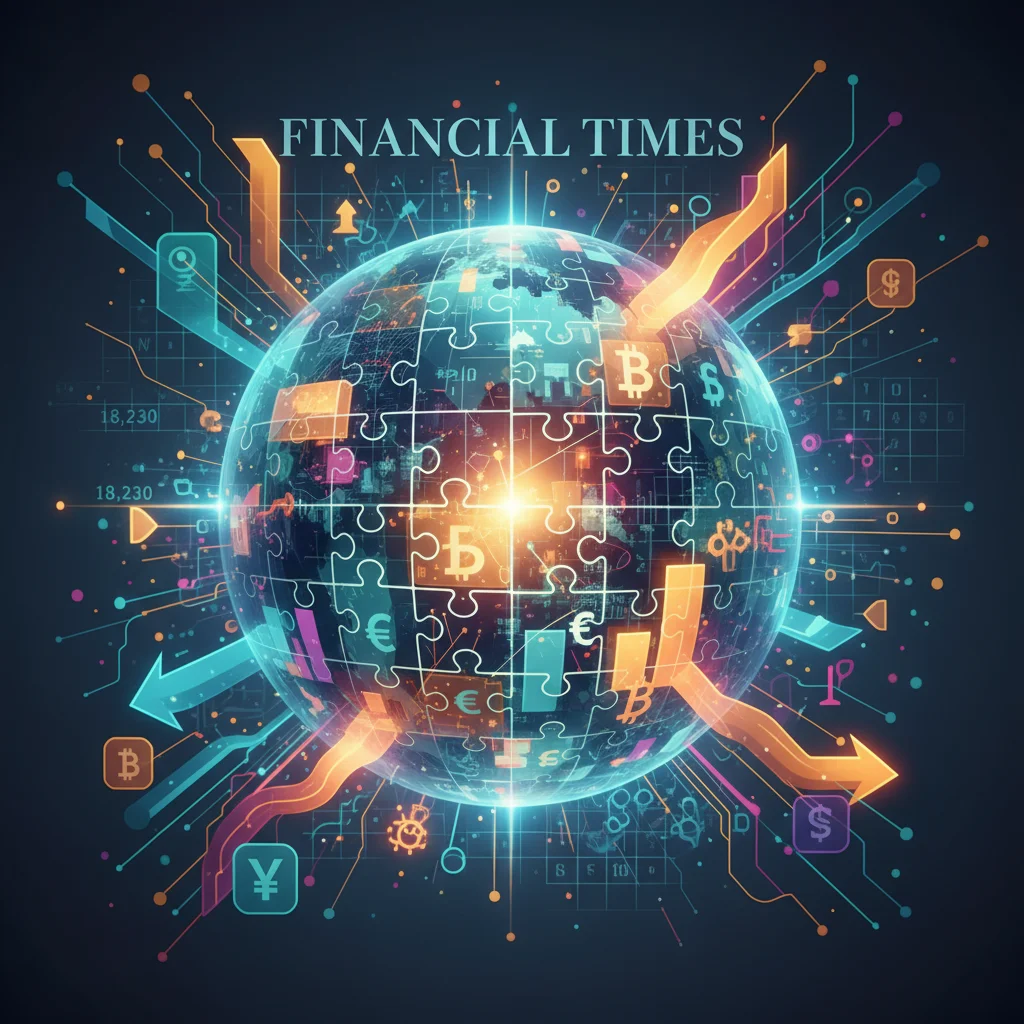
For many, the morning ritual isn’t complete without a cup of coffee and a formidable puzzle. The Financial Times Crossword, like the one recently published as Number 18,230, represents a daily intellectual Everest—a grid of empty white squares and cryptic clues demanding logic, knowledge, and a dash of creative thinking. Yet, this daily challenge offers a surprisingly powerful metaphor for the very world the FT covers: the complex, interconnected, and often puzzling landscape of global finance.
Navigating the modern economy is no different from staring at a blank crossword grid. Investors, finance professionals, and business leaders are all trying to fill in the blanks, deciphering cryptic signals from the market, and understanding how each piece—from a single stock market fluctuation to a major shift in monetary policy—fits into the larger picture. The goal is the same: to transform chaos and uncertainty into a coherent, solved puzzle. This requires more than just a passing knowledge of the rules; it demands a deep, strategic mindset capable of seeing both the individual clues and the entire grid at once.
The Grid: Mapping the Interconnected Financial Ecosystem
A crossword grid is a masterclass in interconnectedness. No word exists in isolation. Each “Across” entry must perfectly align with several “Down” entries. A single wrong letter can create a cascade of errors, rendering a whole section unsolvable. This is a perfect analogy for the global financial system.
Think of the grid’s quadrants as different sectors of the economy: technology, energy, healthcare, and consumer goods. Within these sectors, individual companies are the words. The performance of a major tech firm (a long “Across” word) directly impacts its suppliers in the semiconductor industry (intersecting “Down” words). A disruption in the energy sector, such as a sudden spike in oil prices, doesn’t just affect energy stocks; it ripples through the entire grid, influencing transportation costs, manufacturing inputs, and ultimately, consumer inflation.
This deep-seated interdependence is why seasoned investors practice systems thinking. They don’t just analyze a company; they analyze its entire ecosystem. They ask questions like:
- How will a change in banking regulations affect lending to small businesses in the retail sector?
- What is the relationship between a breakthrough in biotechnology and the insurance industry’s long-term risk models?
- How does a slowdown in one country’s manufacturing output impact the global trading and logistics network?
Just as a crossword solver pencils in an answer tentatively, knowing it might need to be revised, a successful investor remains flexible, understanding that the financial grid is dynamic and constantly evolving.
The Billion-Dollar Comment: How One Executive's Words Put Campbell's Brand and Stock on the Line
The Clues: Deciphering Cryptic Market Signals
If the grid is the market’s structure, the clues are the data points, news headlines, and economic reports we use to make sense of it. And much like crossword clues, they are often anything but straightforward. A central bank’s statement on interest rates can be as cryptic as any anagram, filled with nuanced language that analysts spend weeks dissecting. An earnings report might contain a “hidden word” in its footnotes that completely changes the outlook for a company.
Mastering the art of investing is about learning to read these clues correctly. Here’s a breakdown of how different types of financial “clues” parallel their crossword counterparts:
This table illustrates the parallels between solving a complex puzzle and navigating financial markets.
| Crossword Clue Type | Financial Market Parallel | Required Skillset |
|---|---|---|
| Direct Definition (e.g., “A financial levy (3)”) | Hard Data Point (e.g., Quarterly GDP Growth, Unemployment Rate) | Knowledge of economics and financial terminology. |
| Anagram (e.g., “A deal’s afoot for a leader (5)”) | Corporate Restructuring News (e.g., Mergers, Acquisitions, Spin-offs) | Analytical thinking; seeing potential in rearranging existing assets. |
| Cryptic/Double Meaning (e.g., “Check capital growth (7)”) | Central Bank Forward Guidance (e.g., “patient,” “transitory inflation”) | Nuanced interpretation, understanding context and subtext. |
| Hidden Word (e.g., “Part of the problem is technology (4)”) | Footnotes in an SEC Filing or a line in a CEO’s conference call | Attention to detail, ability to find signals in the noise. |
The most successful participants in the stock market are not those who simply react to the headlines, but those who, like expert puzzlers, look for the deeper meaning. They understand that a clue like “inflation remains elevated” requires more than just knowing the definition; it requires understanding its potential impact on consumer spending, corporate profits, and monetary policy—the intersecting “words” on the grid.
The New Frontier: Fintech, Blockchain, and the Evolving Rules of the Puzzle
For centuries, the rules of the financial crossword were relatively stable. But the rise of financial technology, or fintech, has fundamentally changed the game. It’s as if the puzzle setters introduced entirely new types of clues—and in some cases, are redesigning the grid itself.
Consider blockchain technology. It’s the ultimate anagram—rearranging the core components of trust, verification, and ownership to create something new. Decentralized Finance (DeFi) challenges the very structure of traditional banking by removing intermediaries. Cryptocurrencies and digital assets have introduced a new class of entries that don’t always follow the old rules, forcing regulators and investors alike to adapt. According to a report by BCG and QED Investors, fintech revenues are projected to grow sixfold from 2021 to 2030, reaching $1.5 trillion, which underscores the massive structural shift underway.
This technological disruption adds layers of complexity. Algorithmic trading now happens at speeds incomprehensible to the human mind, filling in parts of the grid before most of us have even read the clues. AI-powered analytics platforms can parse millions of data points—the “hidden words” in global news flow—to predict market movements. For the modern investor, financial literacy is no longer enough. A degree of technological literacy is becoming essential to remain competitive.
The Great British Tax Paradox: Decoding the Real Impact of the Latest UK Budget
Developing a “Solver’s Mindset” for Modern Investing
So, how can one thrive in this increasingly complex financial world? By adopting the mindset of a master crossword solver.
1. Start with the “Givens”
Every difficult puzzle has a few easy clues to provide a starting point. In investing, these are the foundational principles: understanding your risk tolerance, defining your long-term goals, and mastering the basics of diversification. Before tackling the cryptic clues of speculative trades, make sure you’ve filled in these essential answers. The Organisation for Economic Co-operation and Development (OECD) has consistently highlighted the critical link between financial literacy and financial resilience, proving that knowing the basics is the best defense.
2. Think Both Across and Down
Don’t get tunnel vision. A great solver constantly shifts between “Across” (macro) and “Down” (micro) perspectives. Pay attention to broad economic trends—inflation, interest rates, geopolitical shifts. But also do the deep-dive research into individual companies—their leadership, their balance sheets, their competitive advantages. The strongest investment theses are formed at the intersection of these two viewpoints.
3. Be Willing to Erase
In crosswords, the “pen vs. pencil” debate is legendary. Purists might use a pen, but the wisest players use a pencil. They know that an early assumption might prove wrong and are not too proud to erase and reconsider. In investing, this is crucial. The market doesn’t care about your ego. Be willing to admit a mistake, cut your losses, and re-evaluate your strategy based on new information. This psychological flexibility is often what separates successful investors from the rest.
4. Embrace Continuous Learning
The people who set crosswords are constantly inventing new wordplay and referencing new cultural touchstones. Likewise, the world of finance is never static. The rise of ESG (Environmental, Social, and Governance) investing, the tokenization of assets, and the impact of AI on corporate productivity are all new “clues” that didn’t exist a decade ago. A commitment to lifelong learning is non-negotiable. As the World Economic Forum notes, the increasing complexity of our global systems requires a constant “reskilling and upskilling” mindset, a fact as true for finance professionals as it is for any other industry.
Beyond the Headlines: Analyzing the Financial Shockwaves of Hong Kong's Tai Po Tragedy
Conclusion: The Satisfaction of the Solved Grid
There’s a unique satisfaction in filling in that last square of a difficult crossword—a sense of order restored, of a challenge met and conquered. The world of finance and investing offers a similar, albeit more consequential, reward. It’s a puzzle that is never truly “finished,” with a new version published every single day with the opening bell. But by applying the right framework, by learning to read the clues, and by embracing a mindset of flexibility and continuous learning, we can navigate its complexity with greater confidence and skill. The goal isn’t to find a single, magic answer, but to engage in the process of solving—transforming the intimidating grid of the global economy into a landscape of opportunity and understanding.