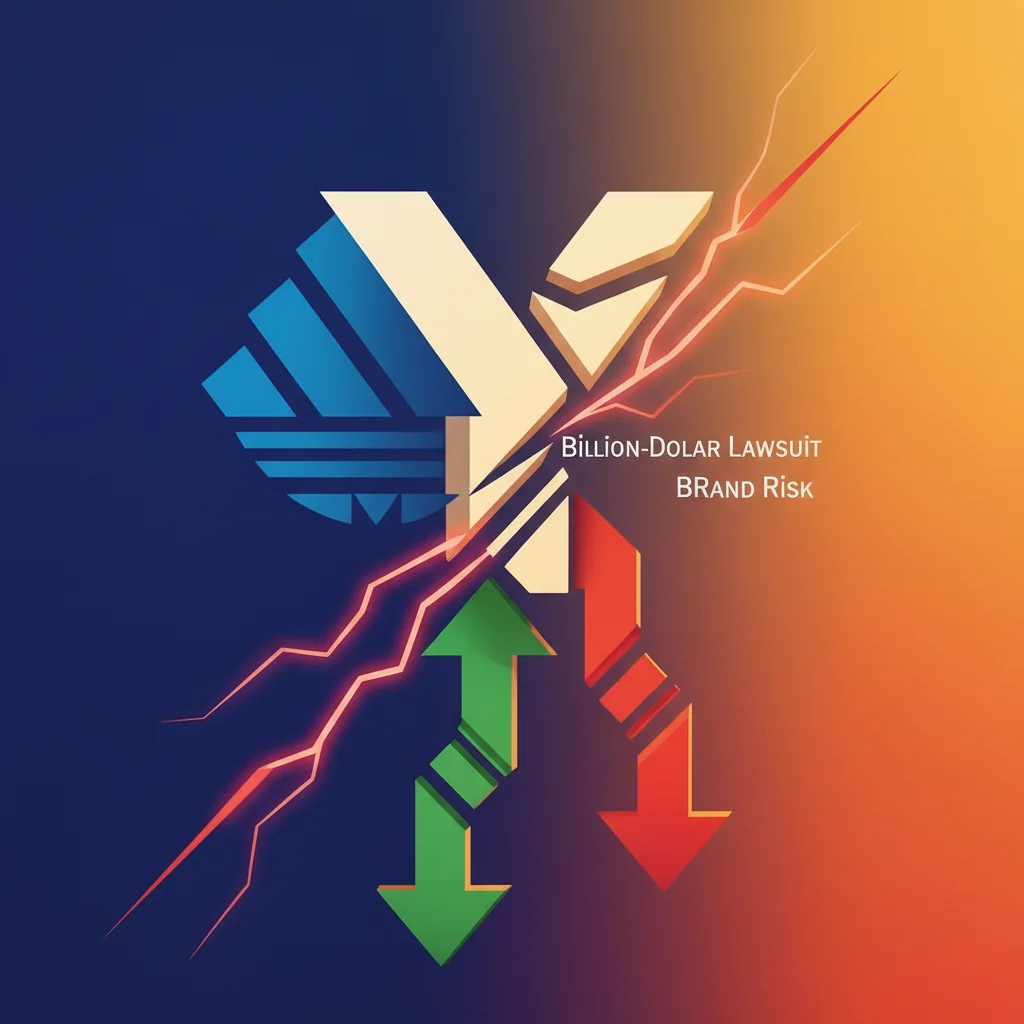
Adidas, Yeezy, and the Billion-Dollar Lawsuit: A Modern Tale of Brand Risk and Investor Responsibility
In the high-stakes world of global finance and brand collaborations, few partnerships have soared as high or crashed as spectacularly as the one between Adidas and Kanye West’s Yeezy brand. What was once a multi-billion-dollar cultural phenomenon ended in a firestorm of controversy, leading to a dramatic severance and a subsequent class-action lawsuit from investors. Recently, a US court sided with Adidas, dismissing an appeal from shareholders who claimed the company had misled them about the risks inherent in their partnership with the volatile artist. This ruling isn’t just a legal footnote; it’s a landmark moment that offers profound lessons on corporate governance, the economics of celebrity endorsements, and the evolving responsibilities of modern investors.
This deep dive will unpack the court’s decision, explore the intricate relationship between brand reputation and stock market performance, and provide a critical analysis of what this case means for the future of finance, investing, and corporate strategy.
The Rise and Fall of a Cultural Juggernaut
To understand the gravity of the lawsuit, one must first appreciate the sheer scale of the Adidas-Yeezy collaboration. Launched in 2015, the partnership was more than just a sneaker deal; it was a cultural reset. Yeezy products generated unprecedented hype, with limited-edition drops selling out in minutes and commanding staggering resale values. For Adidas, it was a golden goose. The Yeezy line became a cornerstone of its business, reportedly generating an estimated €1.7 billion in revenue in 2022 alone, accounting for a significant portion of the company’s total profits.
However, the creative genius behind the brand, Kanye West (now known as Ye), became an increasingly unpredictable and controversial figure. A history of erratic public statements culminated in a series of antisemitic and offensive remarks in late 2022. The public backlash was swift and immense, placing Adidas in an untenable position. On October 25, 2022, the company officially terminated the partnership, a decision that it projected would cost it over $1.2 billion in lost sales for the coming year. The company’s stock market valuation plummeted, wiping out billions and leaving investors reeling.
The Legal Showdown: Why Did the Court Side with Adidas?
In the aftermath, a group of investors filed a class-action lawsuit, alleging that Adidas had violated U.S. securities laws. The core of their argument was that Adidas executives knew about West’s problematic behavior for years but failed to disclose the associated risks to shareholders, thereby artificially inflating the company’s stock price. They claimed that the company had a duty to warn them that its financial stability was tethered to a highly volatile individual.
However, the U.S. Court of Appeals for the Second Circuit in Manhattan upheld a lower court’s decision to dismiss the case. The judges’ reasoning, while not detailed in the brief news report, likely hinged on a high legal bar required for such lawsuits. To prove securities fraud, plaintiffs must typically demonstrate “scienter” – that the company acted with an intent to deceive, manipulate, or defraud. Proving that Adidas executives *knew* West’s behavior would escalate to antisemitism and trigger a partnership-ending catastrophe is a monumental challenge. The court likely concluded that while West’s behavior was a known business risk, the company wasn’t legally obligated to predict and disclose every potential implosion, especially one of this specific nature and magnitude.
To better understand the timeline of this complex relationship, consider the key milestones:
| Date | Event |
|---|---|
| February 2015 | Adidas and Kanye West launch the first “Yeezy Season 1” collection. |
| 2016 – 2021 | The Yeezy line becomes a multi-billion dollar revenue stream for Adidas, driving significant stock market gains. |
| May 2018 | West makes controversial comments about slavery being a “choice,” causing the first major public relations crisis for the partnership. |
| Early October 2022 | West appears at Paris Fashion Week wearing a “White Lives Matter” shirt, beginning a cascade of offensive rhetoric. |
| October 2022 | West makes a series of antisemitic comments on social media and in interviews, leading to widespread condemnation. |
| October 25, 2022 | Adidas officially terminates its partnership with West, citing his comments as a violation of company values. |
| April 2023 | Investors file a class-action lawsuit against Adidas, alleging the company misled them. |
| January 2024 | A U.S. District Judge dismisses the lawsuit, stating investors failed to prove Adidas was aware of the risks. |
| May 2024 | The U.S. Court of Appeals upholds the dismissal, dealing a final blow to the investors’ case. |
The Investor's Crossword: Decoding the Puzzles of the Global Economy
The Ripple Effect: Stock Market Volatility and Corporate Strategy
The Adidas-Yeezy saga is a masterclass in the tangible financial impact of reputational risk. The immediate aftermath of the partnership’s termination saw Adidas’s stock take a significant hit. The company was left with a mountain of unsold Yeezy inventory, initially valued at over $1.3 billion, creating a massive write-down risk that spooked the stock market. This situation highlights a critical vulnerability in the business model: over-reliance on a single product line or personality, a risk that traditional economic models often struggle to price in effectively.
In response, corporations across the globe are re-evaluating their approach to celebrity partnerships and brand collaborations. The key takeaways for business leaders are clear:
- Diversification is Defense: Relying on one “hero” product or person, no matter how successful, creates a single point of failure. A diversified portfolio of brands, influencers, and revenue streams is essential for long-term stability.
- Ironclad Contracts: Legal teams are now undoubtedly revisiting the “morality clauses” in their contracts. These clauses must be robust, clearly defined, and provide a swift, unambiguous exit strategy if a partner’s conduct threatens the brand’s values and, by extension, its financial health.
- Proactive Governance: The case underscores the “G” (Governance) in ESG (Environmental, Social, and Governance) investing. Strong governance involves not just financial oversight but also proactive management of reputational and partnership risks. Boards must have clear protocols for monitoring and acting on these non-financial threats.
The world of financial technology, or fintech, also offers emerging solutions. Advanced AI-powered platforms can now perform real-time sentiment analysis, scraping social media and news outlets to create a dynamic risk profile for a brand or its key partners. This kind of financial technology allows companies and investors to move from reactive damage control to proactive risk mitigation, a critical evolution in modern finance.
Lessons for the Modern Investor in a Volatile Economy
For investors and finance professionals, this court decision is not an invitation to ignore red flags. Rather, it is a clarification of where corporate liability ends and investor responsibility begins. The era of passive investing based solely on quarterly earnings reports is fading. A truly comprehensive investment thesis must now include a qualitative assessment of a company’s cultural and reputational landscape.
Here are some actionable insights for today’s investor:
- Look Beyond the Numbers: Analyze a company’s key dependencies. Is its success heavily tied to a single CEO, a star designer, or a specific patent? Understand the risks associated with that concentration.
- Evaluate Corporate Culture: A company with a strong, resilient culture and clear values is better equipped to weather a storm like the one Adidas faced. It was Adidas’s ultimate decision to stand by its values of diversity and inclusion that, despite the short-term financial pain, may have preserved its long-term brand equity.
- Embrace New Tools: Consider incorporating alternative data sources into your analysis. Fintech tools that track brand sentiment, executive social media activity, and other non-traditional indicators can provide an early warning system for risks that won’t appear in a 10-K report until it’s too late. The banking and trading sectors are increasingly leveraging such technologies to gain an edge.
In a broader sense, this event touches upon complex themes in modern economics. It demonstrates how non-traditional assets, like brand reputation and cultural relevance, have become powerful, albeit volatile, drivers of economic value. The failure to properly model the risk associated with these assets can have devastating consequences, impacting everything from individual trading accounts to the wider economy.
Beyond the Bull and Bear: Lessons from the Chicken on the Trading Floor
Conclusion: A New Chapter in Corporate Accountability
The court’s decision in favor of Adidas closes a tumultuous chapter for the German sportswear giant. But for the broader worlds of finance and investing, it opens a new one. The case serves as a powerful cautionary tale about the immense rewards and catastrophic risks of celebrity-driven commerce. It clarifies the legal boundaries of corporate disclosure but simultaneously highlights the expanding need for investors to become more sophisticated in their own risk assessments.
Ultimately, the Adidas-Yeezy saga is more than a story about sneakers; it’s a defining narrative for 21st-century business. It proves that in our interconnected global economy, a brand’s value is inextricably linked to its values. For investors, business leaders, and finance professionals, the key takeaway is that the most significant risks may not be hidden in the balance sheets, but in the complex, unpredictable, and powerful realm of human behavior.

Related Posts

Cracks in Confidence: How a Nuclear Scandal Shakes Japan’s Economy and Investor Trust
The Politicization of the Portfolio: How State Interference Puts US Companies and Investors at Risk
