The Canary in the Coal Mine: What Rising Food Bank Demand Reveals About the Economy and Your Portfolio
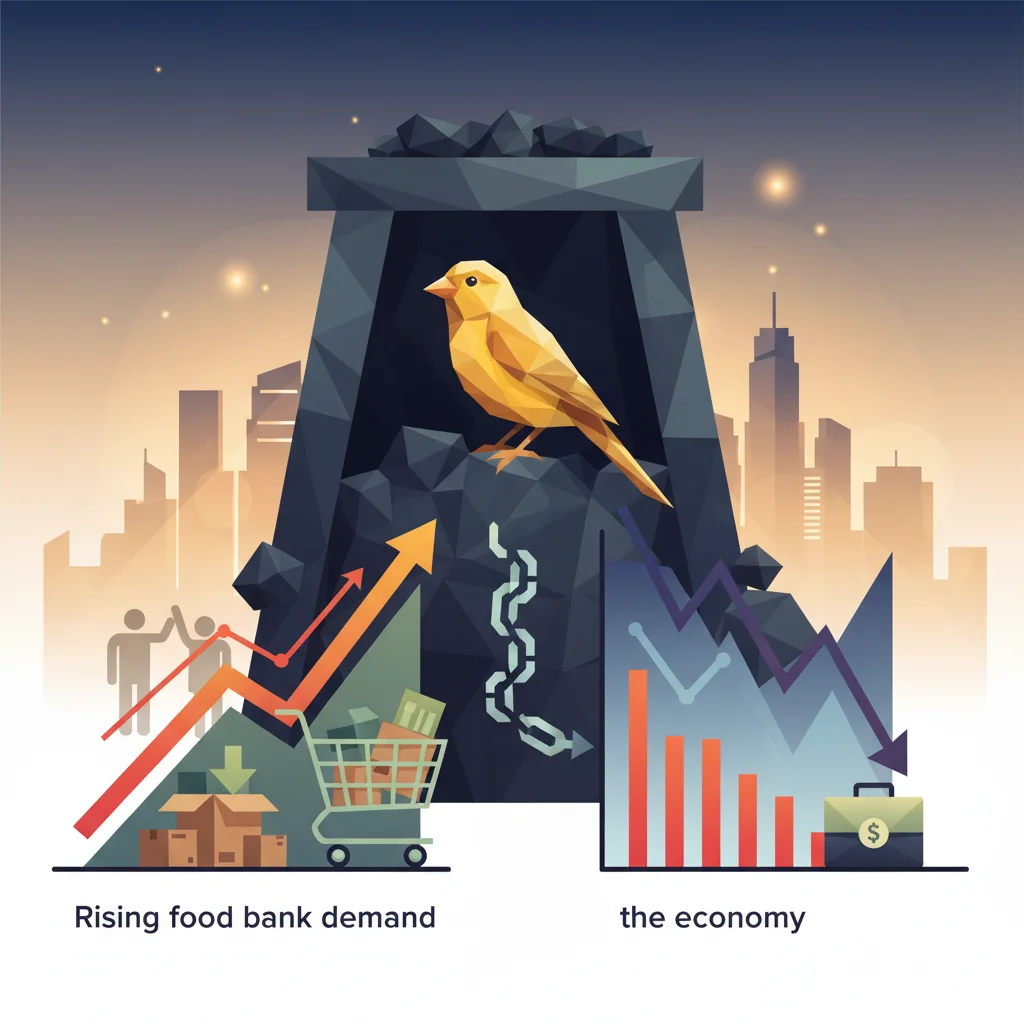
In the West Midlands, a local food bank is “braced for another difficult winter,” a sentiment echoing across communities nationwide. A recent report highlights a stark plea for donations amid surging demand, a direct consequence of the escalating cost-of-living crisis. While this may seem like a localized social issue, for astute investors, finance professionals, and business leaders, it’s something far more significant: a critical, real-time indicator of the true state of our economy. This isn’t just about charity; it’s about understanding the foundational pressures that shape consumer behavior, corporate earnings, and long-term market trends.
The headlines often focus on stock market indices, GDP figures, and central banking pronouncements. These are essential metrics, but they can paint an incomplete, often lagging, picture of economic health. The line outside a food bank, however, tells a raw, immediate story about disposable income, consumer confidence, and the real-world impact of macroeconomic policy. It’s a leading indicator of distress that sophisticated financial analysis should not ignore.
The Macroeconomic Squeeze: From Central Banks to Kitchen Tables
To understand why food bank queues are a vital economic dataset, we must connect the dots from global policy to household budgets. For the past several years, developed economies have been grappling with a complex cocktail of inflationary pressures, supply chain disruptions, and geopolitical instability. In response, central banks, including the Bank of England, have deployed their primary tool: raising interest rates to cool demand and tame inflation.
While necessary from a monetary policy perspective, this action has direct and often painful consequences. Higher interest rates translate to more expensive mortgages, loans, and credit card debt, siphoning off household disposable income. This financial tightening occurs against a backdrop of inflation that, for many, has outpaced wage growth. According to the Office for National Statistics (ONS), while wage growth has seen increases, real-term pay (which accounts for inflation) has often stagnated or declined, meaning the purchasing power of the average worker has diminished.
This creates a vicious cycle. As essential costs for housing, energy, and food rise, families are forced to make difficult choices. The budget for discretionary spending—restaurants, entertainment, new electronics, and travel—is the first to be cut. When the pressure intensifies, even the budget for essentials comes under strain, leading to a rise in food insecurity. The UK’s largest food bank network, The Trussell Trust, reported distributing nearly 3 million emergency food parcels in 2022/23, the highest number on record, underscoring the scale of the problem.
LNG Titans at War: Venture Global Accuses Shell of a "Campaign of Sabotage"
Beyond Averages: The K-Shaped Recovery and Its Market Implications
The current economic environment is often described as a “K-shaped recovery.” This concept posits that following a recession, different segments of the economy recover at drastically different rates. The upward arm of the ‘K’ represents industries and individuals who have benefited—often those in technology, finance, or those with significant asset holdings that appreciated during periods of low interest rates. Their financial position remains strong, and their spending patterns may be robust.
The downward arm of the ‘K’, however, represents a large and growing portion of the population. These are often individuals in service industries, hourly wage earners, or those with little to no financial buffer. They bear the brunt of inflation and high interest rates. The rising demand at food banks, like the one in the West Midlands (source), is the most visible evidence of this downward trajectory.
For those involved in investing and trading, ignoring this divergence is a strategic error. A portfolio heavily weighted towards companies reliant on broad-based consumer spending could face significant headwinds. While luxury brands catering to the top of the ‘K’ might thrive, businesses dependent on the average consumer—from high-street retail to casual dining—are likely to experience margin compression and slowing growth. The stock market may appear healthy on the surface, buoyed by a few mega-cap tech stocks, but a deeper analysis of consumer-staple and consumer-discretionary sectors may reveal underlying weakness.
Can Financial Technology Bridge the Gap?
While traditional finance and economic policy contribute to these pressures, the innovative world of financial technology (fintech) may offer some potential solutions. The same sector driving complex trading algorithms and digital banking could also be leveraged to foster financial inclusion and resilience.
Consider the following applications:
- AI-Powered Financial Wellness Tools: Fintech apps that go beyond simple budgeting to offer predictive insights, helping users navigate financial cliffs by anticipating bills and suggesting micro-savings strategies.
- Earned Wage Access (EWA): Platforms that allow employees to access a portion of their earned wages before the official payday, providing a crucial alternative to high-interest payday loans during an emergency.
- Blockchain for Charitable Transparency: For philanthropists and investors focused on ESG (Environmental, Social, and Governance) mandates, blockchain technology offers a compelling use case. It can create an immutable and transparent ledger for donations, allowing donors to track exactly how their funds are used to purchase and distribute food, enhancing trust and efficiency in the third sector.
This is not a panacea. A fintech app cannot solve systemic wage stagnation or unaffordable housing. However, these tools represent a tangible way the world of modern finance can be applied to mitigate the very problems it sometimes helps create. For the banking and financial technology sectors, this is both a significant challenge and a massive opportunity.
The Great Contraction: Is China's Investment Freeze a Crisis or a Calculated Gambit?
A Visual Look at the Squeeze
The following table illustrates the pressure on UK households by comparing headline inflation (CPI) with average wage growth. When the inflation rate is higher than wage growth, real-term pay decreases, and purchasing power is eroded. This is the statistical reality behind the rising demand at food banks.
| Period | UK CPI Inflation (Annual Rate) | UK Average Weekly Earnings Growth (Annual Rate, incl. bonus) |
|---|---|---|
| Q4 2021 | 5.4% | 4.3% |
| Q2 2022 | 9.2% | 5.2% |
| Q4 2022 | 10.5% | 6.4% |
| Q2 2023 | 7.9% | 8.2% |
| Q4 2023 | 4.0% | 5.8% |
Note: Data is illustrative, based on public figures from the ONS for the approximate periods. Periods of negative real wage growth are clearly visible, particularly during the inflation peak in 2022.
Actionable Insights for Leaders and Investors
Understanding this dynamic is the first step. The next is to integrate it into strategic decision-making.
For Investors:
- Look Beyond the Index: De-average your analysis. Scrutinize the consumer base of your portfolio companies. Are they serving the top or the bottom of the ‘K’?
- Re-evaluate Risk in Consumer Sectors: Companies reliant on broad-based, low- to middle-income consumer spending carry a higher risk profile in this environment.
- Embrace ESG as a Risk Mitigator: Companies with strong social credentials, including robust employee support programs and community engagement, may demonstrate greater resilience and brand loyalty. Food bank support is no longer just CSR; it’s an indicator of a company’s awareness of its operating environment.
For Business Leaders:
- Prioritize Employee Financial Wellness: A stressed workforce is an unproductive workforce. Implementing programs like EWA, financial literacy training, and fair wage policies is not just an expense; it’s an investment in your most valuable asset.
- Adapt Your Business Model: Understand that your customer’s purchasing power is changing. This may require shifts in product offerings, pricing strategies, or value propositions to remain relevant.
- Engage in Authentic Corporate Social Responsibility: Supporting local institutions like food banks is not only the right thing to do but also sends a powerful message to customers and employees that your organization is connected to the community it serves. A recent study by Deloitte found that younger generations increasingly prioritize a company’s societal impact when making purchasing and employment decisions.
The End of an Era or a New Financial Strategy? Why a Top Art Gallery is Closing its New York Doors
Conclusion: The Human Element in Economic Forecasting
The plea from a food bank in the West Midlands is more than a news brief; it is a fundamental data point on the health of our economy. It reflects the real-world consequences of decisions made in the boardrooms of central banks and financial institutions. For those in finance, investing, and business, the challenge is to build models and strategies that are sophisticated enough to incorporate this human element.
By viewing social indicators as critical economic signals, we can achieve a more holistic and accurate understanding of market dynamics. This perspective not only leads to more resilient investment portfolios and sustainable business strategies but also fosters an economic environment that recognizes that true, long-term prosperity cannot be built while a growing portion of its foundation is crumbling.

Related Posts
UK’s Unexpected Fiscal Breather: Decoding the December Borrowing Drop and Its Impact on the Economy
UK Government Borrowing Plummets: A Deep Dive into What This Means for the Economy, Investors, and Your Wallet