Beyond the Headlines: Decoding the Putin-Trump Envoy Meeting and Its Shockwaves for Global Finance
The Quiet Meeting with Loud Implications for the Global Economy
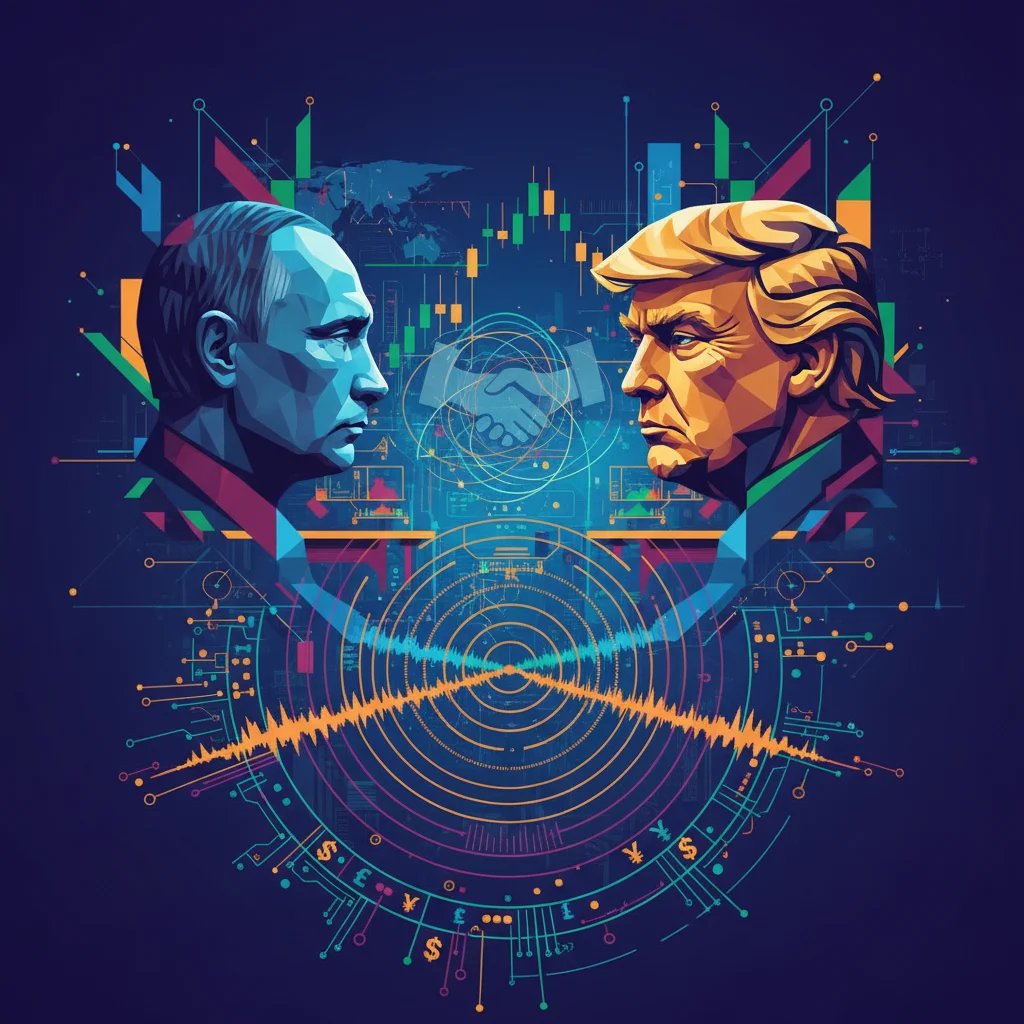
In the world of high-stakes geopolitics, the most significant moves often happen not in the glare of public summits, but in quiet, unannounced meetings. Such was the case recently when Vladimir Putin met with Steve Witkoff, a real estate mogul and a known confidant of Donald Trump, in Moscow. The official Kremlin line, as reported by the Financial Times, described the talks on Ukraine as “useful” but conceded that no concrete deal was reached. For the casual observer, this might seem like a non-event. But for investors, finance professionals, and business leaders, this subtle diplomatic maneuver is a critical signal flare, illuminating potential shifts in global economic policy, market stability, and the future of international trade.
This meeting is more than just a conversation; it’s a form of “back-channel” diplomacy, an informal communication line that operates outside official government protocols. Its very existence hints at a potential divergence between current US foreign policy and the approach a future administration might take. Understanding the nuances of this event is crucial for anyone whose portfolio or business is tethered to the global economy. It forces us to ask critical questions: What does this signal about the future of the war in Ukraine? How could it impact energy markets, sanctions, and the intricate web of global finance? And most importantly, how should we position ourselves for the potential volatility ahead?
Unpacking the Diplomatic Language: What “Useful” Really Means
In diplomacy, words are currency, and their value is often intentionally ambiguous. The term “useful” is a classic example. It’s a non-committal yet positive-sounding word that serves multiple purposes. It acknowledges that a dialogue occurred and that information was exchanged, keeping the door open for future talks without promising any specific outcomes. For Russia, it projects an image of being open to negotiation, potentially aimed at influencing international opinion. For the Trump camp, it signals a willingness to engage directly, a hallmark of his previous presidential term.
However, for those in the world of investing and economics, this ambiguity is a source of uncertainty. The stock market abhors a vacuum of information, and such opaque signals can lead to speculative trading and increased volatility. It suggests that the status quo—a prolonged conflict underpinned by a Western coalition and extensive sanctions—is not guaranteed to last, especially in the event of a political transition in the United States.
Cracking the Code: A Crossword Solver's Guide to Navigating the Financial Markets
The Economic Battlefield: Sanctions, Banking, and Financial Technology
The war in Ukraine is not just being fought with conventional weapons; it’s also a war of economic attrition. The West’s primary weapon has been an unprecedented regime of financial sanctions designed to cripple Russia’s war machine by cutting it off from the global banking system. Key Russian banks were removed from the SWIFT messaging network, and hundreds of billions in central bank assets were frozen, a move that sent shockwaves through the international financial order. According to a report by the Atlantic Council, while Russia’s economy has shown resilience due to high energy prices and a pivot to a war economy, the long-term impacts of technological isolation and financial exclusion are profound.
This economic pressure has forced Russia to innovate and seek alternatives, accelerating a trend that has major implications for fintech and global finance. Russia has been aggressively promoting its own SWIFT alternative, the System for Transfer of Financial Messages (SPFS), and deepening financial ties with nations like China and India using local currencies. This situation highlights a broader geopolitical trend: the potential fragmentation of the global financial system. The dominance of the US dollar and its associated infrastructure is being challenged, creating new risks and opportunities. This is where emerging technologies like blockchain and central bank digital currencies (CBDCs) enter the conversation as potential tools for nations to bypass traditional financial gatekeepers.
Market Implications: A Guide for the Modern Investor
For those managing assets or corporate strategy, geopolitical tremors like the Putin-Witkoff meeting demand a clear-eyed assessment of risk. The implications span across multiple sectors of the global economy.
Before this meeting’s potential impact can be fully understood, it’s helpful to visualize the economic context in which it takes place. The following table outlines some key economic indicators that have been shaped by the conflict and the resulting sanctions regime.
| Economic Indicator | Pre-Conflict Status (Early 2022) | Current Status (Estimate) | Implication for Investors |
|---|---|---|---|
| Russian GDP Growth | Projected +2.8% for 2022 (source) | Contracted in 2022, modest growth on war footing | Indicates a shift to a command-style economy, limiting foreign investment opportunities. |
| Global Energy Prices (Brent Crude) | ~$90/barrel | Volatile, frequently trading between $80-$95/barrel | Continued sensitivity to geopolitical news from the region; a key inflation driver. |
| Russian Ruble (RUB/USD) | ~75 | Weakened significantly, managed by strict capital controls | Illustrates Russia’s financial isolation; a non-convertible currency for most global traders. |
| Global Food Price Index | High but stable | Remains elevated due to supply chain disruptions | Affects inflation, consumer spending, and stability in emerging markets. |
These data points illustrate a global economy under stress. Any hint of a change in policy—whether a move toward peace or an escalation of conflict—will have an immediate and significant impact on these numbers. Here’s how different sectors could be affected:
- Energy Markets: The most sensitive sector. Any signal of a potential ceasefire or resolution could lead to a drop in oil and gas prices, impacting energy stocks and inflation forecasts. Conversely, a breakdown in talks could send prices soaring.
- Defense and Aerospace: These stocks have performed well amid the conflict. A credible peace process could lead to a re-evaluation of their future growth prospects.
- Financials: The global banking sector is exposed to sanctions risk. A change in the sanctions regime would have a direct impact on banks with any remaining ties to the region and could alter risk calculations for international trade finance.
- Emerging Markets: A resolution could ease global food and energy prices, benefiting many emerging economies. However, a prolonged conflict continues to strain global supply chains and drive up borrowing costs.
The Rise of Geopolitical Risk in Financial Technology
The intersection of geopolitics and financial technology is becoming one of the most critical areas for modern economics. While fintech is often seen through the lens of innovation and disruption in consumer banking or B2B payments, it is now a core component of national security and international relations. The Russia-Ukraine conflict has been a real-world stress test for the global financial system, and it has highlighted several key trends:
- The Sovereignty of Payment Rails: Nations are increasingly wary of their dependence on financial infrastructure controlled by other countries. This is driving investment in domestic payment systems and cross-border alternatives that are resistant to sanctions.
- The Regulatory Scrutiny of Crypto: While blockchain offers a potential avenue for circumventing sanctions, it has also brought intense regulatory focus. Governments are now rapidly developing frameworks to monitor and control digital asset flows, treating them as a matter of national security.
- The Race for CBDCs: Central Bank Digital Currencies are no longer just a theoretical concept. China’s digital yuan is well underway, and other nations are accelerating their research, in part, to maintain monetary sovereignty in a digitizing world where private or foreign digital currencies could gain traction.
For investors, this means the fintech landscape is no longer just about which company has the slickest app. It’s about which platforms can navigate a complex and fragmented regulatory environment, and which technologies will be favored by governments in this new era of strategic competition.
The People's Budget: Decoding Public Demands in a High-Stakes UK Economy
Conclusion: A Time for Vigilance and Strategic Foresight
The brief meeting in Moscow between a Russian president and a private envoy of a US presidential candidate is a microcosm of our current era. It represents a world where informal channels can carry as much weight as official ones, and where geopolitical undercurrents can swiftly capsize economic forecasts. The outcome was deliberately inconclusive, but the message is clear: change is on the horizon.
For anyone involved in global finance, investing, or business, the key takeaway is the need for heightened vigilance and strategic agility. The “useful” conversation in Moscow serves as a reminder that the assumptions underpinning our current market—from stable alliances to the architecture of global trade—are subject to sudden and dramatic shifts. The future of the global economy will be shaped not just by earnings reports and central bank policies, but by the outcomes of quiet conversations in rooms where the public is not invited. Staying informed and understanding the deep connections between politics and portfolios is no longer optional; it is the essential price of admission to the modern market.