Germany’s Hydrogen Paradox: A Multi-Billion Euro Bet on an Empty Market?
The Green Gamble: Germany’s High-Stakes Bet on a Hydrogen Future
Germany, the undisputed industrial engine of Europe, stands at a monumental crossroads. For decades, its economic prowess has been fueled by manufacturing, engineering, and a reliable supply of conventional energy. Now, in a bold and necessary pivot towards a sustainable future, the nation is wagering billions on a single, powerful molecule: green hydrogen. Envisioned as the clean fuel that will decarbonize steel mills, power heavy transport, and secure energy independence, hydrogen is the centerpiece of Germany’s ambitious “Energiewende” (energy transition). The government has committed to this vision with its National Hydrogen Strategy, a roadmap backed by immense public and private capital.
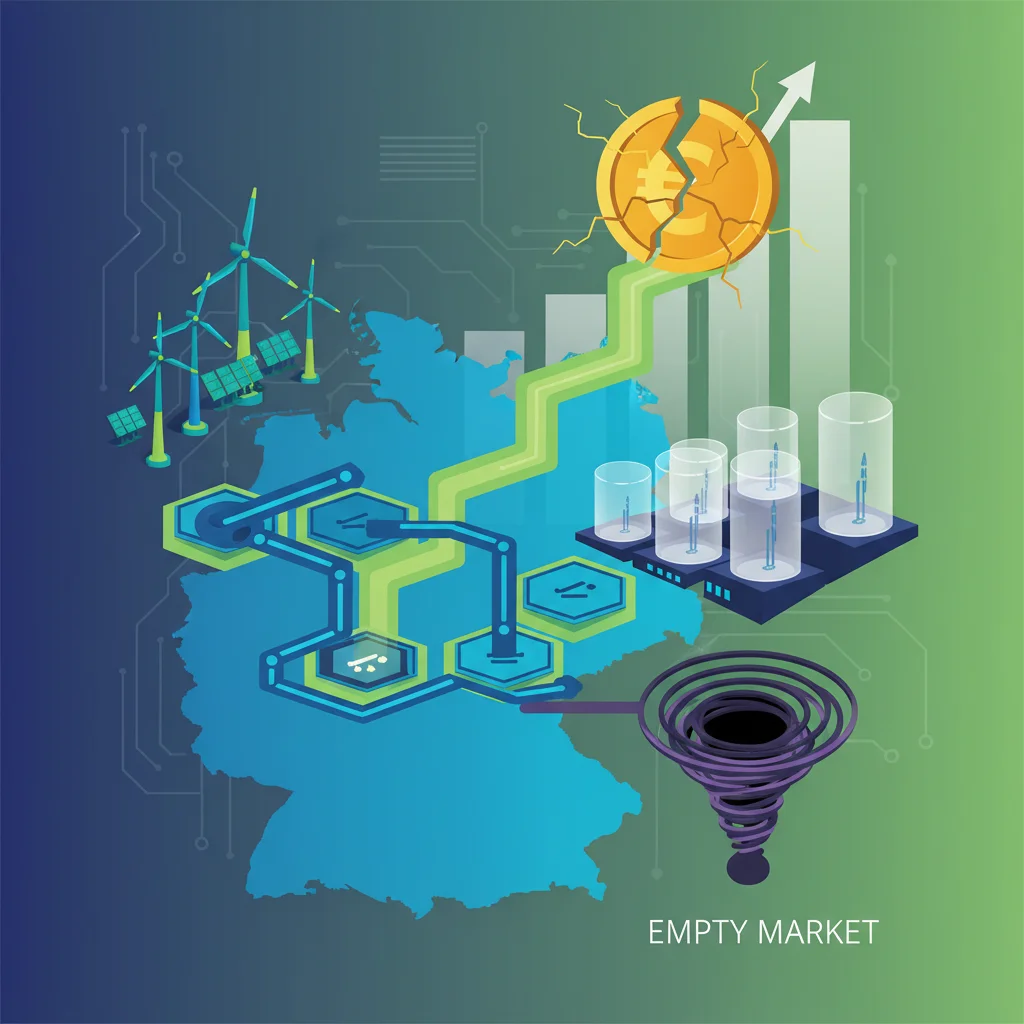
The logic is compelling. Green hydrogen, produced by splitting water into hydrogen and oxygen using renewable electricity, releases only water when burned, making it a perfect clean fuel for industries that cannot easily electrify. For a nation looking to wean itself off volatile global gas markets and meet stringent climate targets, it seems like a silver bullet. The supply side of the equation is roaring to life. German engineering giants are ready to mass-produce the critical hardware—electrolyzers—needed to generate this green fuel. Yet, a deafening silence echoes from the other side of the market. The technology is on the starting blocks, but the race hasn’t begun. This creates a high-stakes paradox: the factories are ready to build, but the buyers are nowhere to be found. This isn’t just an industrial hiccup; it’s a critical stress test for the country’s entire economic model and a fascinating case study for global investors watching the energy transition unfold.
The Great Disconnect: A Market Ready to Supply, But No One to Buy
At the heart of Germany’s hydrogen dilemma is a classic chicken-and-egg problem, a market failure playing out on a national scale. On one hand, companies specializing in the necessary technology are primed for action. Firms are fully capable of manufacturing the electrolyzers that are the core of green hydrogen production. As the BBC recently highlighted, the industrial capacity to build the green hydrogen economy’s foundations is in place. This readiness represents a significant achievement in engineering and a testament to Germany’s innovation-driven economy.
However, this supply-side optimism crashes against a wall of demand-side hesitation. The potential large-scale consumers—steel manufacturers, chemical conglomerates, and logistics companies—are holding back. Their reluctance stems from a potent cocktail of economic and logistical uncertainties:
- The Green Premium: Currently, green hydrogen is significantly more expensive to produce than traditional “grey” hydrogen (made from natural gas) or simply continuing to use fossil fuels. Despite its environmental benefits, the hard numbers of the stock market and corporate balance sheets make it difficult to justify a switch that could cripple competitiveness.
- Infrastructure Vacuum: Hydrogen is a notoriously tricky molecule to store and transport. A vast, dedicated network of pipelines, storage facilities, and refueling stations is required to create a functioning hydrogen economy. This infrastructure does not yet exist at scale, and building it requires colossal upfront investment and regulatory clarity.
- Policy and Price Uncertainty: The long-term price of green hydrogen is dependent on the future cost of renewable electricity, which can be volatile. Businesses are hesitant to commit to massive capital expenditures without iron-clad, long-term policy support, such as carbon pricing mechanisms or “Contracts for Difference” that guarantee a stable price. The current economics simply don’t provide the certainty needed for a boardroom to sign off on a multi-decade investment.
This disconnect creates a dangerous stalemate. Without firm purchase agreements from buyers, electrolyzer manufacturers cannot scale up production, which is essential to drive down costs. And without a clear path to cost-competitive, readily available green hydrogen, buyers will not invest in the new furnaces, engines, and processes needed to use it. The clock is ticking, and every moment of inaction risks ceding Germany’s potential leadership in this critical future market.
Bitcoin at the Brink: Is a Major Price Plunge Imminent or Is This the Ultimate Bear Trap?
An Investor’s Conundrum: Navigating the Hydrogen Stock Market
For those in finance, from retail traders to institutional investors, Germany’s hydrogen sector presents a landscape of tantalizing opportunity fraught with considerable risk. The potential for explosive growth is undeniable, but the path to profitability is shrouded in the fog of market uncertainty. A careful analysis of the economics of this emerging industry is paramount.
Investing in the hydrogen economy is not a monolithic play. It can be broken down into several key areas, each with its own risk-reward profile:
- Technology & Equipment Producers: These are the companies building the electrolyzers, fuel cells, and other critical hardware. They represent a “picks and shovels” play on the hydrogen gold rush. While they benefit from government subsidies for production, their long-term success is entirely dependent on the materialization of demand.
- Infrastructure Developers: Firms focused on building the pipelines, storage caverns, and distribution networks form the backbone of the future hydrogen economy. These are long-term, capital-intensive investments, highly sensitive to regulatory approvals and interest rates.
- Hydrogen Producers & Utilities: These companies will operate the large-scale electrolysis plants. Their profitability will be a direct function of the “spark spread” between the cost of renewable electricity and the selling price of hydrogen.
- Industrial End-Users: While not a direct hydrogen investment, forward-thinking investors are watching which steel, chemical, and logistics companies are becoming early adopters. Their ability to successfully integrate hydrogen could give them a significant competitive advantage in a future low-carbon world.
The core financial challenge remains the Levelized Cost of Hydrogen (LCOH). Below is a simplified comparison illustrating the current economic gap that green hydrogen must close. These figures can vary widely based on regional energy prices and carbon taxes.
| Hydrogen Type | Production Method | Estimated Cost per kg | Key Dependency |
|---|---|---|---|
| Grey Hydrogen | Steam Methane Reforming (Natural Gas) | €1.50 – €2.50 | Natural Gas Price |
| Blue Hydrogen | SMR with Carbon Capture | €2.00 – €3.50 | Gas Price & Carbon Storage Cost |
| Green Hydrogen | Electrolysis (Renewable Power) | €4.00 – €7.00+ | Renewable Electricity Price |
Source: Data synthesized from various industry reports, including the U.S. Department of Energy and other analyses.
For investors, this table highlights the risk. A bet on green hydrogen is fundamentally a bet that the cost of renewable electricity will continue to fall, and/or that carbon pricing will make grey and blue hydrogen uneconomical. The world of financial technology and fintech could play a transformative role here. Imagine blockchain-based platforms for transparently trading Guarantees of Origin for green hydrogen, or AI-powered trading algorithms that optimize hydrogen production based on real-time electricity market prices. The banking sector’s role will be to create innovative financing solutions, such as green bonds specifically tailored for hydrogen infrastructure projects, to syndicate the immense capital required.
Fiscal Straitjacket or Guardian of Stability? The Fierce Debate Over the UK's Economic Watchdog
The Macroeconomic Shockwaves for the German Economy
The outcome of this hydrogen gamble extends far beyond the stock market performance of a few companies; it will have profound implications for the entire German economy. The stakes are nothing less than Germany’s future as a global industrial leader. Success or failure will reverberate through its GDP, employment figures, and international standing.
If Germany fails to kickstart its domestic hydrogen market, the consequences could be severe. Its heavy industries, the backbone of its “Mittelstand” economy, could lose their competitive edge as global carbon taxes and border adjustments make their products more expensive. The nation could become a net importer of clean energy and green commodities like green steel, ceding technological leadership and value creation to other regions. This would be a historic blow to an economy built on the “Made in Germany” seal of quality and innovation.
Conversely, success would unlock a powerful new chapter of economic growth. A thriving hydrogen economy would not only secure the future of Germany’s existing industrial base but also create a massive new export industry. German-made electrolyzers and fuel cells could become the global standard. This would create tens of thousands of high-skilled jobs, drive innovation in adjacent sectors like fintech and logistics, and cement Germany’s role as a leader in the 21st-century green economy. From an economics perspective, it represents a classic case of aiming for a Schumpeterian wave of “creative destruction,” where a new technology (green hydrogen) supplants the old (fossil fuels), leading to a paradigm shift in economic productivity and structure.
Bitcoin at a Crossroads: Decoding the "Death Cross" and On-Chain Warning Signs
Conclusion: The Time for Coordinated Action is Now
Germany’s green hydrogen industry is not suffering from a lack of technology, ambition, or capital. It is suffering from a crisis of coordination. The engineers have delivered, but the market has not. This perilous standoff between ready suppliers and reluctant buyers cannot be resolved by market forces alone. The clock is ticking, and the window for Germany to establish a dominant position in the global hydrogen race is closing.
The path forward requires a decisive, three-pronged effort. First, the government must move beyond funding supply and actively create demand through clear, long-term policies that make green hydrogen economically viable for end-users. Second, the industrial sector must show courage by forming partnerships and making initial investment commitments, trusting that a supportive policy framework will materialize. Finally, the finance and banking world must step up, developing the innovative financial instruments and trading platforms needed to fund this multi-trillion-dollar transition. Germany has built the engine for a new green economy; the challenge now is to build the vehicle around it and, most importantly, to provide the fuel of market certainty to get it moving.